
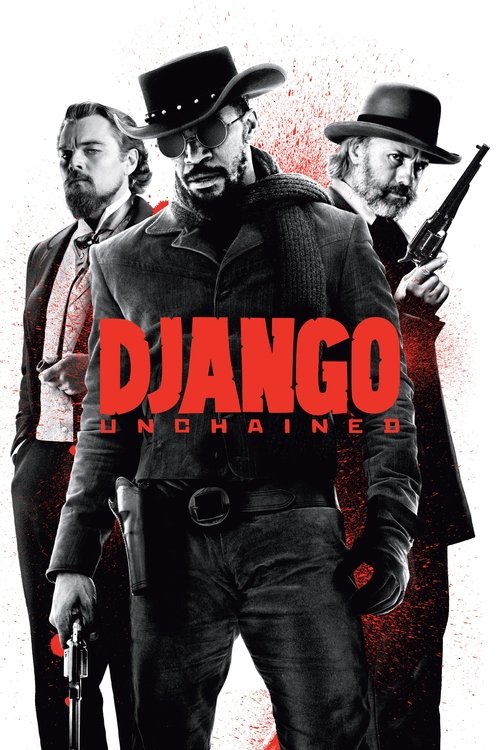
Django Unchained (2012)
Directed by Quentin Tarantino
With the help of a German bounty hunter, a freed slave sets out to rescue his wife from a brutal Mississippi plantation owner.
50 connections found
View:
50 films that influenced Django Unchained
What critics say influenced Django Unchained
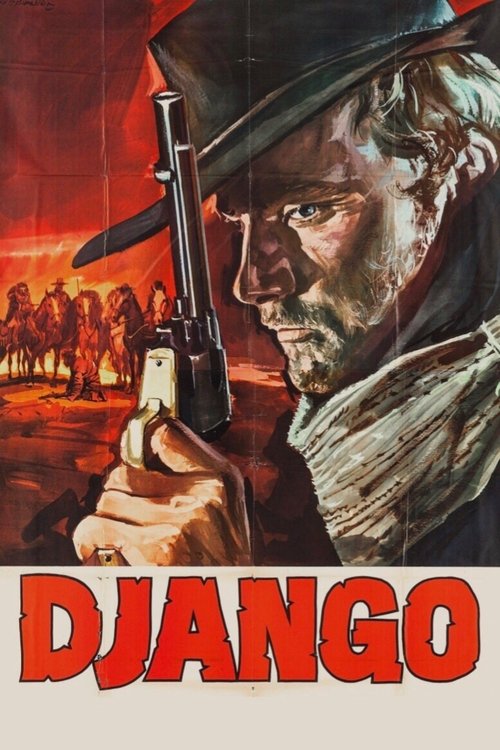


Tarantino's fundamental inspiration stems from the original 1966 shoot-'em-up "Django," a precedent rendered in obvious terms from the opening credits, when the bouncy theme song from Sergio Corbucci's classic spaghetti western makes its first appearance.
As with most Tarantino movies, this one’s brimming with the director’s signature pop-cultural mixology, including a soundtrack with tracks by rapper 2Pac and James Brown, Jim Croce and John Denver, and the theme song to the original 1966 movie, “Django,” from which this one takes its inspiration as well as its title.
The title is an homage to "Django," Sergio Corbucci's over-the-top Spaghetti Western from 1966 starring Franco Nero.
Like "Inglourious Basterds," Tarantino's latest borrows its name and attitude from an old Italian flick, in this case the 1966 Spaghetti Western "Django."
You know from Tarantino’s audacious choice of intro music — the haunting theme song from Sergio Corbucci’s iconic 1966 Spaghetti Western “Django,” that the maestro-of-all-things-tasty has many surprises in store for his delighted audience.
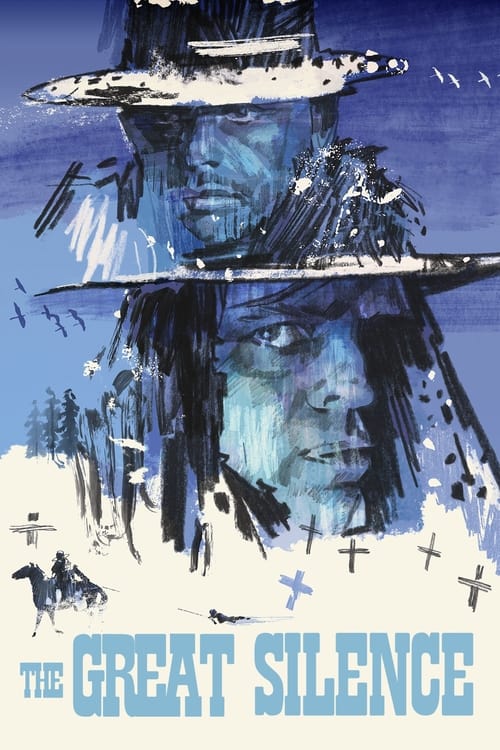
In the same way that Kill Bill paid tribute through imitation to Japanese samurai and Chinese kung fu films, Django Unchained serves as Tarantino’s blood splattered love letter to the work of Leone (A Fistful of Dollars), Corbucci (Django, The Great Silence), Sollima (The Big Gundown) and probably dozens of other filmmakers who most of us have never even heard of, but whose movies’ Tarantino can no doubt recite verbatim.
When this is applied to Americas guilty past, Django Unchained comes to feel like an act of radicalism, which connects it to Tarantinos obvious influences here, the sardonically political spaghetti westerns of Sergio Corbucci (The Great Silence and the original Django).
In Unchained, QT attaches the title of another Corbucci oater, Minnesota Clay, to a saloon, and quotes from Corbucci’s Northern Western The Great Silence, in which a mute Jean-Louis Trintignant rides through snowy landscapes — as Foxx and Waltz do here — on his path to dark destiny.
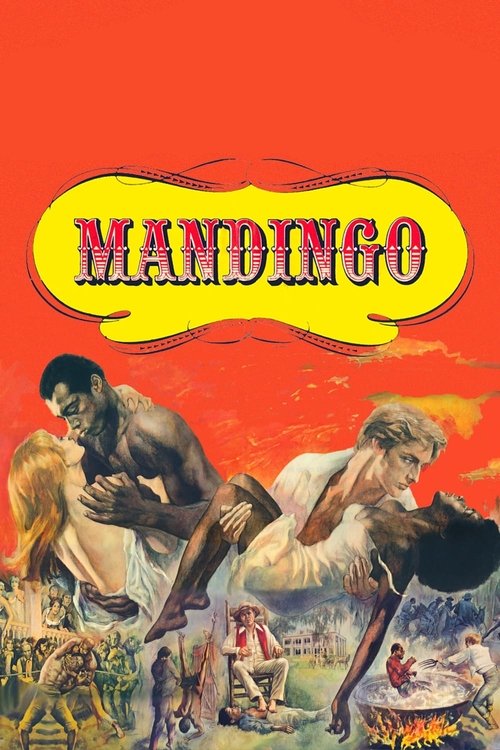
Less-high-flown references evoke Mel Brooks’s Blazing Saddles and Richard Fleischer’s Mandingo, with former heavyweight boxing champ Ken Norton as the sex slave.
Being the ostentatious character that he is, Schultz devises an elaborate plan to secure her freedom by posing as a buyer with a special interest in 'Mandingos' - slaves who are reared to fight to the death (in a reference to the 1975 film Mandingo ).
But much more forceful is the cruelty dispensed by the Southern whites, both as punishment and whim; attack dogs are unleashed on one man, Mandingo fighters (in an homage to the unforgettable 1975 Mandingo) battle to the death in a beautifully appointed drawing room for the wealthy’s amusement, a woman is locked naked in a metal “hot box,” genital mutilation is arranged for a man and much more.
But only one major-studio film of the modern era, Richard Fleischer's notorious 1975 Mandingo, dared to meet slavery on its own terms—a grind house bacchanal of sadism, incest, and miscegenation, capped by an unforgettable finale in which the eponymous bare-knuckle fighter is boiled alive by his master in a cauldron.
The ’70s also spawned some spectacularly lurid melodramas set in the Old South, including Mandingo, with ex-heavyweight champ Ken Norton as the sex slave of fluttery plantation ladies, and the mockumentary Goodbye, Uncle Tom, in which the directors of Mondo Cane submitted Haitian blacks to nearly as much degradation as their slave forebears.
But Django must swallow his pride and pretend to be that most hated of things, a "Mandingo", a fighter-trainer and the white man's tame plaything, and uncomfortably close to Stephen's domestic servitude.
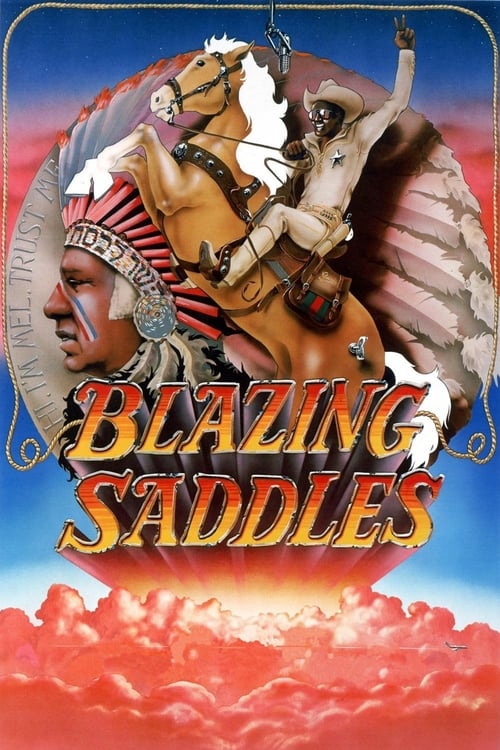
Less-high-flown references evoke Mel Brooks’s Blazing Saddles and Richard Fleischer’s Mandingo, with former heavyweight boxing champ Ken Norton as the sex slave.
I’m not sure the first matters (it works in Tarantino’s fantasia concept) and the second — while likely having as much to do with Blazing Saddles (1974) as anything else — can be answered by reading Huckleberry Finn.
At times more in line with "Blazing Saddles" than the grimly bawdy qualities that define many bonafide oaters, "Django Unchained" erupts with a conceptual brilliance from the outset that never fully meshes with its clumsy storyline.
At one point, another plantation owner (played with ferocious glee by Don Johnson) goes off in pursuit of Django and Schultz with the aid of other members of the local chapter of the KKK and without going into detail, let it be said that what comes next is so laugh-out-loud funny that Mel Brooks will probably be kicking himself for not having thought of the joke himself when he was putting together "Blazing Saddles" back in the day.
In the subversive pairing of a black and a white man in the Old West, Mel Brooks’s Blazing Saddles may ring a bell, or the 1971 sagebrush comedy Skin Game, with James Garner and Louis Gossett Jr. as con-men partners.
One standout is a bit where a group of precursor KKK thugs argue about the efficacy of riding around in hoods with eyeholes cut in them, which would have felt right at home in "Blazing Saddles."
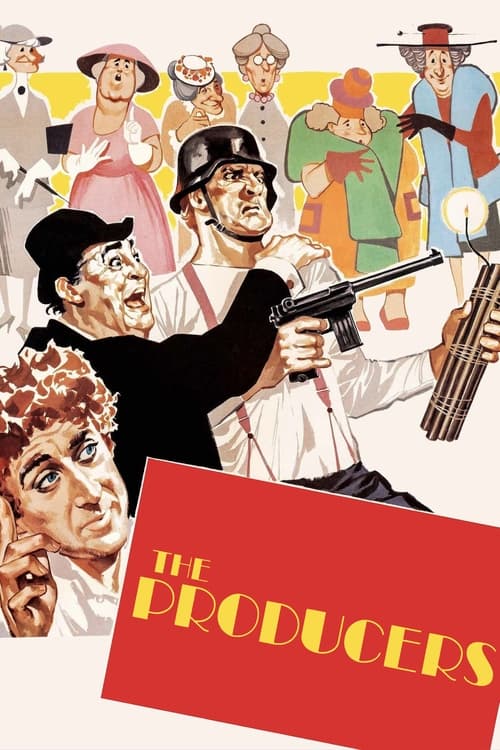
Even given the grand tradition of artists using their work for sharp social rebukes — Mel Brooks ' genius swipe at Nazism in "The Producers," for one —Tarantino's mash-ups between the unconscionable inhumanity of others and his outrageous riffs on the matter defy comparison.
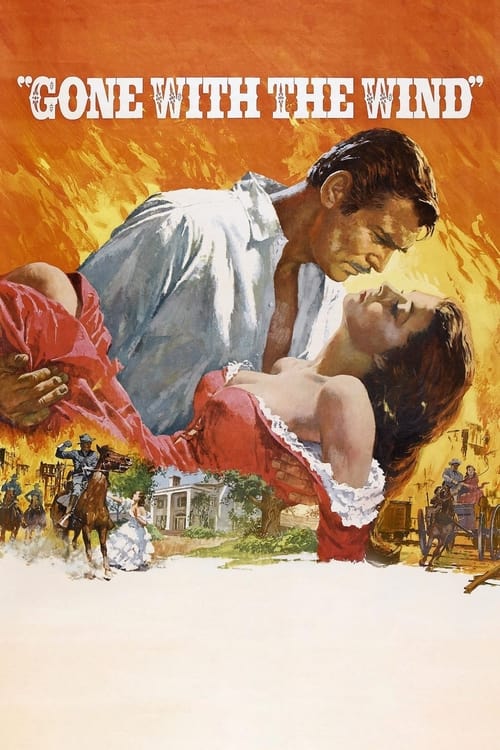
From the first moments of the film — a retro studio logo followed by a heroic theme song and a scrolling red title that evokes the opening of “Gone With the Wind” — we know we are in Tarantino’s universe, where the floss of film history gets spun into gold.
Of course, Spielberg is working in a time-honored tradition: After The Birth of a Nation, with its risible scenes of freed slaves raping and pillaging white Southerners, movies have treated this "peculiar" institution mostly at arm's length, from the happy slaves of Gone With the Wind and Song of the South to the simian allegories of King Kong and Planet of the Apes.
Movies like “Gone With The Wind” give us a much sanitized version.
So after calling out the Nazis and showing what comic figures they truly are, Tarantino is doing the same to the rich, white racists who ran the “Gone With the Wind” South.
There’s a point in “Django Unchained” when its sheer absurdity, luridness and violence pose an inescapable challenge to the skeptical literalists in the audience: Sure, this is an outrageous distortion, the "Django Unchained" movie itself seems to say, but is it any more outrageous than “The Birth of a Nation” or “Gone With the Wind”?
Think of it as Gone With the Wind meets Shaft.
Advertisement
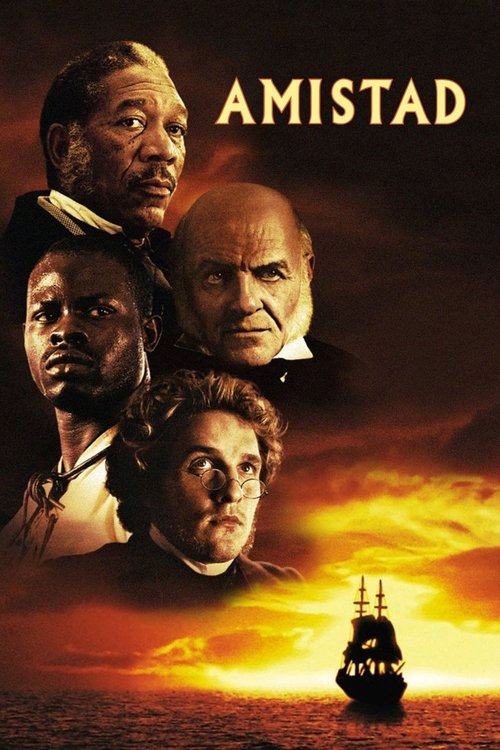
Of course, it's a coincidence that Django Unchained arrives in the same season as Steven Spielberg's Lincoln, the second of two Spielberg films about slavery (after 1997's Amistad) that never expose audiences to the harsh realities of plantation life?
Yes, you will laugh at people saying the n-word, but I bet you’ll also be more viscerally disgusted than you would be watching Amistad or Glory (and yo, isn’t that the point?).
Films like "Lincoln" and "Amistad," and TV shows like "Roots" provide history lessons that show us the horrors and inhumanity of slavery, and how it should be abolished and condemned.
In truth, there have been conspicuously few American films made about slavery, but certainly Django Unchained is a far cry from, say, Amistad or Glory; there is no kowtowing seriousness here to placate political correctness or soothe white guilt.
In recent years, there have been attempts to present a more realistic depiction of slavery in projects like "Roots" and "Amistad" but those efforts, however well-intentioned they may have been, have come across as so self-satisfied in regards to their worthiness that it feels as if the filmmakers are exploiting the subject in order to win awards and acclaim for themselves instead of telling a compelling story.
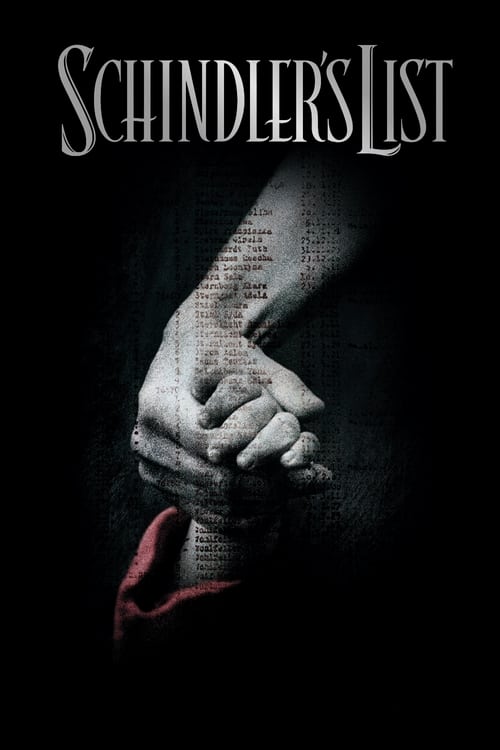
In Basterds, however, Tarantino was engaged with an exhaustive canon of World War II movies, from Casablanca to Schindler's List, while the subject of Django Unchained—slavery in the American South—is one that has been conspicuously absent in Hollywood films in the century since D.W. Griffith's The Birth of a Nation.
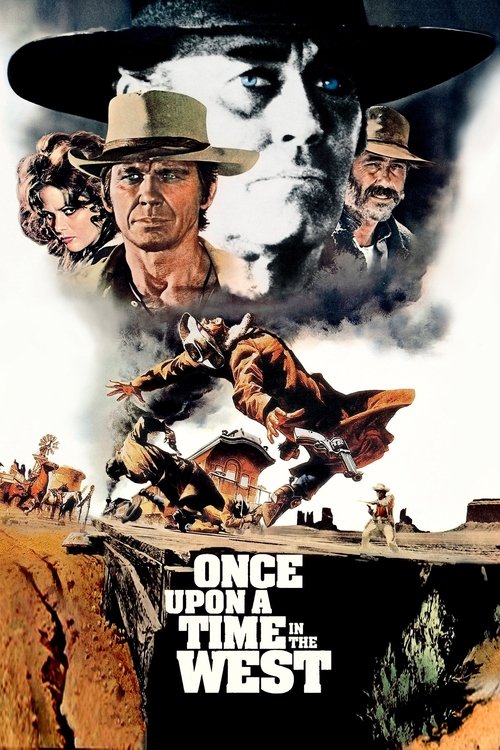
Tarantino is channeling both the economical efficiency of the cash-strapped exploitation workmen who shaped his cinematic worldview and the more operatic ambitions of Sergio Leone in his later years, when the idea of transporting the American Western into the rocky hills of Spain morphed into such epic meditations on life and death as The Good, the Bad, and the Ugly (1966) and Once Upon a Time in the West (1968).
But occasionally as the movie becomes a bit garrulous, we may wish for Charles Bronson's strong, silent hero in Leoni's masterwork Once Upon a Time in the West (1968).
There’s no scene in Django Unchained to put a lump in your throat like Henry Fonda’s child-slaying in Once Upon a Time in the West.
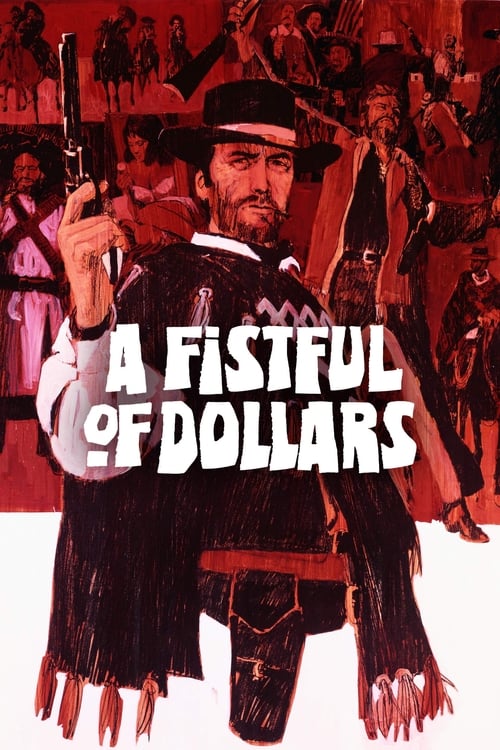
The new movie takes its title and some of its particulars from Sergio Corbucci’s 1966 spaghetti Western Django, whose success spawned dozens of imitators and was itself inspired by Sergio Leone’s A Fistful of Dollars (1964).
Spaghetti westerns were launched in the 1960s by Italian director Sergio Leone when he took American TV actor Clint Eastwood to Spain to make "A Fistful of Dollars," a western rip off of Akira Kurosawa's samurai film "Yojimbo."
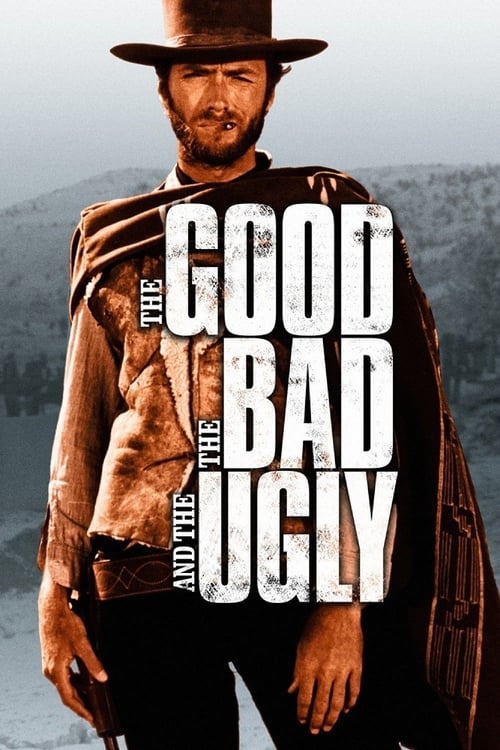
Now, Tarantino reconfigures that classic American genre, the Western, setting his new film in the Deep South, creating what he terms a "Southern," while infusing it with the spaghetti sensibilities of Sergio Leone (director of Tarantino's favorite film, The Good, The Bad and the Ugly) and, more so, the genre grit of that other Sergio, Corbucci (director of 1966's Django, naturally).
Take Django Unchained as an example or even the Oscar-winning The Revenant which sees Leonardo DiCaprio brave bears, the elements and former colleagues in a grim tale of survival against the odds.
Divertissant et savoureusement irrésistible, je comprends pourquoi Quentin Tarantino louange constamment ce film, on en voit l’inspiration dans son “Django Unchained”.
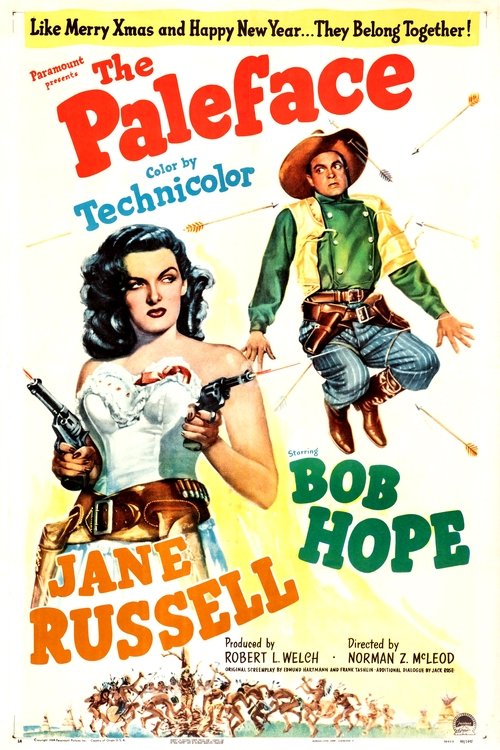
Fans of the genre will relish all the various homages to films running the gamut from the Sergio Leone classics to the Bob Hope comedy "The Paleface" through countless verbal and visual quotes, cameo appearances from a wide array of B-movie favorites (including, as the opening credits put it, "The Friendly Participation of Franco Nero") and incredibly arcane in-jokes (there are a couple of scenes that closely resemble moments from Tarantino's previous films in much the same way that Howard Hawks used to repeat favorite bits from film to film).
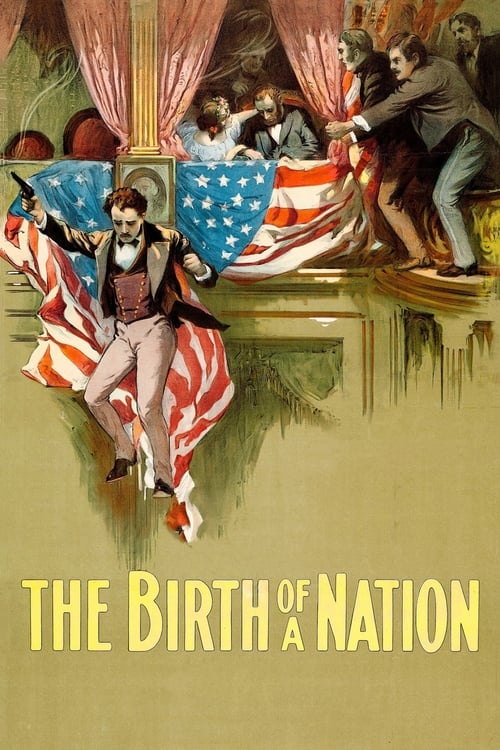
There’s a point in “Django Unchained” when its sheer absurdity, luridness and violence pose an inescapable challenge to the skeptical literalists in the audience: Sure, this is an outrageous distortion, the "Django Unchained" movie itself seems to say, but is it any more outrageous than “The Birth of a Nation” or “Gone With the Wind”?
In Basterds, however, Tarantino was engaged with an exhaustive canon of World War II movies, from Casablanca to Schindler's List, while the subject of Django Unchained—slavery in the American South—is one that has been conspicuously absent in Hollywood films in the century since D.W. Griffith's The Birth of a Nation.
He isn’t breaking any new ground here, as there was an entire subset of 1970s blaxploitation films set in the American West and South that dealt with slavery, but the scope of Tarantino’s ambitions and the mainstream status of his film, despite its exploitation fixations, makes his evocation of that dark chapter of American history that much more daring and dangerous (it is telling how few Hollywood filmmakers have dared to tackle this topic on screen since D.W. Griffith’s The Birth of a Nation in 1915).
Even a scene where a group of Ku Klux Klan are presented as almost endearingly goofy, in a wonderful spoof of the outrageously racist pro-Klan silent classic The Birth of a Nation (DW Griffith, 1915), the violent fate of such characters is not at all problematic due to what they represent.
The release of “Django Unchained,” and the discussion surrounding it, have brought “Birth of a Nation”—D.
Advertisement
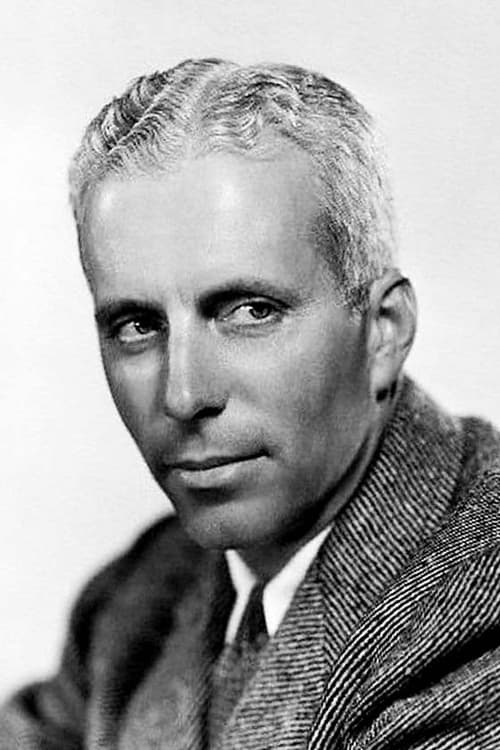
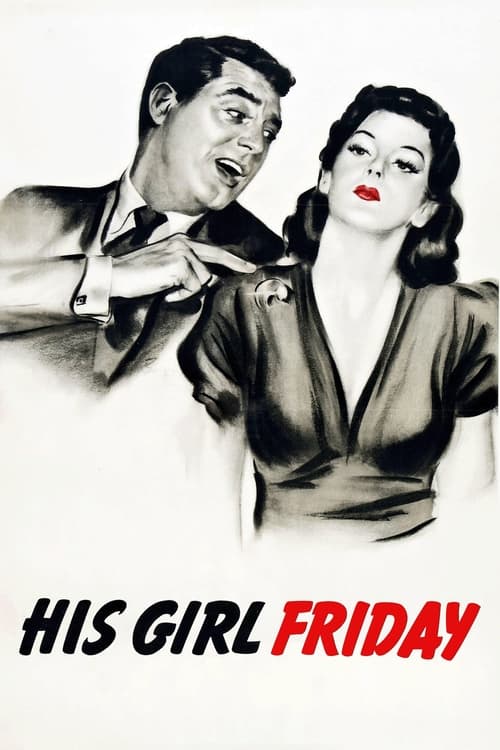
No sooner has the 1858 story itself started than we find Dr. King Schultz agreeing to a price for Django by crying, “Sold American!” — a gag probably lifted from Howard Hawks’ His Girl Friday (1940) and derived from the 1930s Lucky Strike (American Tobacco Co.) tobacco auctioneer ads that ended with “Sold American.”

In most westerns the hero either stays put and the action comes to him (like John Wayne as the sheriff in Rio Bravo) or he sets out on a transformative journey of some kind (as Wayne does in The Searchers).
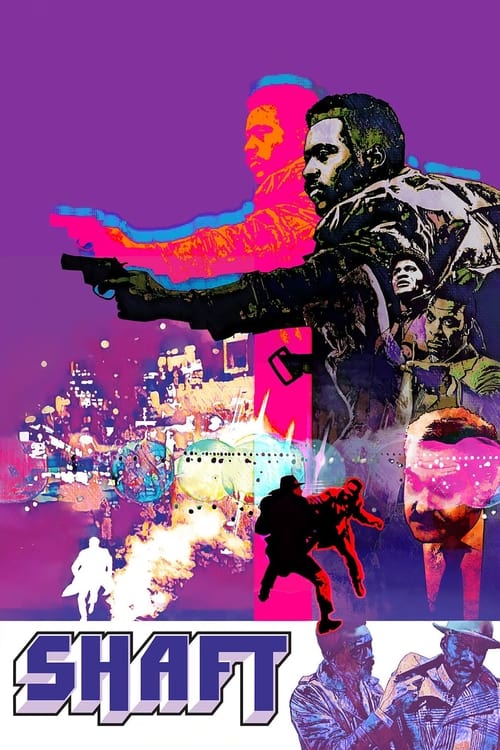
Films such as "Sweet Sweetback's Baadasssss Song" and "Shaft" kicked off the genre in 1971.
The big-kid auteur gives shout-outs to everything from Gordon Parks’s “Shaft” to martial arts action star Sonny Sheba.
Parks is best known for “Shaft”, the 1971 “blaxploitation” classic.