
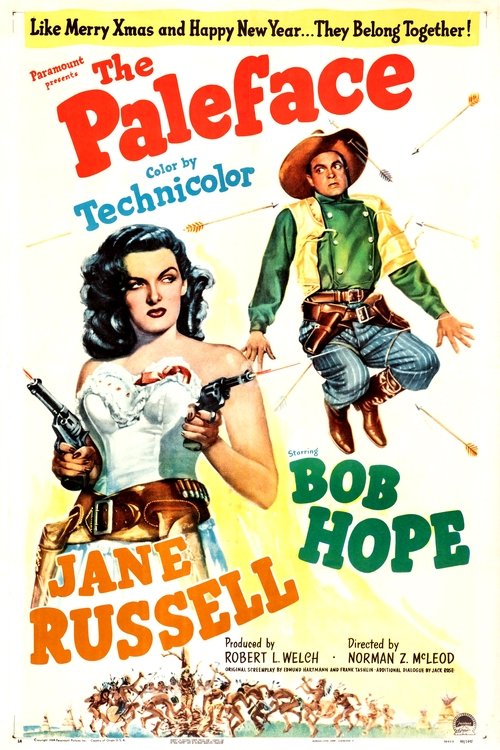
The Paleface (1948)
Directed by Norman Z. McLeod
Bob Hope stars in this laugh-packed wild west spoof co-starring Jane Russell as a sexy Calamity Jane, Hope is a meek frontier dentist, "Painless" Peter Potter, who finds himself gunslinging alongside the fearless Calamity as she fights off outlaws and Indians.
3 connections found
View:
3 connections, in both directions
What critics compared The Paleface to
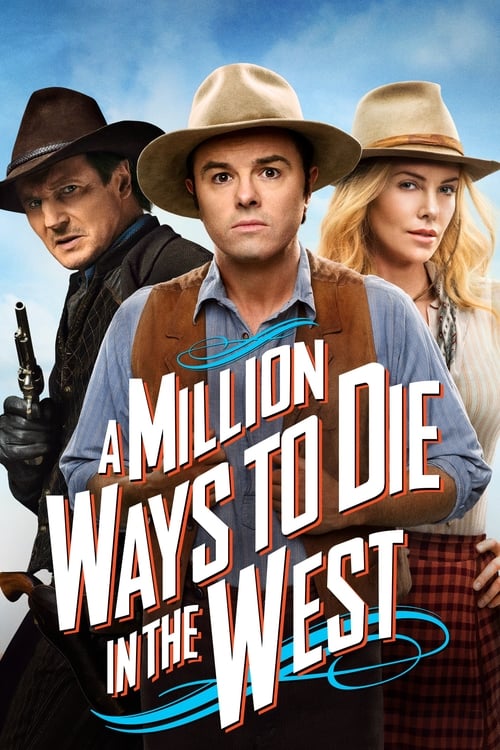


*** With a title inspired by the lurid pulp grandiosity of Spaghetti Westerns (“Shoot the Living and Pray for the Dead” and “Django’s Cut-Price Corpses” are just two examples), a big-sky score by Joel McNeely that channels the Aaron Copland-esque themes of the Hollywood mainstream and a premise more or less lifted from Bob Hope’s “The Paleface,” writer-director-vilified-Oscar-host Seth MacFarlane’s follow-up to his huge hit “Ted” was judged a box-office disappointment when it was released theatrically in May, earning “just” $42 million compared to the $218 million snatched by the movie about the vulgar talking Teddy bear.
Albert may be spineless, but that is nothing new; it is more than sixty years since Bob Hope put a coward among the cowboys, in “The Paleface.”
The problem seems to be that he and co-writers Wellesley Wild and Alec Sulkin could not decide whether to do an over-the-top parody such as “Blazing Saddles” or a fish-out-of-water spoof such as Bob Hope’s “The Paleface.”
Now in a sense, all comic Westerns do this, whether we're talking about Bob Hope in "The Paleface" (1948) or Mel Brooks ' "Blazing Saddles."
The truth is he’s made the new Shakiest Gun in the West — Don Knotts’ 1968 rehash of Bob Hope’s The Paleface (1948) — except MacFarlane’s picture isn’t even up to the none-too-exacting standards of the Don Knotts movie.
But Hope had a knack for comic timing in movies like “The Paleface” — sometimes that’s all he had — and Brooks pushed cultural as well as scatological boundaries in 1974’s “Blazing Saddles.”
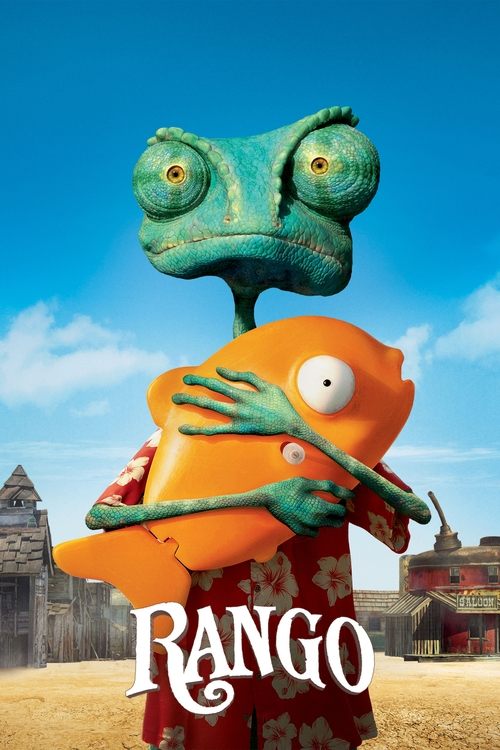
The plot echoes Bob Hope’s The Paleface and its remake with Don Knotts, The Shakiest Gun in the West, about a fast-talking coward becoming, in a case of mistaken identity, a western hero.
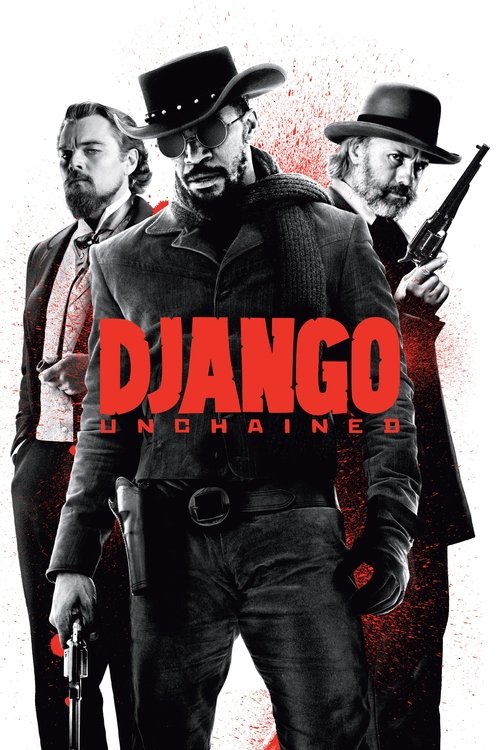
Fans of the genre will relish all the various homages to films running the gamut from the Sergio Leone classics to the Bob Hope comedy "The Paleface" through countless verbal and visual quotes, cameo appearances from a wide array of B-movie favorites (including, as the opening credits put it, "The Friendly Participation of Franco Nero") and incredibly arcane in-jokes (there are a couple of scenes that closely resemble moments from Tarantino's previous films in much the same way that Howard Hawks used to repeat favorite bits from film to film).