
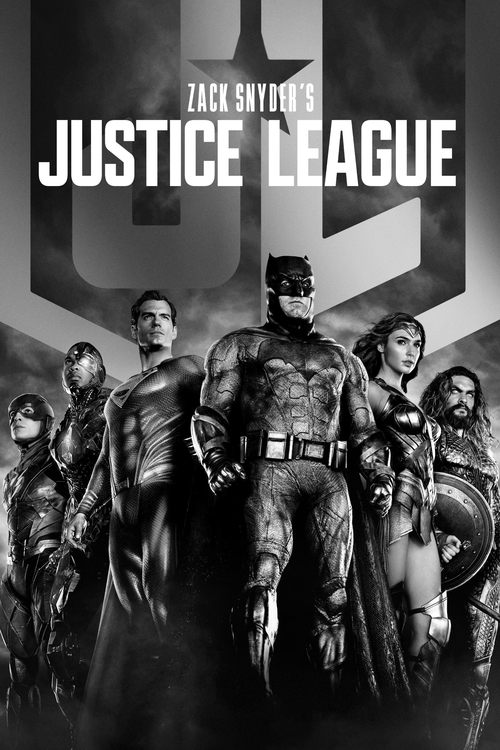
Zack Snyder's Justice League (2021)
Directed by Zack Snyder
Determined to ensure Superman's ultimate sacrifice was not in vain, Bruce Wayne aligns forces with Diana Prince with plans to recruit a team of metahumans to protect the world from an approaching threat of catastrophic proportions.
39 connections found
View:
39 films that influenced Zack Snyder's Justice League
What critics say influenced Zack Snyder's Justice League
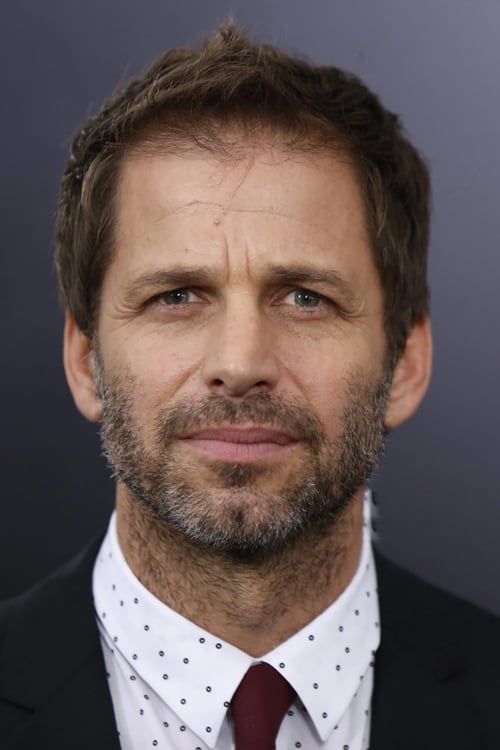
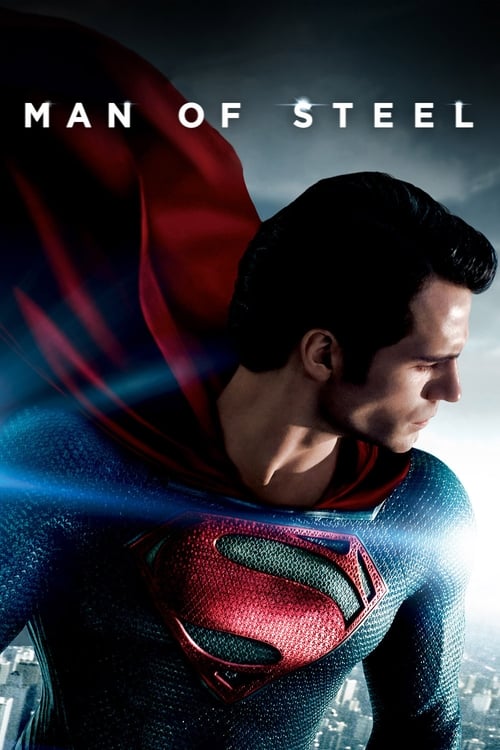


Tom Holkenborg’s booming, percussive score feels much more simpatico with Snyder’s approach (the callbacks to Zimmer’s Man of Steel score are incredibly welcome) than Danny Elfman’s lazy reprises of the old Burton and Donner themes in 2017.
Unless you’ve been living under the proverbial rock for the past four years, you probably know that 2017’s Justice League was supposed to be the culmination of the DC Universe vision Zack Snyder started with Man of Steel in 2013.
After two previous Zack Snyder DC films, Man of Steel and Batman v Superman , failed to match the impossible billion-dollar revenues of The Avengers , Warner Bros., according to Snyder, began to push back on his plans.
Much of his rise into his power mirrors Clark’s from Man of Steel .
Snyder’s two previous DECU entries — ”Man of Steel” and “Batman v Superman” — were steeped in a fickle conception of loss as a mere framing device.
While reviews for Man of Steel and Batman v Superman: Dawn of Justice were mixed, Justice League builds upon the themes and subjects explored in those films.
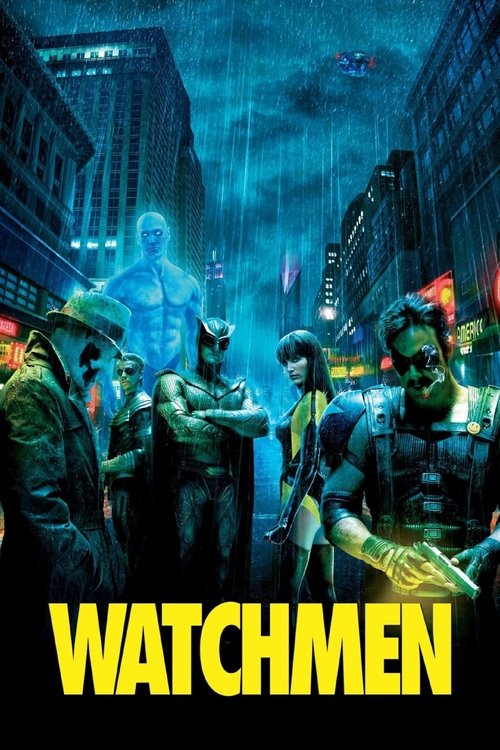
Zack Snyder is an occasionally flawed thinker (see: Sucker Punch ) but for whatever his faults and tendency to be little overwrought, the man can shoot a pretty picture in a way few others can match (the JFK assassination sequence in Watchmen still stands out as an all-time great bit of visual exposition).
“Zack Snyder’s Justice League” will remind you that this is the guy who directed “Watchmen.”
Both Man of Steel and Batman v Superman featured striking sequences that combined superheroic iconography with mythological imagery and dream logic (Mr. Snyder has deployed these sequences elsewhere in his career as well, particularly in his adaptation of Dave Gibbons and Alan Moore’s Watchmen and Sucker Punch ).
Though in the past we’ve appreciated Snyder’s stylistic quirks in films like Sucker Punch or Watchmen , when combined with the four-hour runtime, his heavy-handedness and tendency to overdramatize quickly became grating, especially in dialogue-heavy scenes, most of which are oddly paced and even more awkwardly edited.
But it’s often gorgeous to look at, and taken as a transitional film, one that moves this universe onto a streaming platform that needs it and the proper home for a filmmaker like Snyder (a thrilling “300,” a passable “Watchmen,” a decent zombie movie and…all sorts of this ), “Zack Snyder’s ‘Justice League'” services the fans and just as importantly, the investors, who also “can’t get enough” of these characters, no matter what universe they occupy.
Enter director Zack Snyder, invited by Warner Bros. Pictures, after his successes with 300 (2006) and Watchmen (2009), to bring his same style and vision to their live-action adaptations of celebrated DC Comics characters.

Zack Snyder is an occasionally flawed thinker (see: Sucker Punch ) but for whatever his faults and tendency to be little overwrought, the man can shoot a pretty picture in a way few others can match (the JFK assassination sequence in Watchmen still stands out as an all-time great bit of visual exposition).
Both Man of Steel and Batman v Superman featured striking sequences that combined superheroic iconography with mythological imagery and dream logic (Mr. Snyder has deployed these sequences elsewhere in his career as well, particularly in his adaptation of Dave Gibbons and Alan Moore’s Watchmen and Sucker Punch ).
The Snyder touch is there in everything from “300” to “Watchmen” and “Sucker Punch,” to varying degrees of success, but “Zack Snyder’s Justice League” unleashes it on the largest scale to date.
Snyder is such a talented visual stylist (always has been, go back and look at "300" or even the unjustly picked-upon "Sucker Punch") that he can even make a scene of a character shaving an operatic moment, and he does that here, slowing down the water falling from the faucet so it resembles the rush from a waterfall.
Snyder's self-penned Sucker Punch , by contrast, was a crass, lecherous male fantasy dressed up as "female empowerment".
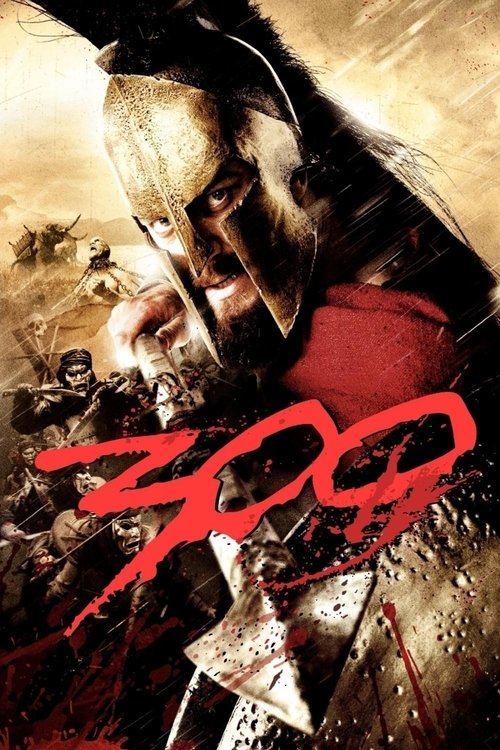
The expanded flashbacks of ancient Amazons, Atlanteans and humans joining forces to defeat Steppenwolf — who’s more spiky now, thanks to reworked CGI — are big, blood-spurting battles that serve mostly to remind everyone, in case they’ve forgotten, that Snyder also directed “300.”
The backstory, if you’re not familiar with it: Snyder, the director of “300” and the DC run-up projects “Man of Steel” (2013) and “Batman v Superman” (2016), abandoned the all-star “Justice League” (2017) mid-shoot when his daughter died.
But it’s often gorgeous to look at, and taken as a transitional film, one that moves this universe onto a streaming platform that needs it and the proper home for a filmmaker like Snyder (a thrilling “300,” a passable “Watchmen,” a decent zombie movie and…all sorts of this ), “Zack Snyder’s ‘Justice League'” services the fans and just as importantly, the investors, who also “can’t get enough” of these characters, no matter what universe they occupy.
Sometimes, a director’s name in the title is merely an act of ego, but in the case of Zack Snyder’s Justice League , it’s entirely apt for a film that could not be the work of anyone other than the auteur behind 300 .
Enter director Zack Snyder, invited by Warner Bros. Pictures, after his successes with 300 (2006) and Watchmen (2009), to bring his same style and vision to their live-action adaptations of celebrated DC Comics characters.
For Warner Bros., it’s obviously a play at boosting HBO Max subscriptions, but for Zack Snyder, it is a passion project that fans, no matter what you think of them, have rallied behind as if the director was King Leonidas from his popular adaptation of the graphic novel 300.
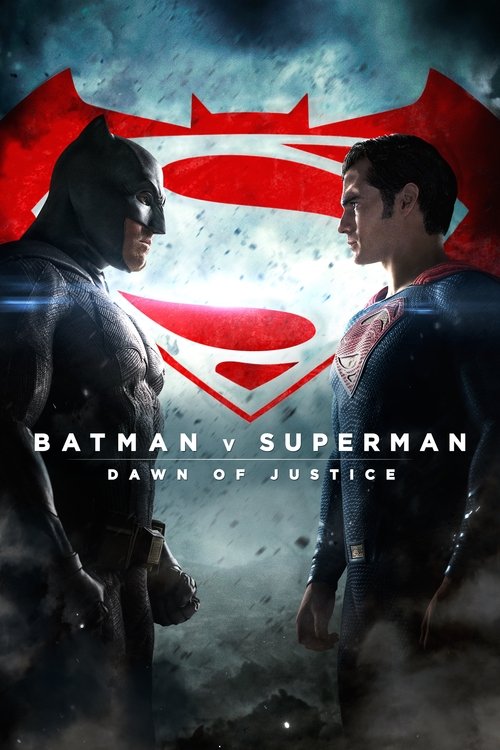
Snyder takes the idea of Batman (Ben Affleck) and Wonder Woman (Gal Gadot) uniting with three more superheroes, Aquaman (Jason Momoa), Flash (Ezra Miller), and Cyborg (Victor Stone), following Superman’s death at the end of Batman v Superman: Dawn of Justice (2016), as a metaphor for spiritual endeavor.
While reviews for Man of Steel and Batman v Superman: Dawn of Justice were mixed, Justice League builds upon the themes and subjects explored in those films.
However, Snyder fans clamored for the release of the original film, convinced that the artist behind “Man of Steel” and “Batman v Superman: Dawn of Justice” had delivered a better Justice League movie with more brutality and mature themes.
Earth has lost its way after the death of Superman, an event depicted in Snyder’s 2016 “Batman v Superman: Dawn of Justice.”
In order to protect the Earth, Batman (Ben Affleck) and Wonder Woman (Gal Gadot) have to scour the globe to make pleas to other superbeings to join them, especially in the wake of the death of Superman (which occurred in the previous "Batman v Superman: Dawn of Justice"), leaving the planet vulnerable.
After reimagining Superman in 2013’s Man of Steel and pitting him against another DC Comics juggernaut in 2016’s Batman v Superman: Dawn of Justice , writer-director Zack Snyder was poised to unite a legendary team of superheroes in Justice League , the first of a planned trilogy that would hopefully level the playing field between Warner Bros. and rival Marvel Studios.
From Dawn of the Dead to 300 to Watchmen and very obviously Man of Steel, Snyder has been interested in power.
Snyder's next project is Netflix's “Army of the Dead,” a heist movie, set to drop May 21, that marks his return to the zombie universe he explored in his 2004 “Dawn of the Dead” remake.
From the days of Dawn of the Dead, Snyder has a keen eye for action and understands how to design brilliant action scenes, his latest is no different.

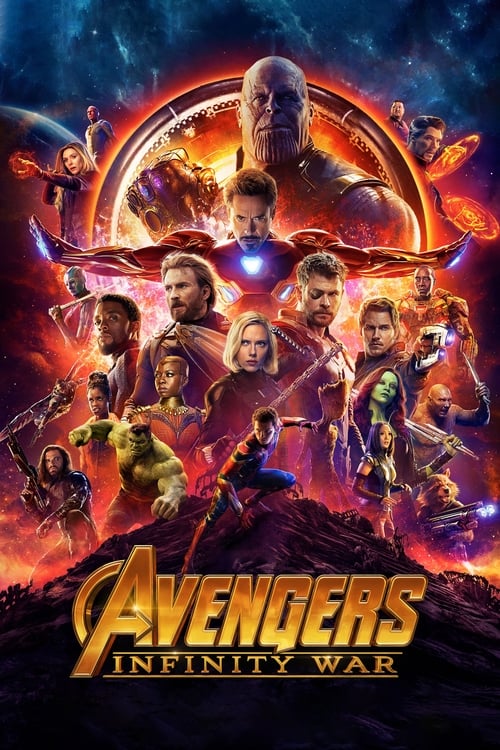
Then again, when you consider that "Avengers: Infinity War" and "Avengers: Endgame" have a combined runtime exceeding five hours . . .
It’s a true culmination of the story began in Man of Steel whilst opening itself up for plenty more, and its scope can only really be matched by Avengers: Infinity War and Endgame .
One cannot help comparing the monstrosity of violence that is inflicted upon our superheroes in Avengers: Infinity War and Avengers: Endgame by Thanos compared to the pleasantries exchanged by Darkseid, it seems.
After 2018’s Avengers: Infinity War, it’s difficult to watch the introduction of Steppenwolf (voiced by Ciarán Hinds) without comparing it to the arrival of those other harbingers of a cosmic, death-embracing villain, Thanos’ Black Order, especially Ebony Maw.
DC fans might not appreciate the comparison, but the change is comparable to how Avengers: Infinity War improved Thanos from his earlier MCU outings.
Put all these pieces together, and you’re left with a comic book adaptation that feels like an event, and is on a scale every bit as grand as Avengers: Infinity War and Avengers: Endgame .
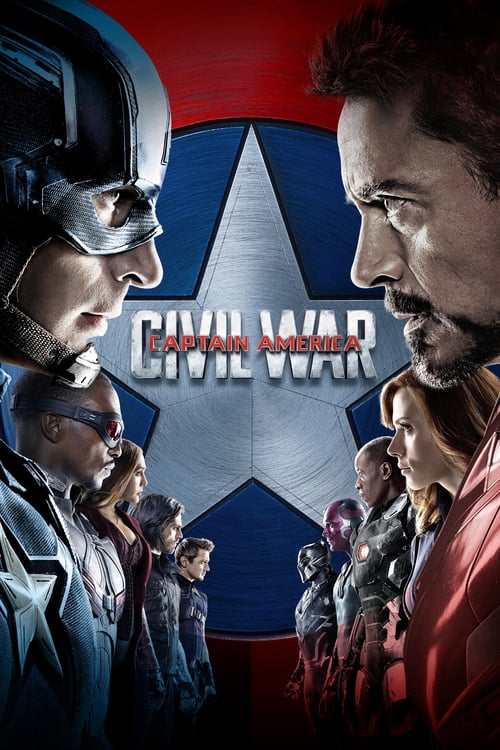
That's particularly true in the Marvel universe where the standalone films slowly but brilliantly started including cameos from other characters, culminating in the all-star ensemble of the "Avengers" flicks that's now continued in other supposedly single character films that have included many others (such as "Captain America: Civil War" and the more recent "Thor: Ragnarok").
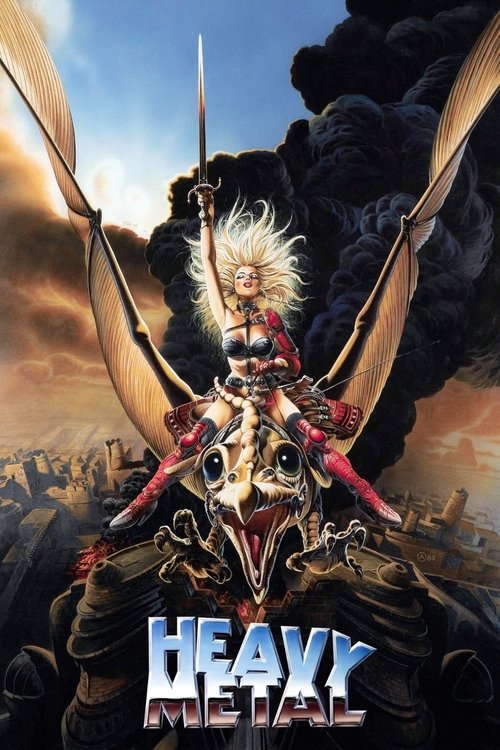
That’s not to say this is a compromised product for fans of Snyder’s deeply 1980s, Heavy Metal– inspired approach to the world of the DC Universe.
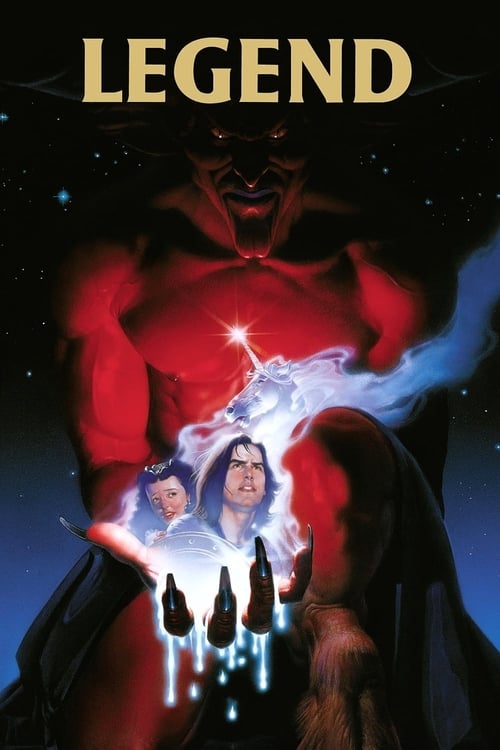
But the main villain still feels weak like before (and keeps reminding me of the horned demon character in the old Tom Cruise movie "Legend").
It was obvious that Whedon didn’t care about Justice League ’s themes any more than Ridley Scott cared about the issues of his visually astonishing Legend (1982).
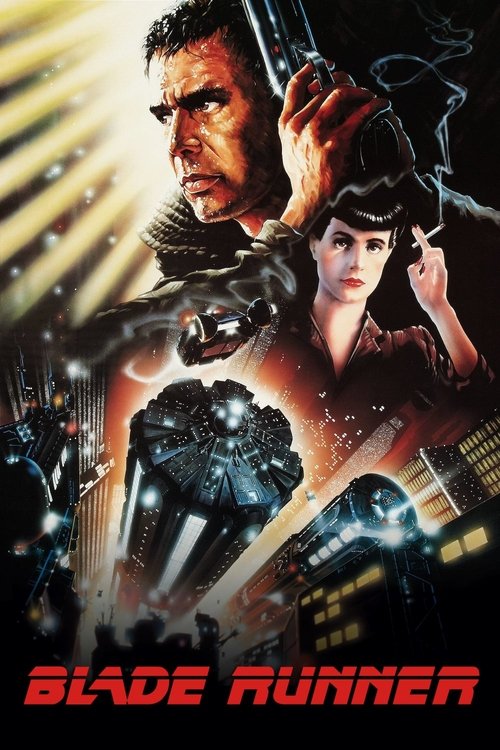
“Blade Runner,” “Brazil,” “Metropolis” and more have all had drastically different cuts made and screened that alter the story and the movies themselves.
While films such as Aliens and Terminator 2 were slightly improved by longer cuts, movies like Cowboys and Aliens and Blade Runner that felt hamstrung by their theatrical cuts later shine when restored for special editions.
Advertisement

And as much as I can’t stand Jared Leto as the Joker from Suicide Squad , his big scene at the end of the movie reminds us of what we could have had – as he delivers a take on the clown prince of crime that the fans will adore.
The 18-minute scene is most popularly received for the return and redemption of Jared Leto’s Joker (first and last seen in “Suicide Squad”).
The other major addition here is an entirely new scene, tacked on during the epilogue, which expands on Bruce Wayne’s nightmarish visions of an apocalyptic future, and offers the Dark Knight an opportunity to go face-to-face with The Joker (Jared Leto, offering an alternate take on the character he portrayed in Suicide Squad ).
Though much hyped, Ray Porter’s role as Darkseid is mostly just sequel bait but he certainly embodies the part well, and Jared Leto’s cameo as The Joker is better than his performance in Suicide Squad but absolutely useless; it doesn’t even have the meme factor of him saying “we live in a society”.
When studios clash with a director, it’s often the latter that comes out on the losing end of it (don’t bank on ever seeing director’s cuts of Rogue One: A Star Wars Story and Suicide Squad , for example), so HBO Max giving Snyder the chance to finish his Justice League movie is in equal parts surprising and groundbreaking.
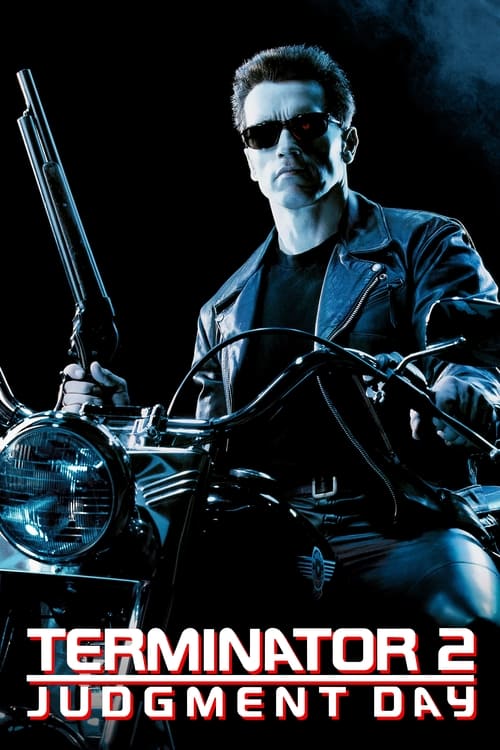
Cyborg's resentment of his scientist father (Joe Morton, aka Skynet's daddy in "Terminator 2") is built out with empathy and care, and paid off in a genuinely moving climax that offers redemption without canceling ill will.
Cyborg gets at least three times the screen time, with his father Silas (Terminator 2′s Joe Morton, forever tasked with portraying men who create dangerous robots) playing a larger role, too.
Snyder himself says Victor Stone/Cyborg is the heart and soul of this superhero team, and his tragic backstory and flawed relationship with his scientist father ( Terminator 2 ‘s Joe Morton) is, indeed, the new film’s heartbeat.
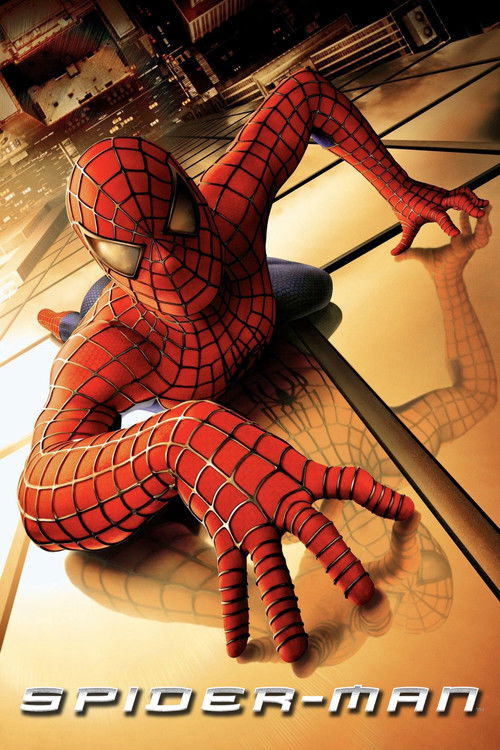
Dafoe looks like he’s having fun in his career jumping from one comic book character to the next; his Green Goblin in Sam Raimi’s Spider-Man was one of the most compelling villains of the franchise.
Pero lo más triste era comprobar cómo Batman (Ben Affleck) se relacionaba con The Flash (Ezra Miller) como Ironman lo hacía con Spiderman.
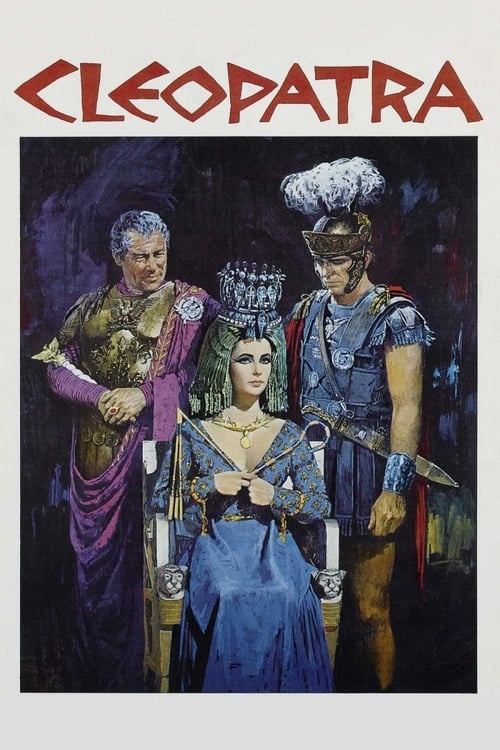
"Zack Snyder's Justice League" also happens to be four hours long, making it slightly shorter than 1963's "Cleopatra," and about an hour longer than 1982's "Gandhi."
Advertisement
The Last Temptation of Christ 's Willem Dafoe actually gets to speak extensive dialogue, unlike Kiersey Clemons, Robin Wright, and David Thewlis.
At the close of Aquaman’s introduction, an Icelandic woman inhales the scent of his discarded sweater (like the wife illicitly recalling the aroma of a soldier’s jacket in The Searchers ).