
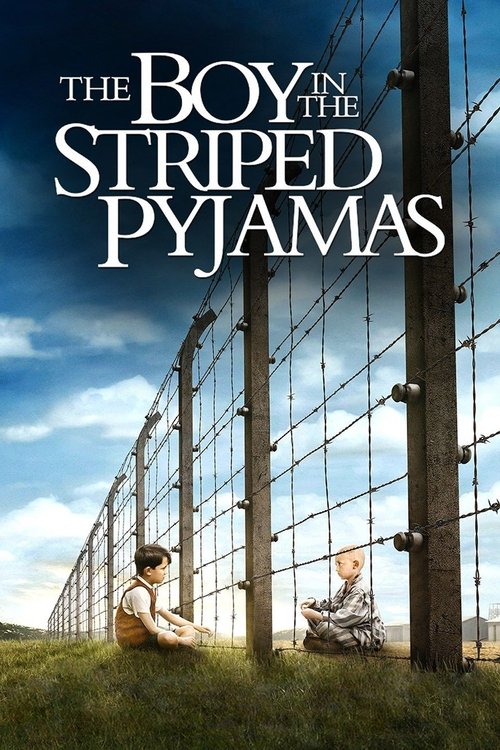
The Boy in the Striped Pyjamas (2008)
Directed by Mark Herman
When his family moves from their home in Berlin to a strange new house in Poland, young Bruno befriends Shmuel, a boy who lives on the other side of the fence where everyone seems to be wearing striped pajamas. Unaware of Shmuel's fate as a Jewish prisoner or the role his own Nazi father plays in his imprisonment, Bruno embarks on a dangerous journey inside the camp's walls.
15 connections found
View:
15 films that influenced The Boy in the Striped Pyjamas
What critics say influenced The Boy in the Striped Pyjamas


NO fictional piece can ever match the horrific reality so vividly chronicled in Resnais' Night and Fog .
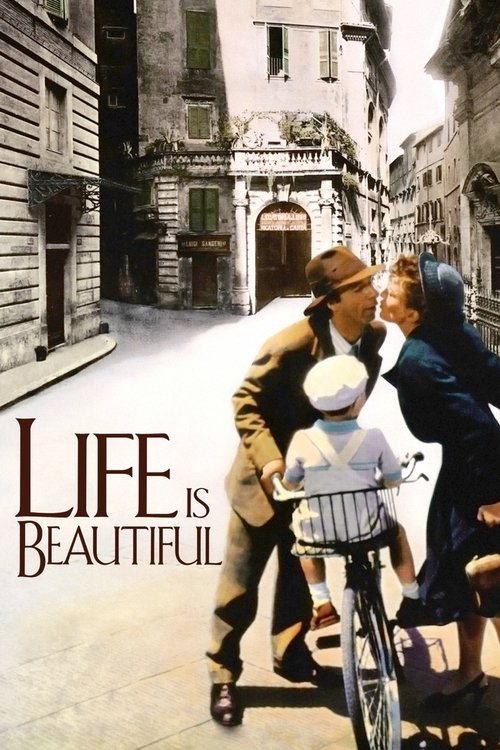
Young Bruno (Asa Butterfield) transforms troubling impressions into the games of a boy, from arms-outspread Messerschmitt fighters through leather soccer balls and knights in tales of chivalry, to a disguised search-and-find mission, his misapprehension of realities resulting in pieces of ironic, sad humor distinct from the purposeful distortions of a father shielding his son in Life Is Beautiful.
Apart from the heavier question of when it's appropriate to confront a child with the human capacity for evil on such a scale, there's also the worry that any effort to do so will devolve into mawkishness of the sort seen in films such as "Life Is Beautiful" and "Jakob the Liar."
In a German-centric twist on "Life Is Beautiful," in which a protective Jewish father convinces his young son that life in a concentration camp is just a game, Bruno's mother (Vera Farmiga) -- who becomes increasingly horrified by the lethal reality of her husband's job -- encourages her son's misinterpretation.
Though not as epic as Schindler's List, this story about the wartime experiences of two children is more haunting and moving than 1997's Life Is Beautiful and is reminiscent of 1987's Au Revoir, Les Enfants, directed by Louis Malle.
The cloying wrong-headedness of Roberto Benigni's Life is Beautiful and Robin William's Jakob The Liar, as well-meaning as they were, left audiences with survivor's guilt for sticking with them to the final credits.
Sturdy Holocaust drama focusing on childhood and innocence amidst the horror takes the multi-Oscar-winning Life Is Beautiful to more harrowing and credible extremes.
Spielberg approaches this by using a hand held camera to thrust us inside the Warsaw ghetto in Schindler's List, but the strongest Holocaust films generally use the historical period as background: The Pawnbroker; Cabaret ; Sophie's Choice ; Europa, Europa ; The Counterfeiters.
Though not as epic as Schindler's List, this story about the wartime experiences of two children is more haunting and moving than 1997's Life Is Beautiful and is reminiscent of 1987's Au Revoir, Les Enfants, directed by Louis Malle.
Taut, spare and ultimately devastating, this sincere adaptation of John Boyne's novel is Disney's Schindler's List.
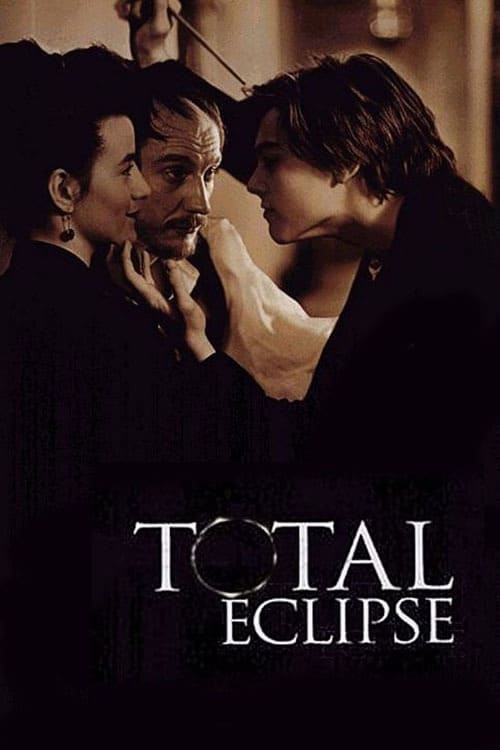
These include Bruno's father (David Thewlis from Total Eclipse ), his propaganda touting tutor (Jim Norton), and menacing Lt. Kotler (Rupert Friend).
Advertisement
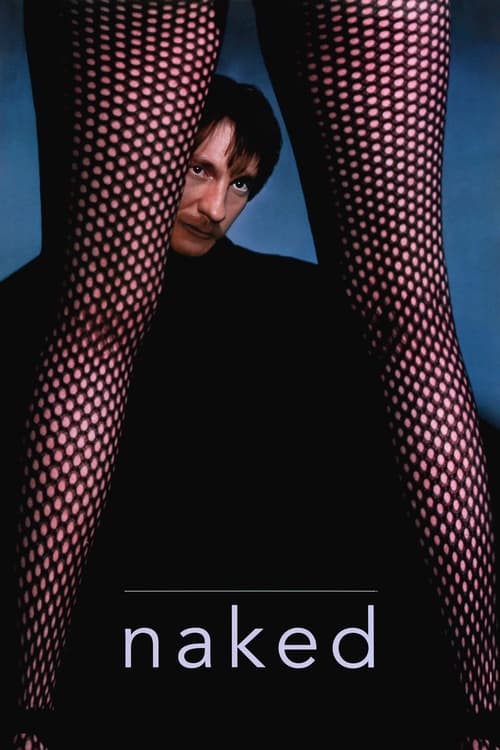
When his soldier father (David Thewlis, "Naked," "Harry Potter and the Order of the Phoenix") receives a promotion, young Bruno (Asa Butterfield, "Son of Rambow") is unhappy about leaving his friends and splendid home in Berlin.

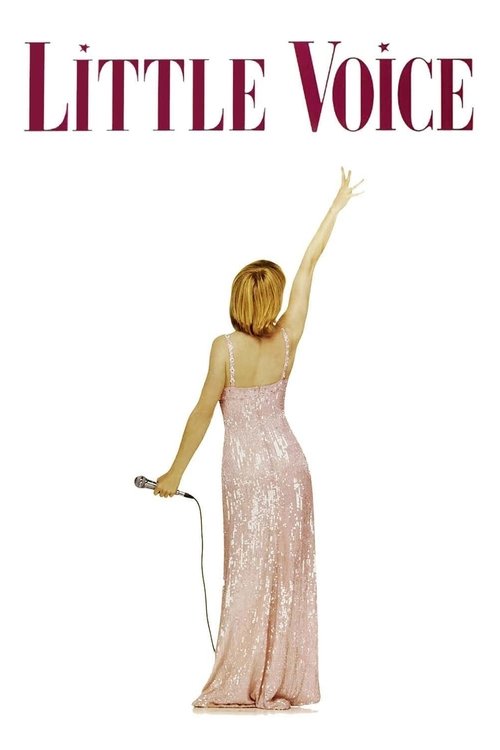
In this scene, Herman (Little Voice) does a terrific job directing Bruno through the crowd.
The film, adapted by writer-director Mark Herman (Little Voice) from the book by John Boyne, does an admirable job of encouraging us to see the story from Bruno's childlike perspective.
In this globalized age, might not director Mark Herman (Little Voice) have recruited German actors, or had a few lines of Deutsch spoken?
Directed by Mark Herman (Hope Springs, Little Voice), The Boy in the Striped Pajamas pulls off a hard-to-imagine balance between the innocence and optimism of children and the evil and darkness of modern history's greatest crime.
Director Mark Herman ("Little Voice") had a peculiar balance to strike in adapting John Boyne's children's novel telling a fictional story of the Holocaust, but he has achieved it.
Herman's most recent effort was 2003's Hope Springs, but he's remembered more for Little Voice and Brassed Off — two small films in bright moods.

What it presents as real may well be, but the adaptation by director Mark Herman ("Brassed Off," 1996) is guilty of poor judgement in structuring it for a hammer-head emotional blow.
Herman's most recent effort was 2003's Hope Springs, but he's remembered more for Little Voice and Brassed Off — two small films in bright moods.
Impeccably produced, "The Boy in the Striped Pajamas" -- written and directed by Mark Herman ("Brassed Off," "Little Voice"), a master of the obvious -- does function at times as its own grotesque self-parody.
So it's good to report that Mark Herman, the director behind such emotionally satisfying dramas as Brassed Off and Little Voice, pretty much succeeds with his transformation of Boyne's story to the big screen.
It’s a difficult balancing act for Herman (“Little Voice,” “Brassed Off”), who faces a challenge in creating a specialized mood that touches upon the horrors of humanity while remaining optimistic, attempting to linger close to Bruno’s heart.
Somewhere along the line, the film turned into a routine period drama; probably right around the point that Mark Herman (of Brassed Off and Little Voice ) was tapped to write and direct.

Mark Herman made Brassed Off, Little Voice and Hope Springs, so this film is quite a departure.
Directed by Mark Herman (Hope Springs, Little Voice), The Boy in the Striped Pajamas pulls off a hard-to-imagine balance between the innocence and optimism of children and the evil and darkness of modern history's greatest crime.
Herman's most recent effort was 2003's Hope Springs, but he's remembered more for Little Voice and Brassed Off — two small films in bright moods.
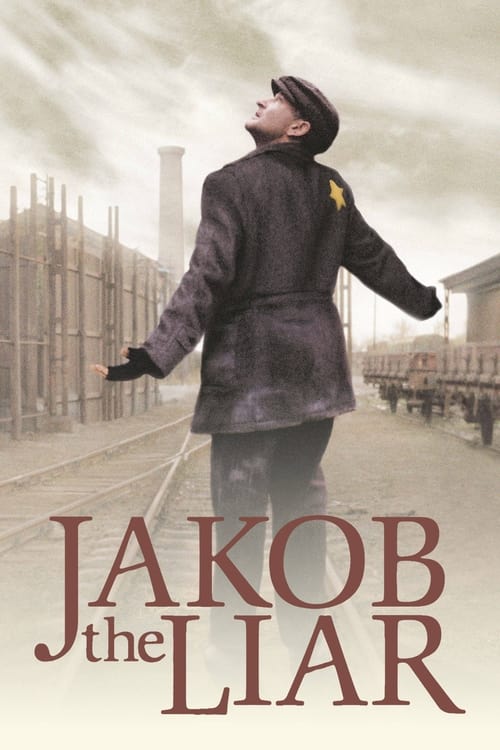
The cloying wrong-headedness of Roberto Benigni's Life is Beautiful and Robin William's Jakob The Liar, as well-meaning as they were, left audiences with survivor's guilt for sticking with them to the final credits.
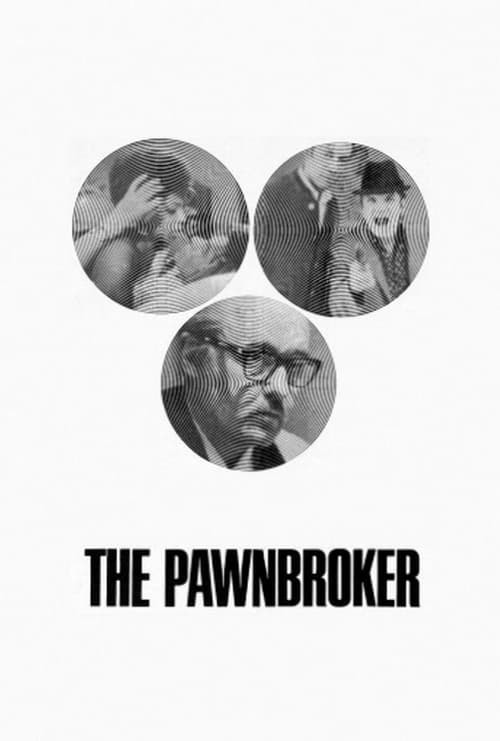
Spielberg approaches this by using a hand held camera to thrust us inside the Warsaw ghetto in Schindler's List, but the strongest Holocaust films generally use the historical period as background: The Pawnbroker; Cabaret ; Sophie's Choice ; Europa, Europa ; The Counterfeiters.
Advertisement
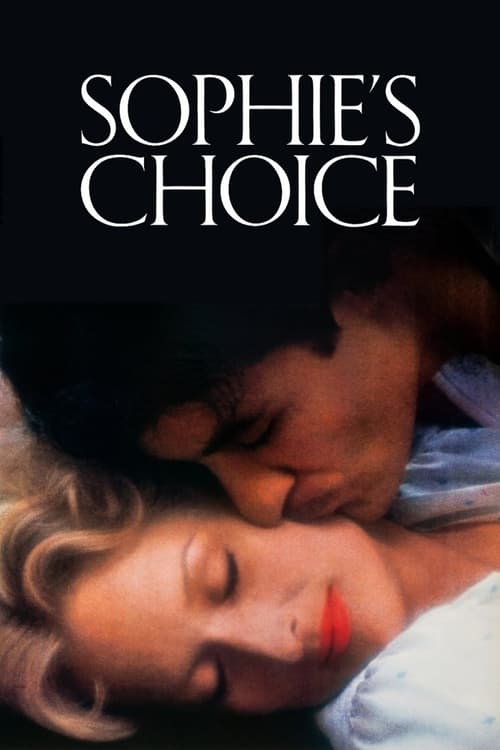
Spielberg approaches this by using a hand held camera to thrust us inside the Warsaw ghetto in Schindler's List, but the strongest Holocaust films generally use the historical period as background: The Pawnbroker; Cabaret ; Sophie's Choice ; Europa, Europa ; The Counterfeiters.
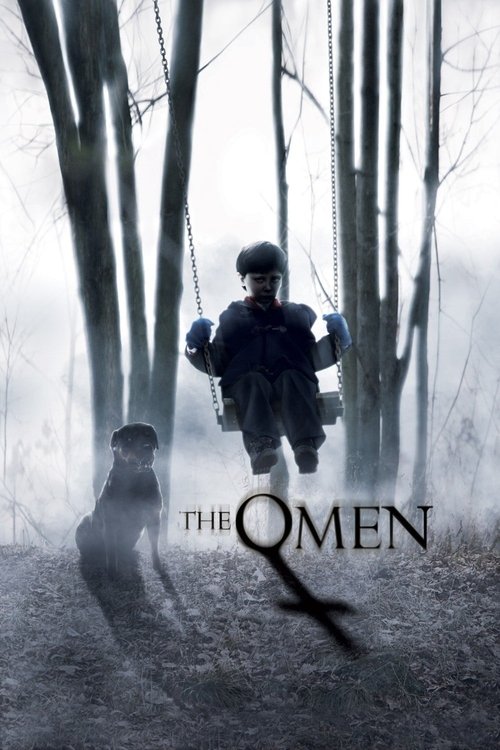
David Thewlis (2006's " The Omen ") plays Bruno's military father as stern and set in his ways, a man in desperate need of a wake-up call.