
21 Grams (2003)
Directed by Alejandro G. Iñárritu
Paul Rivers, an ailing mathematician lovelessly married to an English émigré; Christina Peck, an upper-middle-class suburban housewife and mother of two girls; and Jack Jordan, a born-again ex-con, are brought together by a terrible accident that changes their lives.
9 connections found
View:
9 connections, in both directions
What critics compared 21 Grams to



Here, as in ''Pulp Fiction'' and ''Memento,'' events are fractured and overlapped, so that even the most random catastrophe -- like, say, a hit-and-run accident that leaves a trio of innocents dead in the road -- acquires the dark aura of inevitability.
Alejandro González Iñárritu's Amores Perros was the first film in the wake of Pulp Fiction to wallow in criminal behaviour and monkey with linearity that still managed to stake its own cinematic claim (not the least of which, inaugurating the Mexican New Wave) far removed from the squatters in Tarantinoland, and if I found its fatalism terribly endearing, I realize now that I also derived a lot of pleasure from its trip-hop vibe, which served a function as the film's levity.
This technique has been used effectively in many contemporary films (Memento, Pulp Fiction) but here the cuts are so jarring, and some of the clips so brief, that the viewer ends up focussing on the pieces rather than the picture for the movie’s first 30-minutes.
By the end of the film, it feels less like a burning artistic choice (as the tricks in "Pulp Fiction" and "Memento" were) and more like an easy way for him to cover up the fact that the basic story (written by Guillermo Arriaga, who also wrote "Amores Perros") would doubtlessly come off as absurdly melodramatic if it were told straight.
Iñárritu's first feature was made under the sign of Quentin Tarantino — its giddy pop vibe and interlocking three stories were of a piece with "Pulp Fiction" — but there's something more grown-up about "21 Grams," perhaps because here the strongest stylistic influence comes courtesy of Steven Soderbergh.
His debut feature, the breathless Amores Perros, had a three-act Pulp Fiction-like structure that amplified the drama, rather than distanced it.
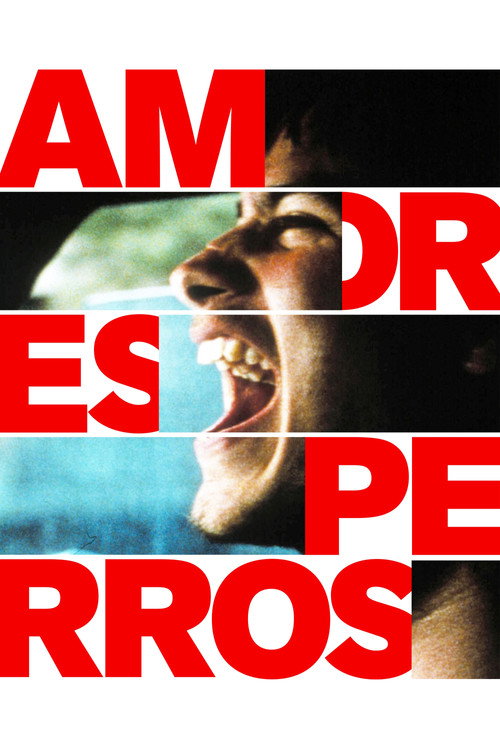
The film is by Alejandro Gonzalez Inarritu , the almost unreasonably talented Mexican filmmaker whose " Amores Perros " (2000) was an enormous success.
It's only the second film — and the first in English — for Mexican director Alejandro Gonzalez Inarritu, whose Amores Perros (2000) also was a triumph.
Director Alejandro Gonzalez Inarritu (Amores Perros) and writer Guillermo Arriaga mix the order of the scenes.
The linear progression of the hours, one after another, is routinely disrupted or derailed altogether by director Alejandro Gonzalez Inarritu and screenwriter Guillermo Arriaga (who previously collaborated on the similarly tricky "Amores Perros"), who tell their story in scattered shards that the viewer must piece together.
Iñárritu uses the same handheld camera and skewed chronology he did in Amores perros, and his style is seductive as long as the story lines remain separate and unclear.
Inarritu's follow-up to "Amores Perros" boasts the high caliber cast of Benicio Del Toro, Naomi Watts and Sean Penn.

The titular reference made by Babel, Alejandro Gonzalez Iñárritu's maddening final installment in his so-called "death trilogy" (along with Amores Perros and 21 Grams), is a grand one, though the film itself gives only passing attention to its supposed inspiration.
Director Alejandro Gonzalez Inarritu and screenwriter Guillermo Arriaga (who worked together on Amores Perros and 21 Grams) have intentionally named their new film Babel; it’s a tip-off that the failure to communicate is the story’s dominant theme.
At the helm is caliente Mexican director Alejandro González Iñárritu, whose masterful Amores Perros and spiritual 21 Grams were just as intricate, just as heavy and just as technically bold.
"Babel" is the third in a series of films - which started with Amores Perros and "21 Grams" - from the team of director Alejandro González Iñárritu and writer Guillermo Arriaga.
Working in one of the few media that resist geographic and cultural borders, Iñárritu and screenwriter Guillermo Arriaga (Amores Perros, 21 Grams) have woven together four disparate, interrelated stories amidst this overarching theme and in doing so have crafted an eloquent and electrifying depiction of mankind's increasingly fractured state, where small acts of kindness are freighted with unpredictable and often disastrous repercussions and desperate hours are never more than minutes away.
Big question: Can writer Guillermo Arriaga and director Alejandro Gonzalez Inarritu deliver a complex, chronologically jumbled film as gripping and well-acted as their last collaboration, "21 Grams"?

Oscar-winner Octavia Spencer (“The Help”) and Oscar-nominee Naomi Watts (“21 Grams”) each make their series debut in bite-size roles – Spencer as the leader of the peaceful faction Amity, Watts as Four’s estranged mother.
Advertisement

Originally known for his multi character tapestry’s ( 21 Grams , Babel ), Innaritu’s break with screenwriter Guillermo Alliaga unleashed a bolder and riskier beast of a director whose blending of the epic with the intimate resulted in cinematic experiences both unique and masterful.
Iñárritu’s follow-up to his multi-award-winning Birdman or (The Unexpected Virtue of Innocence) unfolds in an entirely different tone and setting, although The Revenant’s heartless cruelty may recall imagery from some of Iñárritu’s earlier films, such as Amores Perros and 21 Grams.
It is impeccably directed by the Oscar-winning director Alejandro González Iñárritu, a filmmaker with a flair for making imaginative, structurally complex sagas, following the somber quartet “Amores Perros,” “21 Grams,” “Babel” and “Biutiful” with last year’s best picture, “Birdman.”
After winning the Academy Award last year for Birdman , The Revenant marks the next achievement for Mexican director Alejandro González Iñárritu ( 21 Grams , Babel ).
"To get the camera from one place to another was a nightmare," acknowledged Iñárritu (whose second feature, 2003's "21 Grams," was shot in the less forbidding locale of Memphis).
Among his films like Birdman, Babel, and 21 Grams, this one comes furthest in escaping his tendency toward facile, shallow conclusions, delivered with vast self-importance.

But Campos nonetheless articulates this notion with the same leaden hand that Alejandro González Iñárritu brought to his Well Isn’t That Convenient trilogy of “Amores Perros,” “21 Grams,” and “Babel.”

Working for the first time with cinematographer Rodrigo Prieto (who shot 2003's "21 Grams" in Memphis) and as usual with editor Thelma Schoonmaker, Scorsese makes his mastery of the medium look easy; "Wolf" is filled with bravura moments that make cunning use of the widescreen frame, the depth of field and the camera's fluidity.

David O. Russell (Three Kings), Steven Soderbergh (Traffic) and Alejandro González Iñárritu (21 Grams) are all adept at the technique, but Greengrass has been the most consistent and eager—not to mention monetarily successful—hand-held enthusiast of the past decade: Bloody Sunday (2002), The Bourne Supremacy (2004), United 93 (2006), The Bourne Ultimatum (2007), The Green Zone (2010), and now Captain Phillips all share the same intense camerawork.
Advertisement

Their collaboration, which started with the exhilarating Amores Perros , diminished into didactic shtick by the time they got through 21 Grams and Babel , but Arriaga went to the well a fourth time on his own with The Burning Plain , his laughable debut feature, so perhaps it was Iñárritu’s screenwriter who was holding him back.
The film that thinking inspired him to make, a delightfully light-footed cautionary tale about the perils of selfishness and ambition, is a welcome change from meretricious bummers like 21 Grams and Babel, which attempted to improve our moral fiber by rubbing our noses in melodramatic misery.
After Amores Perros , 21 Grams , Babel and Biutiful , the effect is akin to seating yourself down for Mike Leigh’s latest and seeing Timothy Spall fire eye-lasers at a giant robot.
Lesley (Naomi Watts, "21 Grams"), nervous about her own Broadway debut, fields a suggestion - what about her significant other, Broadway bad boy Mike Shiner (Edward Norton, "The Incredible Hulk"), to replace him?
Director and co-writer Alejandro González Iñárritu is known for expansive and dour essays about human connectivity, like "21 Grams" and "Babel."
Writer/director Alejandro González Iñárritu (“Babel,” “21 Grams,” “Biutiful”) gracefully weaves these magical-realism interludes between the more grounded activity in the dressing rooms and musty halls of the St. James.