
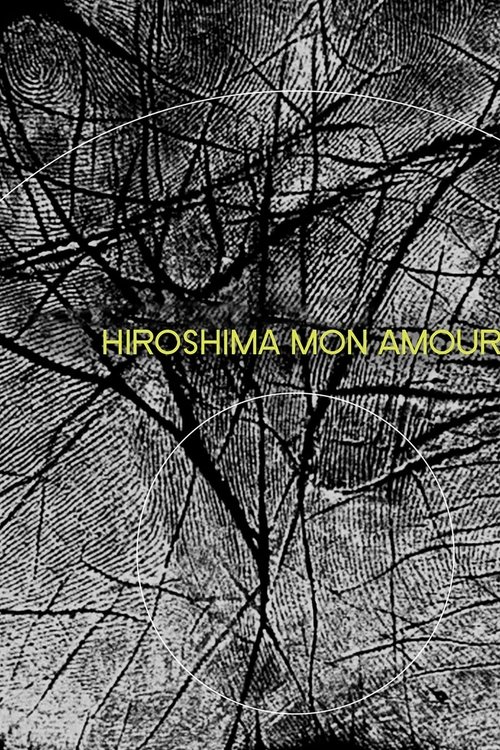
Hiroshima Mon Amour (1959)
Directed by Alain Resnais
The deep conversation between a Japanese architect and a French actress forms the basis of this celebrated French film, considered one of the vanguard productions of the French New Wave. Set in Hiroshima after the end of World War II, the couple -- lovers turned friends -- recount, over many hours, previous romances and life experiences. The two intertwine their stories about the past with pondering the devastation wrought by the atomic bomb dropped on the city.
7 connections found
View:
7 connections, in both directions
What critics compared Hiroshima Mon Amour to
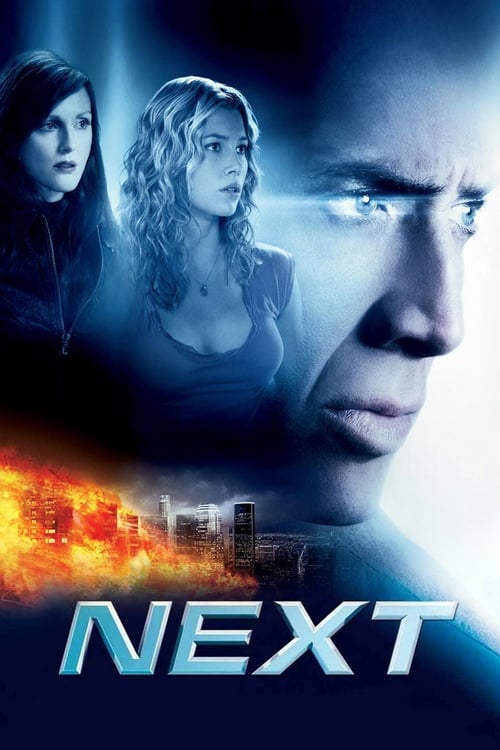


In the movie's production notes, he asserts the inspiration of such high-toned pictures as "Hiroshima mon amour" and Wong Kar-Wai's "Happy Together."
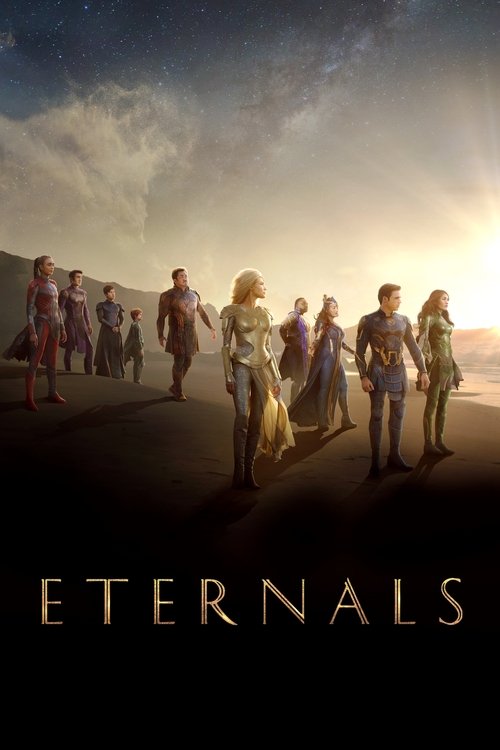
Yes, one of the foundational texts for Eternals appears to be Alain Resnais's Hiroshima mon amour , complete with its moony meditation on the nature of history and memory.
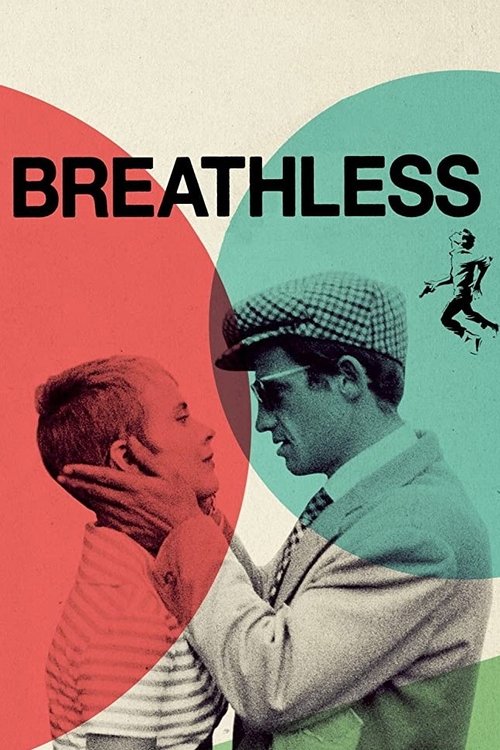
Movie posters and marquees are ubiquitous in the film: Jeff Chandler and Jack Palance in "Ten Seconds In Hell"; the recently-opened "Hiroshima Mon Amour"; and a movie theater playing a Western that Michel and Patricia use as cover when the police net closes in.

Other sources include Allen's "Manhattan" ("Frances Ha," too, is presented in black-and-white) and the romantic classics of the French New Wave (the movie borrows much of its music from Georges Delerue, known for his work on such films as "Jules and Jim" and "Hiroshima Mon Amour," and from Jean Constantin, who scored "The 400 Blows").
Advertisement
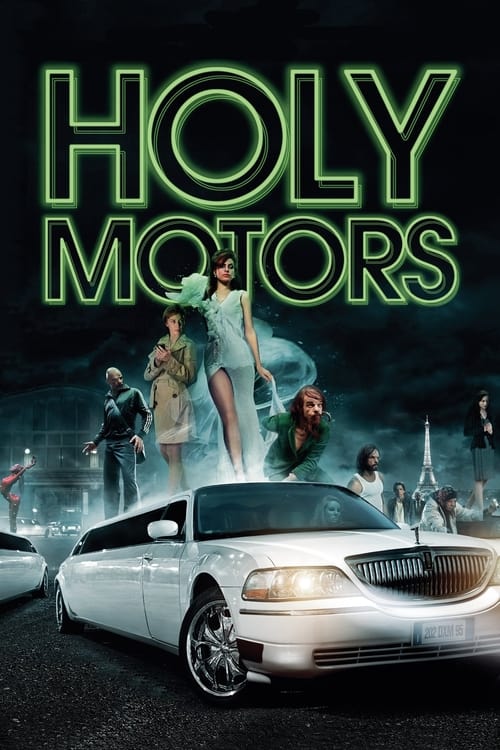
In a scene that suggests a much wordier interpretation of 2001: A Space Odyssey 's finale, a young girl says goodbye to her dying uncle, and inside an abandoned luxury hotel, Lavant and Kylie Minogue, playing ex-lovers, act out Hiroshima Mon Amour as a musical.
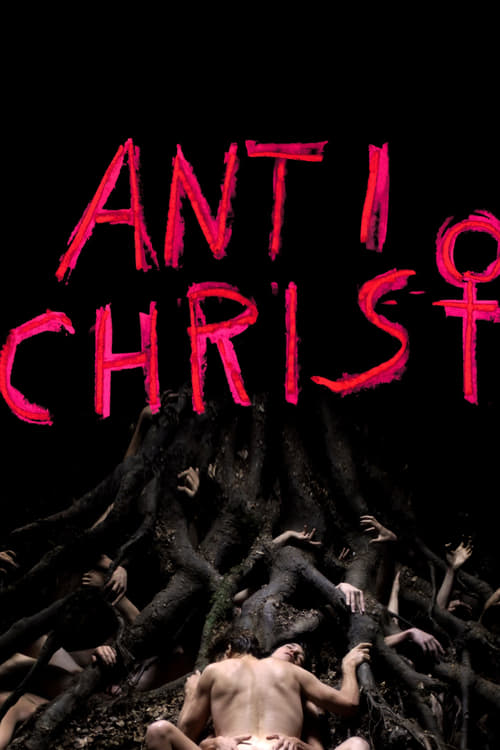
Porn and horror film violence have always shadowed art cinema, and in films as varied as Un chien andalou, Meshes of the Afternoon, Saló, Hiroshima mon amour, Persona, and Prénom Carmen, art cinema claims the power to depict the most extreme human behavior in a coherent, mediated way, incorporating but going beyond the capacity of marginal sensationalist genres.
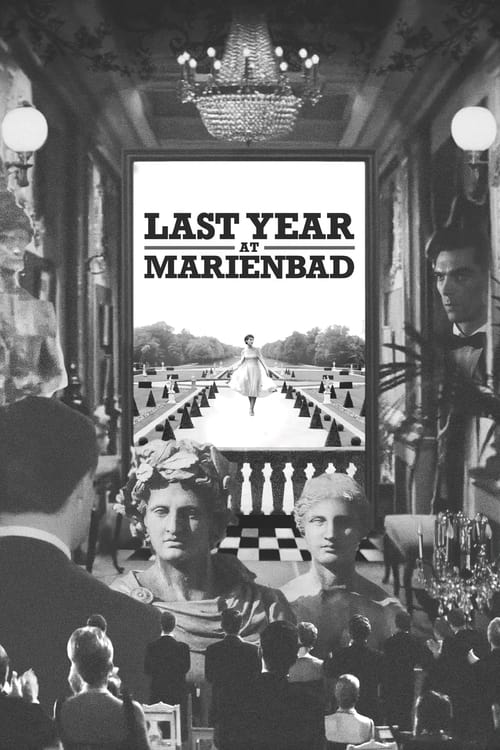
But this opening also reveals continuity with Resnais' previous, more obviously political work: the camera movements through the hall, caressing décor and artworks (and later vivifying a statue in conjunction with montage) recall the explorations of the museums in Les statues meurent aussi (Alain Resnais and Chris Marker, 1953); the play between historical presence and present absence (the narrator's voice is un-situated and disembodied; the hotel is initially empty) figured in mournful tracking shots evokes Nuit et brouillard; the disjunction between subjective memory and the reality of remembered events was also essayed in Hiroshima mon amour (1959).
Given its focus on memory and the slippery division between reality and fantasy, Last Year at Marienbad plays as a natural extension of the ideas and themes in Resnais’ first feature, Hiroshima mon amour (1959), which told the story of a French actress’s affair with a Japanese architect in the shadow of postwar Japan and was scripted by the novelist Marguerite Duras (it is often considered the starting point of the French New Wave).
A substantial moment in Resnais' salad days, Marienbad followed the director's breakthrough, Hiroshima mon amour , and preceded perhaps his most challenging work, Muriel.
The hypnotic dollies elaborate on those of Resnais's earlier Hiroshima Mon Amour; the montage effortlessly synthesizes past and present, flashback and flash-forward, svelte shock cuts and shock match cuts.
French director Alain Resnais's ("Hiroshima Mon Amour") presents a puzzling avant-garde surrealist film that is never solved.