
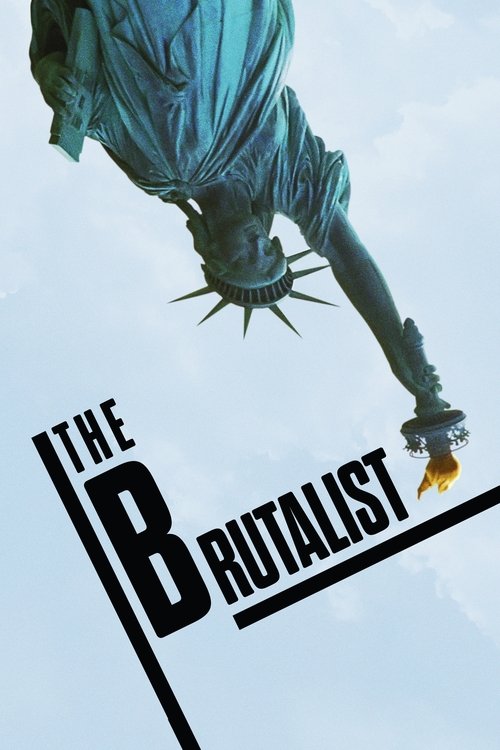
The Brutalist (2024)
Directed by Brady Corbet
When an innovative modern architect flees post-war Europe, he is given the opportunity to rebuild his legacy. Set during the dawn of the modern United States (in Pennsylvania), his wife joins him, and their lives are forever changed by a demanding, wealthy patron.
51 connections found
View:
51 films that influenced The Brutalist
What critics say influenced The Brutalist
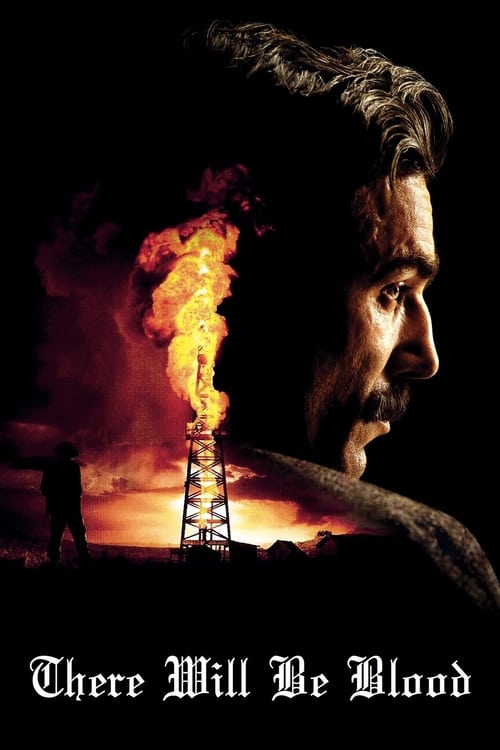


But much like There Will Be Blood before it, Corbet has constructed a visionary film deconstructing one of the many myths America loves to tell about itself: the story of boundless opportunity, of a country where art, talent, and hard work can thrive unfettered by class or background.
Writer/director Brady Corbet’s third film has been compared by many to The Godfather (1972) and There Will Be Blood (2007) — two films that tackle the capitalist pursuit of power in the first half of the “American Century,” but with a comparative lightness of touch, with the former leaning into its genre trappings and the latter being a dark comedy.
Pero como otros nuevos clásicos modernos que lograron emular aunque sea un ápice de la potencia y magnitud de esos hitos del pasado, como «There Will Be Blood» o «No Country for Old Men», decide personificar esa salvaje voracidad sin fin en un personaje con carisma suficiente…
Corbet’s American epic feels like a response to films such as Citizen Kane, There Will Be Blood, or most recently, Christopher Nolan’s Oppenheimer.
…it lands somewhere between Paul Anderson’s There Will be Blood and Ayn Rand’s The Fountainhead in terms of pretention, philosophical self-importance, and a welcome sympathy for the immigrant experience of America…
It openly invites comparisons to past, iconic American epics like The Godfather, Heaven’s Gate, The Master, and There Will Be Blood, despite being made for considerably less money than all of those movies.
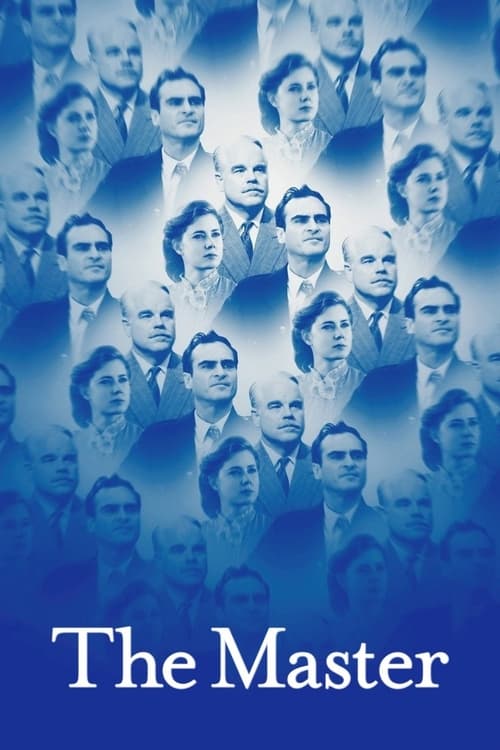
…than homages to the more artificial works of Stanley Kubrick and Paul Thomas Anderson like Barry Lyndon (1975) and The Master (2012)…
In many ways, this is a film which we would have expected from Paul Thomas Anderson, particularly after his 2012 title The Master.
There is a debt owed here to The Master and There Will Be Blood, but Corbet’s reach is no less grandiose…
A grandiose epic in the vein of The Master and The Godfather, The Brutalist asks us to follow an immigrant story over decades.
The influence of Paul Thomas Anderson’s weightiest dramas (in particular, The Master and There Will Be Blood) hover like a specter over Corbet’s storytelling craft–thematic complexity, character depth, narrative scope, adherence to music of the time, earned long takes, crucial scenes closing without closure, and dramatic dick play, for example.
Jones, who has already and regrettably been pounced upon by some critics as an inferior substitute to Corbet’s original choice of Marion Cotillard, matches her on-screen husband nearly beat for beat, especially during a pivotal bedroom scene that generously evokes memories of Paul Thomas Anderson’s The Master. (P.T.A. fans will need to give themselves a hand when they spot it.)
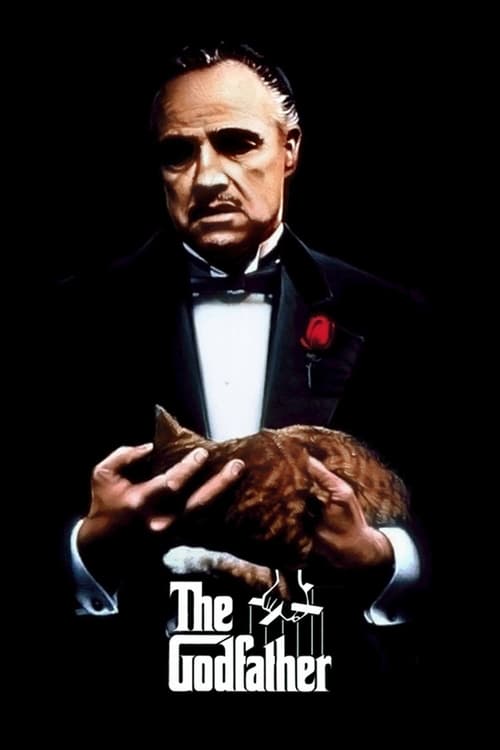
Writer/director Brady Corbet’s third film has been compared by many to The Godfather (1972) and There Will Be Blood (2007) — two films that tackle the capitalist pursuit of power in the first half of the “American Century,” but with a comparative lightness of touch, with the former leaning into its genre trappings and the latter being a dark comedy.
…like other great films about the business of America being business (CITIZEN KANE, EXECUTIVE SUITE, THE GODFATHER) this is a harsh critique of bullying America and its unrelenting goal to lord over others.
Aping “The Godfather,” Corbet swaps catechism for Yom Kippur…
A grandiose epic in the vein of The Master and The Godfather, The Brutalist asks us to follow an immigrant story over decades.
Comparisons to The Godfather have abounded since its Venice International Film Festival premiere…
Corbet's sprawling, nearly four-hour epic is cut from the same cloth (or perhaps I should say chiseled from the same stone) as great masterpieces like "Citizen Kane," "The Godfather," and more recently, "There Will Be Blood."
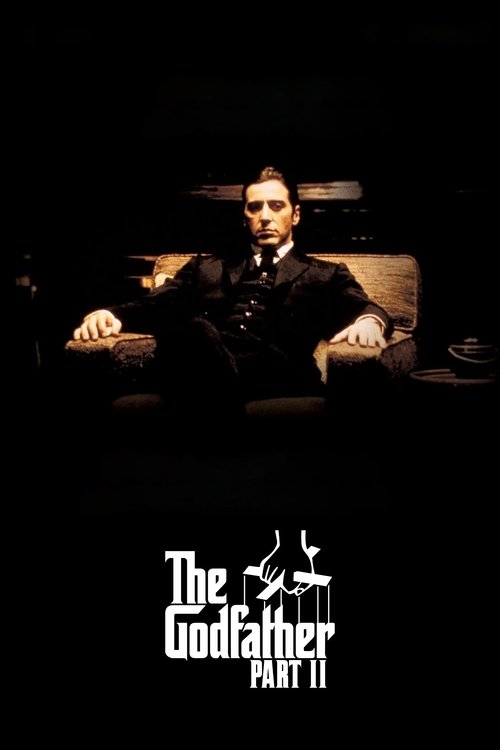
…though as a vast immigrant saga, a more fitting analogy might be The Godfather Part II…
Longer than either Lawrence of Arabia or The Godfather Part II…
This sequence, which I guess is a reference to the Ellis Island arrival scene in The Godfather Part II (1974), is shot with a crazily spinning camera, like a sped-up outtake from La Région centrale (1971).

But while Francis Ford Coppola’s “Megalopolis” was an extravagant mess of half-baked ideas, Corbet’s film is a coherent statement of its themes—perhaps a bit too tidily constructed, in fact.
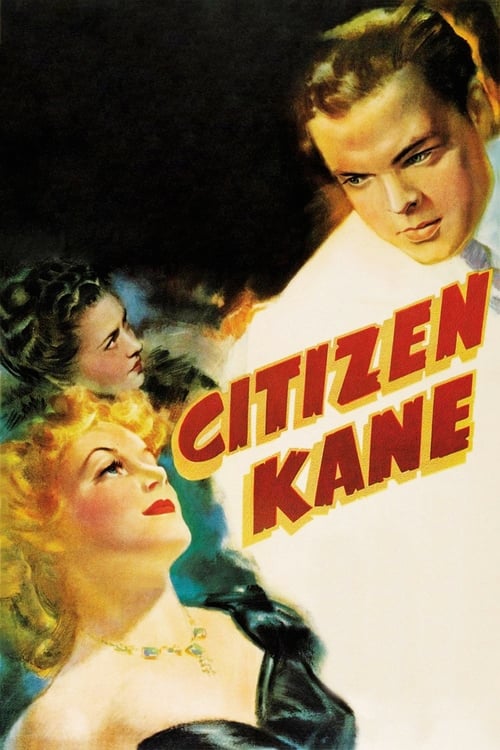
Embracing a style that evokes the cinema of Paul Thomas Anderson and Orson Welles…
…bajando el factor «Scarface» para alejarlo un poco de «El Padrino» o incluso «Ciudadano Kane». Como en esta última, «El Brutalista» entiende que la tensión dramática siempre ocurre debido al nivel de capitalismo en sangre…
Corbet’s American epic feels like a response to films such as Citizen Kane, There Will Be Blood, or most recently, Christopher Nolan’s Oppenheimer.
…like other great films about the business of America being business (CITIZEN KANE, EXECUTIVE SUITE, THE GODFATHER) this is a harsh critique of bullying America and its unrelenting goal to lord over others.
There are alluring shades here of Citizen Kane (think of Kane’s Xanadu)…
Corbet's sprawling, nearly four-hour epic is cut from the same cloth (or perhaps I should say chiseled from the same stone) as great masterpieces like "Citizen Kane," "The Godfather," and more recently, "There Will Be Blood."

Much like last year’s eventual winner, Oppenheimer, the film feels like a throwback to the films we once had on the big screen.
Corbet’s American epic feels like a response to films such as Citizen Kane, There Will Be Blood, or most recently, Christopher Nolan’s Oppenheimer.
Think “There Will Be Blood” and “Oppenheimer” and you’ll get the idea.
Last year’s Oscar-nominated historical dramas Oppenheimer and Killers of the Flower Moon cost about $100 million and $200 million, respectively.
Since the film is more three and half hours long, it is screened with an intermission. It becomes another award-winning long film after Chris Nolan’s Oppenheimer.
Much like last year’s eventual winner, Oppenheimer, the film feels like a throwback to the films we once had on the big screen. Where once, character-driven stories were the big cinematic events.

…with nods to Michelangelo and an ashen grey landscape shot like something from 2001: A Space Odyssey or Christopher Nolan’s Interstellar…
Advertisement
Think of films such as Lawrence of Arabia, 2001: A Space Odyssey, Ben Hur, Gone with the Wind, and many more.
Think of films such as Lawrence of Arabia, 2001: A Space Odyssey, Ben Hur, Gone with the Wind, and many more. Grand films that feel made for the big screen, that seem to invoke the very voice of cinema.
When watching classic films like Citizen Kane, Lawrence of Arabia, or even a modern gem like There Will Be Blood or Oppenheimer, grand epics that focus on the accomplishments of great men with gargantuan ambitions, it’s easy to think, “They rarely make movies like this nowadays.”
Longer than either Lawrence of Arabia or The Godfather Part II…
Think of films such as Lawrence of Arabia, 2001: A Space Odyssey, Ben Hur, Gone with the Wind, and many more.
…with nods to Michelangelo and an ashen grey landscape shot like something from 2001: A Space Odyssey or Christopher Nolan’s Interstellar…
Think of films such as Lawrence of Arabia, 2001: A Space Odyssey, Ben Hur, Gone with the Wind, and many more. Grand films that feel made for the big screen, that seem to invoke the very voice of cinema.
…than homages to the more artificial works of Stanley Kubrick and Paul Thomas Anderson like Barry Lyndon (1975) and The Master (2012)…
It openly invites comparisons to past, iconic American epics like The Godfather, Heaven’s Gate, The Master, and There Will Be Blood, despite being made for considerably less money than all of those movies.
The Brutalist promises the kind of grand Hollywood epic, and old-school cinematic hubris, that more or less went away 40 years ago with Micheal Cimino’s Heaven’s Gate…
The Brutalist promises the kind of grand Hollywood epic, and old-school cinematic hubris, that more or less went away 40 years ago with Micheal Cimino’s Heaven’s Gate and Sergio Leone’s Once Upon A Time In America.

Laszlo crawls from the belly of a boat with the camera chaotically following, similar to the visual scheme of Son of Saul (2015).
Corbet makes this clear right from the start, opening his tale of a Jewish-Hungarian Holocaust survivor with a direct visual link to another film of that type, “Son of Saul.” The shaky camera recreates the exact aesthetic approach laid out by László Nemes as it follows a man through cramped quarters, shooting from behind with the narrowest possible depth of field as Yiddish and Hungarian murmurs overtake the soundscape. But where “Son of Saul” started in the depths of hell and only burrowed further down, Corbet’s visual lift decisively breaks when our guide emerges from the hull of a boat to the sight of Lady Liberty.
A scene of chaos may make one think of the beginning of László Nemes’s Son Of Saul, but instead of the gates of hell, it is Lady Liberty, albeit in topsy-turvy rotation, that announces the arrival of once famous Hungarian architect László Tóth (Adrien Brody) on Ellis Island, the entryway to the land of the free.
The film begins with an intense flurry of barely readable single-take action (one suspects a tip of the hat to the radical visual style of Son Of Saul director Laszlo Nemes)…
Advertisement
Reportedly the first American film fully produced in VistaVision since One-Eyed Jacks in 1961, it screens in its Venice Film Festival premiere in 70mm, a giant canvas amply justified by the narrative’s variegated textures.
Shot in VistaVision – the first US film in this format since 1961’s Marlon Brando-starrer One-Eyed Jacks – and screening in its Venice premiere in 70mm, The Brutalist is sumptuous in its stylistic execution, revealing Corbet as an actor-turned-director who can rise to the challenge of his ambitions.
…the first American film to use the wide-screen format since Marlon Brando’s One-Eyed Jacks, in 1961…

Toth is played by Adrien Brody, with significantly more wear and character in his face than the last holocaust picture, The Pianist, the one did with Roman Polanski, winning both of them Oscars.
It recalls his work in Polanski’s The Pianist, and his engrossing performance as a man who is perverted by the company he keeps, becoming a creator who “worships only at the altar of himself”, is matched by Felicity Jones’ turn as Erzsébet in "Part 2: The Hard Core of Beauty."
Brody – his gaunt perma-angst suggests a revved-up version of his character in The Pianist – never quite makes Toth either likeable or, more importantly, distinctive a character.
Brody, who won his Academy Award for portraying a Holocaust survivor in Roman Polanski’s The Pianist (2002), is equally anguished here, impressively speaking Hungarian and accented English.
Adrien Brody delivers an all-timer of a performance that outdoes even his Oscar-winning turn in The Pianist…
In his greatest performance since The Pianist, Brody captures László as a sharp, if somewhat arrogant, visionary caught between his grand ambitions and his declining mental health.