
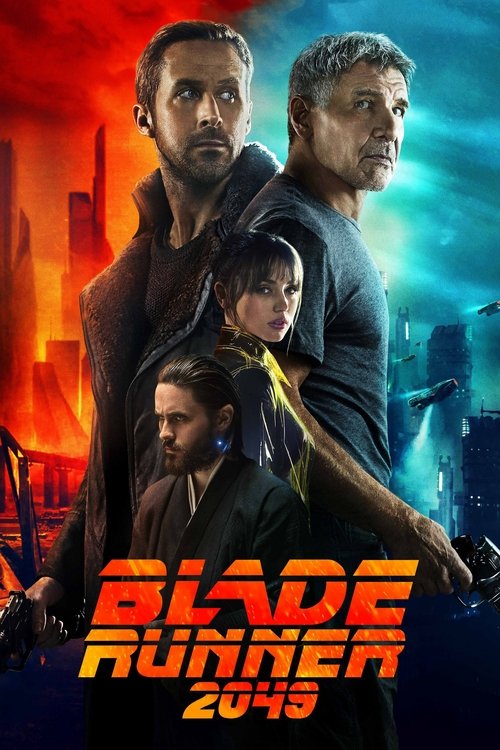
Blade Runner 2049 (2017)
Directed by Denis Villeneuve
Thirty years after the events of the first film, a new blade runner, LAPD Officer K, unearths a long-buried secret that has the potential to plunge what's left of society into chaos. K's discovery leads him on a quest to find Rick Deckard, a former LAPD blade runner who has been missing for 30 years.
46 connections found
View:
46 films that influenced Blade Runner 2049
What critics say influenced Blade Runner 2049
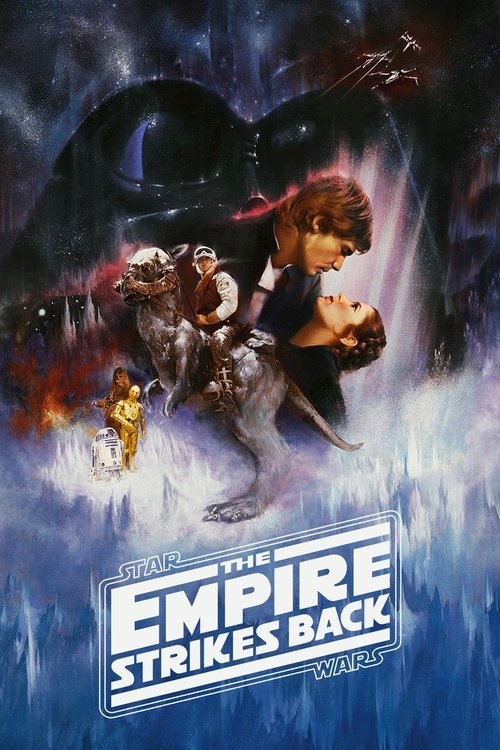


If one was to compare this to the Star Wars franchise, it’s more like The Empire Strikes Back , which took chances, than The Force Awakens , which reworked previous themes and ideas.
But I confess, I wanted the sequel to be a match for the original, the way “The Godfather, Part II” and “Empire Strikes Back” were.
Sequels that do this well become almost mythical: “The Godfather Part II,” “Star Trek II,” “Toy Story 2,” the almighty “Empire Strikes Back.”
The Empire Strikes Back, Terminator 2: Judgment Day and Aliens most regularly appear among the best examples, but Blade Runner 2049 may over time join their ranks.
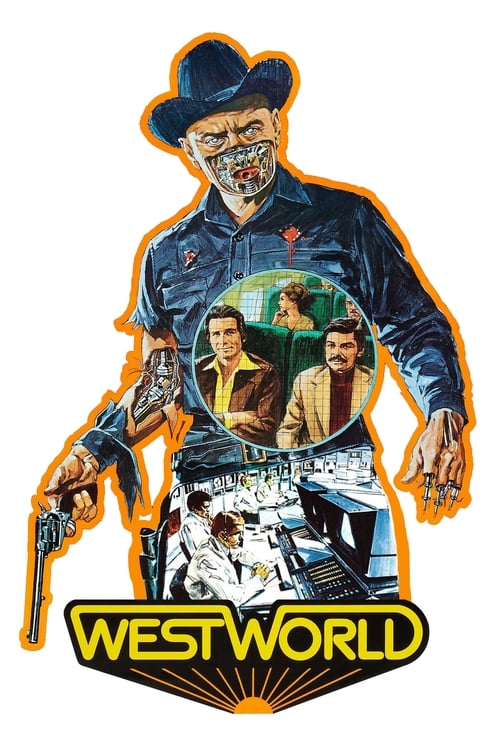
If Blade Runner was interested in who can be truly considered human, and how that’s linked to our ability as a species to feel empathy for others, Blade Runner 2049 is more interested in the question of freedom, in a manner that recalls much recent blockbuster entertainment from Twin Peaks: The Return and Westworld to Alien: Covenant and even The Good Place.
Our current moment is that of Westworld on TV and Her and Ex Machina at the multiplex.
Again, it’s impossible to talk about specifics, but I will say that while K is working through many of the same questions introduced in the original–the same questions at the heart of Westworld or Ex-Machina or any brilliant examination of artificial intelligence–2049‘s exploration hit me in a visceral way, not necessarily harder but definitely different from Blade Runner.
(The movie shares a strong DNA with HBO’s Westworld in this regard.)
— was hashed out more organically in the first film and has been parsed to death in movies and TV shows like “AI: Artificial Intelligence,” “Her,” “Westworld,” and “Humans.”
And in much the way that HBO's "Westworld" brought fresh considerations to Michael Crichton's movie, this 35-years-later sequel introduces ideas and concerns about renegade robots and artificial intelligence that feel very much suited to where we are now.
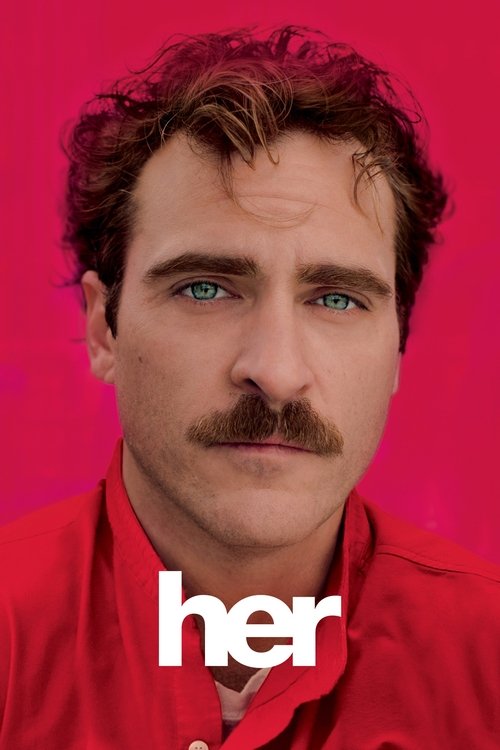
It only recalls a similar scene in Spike Jonze’s Her , which covered this movie’s themes more powerfully.
It’s the movie’s most potentially poignant idea—the robot and the hologram, acting out a facsimile of domestic bliss—and it leads to scenes, like a strange act of consummation, that seem as indebted to Spike Jonze’s aching sci-fi daydream Her as to its own iconic inspiration.
K’s girlfriend Joi (Ana de Armas) recalls Spike Jonze’s 2013 film Her, in which a human falls in love with his computer’s new operating system.
K himself has a holographic girlfriend (think Her ) named Joi (Ana de Armas) who feels and emotes, and is easily the most human of any character in the film.
Here, Ford plays the character as an even more cynical, embittered individual.
There are no new ideas here, poignancy achieved by rehashing moments of the original film with dollops applied from Spielberg's "A.I." and Spike Jonze's "Her."
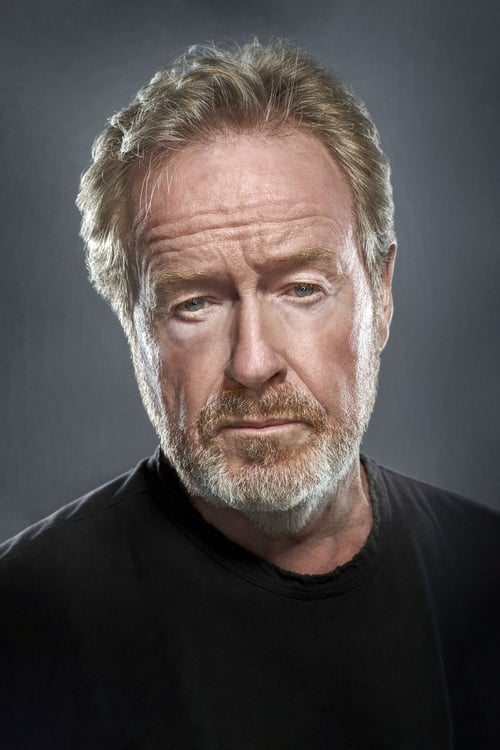
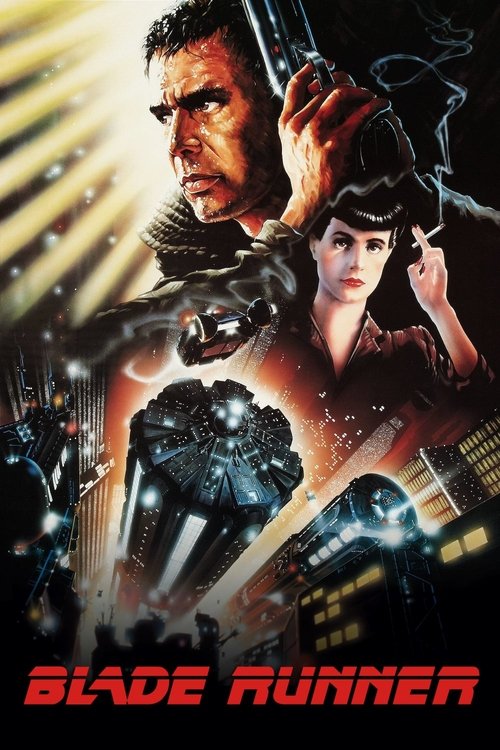
There are subtle stylistic echoes and references to the first movie throughout but this reactivation of Blade Runner is no JJ Abrams fan boy exercise; Sicario director Denis Villeneuve is the king of moral ambivalence and he is also very much his own man.
Most fans of Ridley Scott’s 1982 classic, “Blade Runner,” will approach the sequel, “Blade Runner 2049,” with a mix of high hopes and dread.
Ryan Gosling and Harrison Ford, who reprises the role of Rick Deckard from the 1982 "Blade Runner."
Wright, an icy, steely actress seemingly born for the world of "Blade Runner," is speaking to her replicant detective whose name is his serial number: KDC-3-7 — or "K," for short ( Ryan Gosling ).
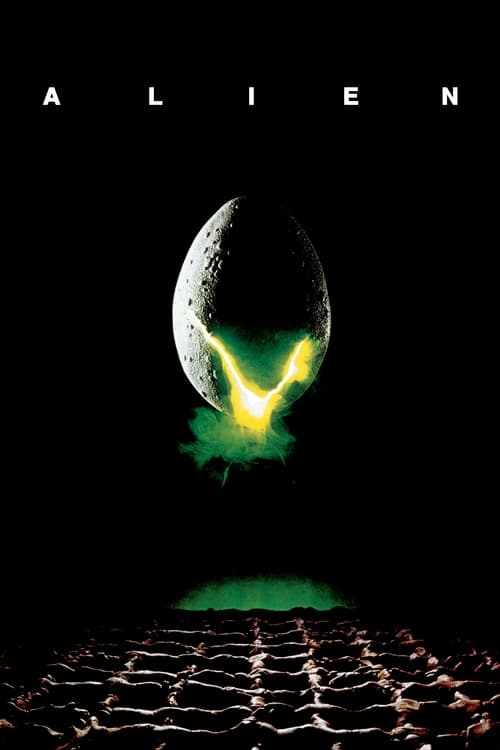
Like Alien and countless other Scott films, Blade Runner is a marvel of production design.
After seeing what Scott has done to the “Alien” franchise, I have to admit I was quite relieved to see that he would not be helming this sequel but rather handing over the reins to a talented, younger director Denis Villeneuve.
Both are movies whose cult reputations are richly deserved, whether or not they are as formally accomplished and structurally taut as, say, Scott’s 1979 outer-space horror classic Alien .
Ridley Scott didn’t design the emotional, yet dispassionate “Blade Runner 2049,” but considering its reflective consideration of evolution, master, slaves, and creators — notions explored in his recent “Alien” prequels — the fundamental ideas find the legendary filmmaker’s DNA everywhere.
Scott's Blade Runner is ludicrously overstuffed with visual stimulation, suggesting a pre-gentrified New York City that's been imprisoned in the bowels of the sexualized spaceship from the filmmaker's earlier Alien , with Asian and French aristocratic bric-a-brac thrown in for kicks.

It’s a largely humorless picture, with Gosling doing the hard-boiled thing in a mechanical minor key, such as when K runs into a hooker (Mackenzie Davis of “The Martian”).
The dusty orange remnants of Las Vegas, meanwhile, Mars in The Martian.
Advertisement


Blade Runner 2049 is not unlike George Miller’s Mad Max: Fury Road, a 2015 sequel for the ages that spectacularly reimagined and redefined the post-nuclear wasteland Miller forged decades ago with Mad Max and Road Warrior.
This new one moves around: from a basically unchanged L.A.—cold and dark as ever, just with pushier holographic advertising—to a junkyard Mad Max orphanage, a temple of robotic creation, and a fallen city, orange with radiation.

Not since the great Mad Max: Fury Road has a game-changing conceptual vision landed on the big screen so fully and forcefully realised.
Blade Runner 2049 is not unlike George Miller’s Mad Max: Fury Road, a 2015 sequel for the ages that spectacularly reimagined and redefined the post-nuclear wasteland Miller forged decades ago with Mad Max and Road Warrior.
With any luck, Blade Runner 2049 will develop into the Mad Max: Fury Road of the upcoming awards season.
Like “Mad Max: Fury Road,” it is a film that takes all of the elements that made its predecessor into a cult sensation and transposes them into a staggeringly ambitious and epic-sized work that expands upon those ideas in intelligent and intriguing ways while at the same time moving in new and interesting ways instead of attempting to simply service the fan base by offering retreads of what worked before.
In that sense, it is much like "Mad Max: Fury Road" and "Star Wars: The Force Awakens."

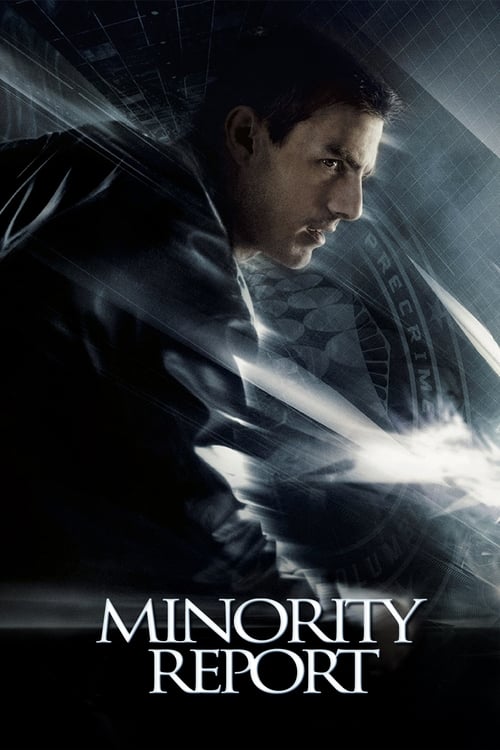
The production design reminded me of Steven Spielberg’s 2002 gem Minority Report , another film based on a Philip K. Dick story.
That includes “The Terminator,” “The Fifth Element,” “The Matrix,” “Ghost in the Shell,” “Minority Report,” Billy Idol’s “Cyberpunk” album and the Spice Girls’ video for “Spice Up Your Life.” Basically, anything that took on the look of neon-lit neo-Tokyo owes a debt to Ridley Scott’s original.
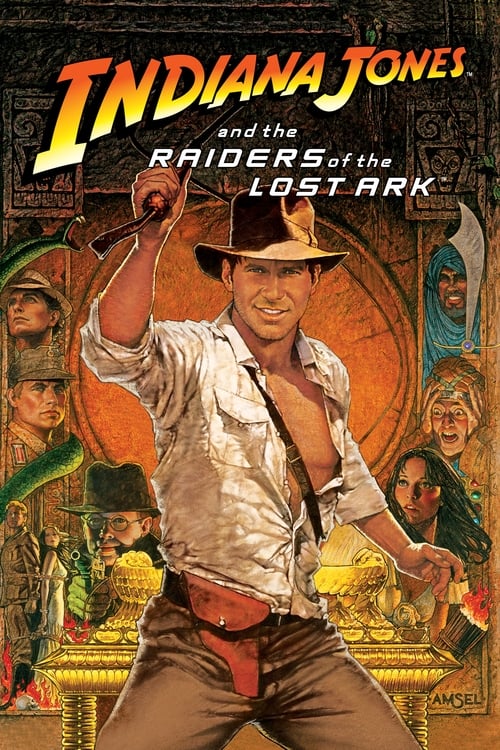
In the original, Harrison Ford, fresh off his turn as a leading man/action hero in “Raiders of the Lost Ark,” took on ex-police officer Rick Deckard, the moody state sponsored killer of rogue replicants.
He has a pleasing rapport with Ford, who delivers the film’s second joke as casually as when he dispatched a swordsman with a cavalier gunshot in Raiders of the Lost Ark. Interrupting a pointless brawl with K, he says: “We could keep at this or we could get a drink.”

As with the original film, Greek composer Vangelis is the real star here—his keening keyboard themes have been acid-washed by today’s re-scorers, Benjamin Wallfisch and Hans Zimmer, yet the Chariots of Fire wizard’s aural signature echoes through these urban canyons like a welcoming beacon.
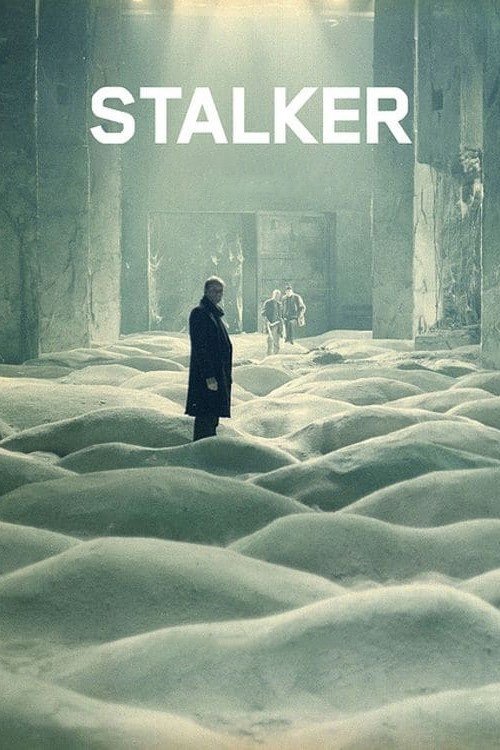
In fact, at 2 hours and 44 minutes, “ Blade Runner 2049 ” clocks in at three minutes longer than the austere Russian auteur’s “Stalker.”
Much of cinema’s greatest sci-fi leans heavily on visuals for its storytelling, of course — Tarkovsky’s Stalker, Kubrick’s 2001: A Space Odyssey, Blade Runner itself.
El espectador avezado me entenderá cuando diga que estamos más cerca de Stalker (1979) de Andrei Tarkovski o de Lemmy contra Alphaville (1965) de Jean-Luc Godard que de cualquier otra distopía fantástica contemporánea -Rupert Sanders se tiene que estar dando cabezazos contra la pared-.
Advertisement

Considerably bulked up since last year’s “La La Land,” the naturally charismatic Gosling is back in the somewhat off-putting zero-emotion mode of “Drive” and “Only God Forgives,” channeling the nihilistic cool Alain Delon demonstrated in hit-man masterpiece “Le Samouraï” to create a character who’s every bit as cool, and twice as inscrutable.
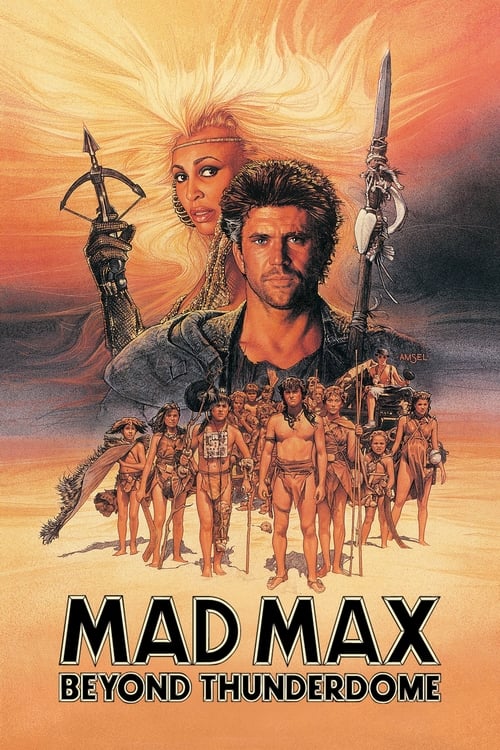
K meets a tribe of child slaves, who paw him like the lost children from Mad Max Beyond Thunderdome, and an underground replicant group that appears just long enough to recall similar rebels in I, Robot and the Channel 4 series Humans.