
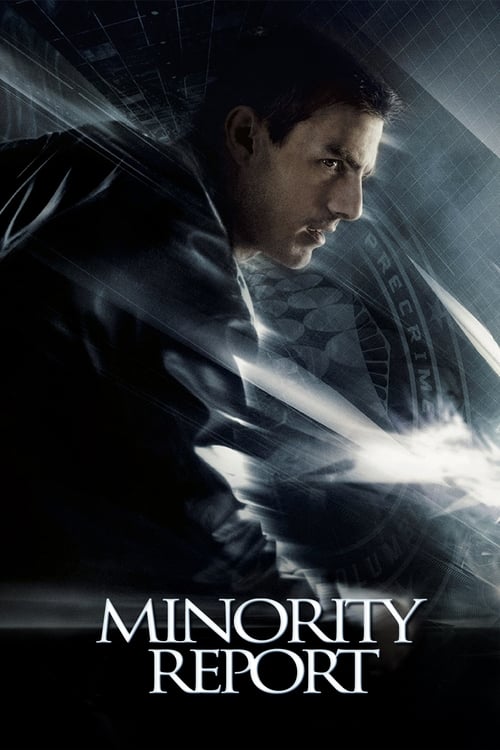
Minority Report (2002)
Directed by Steven Spielberg
John Anderton is a top 'Precrime' cop in the late-21st century, when technology can predict crimes before they're committed. But Anderton becomes the quarry when another investigator targets him for a murder charge.
5 connections found
View:
5 films that influenced Minority Report
What critics say influenced Minority Report



While many aspects of Ghost in the Shell will be familiar to Americans from the likes of Steven Spielberg’s Artificial Intelligence: A.I. and Minority Report , James Cameron’s Avatar and above all The Matrix , that’s a tribute to the massive cultural influence of Ghost in the Shell .
Ghost in the Shell is a stunning film to look at, taking that cyberpunk aesthetic to new heights with nods to the likes of Blade Runner , Minority Report and (or course) the anime original.
If you’re going to adapt a sci-fi thriller, the novels of Philip K. Dick are a good place to start, as evidenced by the success of both Blade Runner and Total Recall.
"Minority Report" is a dark and twisted science-fiction thriller, adapted by Scott Frank and Jon Cohen from a short story by Philip K. Dick, whose work also inspired "Blade Runner" and "Total Recall", the makers of the latter having even considered making a sequel out of the same story which became this film.
Basado en el cuento escrito por Philip K. Dick (autor de verdadero culto entre cuyas obras se encuentran Blade Runner y Total Recall), la historia está ubicada en el año 2054, en la ciudad de Washington, D. C., donde el crimen ha sido eliminado desde hace varios años gracias a un controvertido pero efectivo programa auspiciado por el relativamente nuevo Departamento de Pre-crimen.
Just as Paul Verhoeven adapted a futuristic short story by Philip K. Dick when he directed the masterful "Total Recall", Spielberg picks up another short tale by the same writer for "Minority Report", with screenplay credit going to Scott Frank ("Get Shorty", "Out of Sight").
The trailers for "Minority Report" lead you to think that this sci-fi actioner, based on the short story by Philip K. Dick (who provided the inspiration for such films as "Blade Runner" and "Total Recall"), is about a crime fighting system that goes awry for its chief cop, Anderton, and he must fight to exonerate himself.
That's what Steven Spielberg does in "Minority Report," based on a story by Philip K. Dick, the late science-fiction guru whose notions inspired such popular movies as "Blade Runner" and "Total Recall."
Devised by retired law enforcement officer and elder statesman Lamar Burgess (von Sydow), the system uses the talents of three people with exceptional psychic abilities who are kept in a constant state of dream sleep by a combination of mind-numbing drugs, partial immersion in a huge sensory-deprivation tank, and electronic "halos" attached to their heads (which basically give them the Jack Nicholson treatment from One Flew Over The Cuckoo's Nest).
Seasoned filmgoers will find themselves thinking of “Blade Runner,” “Minority Report” and “The Matrix,” and the soundtrack will probably remind them of “Tron.”
Advertisement
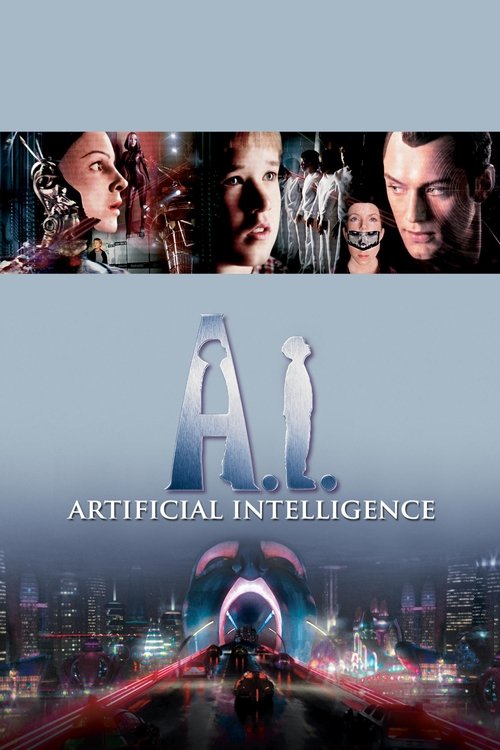
Although Spielberg's latest effort, Minority Report, is admittedly one of his more emotionally sterile productions, it is not unlike last year's A.I. in that it features a fascinating, futuristic concept (based on the short story by Philip K. Dick, first published in Fantastic Universe magazine in 1956), with just enough of the human touch to make it emotionally accessible to the audience.
It’s got the thinky, soul-searching stuff of his recent films — like the unjustly unappreciated A.I. — combined with the gee-whiz popcorn fun of the Indy movies and the dinosaur flicks.
I refer to that Stanley Kubrick classic for a reason: Minority Report, despite some eleventh-hour lapses and rhetorical flab, is the movie A.I. should have been.
After last summer's bummer, A.I. -- with which Minority Report shares a handful of themes and ideas, chief among them the way a husband and wife deal with the disappearance of a child -- Minority Report feels almost like a relief, a huge sigh expelled after the director shook the heavy ghost of Stanley Kubrick off his back.
Stanley Kubrick may have gotten his revenge on Steven Spielberg with A.I., but he pays him back in Minority Report.
These concerns have been updated by screenwriters Scott Frank (Out of Sight) and Jon Cohen, and reshaped by Spielberg, whose anxieties about the future inhumanity received a more strained treatment in A.I. Still, the concerns are drawn from Dick's, and include privacy, surveillance, human rights (and/as property), addictions and obsessions, child abuse, political intrigue and purpose, and legal definitions of criminality.