

The Martian (2015)
Directed by Ridley Scott
During a manned mission to Mars, Astronaut Mark Watney is presumed dead after a fierce storm and left behind by his crew. But Watney has survived and finds himself stranded and alone on the hostile planet. With only meager supplies, he must draw upon his ingenuity, wit and spirit to subsist and find a way to signal to Earth that he is alive.
55 connections found
View:
55 films that influenced The Martian
What critics say influenced The Martian



Yet, in design and stemming from all of the NASA related material, it's far more akin to Ron Howard's superlative "Apollo 13" about that lunar crew ending up stuck in space while the NASA folks down on terra firma tried to figure out how to get them home.
The film it most brings to mind is Ron Howard’s Apollo 13, which recreated the real-life attempt to return the crippled space ship and its three astronauts safely to Earth.
Perhaps not since Ron Howard's 1995 Apollo 13 has a movie paid such loving tribute to star-struck visionaries and their egghead enablers, those brainiacs who work tirelessly to send them soaring past the heavens and just as feverishly toil to return them safely to the fold.
With its seductive blend of hi-tech Nasa chic and Apollo 13 -style DIY, the production design creates a lived-in feel that echoes the industrial environments of Alien .
While the likes of Apollo 13 and Castaway (both clear touchstones for this) were all about escape, Watney is more focused on endurance, making full use of the surroundings to prolong his own existence for as long as necessary.
That quote is one of the most memorable utterances in “Apollo 13,” a movie that “The Martian,” with its NASA-centric story and its all-hands-to-the-pumps, cooperation-is-key vibe, resembles more than just a little.

Although it is based on the best-selling novel of the same title by computer scientist Andy Weir, Ridley Scott’s The Martian directly evokes a much older movie: Byron Haskin’s Robinson Crusoe on Mars (1964), whose sensationalistic tagline “A lone U.S. astronaut pitted against all the odds beyond the earth!” pretty much summarizes both films.
There was even one that combined the two, 1964’s Robinson Crusoe on Mars .
And of course the parallels to Robinson Crusoe - not to mention "Robinson Crusoe on Mars" - were always there.
It’s the opposite of the campy yet compelling 1964 cult film Robinson Crusoe on Mars .
“The Martian” is the ultimate science geeks’ movie, and a more realistic rendering of one of my favorite childhood films, “Robinson Crusoe on Mars,” a 1964 effort from Byron Haskin (“The War of the Worlds”), which is clearly ripe for a remake.
If you don’t know — which seems improbable at this point — The Martian is at its heart a modern sci-fi variant on Robinson Crusoe, which, yes, already had been rather quaintly played with in 1964’s Robinson Crusoe on Mars (a movie best left to childhood memory).
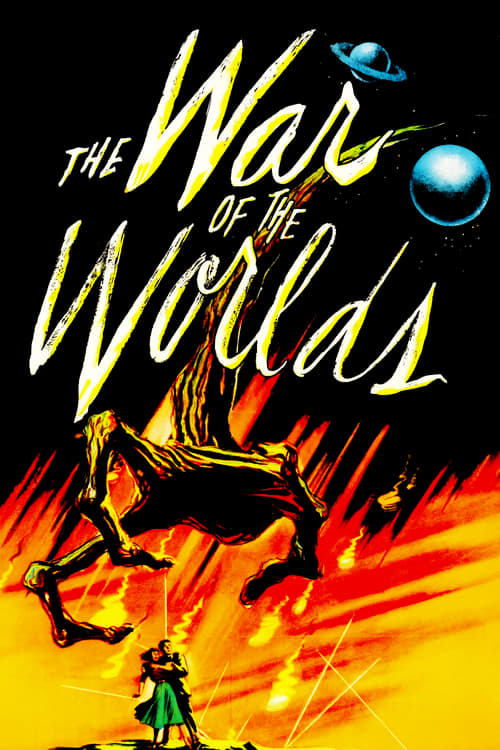
“The Martian” is the ultimate science geeks’ movie, and a more realistic rendering of one of my favorite childhood films, “Robinson Crusoe on Mars,” a 1964 effort from Byron Haskin (“The War of the Worlds”), which is clearly ripe for a remake.
Haskin, a former special effects guru who had already directed the 1953 adaptation of H.G. Wells’s The War of the Worlds and the space adventure From the Earth to the Moon (1958), sought to make Robinson Crusoe on Mars as scientifically accurate as possible in depicting what it would be like for a man to survive for an extended period of time on the surface of the Red Planet, which is exactly what Weir sought to do in his novel and Scott and screenwriter Drew Goddard (The Cabin in the Woods, World War Z) sought to do in their film adaptation.

Haskin, a former special effects guru who had already directed the 1953 adaptation of H.G. Wells’s The War of the Worlds and the space adventure From the Earth to the Moon (1958), sought to make Robinson Crusoe on Mars as scientifically accurate as possible in depicting what it would be like for a man to survive for an extended period of time on the surface of the Red Planet, which is exactly what Weir sought to do in his novel and Scott and screenwriter Drew Goddard (The Cabin in the Woods, World War Z) sought to do in their film adaptation.

The Martian is too lively and expansive to merely ape Cast Away —this is not just Damon acting in a vacuum—and if anything, it illuminates the part of Cast Away you don’t see, that transition period from Tom Hanks being scared and talking to a volleyball to Tom Hanks all scraggly and skinny and spearing fish.
You’re up there with him, and hopefully pulling for him, not unlike Tom Hanks on the desert island in Cast Away.
And some will obviously compare it to "Cast Away" or, to a lesser extent, "All is Lost" where men must contend with being stuck alone in a desolate place while trying to figure out how to survive.
Instead, it's a close cousin to sci-fi stories like Moon , Gravity , and Interstellar and deals with some of the same themes and ideas as Cast Away and Touching the Void .
Like Tom Hanks in “Cast Away,” he’s a man alone, with no way — in the first half, at least — of communicating with the team back home.
The Martian , which is directed by Ridley Scott and based on a best-selling novel by Andy Weir, has drawn comparisons to Cast Away , the 2000 film about Tom Hanks struggling to survive alone on a desert island, but that’s not quite right.
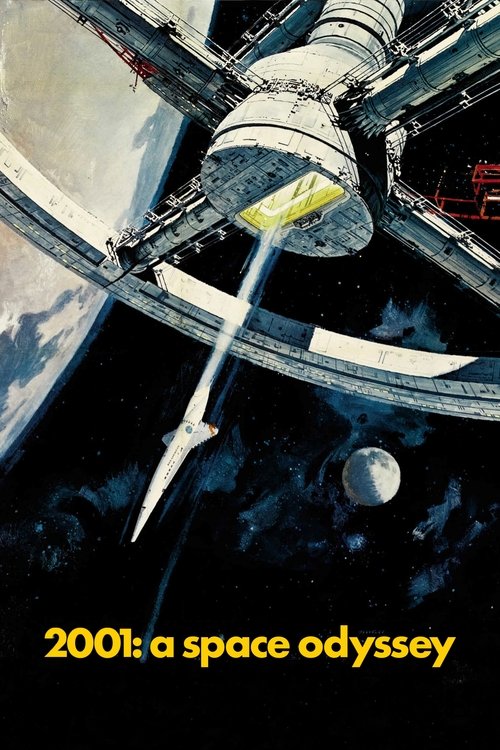
But “The Martian” echoes plenty of other sci-fi landmarks, especially “2001: A Space Odyssey.”
For example, compare the likes of "Mission to Mars," "Red Planet" or "Ghosts of Mars" to space movies set elsewhere such as "Gravity," "The Right Stuff" and "2001: A Space Odyssey," and the difference in artistic quality is off the charts.
At times it seems as if the movie's greatest artistic inspiration is not any particular previous film or novel, but the second act of " 2001: A Space Odyssey ," which features endearing images of Dr. Heywood Floyd anxiously reading the instructions on a zero gravity toilet, and sleeping on a Pan Am flight to an orbital space station like a businessman taking the red eye from Los Angeles to New York.
“The Martian” is to moviegoers of today what “2001: A Space Odyssey” was to audiences in 1968, when Stanley Kubrick and Arthur C. Clarke fired up imaginations and stoked a longing for space exploration.
The film may not be a new “2001: A Space Odyssey.”
The Martian is a working man’s Mars movie, by which I mean it is light on wondering about our place in the universe (think Solaris , The Fountain , 2001: A Space Odyssey ) and heavy on working out a way to get duct tape to seal an air leak.
Advertisement

For example, compare the likes of "Mission to Mars," "Red Planet" or "Ghosts of Mars" to space movies set elsewhere such as "Gravity," "The Right Stuff" and "2001: A Space Odyssey," and the difference in artistic quality is off the charts.
With echoes of movies like “Apollo 13” and “The Right Stuff,” the film hearkens back to the days when America was not crippled with self doubt, but filled with optimism about the ability to overcome.
But I kept waiting for someone to command the room like Ed Harris in “Apollo 13” or Scott Beach in “The Right Stuff.”
The Martian boasts the group and individual heroics that have energized our aviation classics from Howard Hawks’s Only Angels Have Wings to Philip Kaufman’s The Right Stuff .
After a disappointing “Prometheus,” the great English filmmaker Ridley Scott returns to science fiction, the genre that made him a legend, and gives us an “Apollo 13” and “The Right Stuff” for our times.
It’s close to a pseudo-origin of Gene Roddenberry’s Starfleet in Star Trek but never overemphasised for the sake of making a point, it’s subtle, and fits in with Scott’s theme of peace.
It’s easy to miss a lot of the banter that Watney and other characters throw around to lighten the mood, and the calculation-based dialogue eventually gets so dense that it might as well be Star Trek techno babble.

Or, flipping to a more recent reference, what about the satiny red sandscape of Brian De Palma's 2000 Mission to Mars, a half-dreamy, half-plausible effect achieved in part by cinematographer Stephen Burum's use of light reflectors made of copper sheeting?
For example, compare the likes of "Mission to Mars," "Red Planet" or "Ghosts of Mars" to space movies set elsewhere such as "Gravity," "The Right Stuff" and "2001: A Space Odyssey," and the difference in artistic quality is off the charts.
That's been done before in recent films, including “Mission to Mars” (2000).
Because Damon recently played a stranded astronaut in Interstellar, it’s a little worrisome that The Martian may feel redundant to what we’ve seen before, even going as far back as Don Cheadle’s character in Brian De Palma’s Mission to Mars.
Of all the stories you've seen about astronauts coping with the aftermath of disaster—including "Mission to Mars" and the visually superior and more aggressively melodramatic " Gravity ," which is more of a self-help parable with religious overtones—"The Martian" is the most relaxed and funny, and maybe the warmest.
Before “Gravity,” studio executives might have thought twice before greenlighting such a big-budget space drama (surely such Mars-set disappointments as “Red Planet,” “John Carter” and “Mission to Mars” must have given them pause), and while a good portion of “The Martian’s” audience will surely be hoping for a repeat of Sandra Bullock’s white-knuckle experience, Scott has a different agenda altogether.
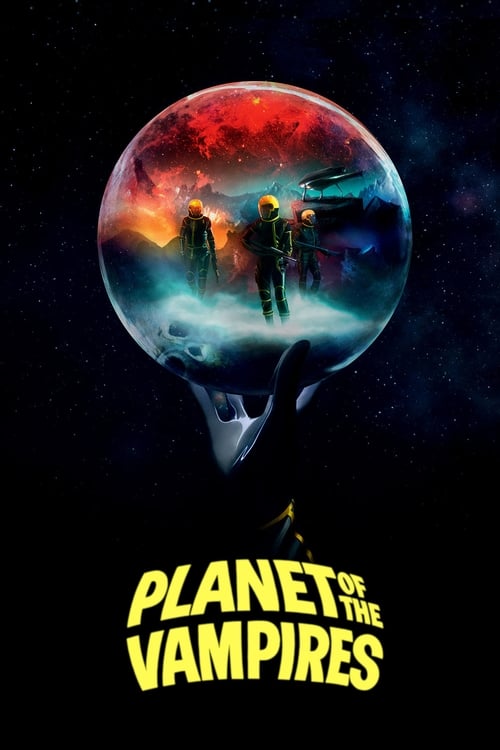
The astronauts stagger through the storm — fuzzed out by swirling soil — in an image that evokes Mario Bava’s ominously beautiful Planet of the Vampires (a source of inspiration for Alien), and when the storm passes, the 3-D brings out every ripple of Mars’s mountainous terrain.
Advertisement
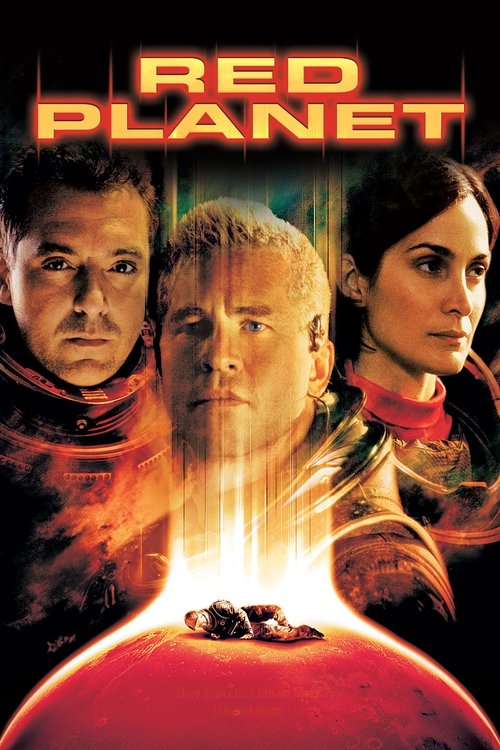
For example, compare the likes of "Mission to Mars," "Red Planet" or "Ghosts of Mars" to space movies set elsewhere such as "Gravity," "The Right Stuff" and "2001: A Space Odyssey," and the difference in artistic quality is off the charts.
Certain parts of this story are almost identical to some story elements in “Red Planet” (2000).
There are hints of the 1960s films “Marooned” and “Robinson Crusoe on Mars” and more recent fare such as “Red Planet” in Andrew Weir’s self-published (originally) novel about an astronaut left for dead by the rest of his crew when a fierce sandstorm threatens to destroy their means of returning to Earth.
Before “Gravity,” studio executives might have thought twice before greenlighting such a big-budget space drama (surely such Mars-set disappointments as “Red Planet,” “John Carter” and “Mission to Mars” must have given them pause), and while a good portion of “The Martian’s” audience will surely be hoping for a repeat of Sandra Bullock’s white-knuckle experience, Scott has a different agenda altogether.
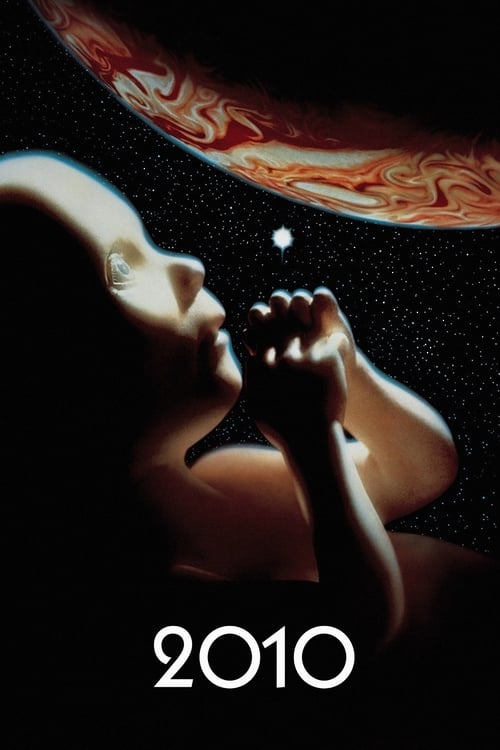
The sleek, science-friendly elegance of Arthur Max’s production design recalls “Silent Running” (another sci-fi parable with a botanist hero), while its running series of logistical challenges echoes Arthur C. Clarke sequel “2010.”