
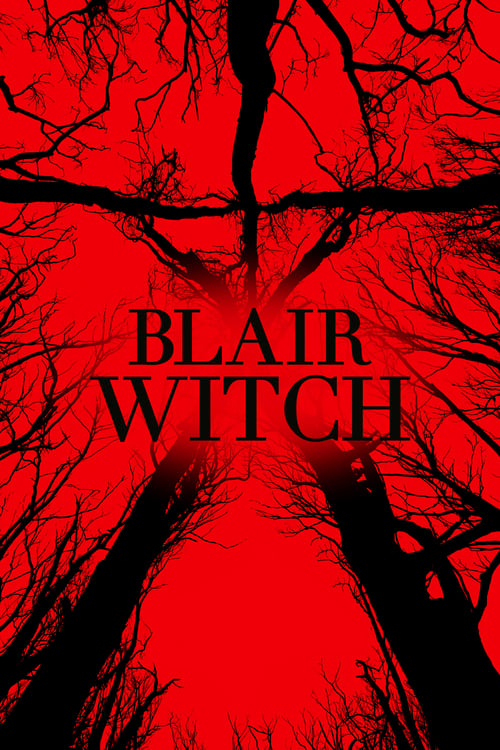
Blair Witch (2016)
Directed by Adam Wingard
Students on a camping trip discover something sinister is lurking beyond the trees.
22 connections found
View:
22 films that influenced Blair Witch
What critics say influenced Blair Witch



Naturally, a sequel was made the following year, but Book Of Shadows: Blair Witch 2 suffered from (a) audience fatigue, and (b) being a bit shit.
The final minutes of Adam Wingard’s “Blair Witch” meaningfully expound 1999’s bombshell blockbuster “The Blair Witch Project,” finally delivering some of the answers that 2000’s terrible, unintelligible “Book Of Shadows: Blair Witch 2” passed over.
The awful official sequel, 2000's Book of Shadows: Blair Witch 2, disappeared without a trace.
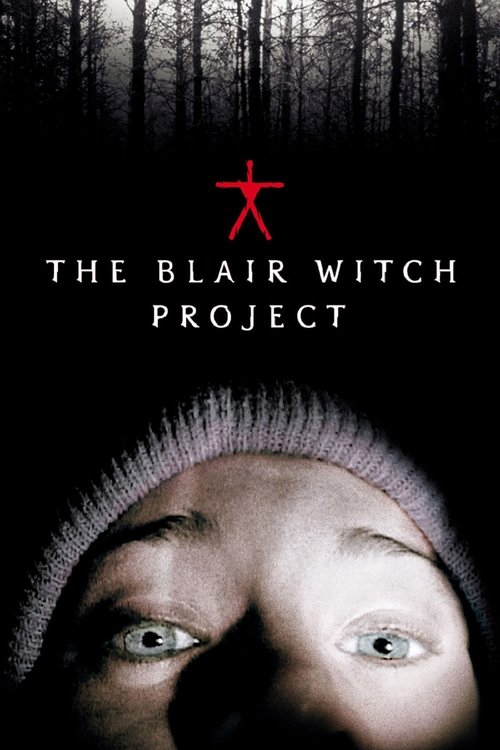
A year earlier, Daniel Myrick and Eduardo Sanchez’s low-budget indie film The Blair Witch Project frightened filmgoers with its “found footage” tale of teenagers investigating the legend of the Blair Witch in the Black Hills woods in Maryland.
In 1999, Daniel Myrick and Eduardo Sanchez changed the face of horror with The Blair Witch Project, a film that has given birth to—I’m being approximate here—fifteen thousand found-footage movies over the last seventeen years.
“Blair Witch” is a sequel/reboot of the hand-held camera classic “The Blair Witch Project,” a film so close to the original that it’s no wonder the filmmakers don’t acknowledge the first film in the screenplay credits.
1999 was the year of The Blair Witch Project.
It wasn’t a smart script or great acting that made “The Blair Witch Project” a box-office sensation in 1999.
In 1999, “The Blair Witch Project” was a milestone of low-budget, found-footage horror.
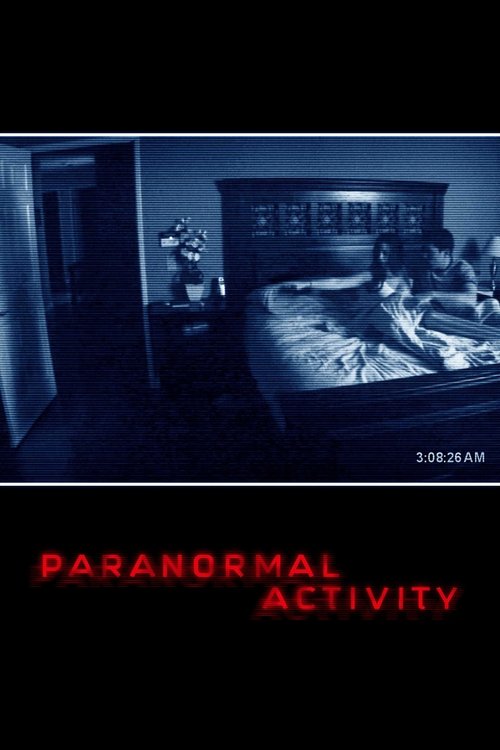
The Blair Witch juggernaut was over before it really got a chance to begin, and the found footage conceit languished until around 2007 when Paranormal Activity and REC proved that there was life left in the sub-genre yet.
Cheap frights — characters keep sneaking up on each other while they’re filming, with deafening sound effects accompanying them bumping into each other — and a selection of horror stunts borrowed from the “Son of Blair Witch,” aka the “Paranormal Activity” movies, deliver the only hair-raising moments.
Indeed, the movie as a whole finds itself caught between styles, evoking neither the amateur authenticity of The Blair Witch Project (and successors such as Paranormal Activity) nor the crafted sheen of a typical studio project.
Confidant and succinct, the preamble should remind viewers of “Paranormal Activity,” “Cloverfield” or any number of found footage films released post-“Blair Witch,” all of which hastily explain just how this footage could eventually be found.
But that doesn’t erase the 17 years in between, during which countless horror films (the [Rec] series, the Paranormal Activity series and Cloverfield, for example) have mined similar territory.
Underneath the low-budget simplicity of the concept, writer-directors Daniel Myrick and Eduardo Sánchez created a nerve-rattling, painstakingly complex mythology encompassing an almost sci-fi approach to warps in time and space (borrowed by the makers of the more recent found-footage franchise Paranormal Activity).
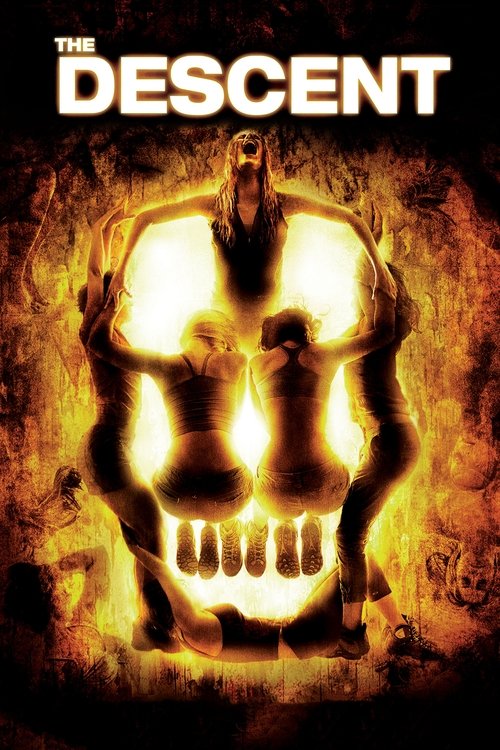
Wingard, whose films “You’re Next” and “The Guest” show him to be a talented genre stylist, is purely in homage mode here; there’s even a touch of “The Descent” when he sends actress Callie Hernandez crawling into a very tight space.
Wingard has assembled a decent cast and he is certainly skilled enough to replicate the dynamics of Project, along the way replicating an unnervingly claustrophobic scene from The Descent.
Lisa follows and has an adventure with the underground tunnels in a sequence right out of "The Descent."
It’s panic attack-inducing — although less so than the very similar sequence in Neil Marshall’s cave monsters movie “The Descent,” which had the added element of the roof about to cave in, as well as the novelty of doing it first and even better.
Minor nods to The Descent and the horror manga of Junji Ito serve the film well, but just like everything else in the film, they go nowhere.
For example, there’s a chilling claustrophobia-inducing sequence that’s straight out of The Descent, while a particularly nasty injury offers a potential new source of horror before being abruptly dropped.
Advertisement
This is a movie that builds on the mythology established in the first film, and that plays by the same basic rules while also offering new details, new ideas, pulling not only from the original movie but from other sources, like Curse Of The Blair Witch and The Blair Witch Project: A Dossier and even the sequel and its spin-off companion Shadow Of The Blair Witch.
But a nice feature of Blair Witch is the expansion of the original’s underlying mythology, featured most prominently in the Sci-Fi Channel special Curse of the Blair Witch.
The “found footage” conceit seemed fresh and new (particularly to people who’d never heard of Ruggero Deodato’s 1980 found footage nasty, Cannibal Holocaust), and audiences flocked to the movie in droves.
Mockumentary and found footage had been done before (see 1980's Cannibal Holocaust), and the art houses were awash at the time with semi-improvised films shot on handheld digital rigs, for example.
Predecessors include Ruggero Deodato’s 1980 Cannibal Holocaust , which beat Myrick and Sánchez to the punch by nearly two decades, while Stefan Avalos and Lance Weiler’s The Last Broadcast premiered the year before The Blair Witch Project took Sundance by storm.
Although technically not the first of a kind (the dreadful Cannibal Holocaust owns that medal), Daniel Myrick and Eduardo Sanchez’s low-budget romp through the woods popularized it.
After 2007’s Paranormal Activity — another indie that found wide appeal — and 2008’s Cloverfield , when found-footage colonized studio filmmaking, the technique began to descend into trope-hood, then cliché, and has now infected many a movie that has mistakenly believed that technique is story.
Confidant and succinct, the preamble should remind viewers of “Paranormal Activity,” “Cloverfield” or any number of found footage films released post-“Blair Witch,” all of which hastily explain just how this footage could eventually be found.
Convincente a ponto de levar muitos espectadores à crença de que viam algo real (lembrem-se: a Internet engatinhava), A Bruxa de Blair empregou com tanta eficiência a estrutura de found-footage estabelecida quase 20 anos antes por Holocausto Canibal que acabou por criar um subgênero próprio, dando origem a títulos como [REC] , Atividade Paranormal , Cloverfield e Apollo 18 , entre tantos outros.
Cloverfield at least showcased the monster at the end while [REC] eventually unveiled what the storyline locked away.
But that doesn’t erase the 17 years in between, during which countless horror films (the [Rec] series, the Paranormal Activity series and Cloverfield, for example) have mined similar territory.
It’s been 16 years since the first sequel, Book of Shadows: Blair Witch 2 and One Too Many came out, and essentially killed the franchise, although the found-footage cheapie horror shtick would live on, eventually peaking with Cloverfield (2008) but pretty much sucking before and after that film.

Wingard, whose films “You’re Next” and “The Guest” show him to be a talented genre stylist, is purely in homage mode here; there’s even a touch of “The Descent” when he sends actress Callie Hernandez crawling into a very tight space.
Director Adam Wingard and writer Simon Barrett (collaborators on the indie spook shows “You’re Next” and “The Guest”) offer few contrasts with the original.
The brainchild of Simon Barrett and Adam Wingard, the indie writer-director team that produced far more innovative thrillers like “The Guest” and “You’re Next,” this movie takes the “shaky cam syndrome” to the ultimate extreme.
Blair Witch comes from You're Next and The Guest duo Adam Wingard and Simon Barrett, who stretch traces of mythology built into a horror movie mind-bender.
Directed by talented, genre-savvy Adam Wingard (You’re Next, The Guest), Blair Witch tells the familiar tale of a group of college students going into the Black Hills of Maryland to solve a mystery.
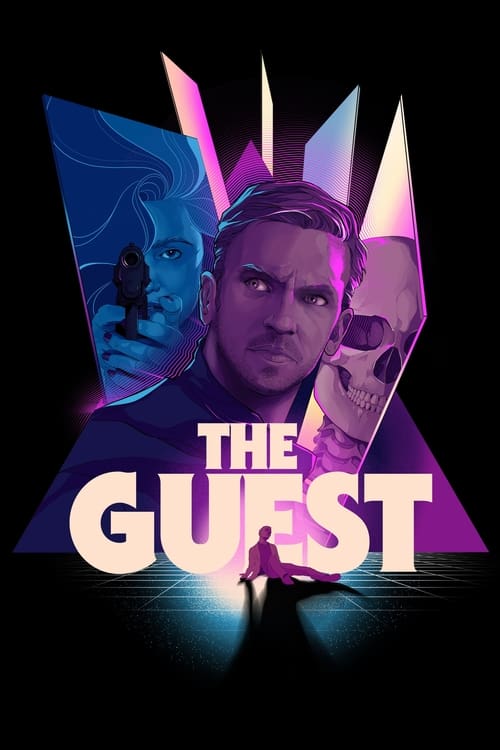
Wingard, whose films “You’re Next” and “The Guest” show him to be a talented genre stylist, is purely in homage mode here; there’s even a touch of “The Descent” when he sends actress Callie Hernandez crawling into a very tight space.
Director Adam Wingard and writer Simon Barrett (collaborators on the indie spook shows “You’re Next” and “The Guest”) offer few contrasts with the original.
The brainchild of Simon Barrett and Adam Wingard, the indie writer-director team that produced far more innovative thrillers like “The Guest” and “You’re Next,” this movie takes the “shaky cam syndrome” to the ultimate extreme.
Blair Witch comes from You're Next and The Guest duo Adam Wingard and Simon Barrett, who stretch traces of mythology built into a horror movie mind-bender.
They’ve made names for themselves snarking on 80s action movies with The Guest and 70s slasher flicks with You’re Next .
Directed by talented, genre-savvy Adam Wingard (You’re Next, The Guest), Blair Witch tells the familiar tale of a group of college students going into the Black Hills of Maryland to solve a mystery.

They've made a handful of intense horror features in the last six years, including "You're Next" and "A Horrible Way to Die," and contributed segments to the "V/H/S" films, anthologies that use the "found footage" style basically invented by "TBWP."
As early as 2010 he directed an excellent horror-thriller in A Horrible Way to Die, and had his first wide release in 2011 with the likewise solid twist on home invasion horror films, You’re Next.
Imaginatively titled Blair Witch, it's a sequel of sorts scripted by Barrett and helmed by Wingard, who are responsible for some of my favorite horror films of the decade, including A Horrible Way to Die, You're Next, and The Guest.
“Blair Witch,” the latest collaboration between writer Simon Barrett and director Adam Wingard (they previously made “You’re Next,” “The Guest” and “A Horrible Way to Die”), is essentially a remake of “The Blair Witch Project” with better production values and a few added jolts of shock-horror.
When they made A Horrible Way To Die, it played some notable nerdy film festivals, and it got some love from genre reviewers and from the genre nerds who actually saw it.
With this commissioned sequel, filmed in secret under the title The Woods, director Adam Wingard and writer Simon Barrett – who have worked together on a run of interesting genre fare (A Horrible Way to Die, You’re Next, The Guest) – are required to get the Blair Witch back in business.
Advertisement
Predecessors include Ruggero Deodato’s 1980 Cannibal Holocaust , which beat Myrick and Sánchez to the punch by nearly two decades, while Stefan Avalos and Lance Weiler’s The Last Broadcast premiered the year before The Blair Witch Project took Sundance by storm.

Like Gus Van Sant’s ill-fated “Psycho” remake, the result is vaguely watchable with a steady waft of pointlessness.