

United 93 (2006)
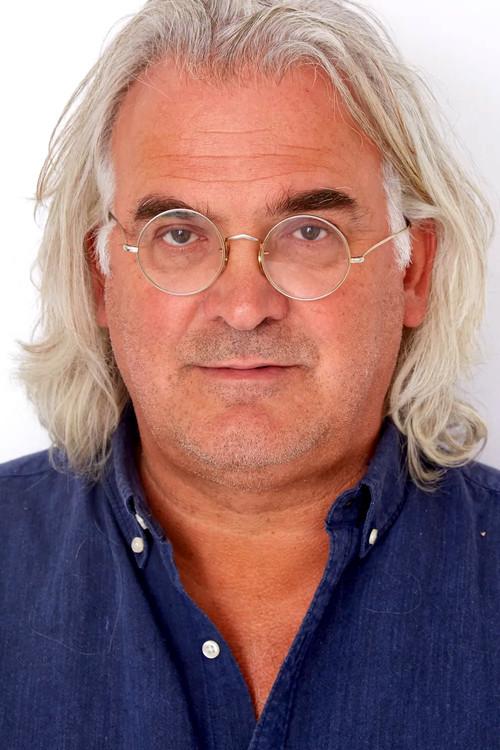
Directed by Paul Greengrass
A real-time account of the events on United Flight 93, one of the planes hijacked on 9/11 that crashed near Shanksville, Pennsylvania when passengers foiled the terrorist plot.
27 connections found
View:
27 connections, in both directions
What critics compared United 93 to



The movie “Sully” reminded me the most of was another true-life airline drama “United 93,” which chronicled the doomed flight that crashed in Pennsylvania field on Sept. 11, 2001.
So while the crash landing sequence will grip audiences, it doesn’t have the stamina to match other plane-drama films such as Paul Greengrass’s United 93 (still a masterpiece).
Even Paul Greengrass in his now forgotten United 93 (about the 9/11 hijacking of the plane that, headed for the Pentagon, crashed in Shanksville, Pa.) trivialized the experience in a hackneyed pretense of commemoration.
(It is in some ways the mirror image of Paul Greengrass’s heartfelt, harrowing United 93 .)
Eastwood wants to sensationalize the event by depicting Sully as something of a guilt ridden everyman, while also anxiously trying to film every event with a stark reality in the vein of “United 93.”

Recent war films such as “Black Hawk Down” (2001), and “United 93” (2006) wear their obvious political ideologies on their sleeves.


In more precise terms, Bigelow’s ability to dramatize modern history known to many but only truly understood by a precious few mirrors the surreal quality of Paul Greengrass’ “United 93,” which also managed to transform traumatic history into cinematic narrative.
The movie's most obvious thematic benchmarks are United 93 and Black Hawk Down , whose respective solemnity and gritty, jostling military subjectivity are both evoked in fitful flashes.
The one piece of affirmative dialogue (“Geronimo”) arrives as matter-of-factly as “Let’s roll” in Paul Greengrass’ excellent United 93 , blessedly free of any impulse to underline heroic action.
Bigelow and Boal take a similar approach as Paul Greengrass’ “United 93” in terms of creating a movie that feels real every step of the way despite having known actors.
And the calendar: even more so than with Paul Greengrass' United 93 , it's fair to suggest that the Hollywood treatment of such politically delicate—and, in this case, covert—recent history comes "too soon," and lacking in the crucial historical perspective that comes with time.
The film I find myself comparing it most to is United 93.
It’s the fake realism of Paul Greengrass films (United 93, Captain Phillips, and the Bourne movies — all appalling)…
Throughout the film, Bigelow samples the jittery formal syntax of shows like “24” and movies like Paul Greengrass’s 9/11 docudrama “United 93” (2006), which turn workplaces into war zones and create a prolonged sense of immersion.
The Academy has gone for difficult subject matter in the padt when the filmmaking is this good, a la United 93, so this should be no exception.
Brit cinematographer Ackroyd, who shot The Hurt Locker and Detroit for Bigelow, as well as various Paul Greengrass features, including United 93 and Captain Phillips, is a master of nerve-shredding visual language.
…the good movies he shot for Paul Greengrass (Captain Phillips, United 93)…
…filmed by cinematographer Barry Ackroyd (United 93, The Hurt Locker, Captain Phillips)…
An apt parallel might be "The Passion of the Christ."
A reconstruction, and, lest audiences continue on shouting it's "too soon," a completely scrubbed one, safely leached of historical or political context; overall, the reductive effect is comparable to Mel's spiritually-bankrupt, viscera-soaked Calvary, and, like The Passion of the Christ, Paul Greengrass' 9/11 evocation cannily exploits a subject that comes already embellished by viewers' emotional responses.
From a marketing standpoint, the challenge for Universal is not unlike that faced by Mel Gibson and Newmarket during the distribution of "The Passion of the Christ," so it should come as little surprise that Universal has enlisted many of those same individuals to shepherd the effort here.
Instead it’s a simple little horror movie, one that apes a lot of the filming techniques used by Paul Greengrass on his brilliant film United 93, but wastes them on a bunch of unlikable, happy to see them drop dead characters and instead ends up being more like the first cousin of Blair Witch.
Yup, there is no doubt that Cloverfield is no less directly inflected with the events of 9/11 than Paul Haggis' United 93 was - although if it has become a clich� to describe the collapse of the Twin Towers as "like something out of a movie", then Cloverfield divides its inspiration accordingly between the real terrors of 2001 and the cinematic horrors of King Kong or Godzilla.
Advertisement
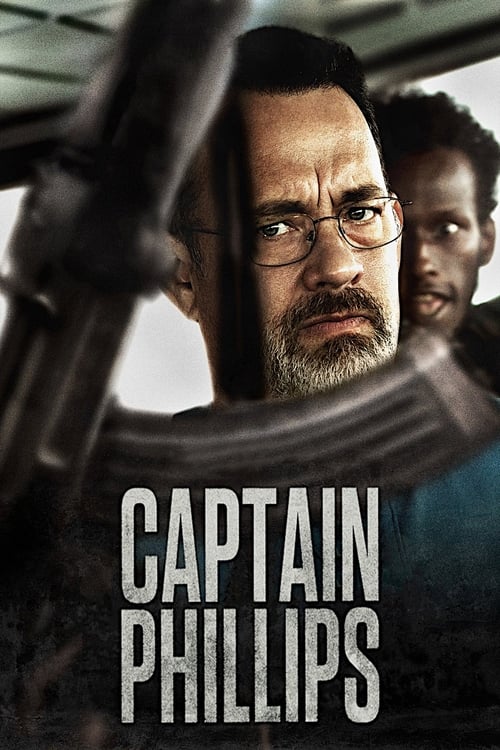
Director Paul Greengrass has the distinction of making the best film that I will never, ever see a second time – 2006’s September 11th drama, “United 93.” It’s been more than 7 years, but I recall the sheer dynamism of the film overpowering me, Greengrass’ skills as a visual storyteller shepherding its stark, sobering screenplay exactly where it needed to go.
“Captain Phillips” matches the effectiveness of his best films, “United 93” and “The Bourne Ultimatum.”
There are definite elements in “Captain Phillips” that remind me of the emotional and gut-wrenching effect that “United 93” had on so many of us nearly seven years ago.
Dividing the focus among a variety of vantage points, including those of the besieged crew, the young hijackers, and the control-room cavalry, Greengrass echoes the immersive docudrama strategy of his own United 93 .
Greengrass has an impressive gift for creating tension with his trademark documentary-style shaky camera (here wielded by frequent Greengrass collaborator Barry Ackroyd), but he’s not always so great at diffusing that tension, or modulating its rhythms over the course of a film (which is part of why I sat through his 9/11 re-creation, United 93 , with an uneasy combination of anguish and boredom).
Director Paul Greengrass (“United 93,” “The Bourne Ultimatum”), a onetime documentary journalist, uses hand-held cameras, desaturated colors and authentic settings to create a physical world of inarguable authenticity.

Director Greengrass is a master at combining sympathetic character studies with docudrama, staccato action sequences in films ranging from his Matt Damon “Bourne” trilogy to nonfiction-based films such as “Green Zone” and “United 93” and the aforementioned “Captain Phillips,” and he’s at the top of his game here in this expertly crafted adaptation of the 2016 novel by Paulette Jiles.
Greengrass plays it safe here, minimizing his handheld “shaky cam” style to match the genre rather than try anything new (Dads hate things that feel new, obviously, but that style is more suited to Bourne movies and United 93 ).
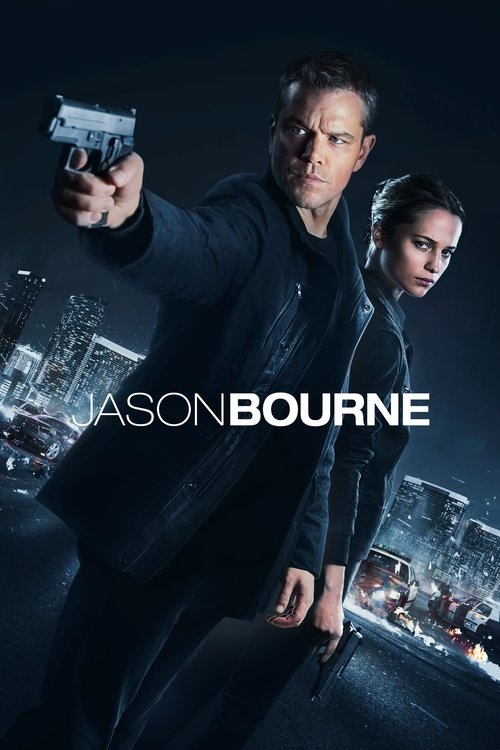
Since Paul Greengrass broke through to American audiences with the second and third installments in the Bourne franchise (and returned for Jason Bourne in 2016), his films have frequently tapped into current events ( United 93 , Captain Phillips ) or existential fears based on them ( Green Zone ).
Such is the time and place and general ambience of News of the World , a surprisingly demure offering from Paul Greengrass, a documentarian who grew into a franchise director of action laden output with three Jason Bourne titles and his remounting of heinous terrorist attacks, such as the Oscar nominated 9/11 title United 93 and 2018’s grueling portrait of Norway’s 2011 tragedy 22 July (2018).
Paul Greengrass ( United 93 , The Bourne Supremacy ) does not shy away from the horrors a girl faced in the old west.
Though well-paced, “News of the World” is not the type of film I expected from Paul Greengrass, whose amazing action work includes three “Bourne” films, “Captain Phillips” and the heart-wrenching “United 93,” which earned him an Academy Award nomination as Best Director.
Greengrass scripted his excellent films “United 93” and “Bloody Sunday,” but both were heavily based on real events.
Like Bloody Sunday, Captain Phillips and Greengrass’s masterpiece United 93, his Bourne movies aren’t so much about the awesomeness of big, explosive set-pieces as much how chaotic those set-pieces felt when juxtaposed with reality.
It was a character that suited him nicely, especially when director Paul Greengrass (“United 93”) took over directing duties with the 2004 sequel “The Bourne Supremacy,” and once again with “The Bourne Ultimatum” in 2007.
In the five installments – four starring Matt Damon and now three of those helmed by chaos choreography maestro Paul Greengrass (“Captain Phillips” and “United 93”) – the impetus has moved from an internal struggle driven by outside forces to dubious machinations in those external structures (the CIA and its splintered sub-organizations) looking for any excuse to put Bourne in someone’s crosshairs.
That the action scenes are so lame and derivative is shocking considering Greengrass’ record of taking our breath away in thrillers such as “United 93,” “Captain Phillips” and the second and third “Bourne” movies.
His 9/11 film, “United 93,” benefited from his probing, feverish camera, but this time he takes scenes into visual incoherence.
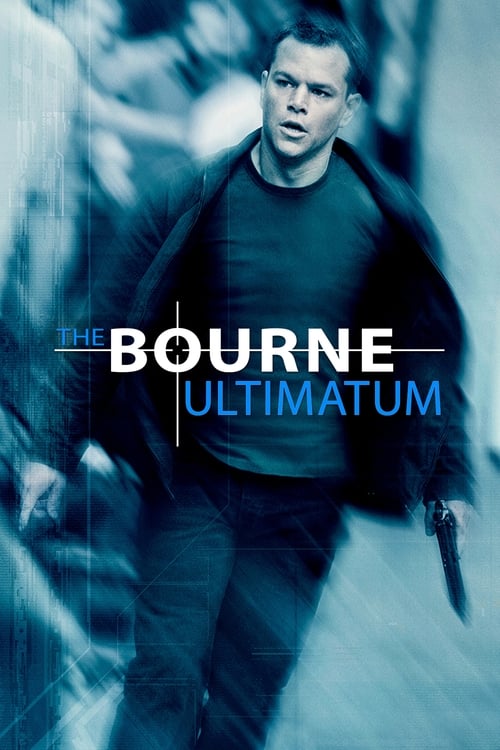
Between Bournes 2 and 3 Greengrass made the remarkable "United 93," which shares some of the manic intensity of "eTMUltimatum" and "eTMSupremacy" but shouldneTMt really be compared to these films let alone referred to in the same sentence as them.
This being a Paul Greengrass movie -- he directed "The Bourne Supremacy" and "United 93" -- the shock absorbers are off, the framing is epileptic and it's a rare shot that lasts more than a millisecond.
There’s a fascinating irony to the fact that both director Greengrass and star Matt Damon come to this from having been separately involved in two overtly “important” and political films—United 93 (2006) and The Good Shepherd (2006) respectively—and yet have managed to make more of a statement with what could be categorized as nothing more than a preposterous action movie.
Director Paul Greengrass (United 93, Bloody Sunday) returns with his frenetic style as the series makes its supposed final foray into the genre.
Following up last year’s United 93 , director Paul Greengrass (who also directed 2004’s slightly superior The Bourne Supremacy) once again goes for thrills with a political bent, here employing Abu Ghraib-style imagery and pervasive intelligence agency surveillance footage in an attempt to cast amnesiac spy Jason Bourne’s (Matt Damon) revenge mission against the government agency that turned him into a ruthless killer as the return of America’s repressed past crimes.
This is director Paul Greengrass's second Bourne picture after Supremacy, but it's also a stealth sequel to his last film, United 93.
The artistic superstar of this film is Oscar-nominated cinematographer Barry Ackroyd, a prized regular collaborator of Kathryn Bigelow (The Hurt Locker and Detroit) and Paul Greengrass (Captain Phillips and United 93).
Cinematographer Barry Ackroyd's previous beautiful work includes The Wind That Shakes the Barley, United 93, The Hurt Locker, Captain Phillips, and Detroit.

There have been great films throughout cinematic history that have used the method quite effectively, classics like "High Noon" and "12 Angry Men, or a little more recently with "Phone Booth" and "United 93," but, of course, not all such films turn out so well ("88 Minutes" and "Silent House" come to mind).
My only real problem with “The Trial of the Chicago 7” is that it tells a story that kind of calls out for a slightly bolder and more adventurous treatment than it has been afforded here—it might have been interesting to see what Paul Greengrass, whose films include such true stories as “Bloody Sunday,” “United 93” and “22 July,” might have made of it.
Advertisement

While Dunkirk is a historical recreation that, like Paul Greengrass’s United 93, rattled my nerves as if trying to traumatize me, it didn’t move me in more than a couple of fleeting moments.
It’s United 93 in the scary streets of LA.