
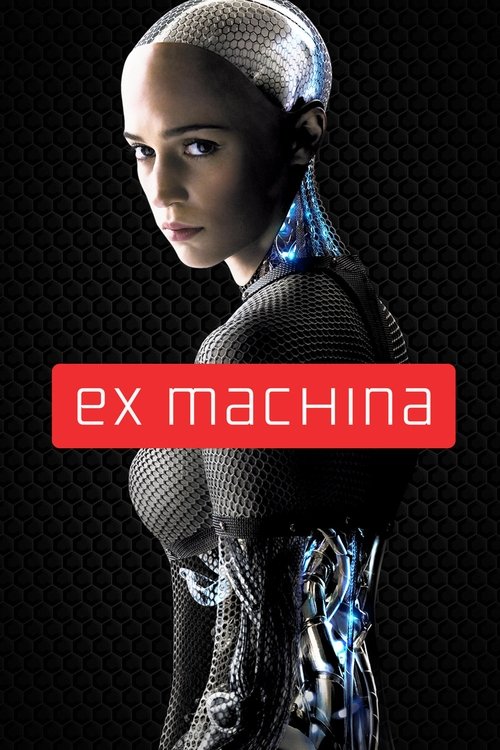
Ex Machina (2015)
Directed by Alex Garland
Caleb, a coder at the world's largest internet company, wins a competition to spend a week at a private mountain retreat belonging to Nathan, the reclusive CEO of the company. But when Caleb arrives at the remote location he finds that he will have to participate in a strange and fascinating experiment in which he must interact with the world's first true artificial intelligence, housed in the body of a beautiful robot girl.
42 connections found
View:
42 films that influenced Ex Machina
What critics say influenced Ex Machina
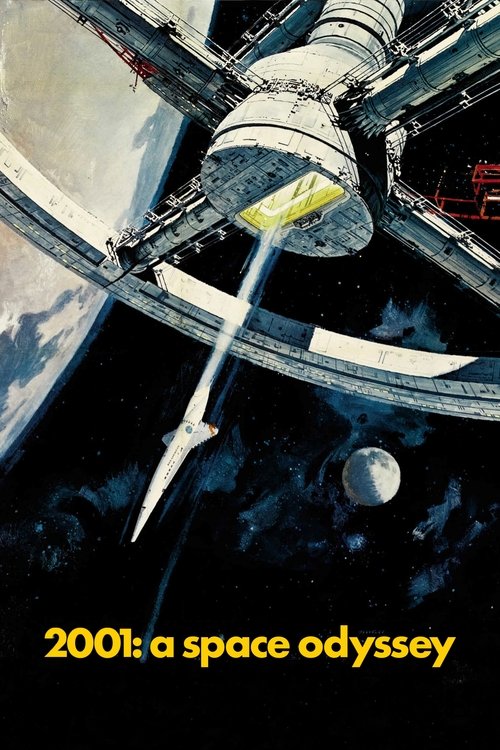


The three-sided game of psycho-sexual dominance is played out in a claustrophobic environment that often recalls the color-intensive settings of Stanley Kubrick’s “2001: A Space Odyssey.”
The movie draws inspiration from likeminded films such as “2001: A Space Odyssey,” but at its core, it’s basically a modern day retelling of Mary Shelley’s “Frankenstein” with a twist, with Nathan as the creator and Vikander as his monster.
Usually, it means having sparce production design and subdued camera movement, but Garland’s visual homages to Kubrick are more than just the obvious comparisons of 2001: A Space Odyssey or Kubrick’s posthumous Spielberg-directed A.I.: Artificial Intelligence.
Tired though 2001: A Space Odyssey comparisons inevitably feel, Ava's growing self-consciousness in contrast to the humans around her is thoroughly reminiscent of HAL's, though Vikander's graceful and deftly modulated performance makes Ava very much her own beast.
A hulking hunk of metal bent on human annihilation, he’s the latest in a long line of movie robots run amuck, one that stretches back all the way to Fritz Lang’s silent Metropolis and encompasses many of the all-time great science-fiction films, including 2001: A Space Odyssey, The Terminator and the criminally underrated masterpiece that is Bill and Ted’s Bogus Journey.
Taking cues from obvious predecessors like 2001: A Space Odyssey and AI—some will even compare it to Her—Ex Machina stands solidly on its own as a highly stylized and mesmerizing film, never overly dependent on CGI, and instead built upon the ample talents of a small cast.
Caleb's conversations with Ava are presented as discrete narrative sections, titled like chapters in a book (though the claustrophobic setting will inevitably remind viewers of another classic of shut-in psychodrama, Stanley Kubrick's film of " The Shining ").
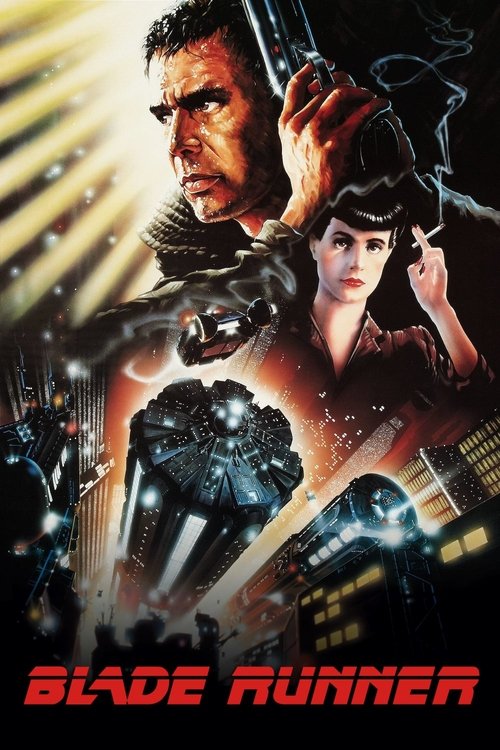
In its exploration of Ava and the extent to which she becomes worthy of human empathy even though she's technically a machine, the piece recalls not only Shelley but also Philip K. Dick's Do Androids Dream of Electric Sheep? (aka Blade Runner in film lingo) and H.G. Wells' The Island of Dr. Moreau, particularly its repeated refrain of "Are we not men?"
Ex Machina has the mix of fizzy intellect, black humour and streamlined thrills Judge Dredd’s comic-book home 2000 AD has always specialised in (as did an early, obvious homage to it, Blade Runner).
Domhnall Gleeson, who was last seen in Angelina Jolie’s Unbroken, stars as Caleb Smith, a slightly nerdy computer-programming whiz who works for BlueBook, a Google-like search-engine giant run by a reclusive eccentric named Nathan Bateman (A Most Violent Year’s Oscar Isaac, mischievously channeling the mad-genius trio of Steve Jobs, Richard Branson, and J.F. Sebastian, the replicant designer from Blade Runner).
The creation of new forms of life, and the dangers that poses, has informed screen classics from Fritz Lang's Metropolis in 1927 to Ridley Scott's Blade Runner in 1982.
Ava is certainly convincing, in a Sean Young from Blade Runner sort of way, especially when she dons clothes more appealing to Caleb's (millennial hipster) sensibilities.
Just as Blade Runner wondered whether its lifelike replicants could really fall in love, so Ex Machina spirals obsessively around the question not of artificial intelligence but artificial affection , worrying away at the authenticity of attraction as an indicator of consciousness itself.
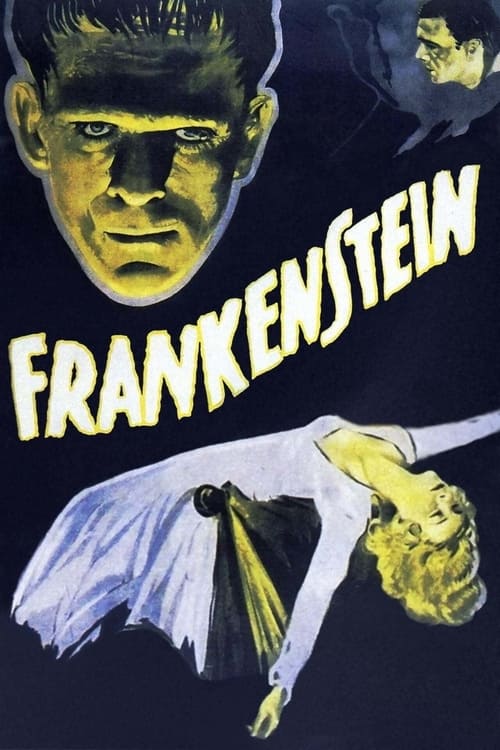
In that respect, the story harkens back to Mary Shelley's Frankenstein, a novel that — pay attention, Trivial Pursuit players — sports the often dropped subtitle The Modern Prometheus.
A worthy companion piece to “Under the Skin” and “Her” in its examination of what constitutes human and feminine identity — and whether those two concepts need always overlap — Garland’s long-anticipated directorial debut synthesizes a dizzy range of the writer’s philosophical preoccupations into a sleek, spare chamber piece: Mary Shelley’s “Frankenstein” redreamed as a 21st-century battle of the sexes.
The movie draws inspiration from likeminded films such as “2001: A Space Odyssey,” but at its core, it’s basically a modern day retelling of Mary Shelley’s “Frankenstein” with a twist, with Nathan as the creator and Vikander as his monster.
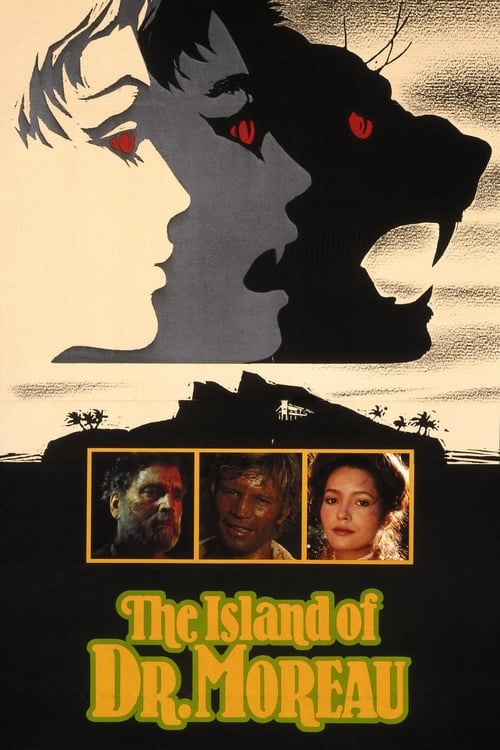
In its exploration of Ava and the extent to which she becomes worthy of human empathy even though she's technically a machine, the piece recalls not only Shelley but also Philip K. Dick's Do Androids Dream of Electric Sheep? (aka Blade Runner in film lingo) and H.G. Wells' The Island of Dr. Moreau, particularly its repeated refrain of "Are we not men?"
Advertisement
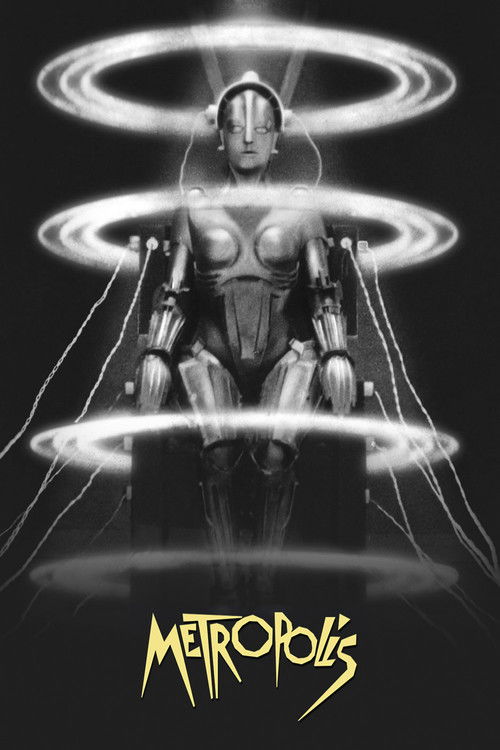
A hulking hunk of metal bent on human annihilation, he’s the latest in a long line of movie robots run amuck, one that stretches back all the way to Fritz Lang’s silent Metropolis and encompasses many of the all-time great science-fiction films, including 2001: A Space Odyssey, The Terminator and the criminally underrated masterpiece that is Bill and Ted’s Bogus Journey.
The creation of new forms of life, and the dangers that poses, has informed screen classics from Fritz Lang's Metropolis in 1927 to Ridley Scott's Blade Runner in 1982.
In 1927, Fritz Lang created a beautiful female robot for his futuristic Metropolis, a parable about the crushing power of modern industrial life.
This is more like trying to prove the humanity of the robot Maria (Brigitte Helm) in Metropolis (1927) — something probably not lost on Garland, since his Ava is the sexiest robot since Maria and is really something of a modernized take on her.
A worthy companion piece to “Under the Skin” and “Her” in its examination of what constitutes human and feminine identity — and whether those two concepts need always overlap — Garland’s long-anticipated directorial debut synthesizes a dizzy range of the writer’s philosophical preoccupations into a sleek, spare chamber piece: Mary Shelley’s “Frankenstein” redreamed as a 21st-century battle of the sexes.
Taking cues from obvious predecessors like 2001: A Space Odyssey and AI—some will even compare it to Her—Ex Machina stands solidly on its own as a highly stylized and mesmerizing film, never overly dependent on CGI, and instead built upon the ample talents of a small cast.
It's entertaining and cool as hell to look at but it doesn't hold a candle to Spike Jonze's "Her" for insights into man's relationship with artificial intelligence.
Nor is Garland communicating original ideas – Steven Spielberg's "A.I." and Spike Jonze's "Her" covered similar territory, albeit from different angles.
Stories about artificial intelligence are a frequent science fiction topic, from Czech writer Karel Capek's 1920 play "R.U.R." (which coined the term "robot") to Spike Jonze's invisible "Her."
As with Spike Jonze’s “Her” (2013), this movie pokes around in the schlumpy emotional needs we humans ask our technology to fulfill.
It's the best cerebral British science fiction film since Duncan Jones' exceptional Moon , playing out like the big-screen cousin of Charlie Brooker's Black Mirror series.
This movie’s fluid, forlorn sense of identity most recalls “Moon,” with a dash of “Forbidden Planet” thrown in.
Simply put, Garland has given us an excellent work of genuine science fiction that will stand with other notable recent efforts like Moon and Europa Report .
In its exploration of Ava and the extent to which she becomes worthy of human empathy even though she's technically a machine, the piece recalls not only Shelley but also Philip K. Dick's Do Androids Dream of Electric Sheep? (aka Blade Runner in film lingo) and H.G. Wells' The Island of Dr. Moreau, particularly its repeated refrain of "Are we not men?"
Advertisement
Only once do they and Garland err, and that’s during a throwaway scene in which Nathan and his robot do a little song and dance reminiscent of Gene Wilder and Peter Boyle in “Young Frankenstein.”

Nathan’s persona is odd, forced, too casual: He throws lots of “dudes” and “bros” into his conversation, and in an early piece of character foreshadowing, he drunkenly reminisces about how a ghost in Ghostbusters performed oral sex on Dan Aykroyd.