
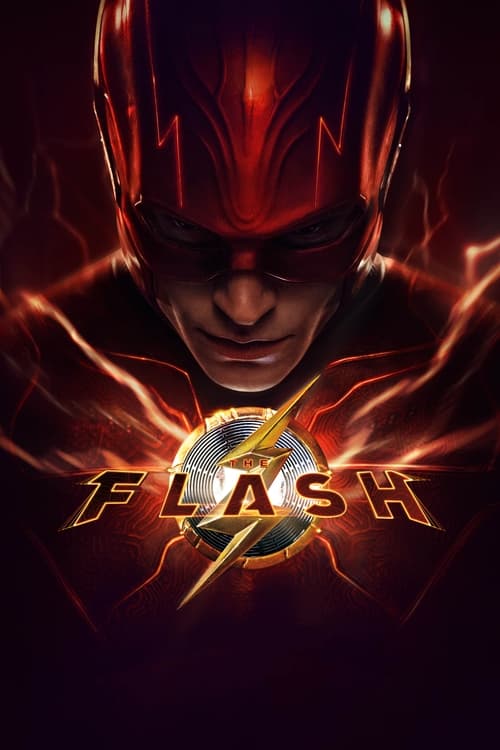
The Flash (2023)
Directed by Andy Muschietti
When his attempt to save his family inadvertently alters the future, Barry Allen becomes trapped in a reality in which General Zod has returned and there are no Super Heroes to turn to. In order to save the world that he is in and return to the future that he knows, Barry's only hope is to race for his life. But will making the ultimate sacrifice be enough to reset the universe?
37 connections found
View:
37 films that influenced The Flash
What critics say influenced The Flash

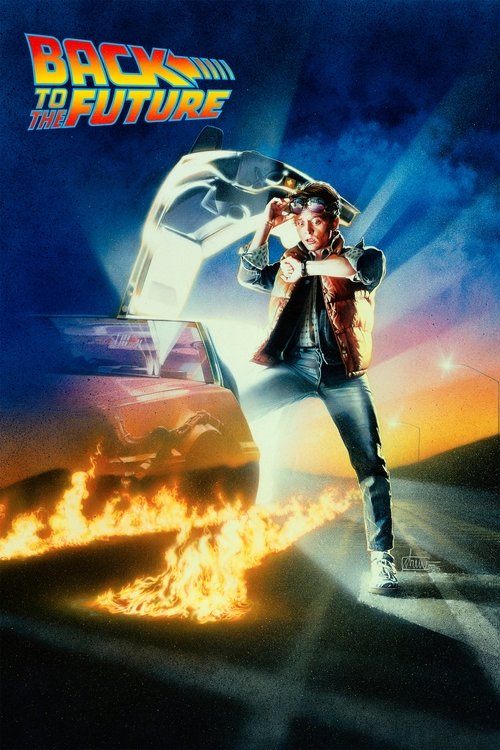


Older Barry is in for further surprises: talking with his younger self about the concept and the film Back To The Future (Robert Zemeckis, 1985), younger Barry refers to it as the film starring Eric Stolz as Marty McFly.
It has the grave misfortune of not just paying conspicuous homage to infinitely better properties (poking fun at “Back to the Future,” or borrowing a line from “RoboCop” about seeking out a health care professional after a traumatic rescue), but also employing a plot that is remarkably similar to recent superhero flicks.
Removed from the cape and cowl, Bruce gradually resembles that of a Doc Brown (Christopher Lloyd) from Back to the Future , which is a major point of reference for The Flash .
The Back to the Future references and people confusing Eric Stoltz with Michael J. Fox is only funny the first time around, but it was done ad nauseam.
For example, this alternative universe does not have most of Justice League members, and the movie has some naughty fun via several wry references on well-known Hollywood films including “Back to the Future” (1985), which does not have Michael J. Fox in this alternative universe but has the other actor initially chosen for that film instead.
It is like watching Man of Steel , Back to the Future and Spider-Man: No Way Home combined into one.
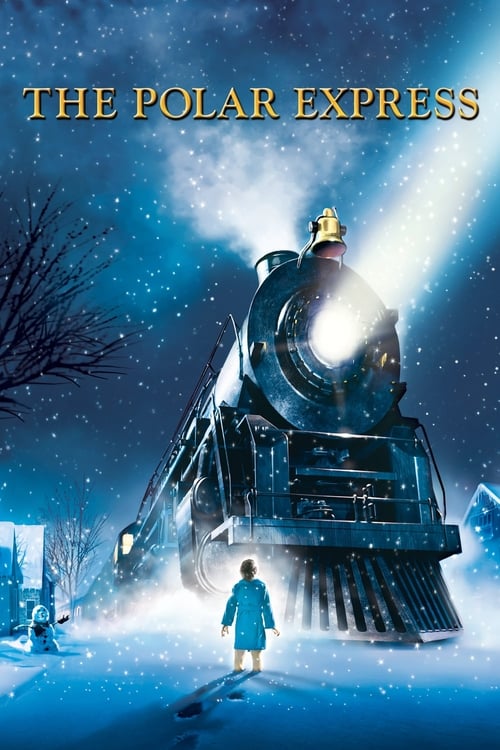
People pass by through time and look exactly like characters from The Polar Express film Robert Zemeckis made in 2004.
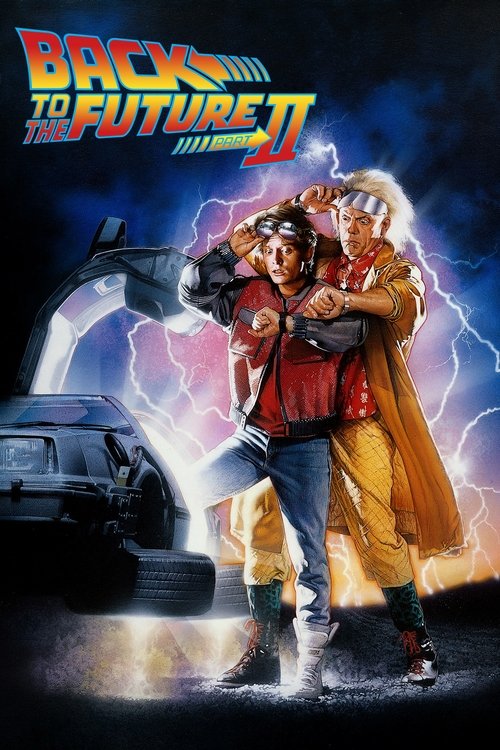
For a film that calls to mind 1989’s Back to the Future Part II (released just five months after Tim Burton’s Batman catapulted Keaton to a new level of stardom), Hodson’s script is surprisingly agile and stays on course.
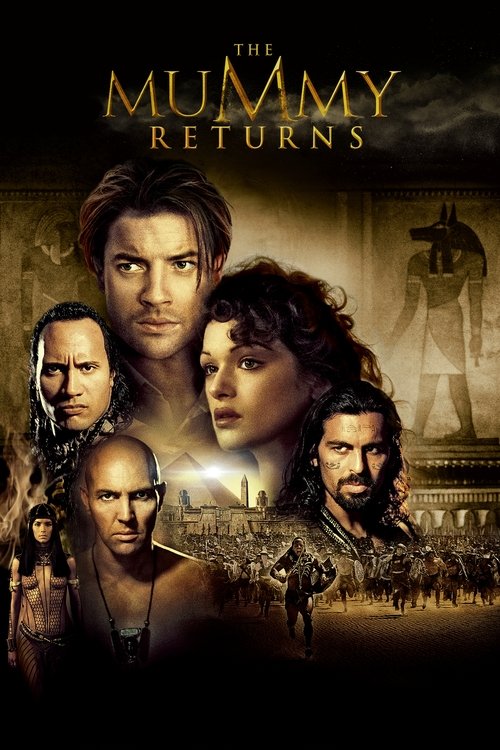
There are other scenes in the “chronobowl”—the junction between different parallel universes—where actors have jarringly fake faces that remind one of nothing so much as the infamously awful CGI Dwayne Johnson in 2001’s The Mummy Returns .
Even if you were to ignore what ethical boundaries it may or may not cross, the film can’t escape the fact that it frequently features rubbery VFX and CGI-recreations of moments and characters that make them look like The Scorpion King from Stephen Sommers’ The Mummy Returns .
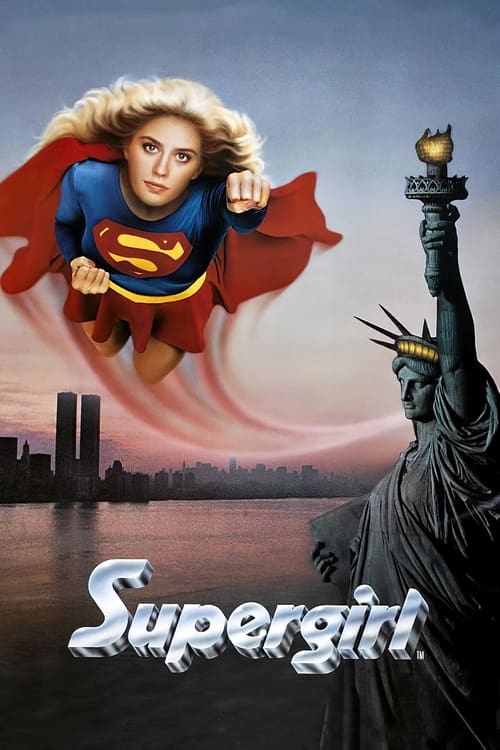
There, Christopher Reeve’s Superman stands side by side with Helen Slater’s Supergirl , while Nicolas Cage’s aborted take on the Man Of Steel is able to fight giant spiders in space while a dozen other characters and actors whiz by in a…um…flash.
Et quant à réactiver la nostalgie, autant faire appel à des effets numériques pour convoquer à la fête Helen Slater (la Supergirl des années 80) et même le regretté Christopher Reeve.
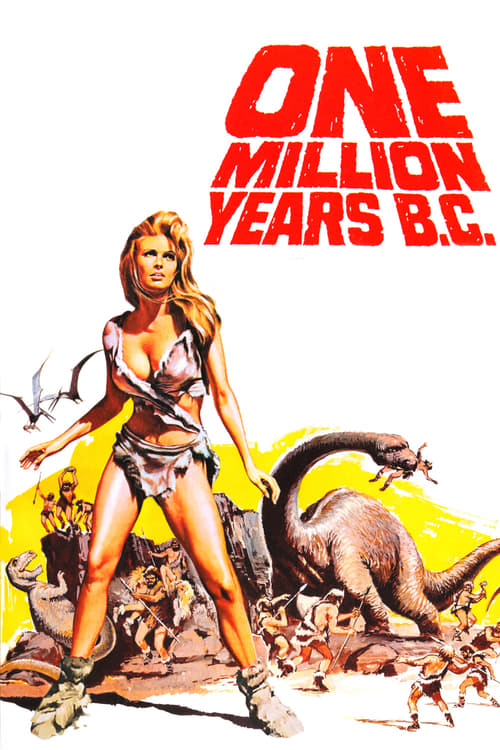
There's a strange detail where Barry has that Raquel Welch One Million Years B.C. poster on his wall--the last poster Andy uses to cover his escape hole in The Shawshank Redemption and a tribute now to a recently-passed icon.
Advertisement

Of course, I’m referring to the Flashpoint Paradox , which has already been adapted into an excellent animated film with 2013’s Justice League: The Flashpoint Paradox.
The Flash ‘s plot is familiar because the extended animated version, Justice League: The Flashpoint Paradox (2013), also presents a classier plot.
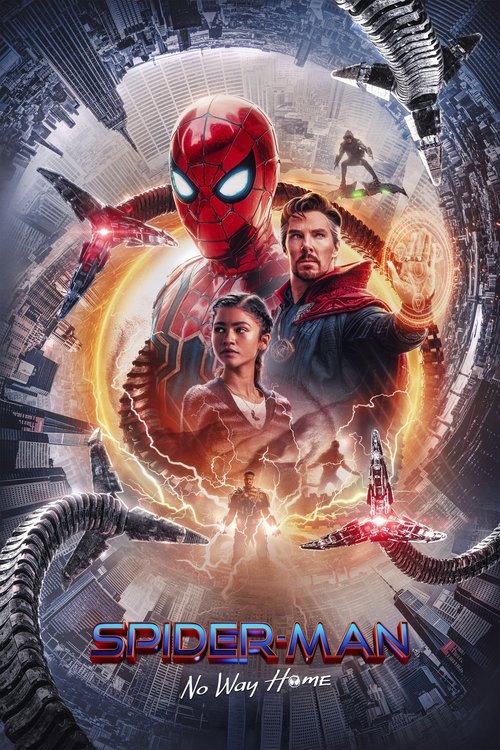
And it was Marvel that first brought the superhero multiverse to live-action film, starting with Spider-Man: No Way Home —a film that delighted fans by bringing back previous Spider-Men Tobey Maguire and Andrew Garfield alongside incumbent Spider-Man Tom Holland.
While the movie remains rather schizophrenic in its mix of comedy and drama, the following narrative resolution is too convenient as not carrying much dramatic weight compared to the ending of “Spider-Man: No Way Home” (2021), and I only came to muse more on how much Holland’s Spider-Man in that film sacrificed while really coming to learn a painful lesson from his unwise attempt to change the timeline of his universe.
Is anyone out there holding onto super fond memories of this year’s “Ant-Man and the Wasp: Quantumania” or “Spider-Man: No Way Home” (2021)?
And Marvel beat DC to the big-screen with an almost identical multiverse-breaking, cameo-rich, nostalgia-pandering story, the 2021 fanwank-feature Spider-Man: No Way Home.
Fans collectively lost their minds when Tobey Maguire and Andrew Garfield joined Tom Holland in Spider-Man: No Way Home – the first superhero movie to introduce the multiverse – and Marvel Studios later followed through with their additions Doctor Strange in the Multiverse of Madness and Ant-Man and the Wasp: Quantumania.
The Flash , which very clearly takes several pages out of Marvel’s playbook, tries to be both 2019’s Avengers: Endgame and 2021’s Spider-Man: No Way Home (both far better films), and, as if that wasn’t enough, this movie was released just two weeks after Spider-Man: Across the Spider-Verse , which doesn’t just feature several alternate reality versions of the main character, but which also revolves around whether or not one can be allowed to prevent the tragedy that is meant to define who we are.
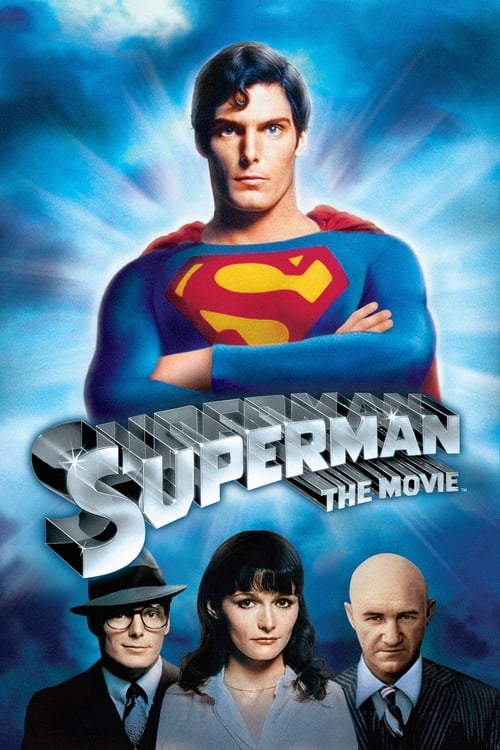
In this iteration, the Flash figures out he can run fast enough to travel not only through time but also across parallel universes--and, in so doing, perhaps accomplish the dangerous trick Superman pulls off in Richard Donner's Superman (1978) of turning the clock back far enough to save a loved one.
There, Christopher Reeve’s Superman stands side by side with Helen Slater’s Supergirl , while Nicolas Cage’s aborted take on the Man Of Steel is able to fight giant spiders in space while a dozen other characters and actors whiz by in a…um…flash.
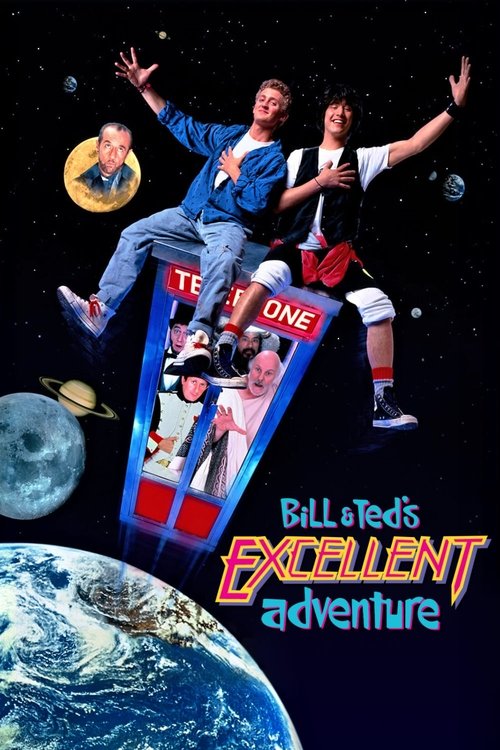
This point is particularly true with scenes that feature both past and present Barry Allen on screen, with Ezra Miller doing his best Ted impression for the younger Flash, ala 1989’s Bill & Ted’s Excellent Adventure , that somehow manages not to overstay its welcome.
Advertisement
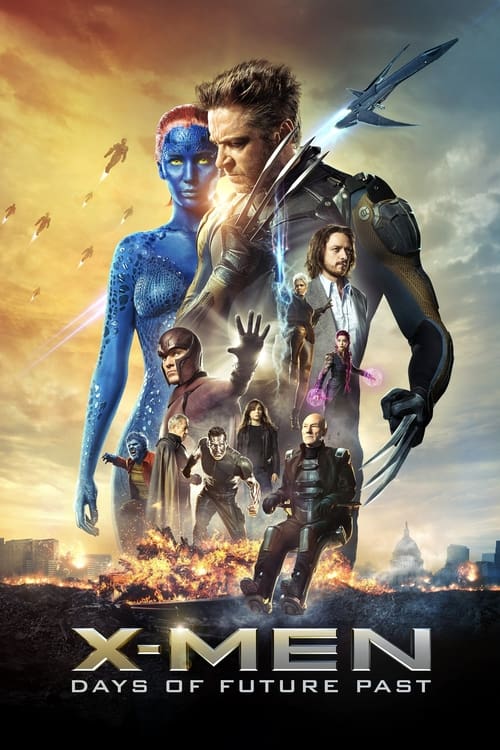
The scene makes me recall the phenomenal Quicksilver’s (Marvel’s version of The Flash) kitchen scene in X-Men: Days Of Future Past which is still superior to this one.
And there is nothing in “The Flash” to rival Evan Peters’ Quicksilver scene in “X-Men: Days of Future Past.”
It’s quick to jump into action sequences as well, orchestrating a silly, dominate-the-world conceit for a frenetic opening that boasts tremendous catastrophes – the brunt of which focuses on hyper-complex, slow-motion orchestrations that are never as engaging or as funny as the kind executed with Quicksilver from “X-Men: Days of Future Past.”
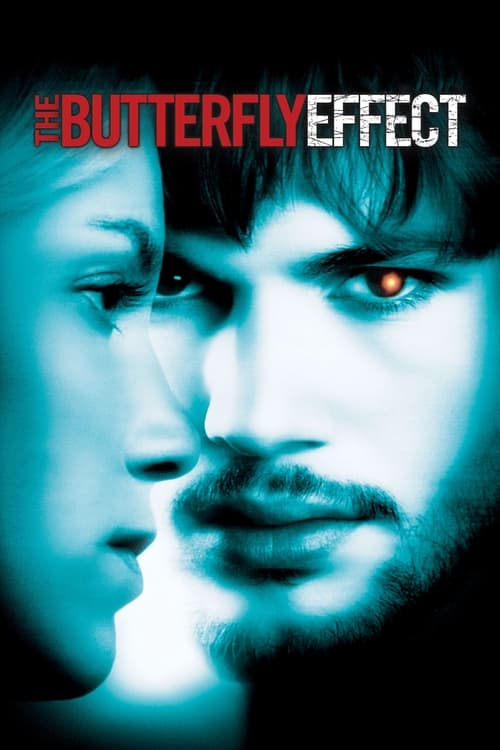
Barry and Bruce discuss the concept of “The Butterfly Effect” – that every minor change to a timeline could kick off an unpredictable chain reaction leading to catastrophe.