
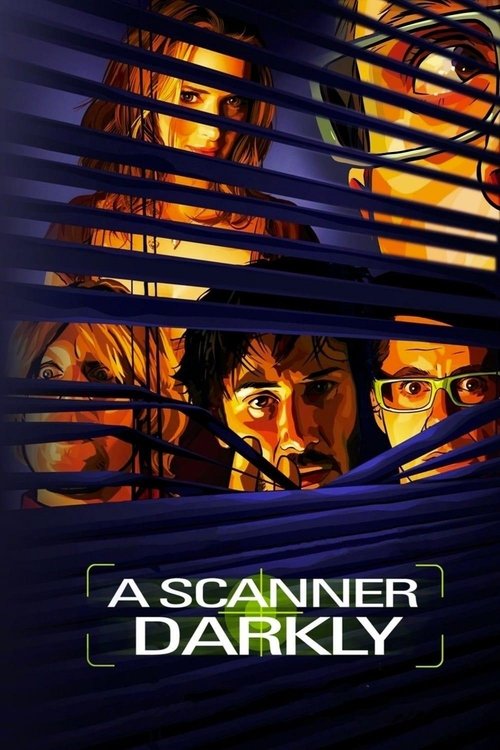
A Scanner Darkly (2006)
Directed by Richard Linklater
An undercover cop in a not-too-distant future becomes involved with a dangerous new drug and begins to lose his own identity as a result.
25 connections found
View:
25 films that influenced A Scanner Darkly
What critics say influenced A Scanner Darkly


Most adaptations of novels or short stories by cult science fiction writer Philip K Dick (Paycheck, Minority Report, Total Recall) use his imaginative scenarios for action sequences but sideline his extraordinary philosophical musings.
Unlike Ridley Scott (Blade Runner), Steven Spielberg (Minority Report), and Paul Verhoeven (Total Recall), Linklater has chosen not to massage the story to make it more accessible.
From Total Recall to Minority Report , Screamers to Blade Runner , the themes have always included a Big Brother world of paranoia, some suppressive totalitarian government and a technological future that squelches individuality.
The strange, kaleidoscopic universe of writer Philip K. Dick has been transferred to celluloid numerous times, in films from Blade Runner and Total Recall to Minority Report.
If we can imagine it for you, it's true (echoes of Dick's short story, "We Can Remember It For You, Wholesale", which became Total Recall ), thus this mass media televisual dystopia of ours becomes the angry fix for our atrophied left hemispheres.
But for every Minority Report or Blade Runner, we’re stuck also with a Paycheck or (shudder) Total Recall.
One of Dick's books, A Scanner Darkly describes a nightmarish world in which a narcotics agent ends up narking on himself.
The filmmakers based the movie on a story by the late Philip K. Dick, from whose prolific writings have come such other sci-fi films as "Blade Runner" (1982), "Total Recall" (1990), "Screamers" (1995), "Impostor" (2002), "Paycheck" (2003), "A Scanner Darkly" (2006), "Next" (2007), and "Radio Free Albemuth" (2010).
Most adaptations of novels or short stories by cult science fiction writer Philip K Dick (Paycheck, Minority Report, Total Recall) use his imaginative scenarios for action sequences but sideline his extraordinary philosophical musings.
Like Ridley Scott's Blade Runner and Steven Spielberg's Minority Report, A Scanner Darkly is based on the science fiction of Philip K. Dick.
The writer Philip K. Dick has inspired Hollywood to both highs ("Blade Runner", "Minority Report" ) and lows ("Paycheck", "Imposter") with his cautionary tales set in very recognizable futures.

The writer Philip K. Dick has inspired Hollywood to both highs ("Blade Runner", "Minority Report" ) and lows ("Paycheck", "Imposter") with his cautionary tales set in very recognizable futures.
Based on Philip K. Dick's 1977 novel that was informed by the author's own drug experiences, the film, which retains the dark humor often missing from other Dick adaptations such as "Blade Runner," "Minority Report" and "Paycheck," is at once dated and eerily prescient.
But for every Minority Report or Blade Runner, we’re stuck also with a Paycheck or (shudder) Total Recall.
Based on a novel by Philip K. Dick -- whose works have inspired films both good ( "Minority Report," "Total Recall") and bad ( "Impostor," "Paycheck" ) -- "Scanner" is set a few years in the future, in a heavily surveilled America where 20 percent of the citizens are addicted to a new illicit drug called Substance D. An organization called New Path is providing rehab for recovering D addicts, but their methods are mysterious and their treatment centers are not open to public scrutiny.
Most of these, such as Ridley Scott's Blade Runner (1982), Paul Verhoeven's Total Recall (1990), Gary Fleder's Impostor (2002) and John Woo's Paycheck (2003) were instantly underrated upon release, and A Scanner Darkly is likely to join them.

From Total Recall to Minority Report , Screamers to Blade Runner , the themes have always included a Big Brother world of paranoia, some suppressive totalitarian government and a technological future that squelches individuality.
Of the many movies adapted from Dick's books, including "Total Recall," "Blade Runner," "Screamers" and "Minority Report," Linklater's is unassailably the most faithful.
Advertisement
While a film such as Blade Runner successfully adapted Dick’s ideas for the medium of film, A Scanner Darkly is a more literal adaptation that closely reproduces the story from the original novel.
Like Ridley Scott's Blade Runner and Steven Spielberg's Minority Report, A Scanner Darkly is based on the science fiction of Philip K. Dick.
And as great as they were (Blade Runner is indisputably one of the best science-fiction pictures of all time), they never quite captured the edgy paranoia that Dick excelled at: the drug-fueled certainty that someone really is out to get you.
The writer Philip K. Dick has inspired Hollywood to both highs ("Blade Runner", "Minority Report" ) and lows ("Paycheck", "Imposter") with his cautionary tales set in very recognizable futures.
From Total Recall to Minority Report , Screamers to Blade Runner , the themes have always included a Big Brother world of paranoia, some suppressive totalitarian government and a technological future that squelches individuality.
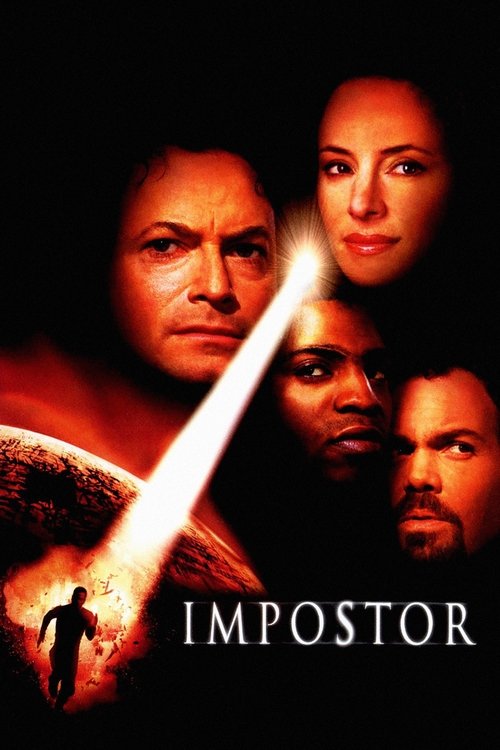
Based on a novel by Philip K. Dick -- whose works have inspired films both good ( "Minority Report," "Total Recall") and bad ( "Impostor," "Paycheck" ) -- "Scanner" is set a few years in the future, in a heavily surveilled America where 20 percent of the citizens are addicted to a new illicit drug called Substance D. An organization called New Path is providing rehab for recovering D addicts, but their methods are mysterious and their treatment centers are not open to public scrutiny.
Most of these, such as Ridley Scott's Blade Runner (1982), Paul Verhoeven's Total Recall (1990), Gary Fleder's Impostor (2002) and John Woo's Paycheck (2003) were instantly underrated upon release, and A Scanner Darkly is likely to join them.

Layering undulating animation over live-action as he did in “A Scanner Darkly,” Linklater thrillingly journeys to the film medium’s tipping point: “Life” seems to exhale its stoner reveries and sober truths right in front of you.
But more recently, as in the vertiginous Waking Life (2001), he’s tracked the gradual disillusionment of the dissolute, the drift of those once-sunny optimists toward an uneasy dystopia.
Linklater replicates the paranoid and dreamlike mood of Dick’s highly personal story about drug abuse by using the same animation rotoscoping technique as he did in Waking Life.
To give audiences a palpable sense of Fred's delusion, Linklater uses the same style of animation that made his earlier film Waking Life so hypnotic.
Director Richard Linklater broke experimental ground with his 2001 animated “Waking Life” where he utilized a technique called interpolated rotoscoping – live action film drawn over with advanced animation techniques.
Its appearance in Waking Life was more primitive, but also more effective.
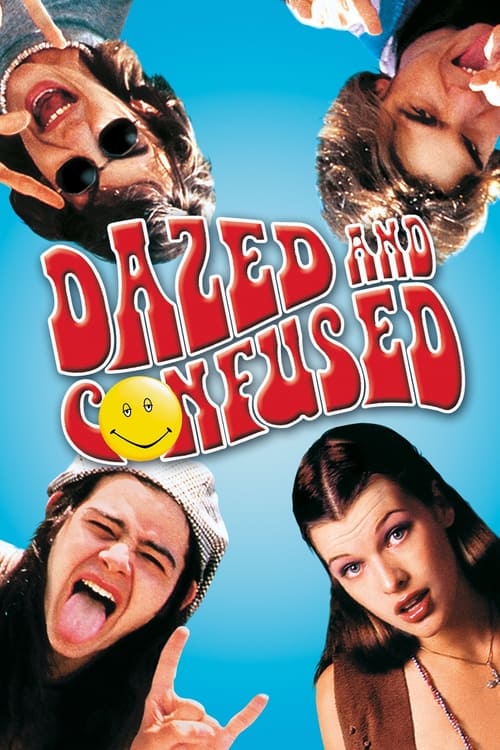
RICHARD LINKLATER HAS BEEN PREOCCUPIED WITH DROPOUT CULTURE since the earliest days of his career: in the loopy Slacker (1991) and the larky Dazed and Confused (1993) he developed archetypal characters fueled by experimental lifestyles, mood- and mind-altering substances, and endless conversation.
The writer-director tends to traffic in a kind of peripheral, druggie subculture ("Slacker", "Dazed and Confused", "Waking Life") and Mr. Dick is known to have experimented with more than his fair share of substances.
Linklater (“Dazed and Confused,” “School of Rock”) filmed the movie digitally and then used the same rotoscopic animation technique that he did on his stream-of-consciousness/annoying armchair philosophy film, 2001’s “Waking Life.”
Writer-director Richard Linklater ("Dazed and Confused") employs the same animation-over-live-action style of "Waking Life" to adapt Philip K. Dick's near-futuristic novel, about an undercover cop (Keanu Reeves) investigating the drug use of his friends (Robert Downey Jr., Winona Ryder, Woody Harrelson).
The first character seen is a jittery burnout scratching imaginary crawlies, jumping in the shower and rushing out to score more drugs, horrified of getting pulled over and blithely blown away by the police -- the "culture of addiction" has its newest substance ("D"), the government sees and records everything, but the hophead is Rory Cochrane, the hangover of pothead Ron Slater, from Dazed and Confused, plunked amid the dystopia of Minority Report.
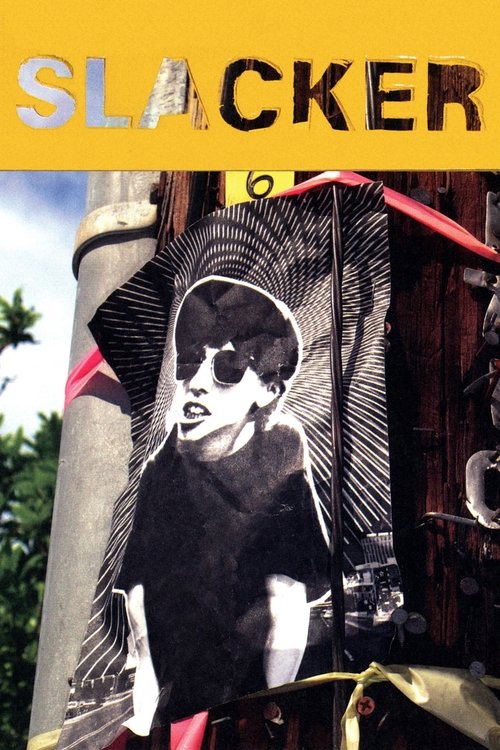
RICHARD LINKLATER HAS BEEN PREOCCUPIED WITH DROPOUT CULTURE since the earliest days of his career: in the loopy Slacker (1991) and the larky Dazed and Confused (1993) he developed archetypal characters fueled by experimental lifestyles, mood- and mind-altering substances, and endless conversation.
The writer-director tends to traffic in a kind of peripheral, druggie subculture ("Slacker", "Dazed and Confused", "Waking Life") and Mr. Dick is known to have experimented with more than his fair share of substances.
The constant patter of these characters is amusing and provides lots of flavor (at times, itâs almost as if these chattering creatures have crept in from Linklaterâs Slacker rather than this cutting-edge science-fiction work), but as a whole, the film has too little character and/or plot development to sustain narrative interest.
Just as Before Sunset wondered if the idealism of Before Sunrise could have survived the passage of time, A Scanner Darkly ponders the inherent doom of Slacker transgressors.
When Richard Linklater made "Slacker" 15 years ago, he filled it with characters living in the margins of American society.
It’s a perfect fit for Linklater, in part because its focus on a group of junkies engaged in stoned, out-there conversation offers an episodic structure that recalls Slacker and Dazed and Confused.
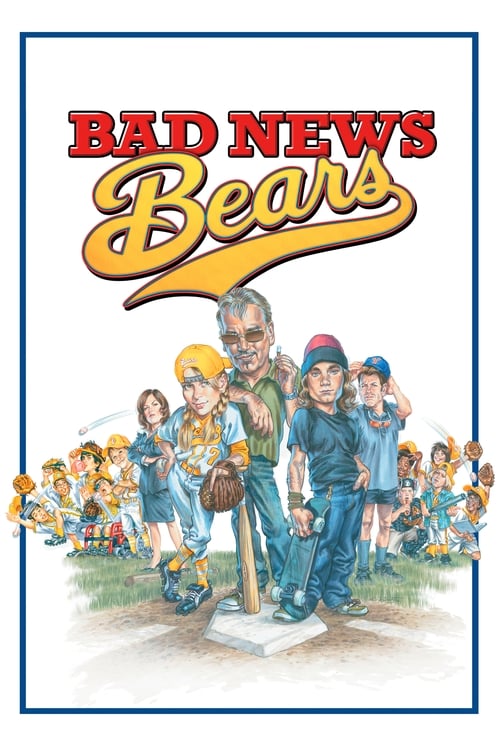
And while their flops are few, they are at least noteworthy in their awfulness: Linklater's remake of The Bad News Bears was an idea that should have been abandoned at the conceptual stage, and Smith is still trying to live down 2004's Jersey Girl, a flubbery romantic vehicle for chum Ben Affleck.
Richard Linklater lost some street cred with "School of Rock," which violated true independent-film principles by being a box office success, and "Bad News Bears," which broke the rules by being a crappy remake.
An often underrated director, ever since breaking through with Dazed and Confused Linklater has effortlessly bounced between inventive independent work like Tape, Before Sunrise, Before Sunset (as well as the aforementioned Waking Life) and crowed-pleasing studio films such as School of Rock and Bad News Bears.
Linklater âs last release was Bad News Bears , and his next is Octoberâs Fast Food Nation .
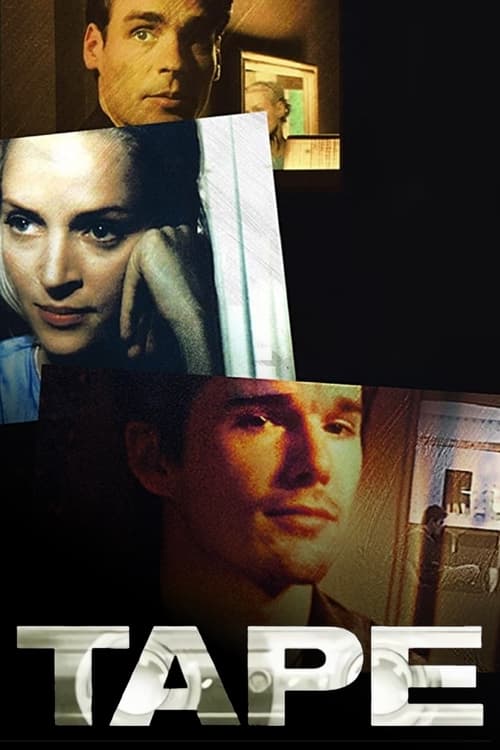
An often underrated director, ever since breaking through with Dazed and Confused Linklater has effortlessly bounced between inventive independent work like Tape, Before Sunrise, Before Sunset (as well as the aforementioned Waking Life) and crowed-pleasing studio films such as School of Rock and Bad News Bears.

With A Scanner Darkly director Richard Linklater (Before Sunrise, The School of Rock) has directly adapted Dick’s novel from page to screen.
Just as Before Sunset wondered if the idealism of Before Sunrise could have survived the passage of time, A Scanner Darkly ponders the inherent doom of Slacker transgressors.
An often underrated director, ever since breaking through with Dazed and Confused Linklater has effortlessly bounced between inventive independent work like Tape, Before Sunrise, Before Sunset (as well as the aforementioned Waking Life) and crowed-pleasing studio films such as School of Rock and Bad News Bears.
This is writer-director Richard Linklater's ("Slacker"/"Before Sunrise") rotoscoped (animation process Linklater first used for Waking Life that interlocks live-action photography with uniquely hazy graphic software animations, thereby blurring the line between reality and hallucinations) take on Philip K. Dick's 1977 classic futuristic counterculture novel, something he wrote from firsthand experience after getting hooked on speed and tranquilizers.

The overall story is a paranoia-fueled, anti-drug tale; but after expending most of its length trading in stoner comedy, the feeling generated is about on par with watching Cheech and Chong follow up a screening of their Up in Smoke (1978) with a PSA on the evils of marijuana.
Advertisement
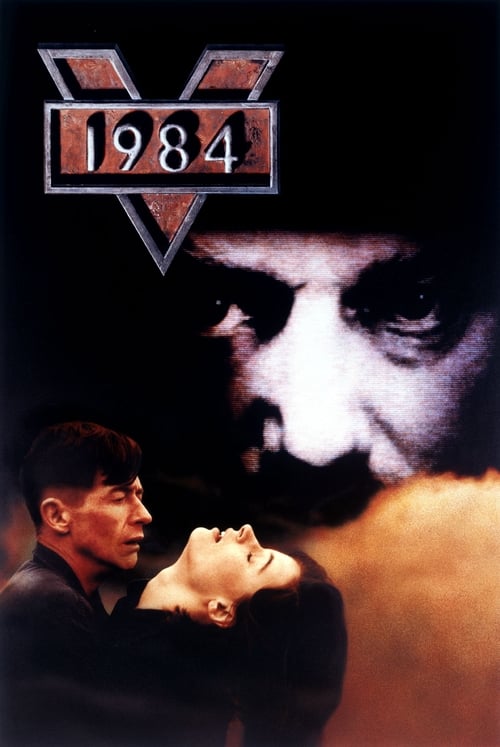
The world of A Scanner Darkly seems far more ordinary and commonplace than something like, to give a well-known example, 1984‘s Oceania, but I am not sure which is more chilling.
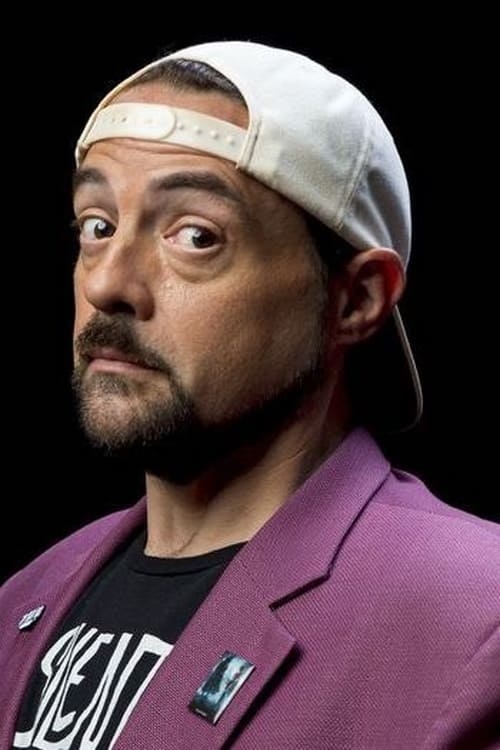
And while their flops are few, they are at least noteworthy in their awfulness: Linklater's remake of The Bad News Bears was an idea that should have been abandoned at the conceptual stage, and Smith is still trying to live down 2004's Jersey Girl, a flubbery romantic vehicle for chum Ben Affleck.
Each man started out with small, indie crowd-pleasers -- Linklater in 1991 with Slackers, Smith in 1994 with Clerks.

It rejoins Dante (Brian O'Halloran) and Randal (Jeff Anderson), who have moved on from the Quick Stop (which burns down in the movie's opening scene), and into a fast food parlor known as Mooby's (introduced in Smith's Dogma), which features a grinning cartoon cow as its icon, has an entryway door that emits a sickly moo when opened, and boasts a four-patty behemoth called ''The Cow Tipper.''
The duo, played by the electrifying Jason Mewes and a tight-lipped Smith, outdo even their nuttiest previous exploits (and that includes the wild ride Jay and Silent Bob Strike Back).