
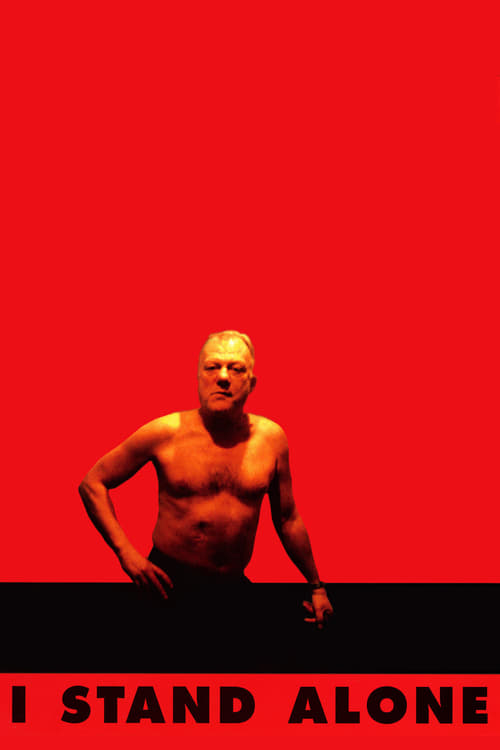
I Stand Alone (1999)
Directed by Gaspar Noé
After completing jail time for beating up a man who tried to seduce his mentally-handicapped teenage daughter, the Butcher wants to start life anew. He institutionalizes his daughter and moves to the Lille suburbs with his mistress, who promises him a new butcher shop. Learning that she lied, the Butcher returns to Paris to find his daughter.
5 connections found
View:
5 connections, in both directions
What critics compared I Stand Alone to




It is the director rummaging through his past loves and crafting a story that is a narcissistic parade of all things Noé with (not so sly) asides (to wit: Murphy keeps drugs in a VHS case for I Stand Alone; there is a model of the Love Hotel from Enter the Void in his apartment; Noé shows up in a cameo as one of Electra's ex-boyfriends, a pretentious art dealer billed as Aaron Pages (anagrams!)).
We can’t print the depravities in “I Stand Alone,” “Irreversible” and “Enter the Void,” but the big shocks in “Love” are more goofy, couldn’t-resist, including two separate cases where Glusman’s member stares right at us and shoots out the camera lens.
He did it with graphic violence in I Stand Alone (1998), with extreme sexual torture in Irréversible (2002), and with mind-melting, sick-making visuals in Enter the Void (2009).
Whereas Noe over-amplified his own sex- and violence-related fantasies in his three previous features (beginning with the bloody “I Stand Alone”), here, the helmer strips away such hyperbole to reveal his naked soul.
Noé is addicted to self-references: Murphy—who, like the Argentinean-born director, came to Paris for film school, not speaking a word of French—stashes drugs in a VHS case for Noé’s debut, I Stand Alone , and has a scale model of one of the fantasy buildings from Enter The Void; in framing scenes that show him slightly older, he has a young son named Gaspar.
Ya sea por su obsesión con lo explícito (la violencia, el sexo o el drama) o los argumentos que sostienen sus películas, desde la formidable y violenta I Stand Alone, su ópera prima, el nombre del director argentino se ha caracterizado por acompañar retratos ultra violentos de realidades sórdidas francesas.
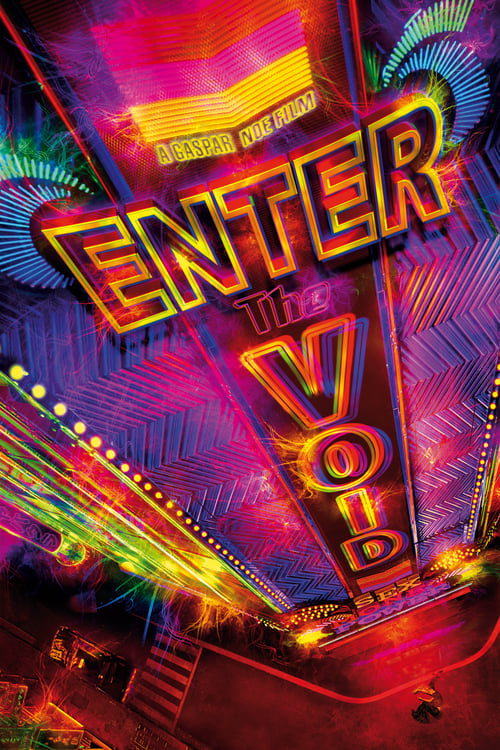
"I Stand Alone" was a portrait of a man on the edge of an unspeakable eruption; "Irreversible" was a punishing revelation of how one act of brutality can breed another and erase all good from life; "Enter the Void" seeks to put its audience into some kind of transcendent state of bodilessness, whether through a druggy affect or, madly, through a simulation of death and, it hints, reincarnation.
Made by the devil-horned provocateur behind I Stand Alone and Irreversible, Enter the Void should be more memorable than it is — it’s a picture whose wildest images don’t linger in the mind as vividly as they ought to — but at least it often feels alive while you’re watching it.
No�, author of the polarizing and galvanizing I Stand Alone and Irreversible, sets the movie up as his grand statement, the dense volume his other work was leading up to.
In such films as 1998's I Stand Alone (in which a crazed horsemeat butcher goes on a rampage) and 2002's Irreversible (an ultra-violent tale of pimps and prostitutes in a Paris sex club, told in reverse order, from last scene to first), abstract notions of fate and destiny commingle with depictions of life at its most riotous.
Noé tips to Godard, an early influence, in the bold text of his opening credits (as he did throughout his first feature I Stand Alone), but Enter the Void is more of a tribute to the late Stanley Kubrick, who commands greater fascination.
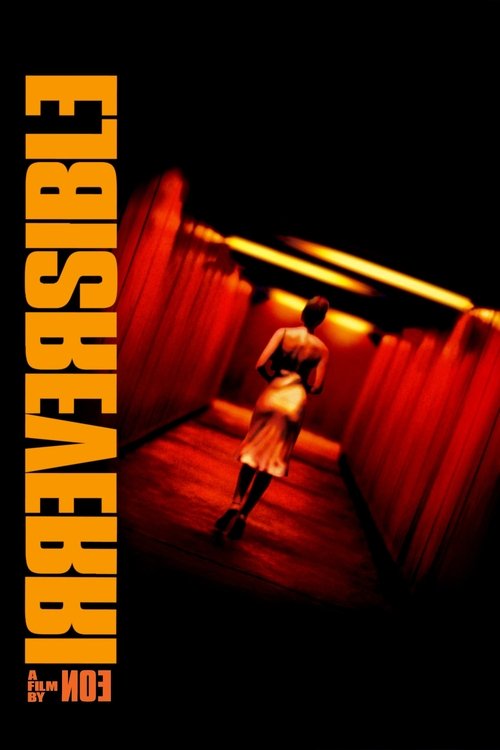
'Time destroys all things' the naked butcher of "I Stand Alone" (Philippe Nahon) tells a friend before police and ambulance sirens draw their attention to a commotion outside at The Rectum, a notorious Parisian gay club.
(Nahon would appear to be reprising his butcher character from Noé's I Stand Alone.)
Gaspar Noé's steely-eyed 1998 feature I Stand Alone was like a French Taxi Driver — only 22 years bleaker.
The film begins with its supposedly backward credits and a brief appearance by Philippe Nahon, the butcher of I Stand Alone (also the focus of Noe's first film, Carne) -- brought back like a presiding philosopher king to inform us and a friend of his that "time destroys everything."
The nudist, the raging center in Noé's previous feature "I Stand Alone," replies, "I was in the joint because I slept with my daughter....
"Irreversible," director Gaspar Noe's much anticipated follow-up to his 1998 Cannes award winner "I Stand Alone," is a repulsive masturbatory exercise whose only achievement is its heroic ratio of style over story.
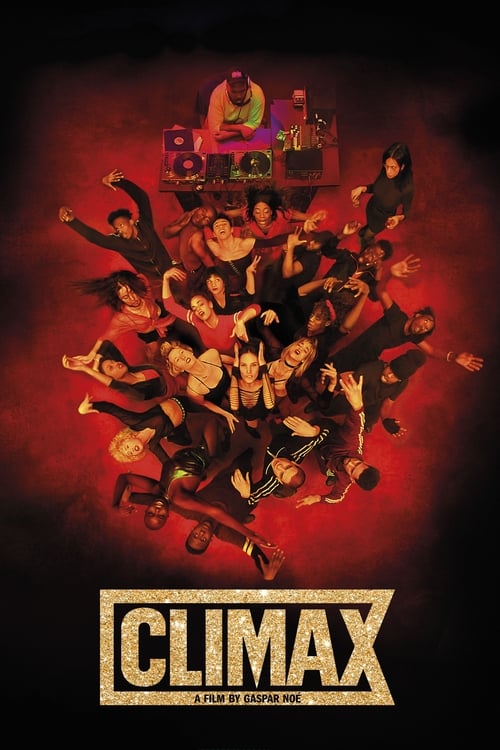
Climax also plays like a dance remix of all Gaspar Noé’s other hits: for there is the the incest of I Stand Alone (Seul contre tous), the begin-at-the-end structure of Irréversible, the blink-cut wooziness of Enter The Void and the messy, sexually liberated conjunctions of Love.
As always, he’s out to provoke, with gleeful teaser posters screaming: “You despised I Stand Alone, you hated Irréversible , you loathed Enter the Void , you cursed Love , now try Climax”, accompanied by an image of the Argentina-born, Paris-based director raising a glass with a demonic grin.
Plenty of discomfort is also to be had, especially with some of Noe’s favored motifs, revisiting the kicking of a pregnant woman’s abdomen a la his 1998 debut I Stand Alone .
The gruesome climax of Noé's previous movie, "I Stand Alone," was preceded by a flourish right out of William Castle, a blinking red "WARNING!"