
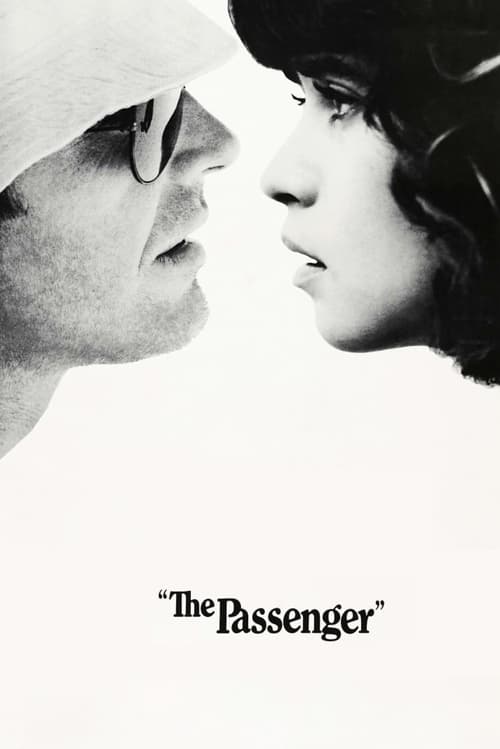
The Passenger (1975)
Directed by Michelangelo Antonioni
David Locke is a world-weary American journalist who has been sent to cover a conflict in northern Africa, but he makes little progress with the story. When he discovers the body of a stranger who looks similar to him, Locke assumes the dead man's identity. However, he soon finds out that the man was an arms dealer, leading Locke into dangerous situations. Aided by a beautiful woman, Locke attempts to avoid both the police and criminals out to get him.
6 connections found
View:
6 films that influenced The Passenger
What critics say influenced The Passenger



Jack Nicholson, who worked with Antonioni in The Passenger, reads from a few essays and provides his own remarks about the great director.
Writings by Antonioni, read by Jack Nicholson, with his personal recollections of the director, are also on the disc, which only made me want a Criterion Blu-ray edition of their underrated collaboration The Passenger, even more.
As a result, I suspect that most contemporary audiences will find themselves as alienated with the film as the central character is with his life and even those with a taste for Antonioni’s elliptical narratives would probably have to admit that works such as “L’Avventura” and “Blow-Up” dealt with similar material in a far more compelling manner (and neither had the additional handicap of the weak performance by Schneider, in her only significant post-“Last Tango in Paris” role).
Antonioni, who established his own identity with landmark films such as "L'Avventura," "L'Eclisse" and "Blow-Up" in the 1960s, returned to form in "The Passenger."
The Italian-born Antonioni was a major name in world cinema in the 1960s, thanks to films such as "L'Avventura"and "Eclipse."
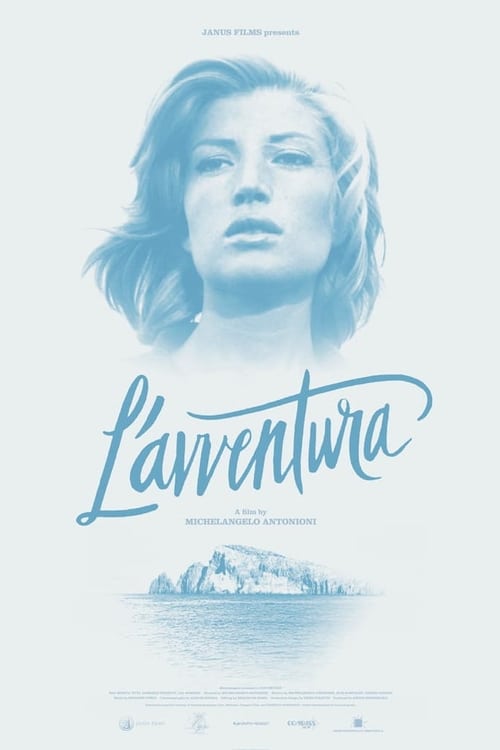
Antonioni made a similar movie to The Passenger in his native Italy called L'Avventura (1960).
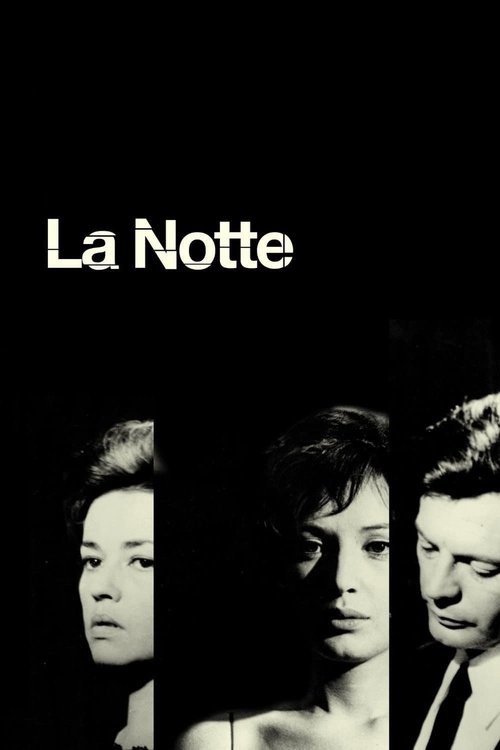
Of course, his classic trilogy of isolationism - "L'Avventura" (1959, which put Antonioni on the international map), "La Notte" (1961) and "L'Eclisse" (1961) - as well as his trio of English-language films - his biggest international hit in "Blow-Up" (1966), the much-maligned "Zabriskie Point" (1969) and the Jack Nicholson-starrer "The Passenger" (1975) - will be screened.
You could argue that later Antonionis begin to remove that choice--begin to suggest, in movies like Zabriskie Point and The Passenger, that it's too late, that modernity has killed the artist, or that post-modernism has declared that the only thing divine is our desire for it.
Even " Blow-Up ," set in London, or "La Notte," in Milan, seem barely inhabited; he is drawn to spaces empty of people, save a few characters who wander irresolutely through in search of -- well, of nothing.
The one word that describes Antonioni's filmmaking is "ennui", and The Passenger is his ennui-est movie; L'avventura and La notte might showcase characters with a complete detachment from the shallow culture containing them, but The Passenger goes one step further, taking away the culture itself.

The film was produced by Carlo Ponti, who had contracted Antonioni to make three English language films for MGM (the others were “Zabriskie Point” and “The Passenger”).
Even " Blow-Up ," set in London, or "La Notte," in Milan, seem barely inhabited; he is drawn to spaces empty of people, save a few characters who wander irresolutely through in search of -- well, of nothing.
As a result, I suspect that most contemporary audiences will find themselves as alienated with the film as the central character is with his life and even those with a taste for Antonioni’s elliptical narratives would probably have to admit that works such as “L’Avventura” and “Blow-Up” dealt with similar material in a far more compelling manner (and neither had the additional handicap of the weak performance by Schneider, in her only significant post-“Last Tango in Paris” role).
Antonioni, who established his own identity with landmark films such as "L'Avventura," "L'Eclisse" and "Blow-Up" in the 1960s, returned to form in "The Passenger."
For instance, where Antonioni’s films have often had an unwarranted way of seeing with a foreigner’s eye—particularly “Blow-Up” and “Zabriskie Point”—the method is totally pertinent to “The Passenger,” because it is a study of a bleached-out man for whom everything is estranging.
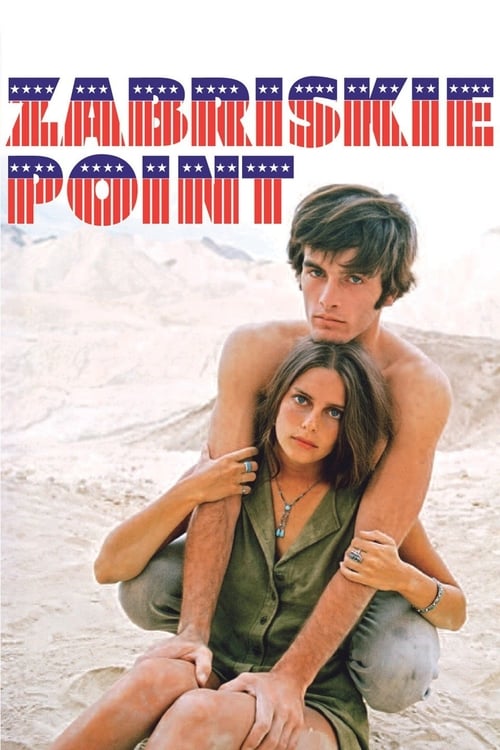
For instance, where Antonioni’s films have often had an unwarranted way of seeing with a foreigner’s eye—particularly “Blow-Up” and “Zabriskie Point”—the method is totally pertinent to “The Passenger,” because it is a study of a bleached-out man for whom everything is estranging.
After the critical pillory that followed the release of Antonioni’s Zabriskie Point six years earlier, audiences and reviewers were approaching Antonioni’s new film with a mixture of hope and trepidation.
Like many foreign directors, he was seduced by Hollywood and made three English-language pictures there, Blowup (1966), The Passenger, and Zabriskie Point (1969).
The last of three English language films he made for MGM (after "Blowup" and "Zabriskie Point"), it got mixed reviews, fared poorly at the box office and received no Oscar consideration.
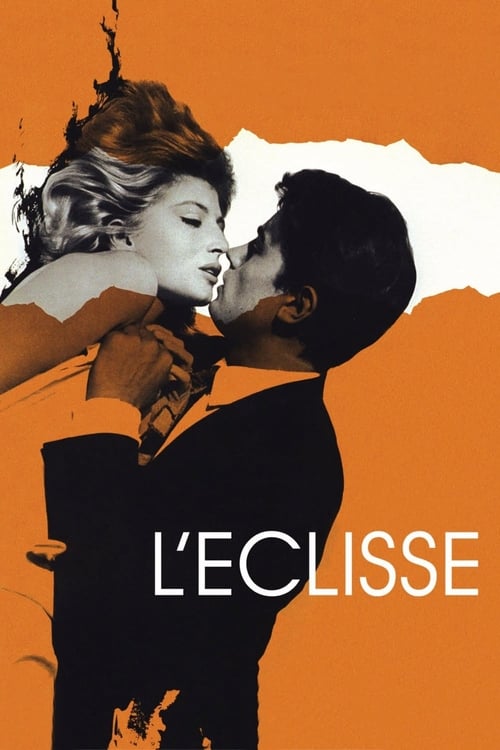
Antonioni, who established his own identity with landmark films such as "L'Avventura," "L'Eclisse" and "Blow-Up" in the 1960s, returned to form in "The Passenger."

Michalangelo Antonioni's first color film, The Red Desert (1964), could be called a film for persons who found The Passenger too straightforward and cheery.
There is none of the disquiet between the instinctive and the ideological halves of a slumbrous man in arcane agony which made his “Eclipse” and “Red Desert” seem the struggles of a dozing patient to kick the sheets about in a long, long night.