
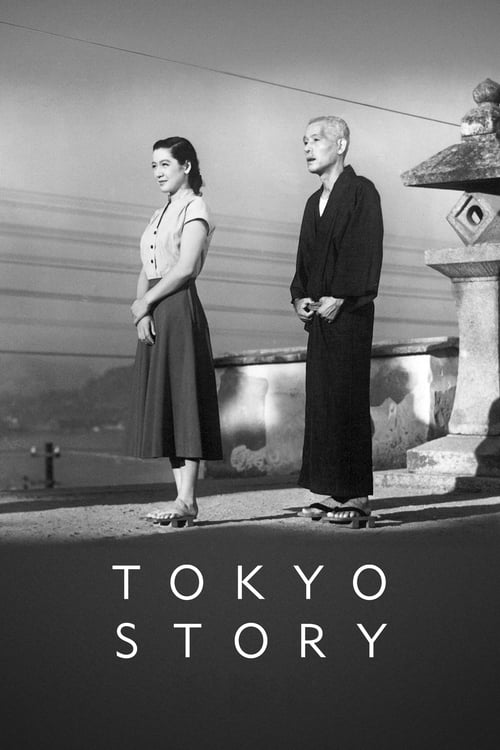
Tokyo Story (1953)
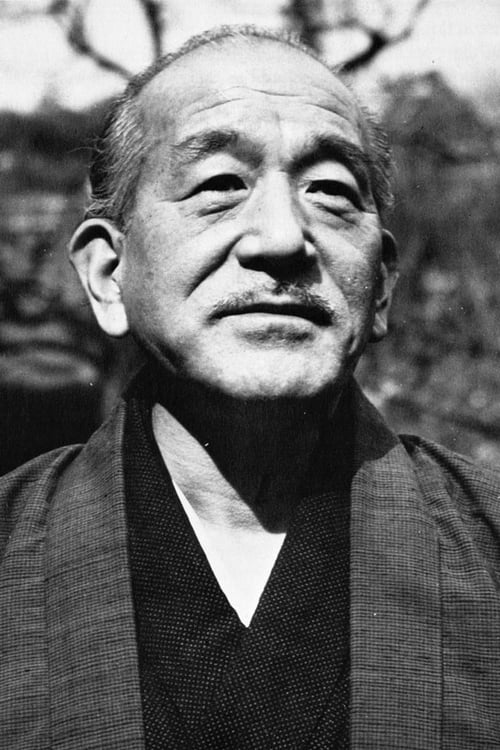
Directed by Yasujirō Ozu
The elderly Shukishi and his wife, Tomi, take the long journey from their small seaside village to visit their adult children in Tokyo. Their elder son, Koichi, a doctor, and their daughter, Shige, a hairdresser, don't have much time to spend with their aged parents, and so it falls to Noriko, the widow of their younger son who was killed in the war, to keep her in-laws company.
4 connections found
View:
4 films that influenced Tokyo Story
What critics say influenced Tokyo Story
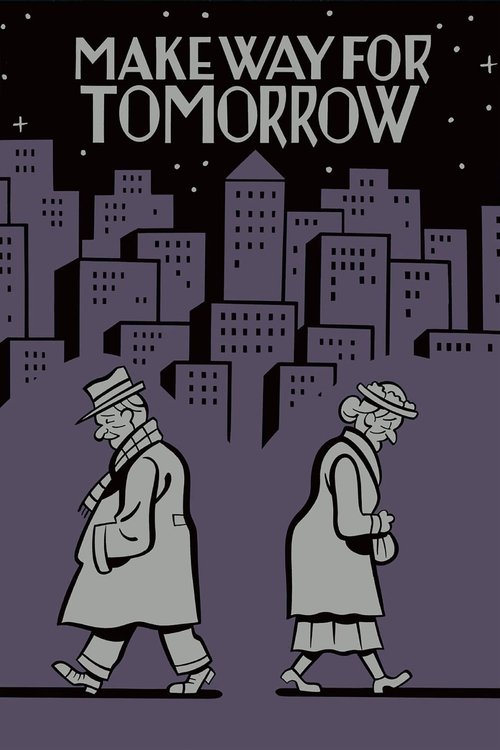


The film is not fueled by incident or melodrama - the clearest break it makes from its avowed inspiration, Leo McCarey's heart-rending Make Way for Tomorrow of 1937 - but by character interactions: the film simply places us in the middle of a family situation and allows us to be thrilled and enthralled by the greatest cinematic spectacle of them all, the feelings of human beings.
With its debt to Leo McCareys trenchantly titled Make Way for Tomorrow sixteen years earlier, Yasujiro Ozus Tokyo Story/Tokyo monogatari is no less true, shattering, and not for viewers fretting about unsympathetic grown-up children.
Before they depart, the couple treat themselves to a bittersweet night on the town, and it is here that McCarey’s masterful mise en scène recalls the spare profundity of a Japanese landscape print—no surprise that the film is the ostensible inspiration for Yasujirô Ozu’s Tokyo Story.
Of these, the filmmaker's personal favorite and arguably his film with the highest overall reputation among those who've seen it is Make Way for Tomorrow , our current subject; I am not myself quite inclined to call it better than Duck Soup or fellow 1937 release The Awful Truth (with which it shares screenwriter Viña Delmar), but that's pretty damn good company to be in regardless; and serving as the inspiration for Tokyo Story isn't too shabby either.
Tokyo Story was co-written by a longtime associate of Ozu's, Kogo Noda, who felt inspired by his memories of having watched Leo McCarey's Make Way for Tomorrow, a tremendously heartfelt 1937 Hollywood drama which recounts a similar story.
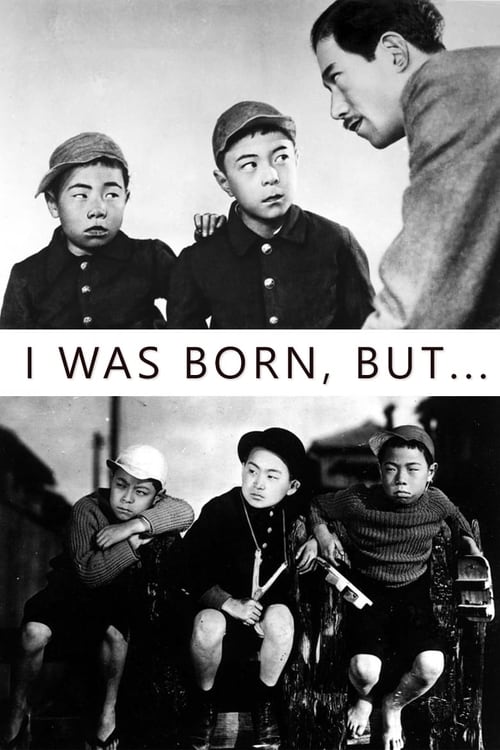
Yet even the characters in something as lighthearted as 1932's I Was Born, But... ( ; Jan. 16) -- a delightful silent film about two young brothers whose family moves to a new town, which Ozu remade 27 years later as Good Morning -- are forced to contend with unexpected slights and hurts.
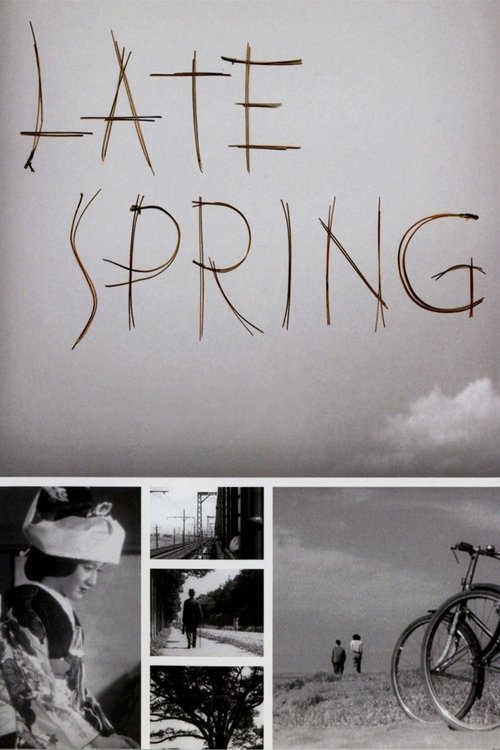
It is not, in fairness, the only perfect film made by director Ozu Yasujiro: there are no quantitative ways to measure the difference between it and Late Spring , and I wouldn't bat an eye at the suggestion that his final two films (both in color), The End of Summer and An Autumn Afternoon , are more accomplished than either.
Perhaps the most powerful such moments are conveyed by Setsuko Hara in Ozu's two most celebrated films, 1949's Late Spring and 1953's Tokyo Story, both of which are presented in limited runs this week.
“Tokyo Story” was voted the third greatest film of all-time in the 2012 Sight and Sound poll , just behind “Vertigo” and “Citizen Kane,” and the inclusion of “Late Spring” at number 15 makes Ozu the only director with two entries in the top twenty (Coppola and Dreyer were close).
This film may be concerned with time (and its chief symbol may be Tomi’s old-fashioned, albeit still ticking, timepiece), but Ozu’s carefully framed, quietly sedate mise-en-scène makes Tokyo Story seem timeless – an effect aided by some masterfully understated performances, as Ryu and Hara, ringing the changes on roles that they had already played in Ozu’s Late Spring and Early Summer , both show the full range of human emotions that can be concealed behind a smile.
Reductive critics may protest that he made virtually the same films again and again, and in this regard, Tokyo Story may not be any "better" than, say, There Was a Father or Late Spring or Early Summer, but in such stellar company, hierarchies become meaningless and subtle differences become everything.
Some of these films include Late Spring (Banshun, 1949), Early Summer (Bakushu, 1951), Floating Weeds (Ukigusa, 1959) and An Autumn Afternoon (Sanma no aji, 1962).
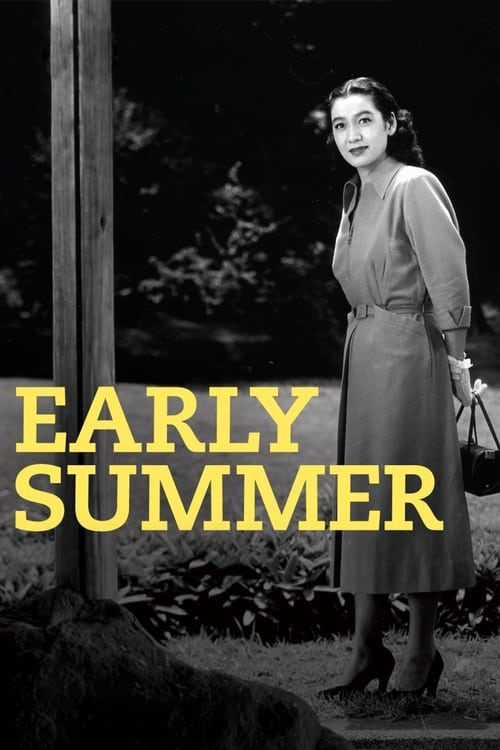
Reductive critics may protest that he made virtually the same films again and again, and in this regard, Tokyo Story may not be any "better" than, say, There Was a Father or Late Spring or Early Summer, but in such stellar company, hierarchies become meaningless and subtle differences become everything.
This film may be concerned with time (and its chief symbol may be Tomi’s old-fashioned, albeit still ticking, timepiece), but Ozu’s carefully framed, quietly sedate mise-en-scène makes Tokyo Story seem timeless – an effect aided by some masterfully understated performances, as Ryu and Hara, ringing the changes on roles that they had already played in Ozu’s Late Spring and Early Summer , both show the full range of human emotions that can be concealed behind a smile.
Some of these films include Late Spring (Banshun, 1949), Early Summer (Bakushu, 1951), Floating Weeds (Ukigusa, 1959) and An Autumn Afternoon (Sanma no aji, 1962).
The Criterion Collection has just released Early Summer (1951), their fourth Ozu disc, after Good Morning (1959), Tokyo Story (1953) and Floating Weeds (1959).