
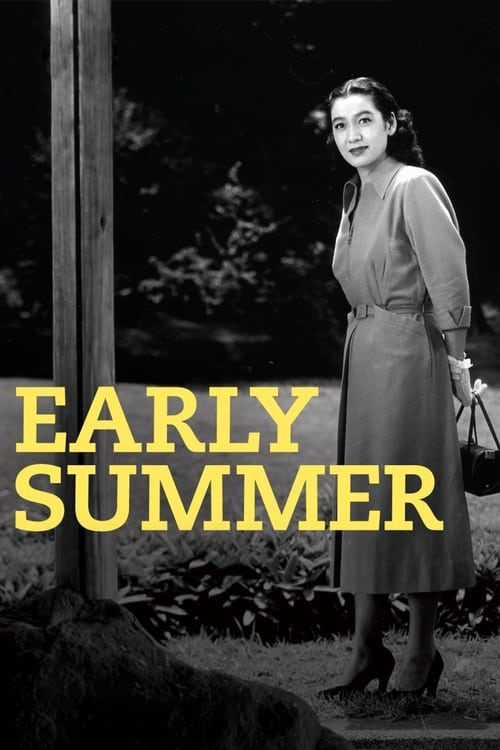
Early Summer (1951)
Directed by Yasujirō Ozu
In postwar Tokyo, Noriko lives with her extended family. Although she enjoys her career and her social life, her more traditional family worries about her single marital status at the advanced age of 28. 40-year-old business associate Takako proposes, Noriko's family press her into accepting, but when her widowed childhood friend Kenkichi returns to the neighborhood, she finds her heart leading in another direction.
1 connection found
View:
1 connections, in both directions
What critics compared Early Summer to
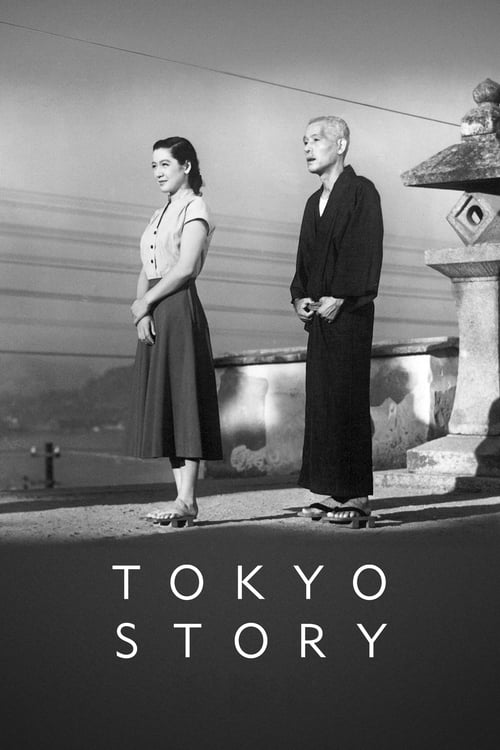


Reductive critics may protest that he made virtually the same films again and again, and in this regard, Tokyo Story may not be any "better" than, say, There Was a Father or Late Spring or Early Summer, but in such stellar company, hierarchies become meaningless and subtle differences become everything.
This film may be concerned with time (and its chief symbol may be Tomi’s old-fashioned, albeit still ticking, timepiece), but Ozu’s carefully framed, quietly sedate mise-en-scène makes Tokyo Story seem timeless – an effect aided by some masterfully understated performances, as Ryu and Hara, ringing the changes on roles that they had already played in Ozu’s Late Spring and Early Summer , both show the full range of human emotions that can be concealed behind a smile.
Some of these films include Late Spring (Banshun, 1949), Early Summer (Bakushu, 1951), Floating Weeds (Ukigusa, 1959) and An Autumn Afternoon (Sanma no aji, 1962).
The Criterion Collection has just released Early Summer (1951), their fourth Ozu disc, after Good Morning (1959), Tokyo Story (1953) and Floating Weeds (1959).