
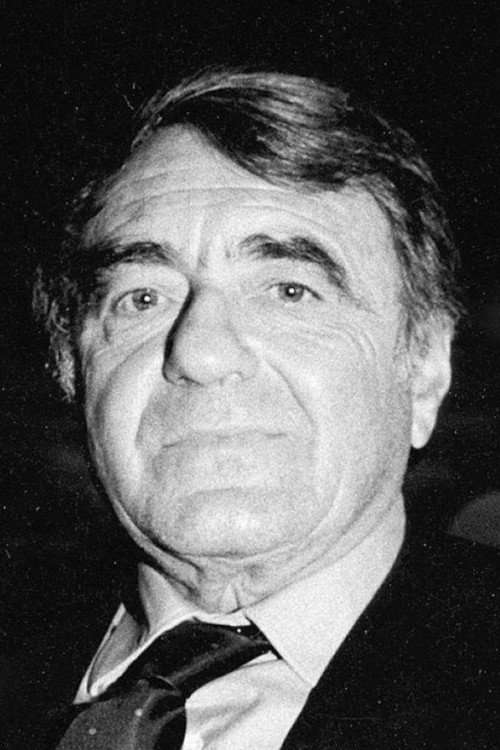
Claude Lanzmann
8 connections found
Filmography
View:
Connections, in both directions
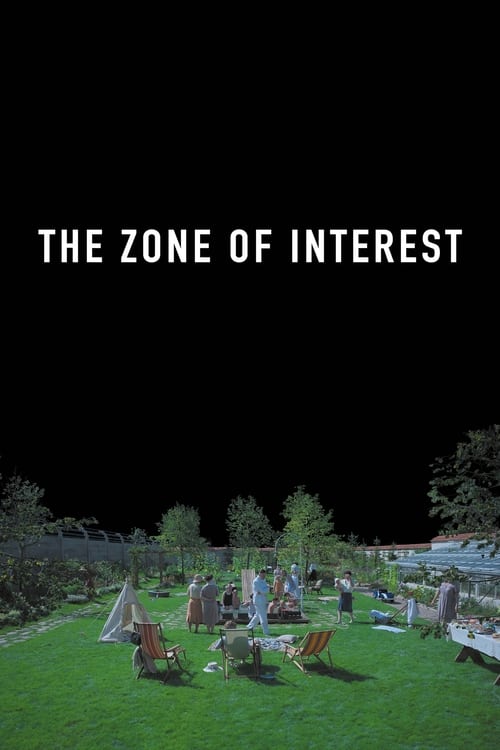


It's this emphasis on keeping the Holocaust unsaid and unseen yet always heard is what makes The Zone of Interest an undeniably powerful yet unique cinematic experience that lines it in the tradition of films like Claude Lanzmann's Shoah (1985) and Joshua Oppenheimer's The Act of Killing (2012) – a coughing fit evokes Anwar Congo from the latter.
This is the same line of reasoning that leads to the (extremely stylistically different) 1985 documentary Shoah, for one, and I will say that I don't know that I agree.
Claude Lanzmann, in his monumental Shoah, gave us the bureaucratic answer: defining at length the logistics of how it happened. British filmmaker Jonathan Glazer now offers up a physiological response: the mental compartmentalization needed to completely sidestep and ignore a soul-shattering nightmare happening in your vicinity.

Nobody who knows Claude Lanzmann’s “Shoah” can forget the sequences filmed in Poland, some of them near former extermination camps.
“If you could lick my heart it would poison you,” an aged Polish Jewish partisan tells Claude Lanzmann near the end of Shoah .
For a concentrated overview of Nazi horror, Resnais' poetic thirty-minute Night and Fog remains definitive, but for the hardy, Shoah relentlessly uncovers facets that viewers will never forget, posing questions about just what it means to be a human being in this crazy universe.
Claude Lanzmann's 1985 Shoah is so indebted to this film that it never could have been conceived, much less made, without Resnais' example, and Schindler's List is a cartoon alongside it.
In practice, it competes only with Alain Resnais's nightmarish 1955 short Night and Fog to be the most devastating and comprehensive document about the Holocaust yet produced.
If the first option had been realized so perfectly in Alain Resnais’ brief but powerful 1955 film, Night and Fog, and the second option too vulgar for everyone but the Americans, what were filmmakers who wanted to explore the millions of stories of the Holocaust to do? Claude Lanzmann, a French filmmaker and contemporary of philosophers Jean-Paul Sartre and Simone de Beauvoir, spent eleven years exploring a third option.
What’s more, when a Japanese Christian greets Rodrigues by making the sign of the cross, he does it close to his neck, so that it looks rather like the miming of a throat-slitting—a gesture distinctly reminiscent of a moment in Claude Lanzmann’s “Shoah.”

One way is to present the overwhelming evidence as Raul Hilberg does in "The Destruction of the European Jews" and Claude Lanzmann does in his documentary "Shoah."
Perhaps wisdom should be taken from the words of Shoah filmmaker, Claude Lanzmann, that any dramatic attempt to recreate the Holocaust is intrinsically a lie, an obscene lie, no matter if it’s Ilsa, She Wolf of the SS or Schindler’s List.
In the terms propounded by Claude Lanzmann's Shoah (1985), it concerns ethics.

This is a long movie but not a slow one, and in its words it creates something of the same phenomenon I experienced while watching "My Dinner With Andre".