
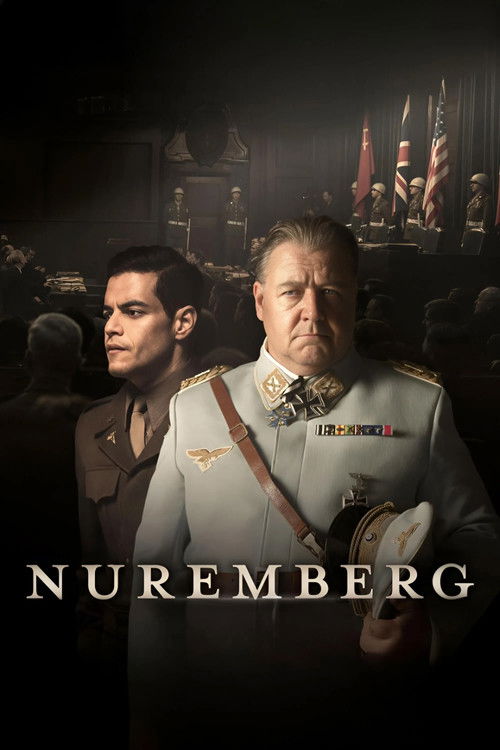
Nuremberg (2025)
Directed by James Vanderbilt
In postwar Germany, an American psychiatrist must determine whether Nazi prisoners are fit to go on trial for war crimes, and finds himself in a complex battle of intellect and ethics with Hermann Göring, Hitler's right-hand man.
62 connections found
View:
62 films that influenced Nuremberg
What critics say influenced Nuremberg



…in line with the well-known scene in A Few Good Men where Jack Nicholson yells at Cruise that he can’t handle the truth…
You will spend much of the trial waiting for the A Few Good Men moment that Vanderbilt’s script and direction very obviously telegraph, for example.
…a gripping courtroom drama in the mold of the Aaron Sorkin-penned “A Few Good Men,”…
The film builds up to a Few Good Men-like confrontation between Göring and the American prosecutor, but the outcome is drier than a mass-produced cookie.
Pulling off sleight-of-hand magic with an attempted cocksure swagger while sporting a leather coat and shades that are undoubtedly wearing him, Malek arrives as if he were auditioning for A Few Good Men.
Nuremberg tries way too hard to replicate the prosecution/witness dynamic of A Few Good Men.

Highlighting the banality of evil has become a trend in recent Holocaust dramas like The Zone of Interest. But unlike that film, Nuremberg relies on didactic expository dialogue.
…as an exploration of Nazi evils the film pales in comparison to Jonathan Glazer's masterwork The Zone of Interest (2023)…
It’s unfair to make the comparison to Jonathan Glazer’s The Zone of Interest. Still, Glazer’s film was willing to sit uncomfortably with evil long enough to dissect it without turning its characters into a sideshow of Hollywood tropes. The problem is that it’s not as accessible as Vanderbilt’s film. They share the intent of dissecting evil, but Glazer is much clearer about how he wants to approach it, while Vanderbilt strings together a few conceptually interesting ideas before sacrificing them all for a more generic absolute.
…just as 2023’s The Zone of Interest depicted, Nuremberg captures how the Holocaust was not carried out by some supernatural evil but by everyday people so entrenched in their beliefs, ambition, and power that they committed horrific acts against their fellow human beings.
While the plot may not deliver the same emotional gut-punch as The Zone of Interest, it also explores the banality of evil, suggesting that horrific acts are committed not by some supernatural force, but by ‘ordinary people’ motivated by ambition and unchecked desire for power.
It is so hard to put this up against the artistic stretching we’ve seen the last few years from films like Poor Things, Everything Everywhere All At Once, The Substance, or even the design of WWII drama The Zone of Interest.
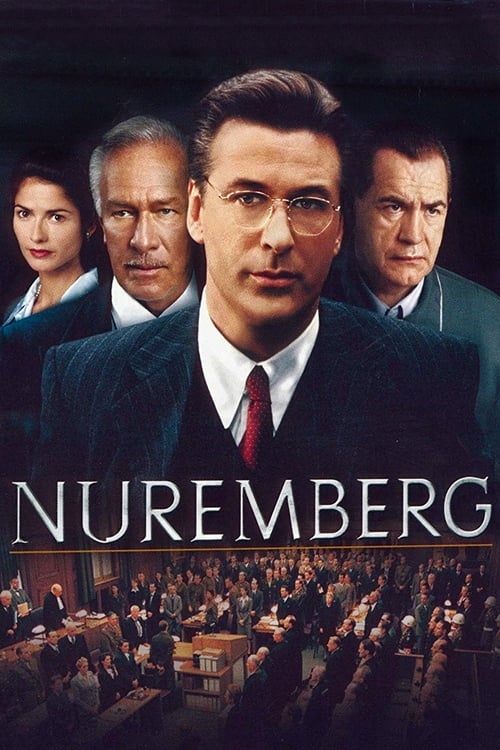
Much closer to Nuremberg is a 2000 TV miniseries, also called Nuremberg, starring Alec Baldwin as Jackson, the American prosecutor, and Brian Cox as Goering.
What is essentially so disappointing about “Nuremberg” is that the tenor and aesthetic of the proceedings isn’t far from a two-part 2000 docudrama of the same title.
…most notably the 2000 mini-series Nuremberg with Alec Baldwin opposite the brilliant Brian Cox as Göring…
Vanderbilt may be a fan of Yves Simoneau’s 2000 telefilm Nuremberg, which starred Alec Baldwin as Jackson and Brian Cox as Göring…
Then there are the scenes involving Kelley’s involvement with Göring’s wife and daughter; he perhaps met them, but the level of his engagement with them here doesn’t feel credible.
Partially that’s because Malek’s performance is intense but dull. The same can be said of Shannon, a fine actor reduced to one-note snarling as Jackson. There’s compensation in Crowe’s flamboyant turn as Göring, and Grant’s amusing contrast to Shannon’s approach as his British colleague. Curiously, similar strengths and weaknesses in casting can be found in the one previous dramatization of the trial, the TNT mini-series “Nuremberg” of 2000.
The first feels much like the last time that Hollywood tried to dramatize the events of the trial of the century, with the 2000 television miniseries, also titled Nuremberg, starring Baldwin as U.S. Supreme Court Justice Robert Jackson and Brian Cox as Adolf Hitler’s second in command Hermann Goring – two well-cast performers going toe to toe in a slick legal thriller that condensed complex history to a respectable degree.

Imagine Judgment at Nuremberg refracted through Clarice Starling and Hannibal Lecter’s relationship in The Silence of the Lambs.
There’s a certain flavor of “Silence of the Lambs,” of course, with the German general as the super-intelligent locus of evil and the shrink as the somewhat naive innocent who thinks he can match wits with him.
There are definite similarities between the Göring-Kelley relationship and the one between Hannibal Lecter and Clarice Starling in The Silence of the Lambs—questions of morality and ethics, and intellectual power versus low animal cunning.
The film dives headfirst into a “Silence of the Lambs” cross-examination between Kelley and Göring, as the two match wits by trying to outsmart each other in a game of mental chess.
…played as something between Hannibal Lecter and Crowe’s own take on Dr. Jekyll…
In their sessions, Vanderbilt’s script veers close to the cat-and-mouse tropes of the serial killer hunter genre created by The Silence of the Lambs and continued to this day through Mindhunter and No Man of God.
Advertisement

Eighty years removed, on this side of Schindler’s List, The Pianist, and other Holocaust movies, this imagery is familiar to us.
…other films of the WWII genre that were released in that era (one may have been directed by a certain Steven Spielberg).
Some extraordinary movies have been made about the Nazi period (think only of "Schindler's List").
Stanley Kubrick, in one of the most famous director disses ever, remarked that the failing of his friend Steven Spielberg’s Schindler’s List was that the Holocaust was six million people being killed, while the film decided to make it about the 600 who didn’t.

You also get a slight sense of post-Oppenheimer cinema in the pretty rapid pacing…
Arguably, this was worse than the part Albert Einstein magically appears to see Julius Robert Oppenheimer in Oppenheimer.
…which is one of the year’s biggest casts, not quite reaching Oppenheimer level but still having several A-listers show up for little more than a cameo…
It’s funny to see Grant get the Malek “Oppenheimer” treatment; introduced early, seemingly forgotten for a long stretch, then brought back in the end to deliver some of the most riveting moments in the film.
Films like Oppenheimer, which Vanderbilt seems especially eager to replicate in terms of its active pacing, heavily descriptive writing and even the use of shared cast member Rami Malek, managed to earn its unlikely combination of epic filmmaking and stuffy exposition through engrossing technical aspects like its cinematography and editing.
Malek’s post-Academy Award shtick has become so immediately grating as to torpedo nearly every project in which he’s appeared (save Oppenheimer, in which he was graciously wrangled into brief moments).

Rainer Werner Fassbinder’in Berlin Alexanderplatz uyarlaması, Nazi iktidarının toplumsal zemininin nasıl oluştuğunu anlamak açısından hâlâ çok değerli bir referans olmayı sürdürüyor.
…while Rainer Werner Fassbinder’s adaptation of Berlin Alexanderplatz remains a highly valuable reference for understanding how the social foundations of Nazi rule were formed.
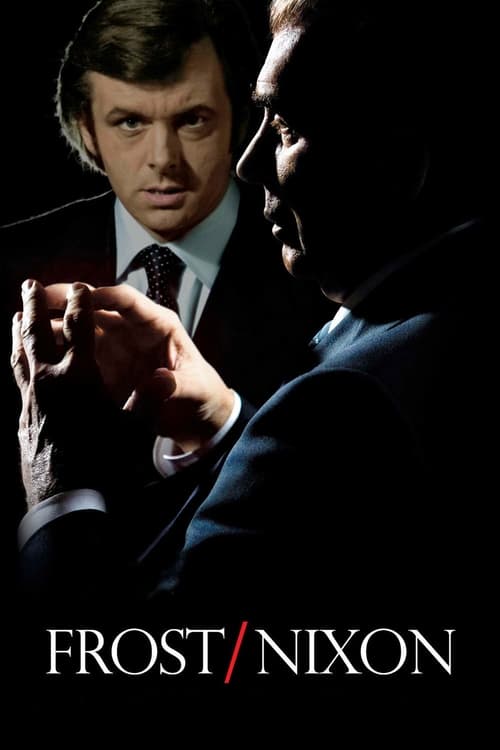
…should yield talky, high drama à la Frost/Nixon…
But the film lacks the claustrophobic tension of comparable investigative double acts – Frost/Nixon, for example – and has a slightly careful quality.
Advertisement

Bu dönemi daha iyi kavramak isteyenler için Babylon Berlin dizisi, Weimar Almanyası’nın toplumsal ve siyasal atmosferini güçlü biçimde resmederken…
For those seeking to better grasp this period, the series Babylon Berlin powerfully depicts the social and political atmosphere of Weimar Germany…

John Slattery’s character introduces conditions for Nuremberg’s Nazi prisoners like he’s in a theatrical revival of The Rock (right down to “Welcome to Nuremberg”).
When prison warden Colonel Burton C. Andrus (John Slattery) exclaims “Welcome to Nuremberg!” it’s a downright comical phrase that reminds of Michael Bay’s “The Rock.”