
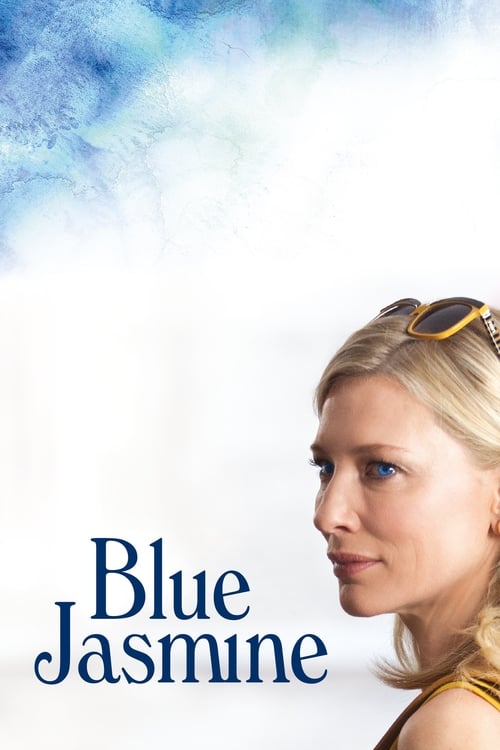
Blue Jasmine (2013)
Directed by Woody Allen
After experiencing a traumatic misfortune, Jasmine French, a wealthy woman from New York, moves to San Francisco to live with her foster sister Ginger and the firm purpose of getting a new life, but she will be haunted by anxiety and memories of the past.
6 connections found
View:
6 connections, in both directions
What critics compared Blue Jasmine to


Probing the allure of romantic fulfillment and upward mobility with rigor, emotional generosity and a pleasing sense of dramatic balance, this Sony Classics release won’t do “ Midnight in Paris ”-sized numbers, but solid critical response should pull in more than just the Woodman faithful.
Although he occasionally hits slumps both artistically and at the box office, he always makes something of a comeback, surprising viewers, critics and the industry alike with movies such as "Match Point," "Vicky Cristina Barcelona" and his biggest hit to date, 2011's "Midnight in Paris."
Since turning 70 in 2005, Allen has released “Match Point,” “Vicky Cristina Barcelona,” “Midnight in Paris” and now “Blue Jasmine,” all among the best of his 44 feature films.
Certainly it's his best since "Midnight in Paris," two movies ago, which is to say it's better than "To Rome With Love."
Getting out of New York has clearly refreshed Allen, as "Midnight in Paris" and "Vicky Cristina Barcelona" demonstrated.
I think of Cate Blanchett in “Blue Jasmine ,” Brie Larson in “Room ,” Denzel Washington in “Flight ,” to name just a few — and now, Viggo Mortensen in “Captain Fantastic.”

Like the couples in Roman Polanski’s Carnage (2011), Jasmine and Ginger’s arguments reflect class based resentments and conflict.
Just two years after winning an Oscar for Woody Allen’s Blue Jasmine, Blanchett gives an even more memorable performance as Mapes, a strong and powerful woman in a man’s world who still has some inner fragility from having an abusive father.
Advertisement
Movies like Blue Jasmine (2013), Still Alice (2014), The Dressmaker (2015), Ricki and the Flash (2015), Miss You Already (2015), and Room (2015) have recently shown both enormous popularity and a lack of interest in the male point of view.
In recent years, Blanchett has become increasingly reminiscent of a faded matinee idol; although inspired by Blanche from A Streetcar Named Desire in her Oscar winning Blue Jasmine performance, there was more than a hint of Sunset Boulevard’s Norma Desmond in her failure to grasp the reality around her.
Having earned a best actress Oscar last year for her latterday Blanche DuBois in Woody Allen’s Blue Jasmine , Blanchett (for whom Carol has long been a passion project) reconfirms her status as one of modern cinema’s most facially balletic actresses; the symphony of emotions that play out upon her painted visage range from sly seduction to piercing grief without need of a raised voice.
As searing as Blanchett was in her Oscar-winning turn in “Blue Jasmine,” she arguably achieves something even deeper here by acting in a much quieter, more underplayed register.
In a role that makes very different demands from the one for which she won the Oscar in “Blue Jasmine,” Blanchett is generally the embodiment of understated refinement.
Not unlike Haynes, Blanchett at times seems to replicate her Oscar-winning role in Blue Jasmine , but it’s a facade for a role that’s perhaps more challenging.
If Carol is in some respects a mannered and exaggerated character – a beautiful woman playing the role of a beautiful woman, to calculated effect – she is vastly more convincing and more controlled than the Blanche DuBois nightmare that won Blanchett an Oscar in “Blue Jasmine.”