
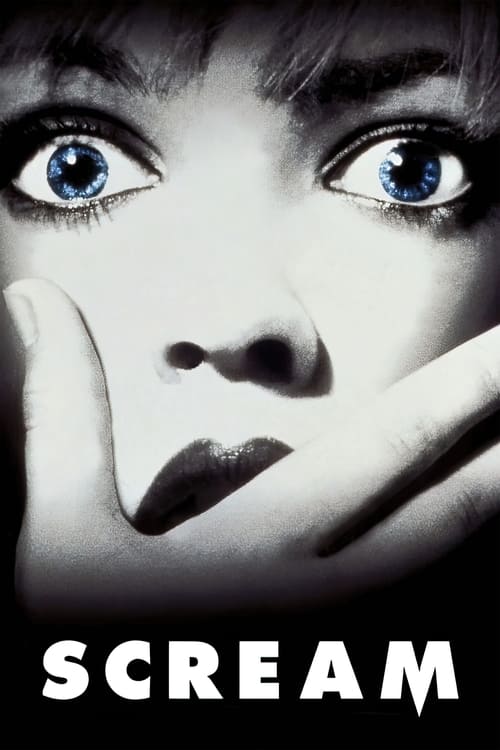
Scream (1996)
Directed by Wes Craven
A year after the murder of her mother, a teenage girl is terrorized by a masked killer who targets her and her friends by using scary movies as part of a deadly game.
42 connections found
View:
42 films that influenced Scream
What critics say influenced Scream
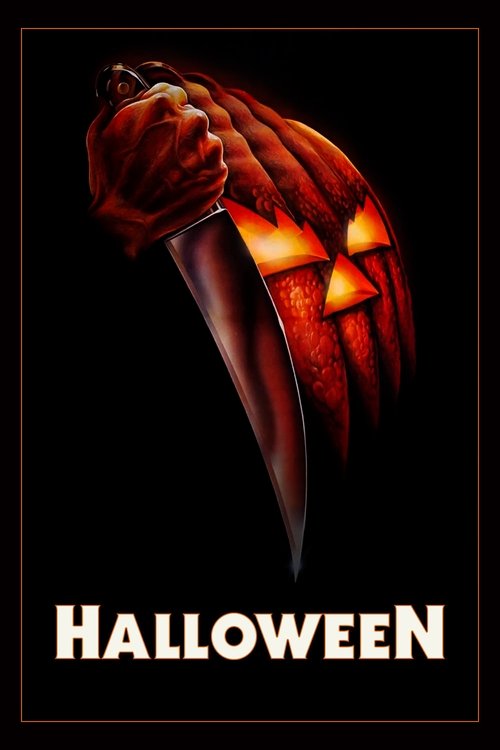


Were the picture not well-made, it would be but a footnote in history, and subsequent copycats (e.g., " Friday the 13th ," "Prom Night," "Silent Night, Deadly Night"), satirical treatments (e.g., HBO's "Tales from the Crypt" and the " Scream " series) and spoofs (e.g., "Student Bodies" and the " Scary Movie " franchise) would cease to exist.
Halloween was the film that earned Jamie Lee Curtis the infamous title of "Scream Queen."
The constant references to Halloween in particular are more hamfisted homage than plot device, and the aforementioned video camera gimmick is wasted.
References to Carpenter's original Halloween abound; several minutes of footage from that film are used here in a uniquely effective manner.
"Scream" may be a cut above the gore fests that line the dimly lit back wall at your video store, but it is a far cry from genre classics like "Halloween" or Craven's own "Nightmare On Elm Street."
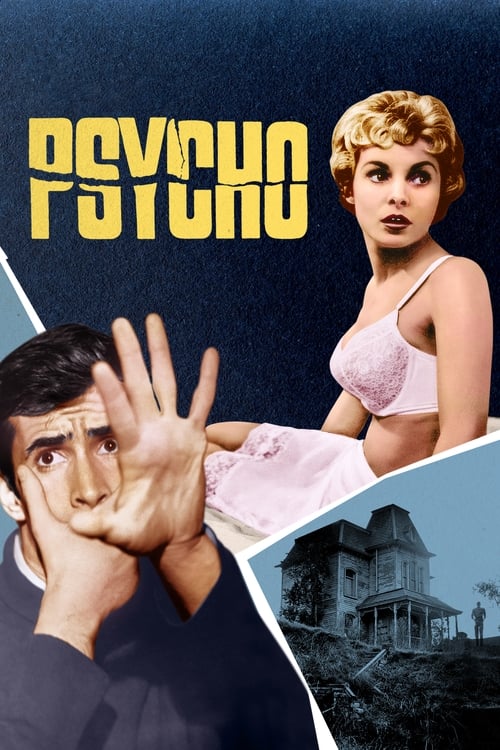
After a tense opening sequence in which Drew Barrymore is quickly dispatched in a manner reminiscent of Janet Leigh's abrupt departure from "Psycho," "Scream" focuses on another teen-in-peril heroine, Sidney Prescott (Neve Campbell), whose mother was mysteriously murdered the year before.
Sidney is being haunted by the specter of her dead mother in a way that's meant to remind us of Norman Bates's mother in Psycho, but that doesn't quite work either.
And thus a whole new era was born, with more blood and gore: Alfred Hitchcock's Psycho (1960), the gore factor raised to a maximum by Herschell Gordon Lewis' Blood Feast (1963), Roman Polanski's Rosemary's Baby (1968), George A. Romero's Night of the Living Dead (1968), William Friedkin's The Exorcist (1973), David Cronenberg's Shivers (1975), Brian De Palma's Carrie (1976), and culminating with John Carpenter's Halloween (1978).
The opening ten minutes of "Scream" are masterfully conceived and horrifyingly pulled off, likely as well-known as the shower scene in 1960's " Psycho " or the shark attack that started 1975's "Jaws."
At the time of its release, many people considered the first half of “Scream” to be ingenious but while it does break down all security of the entire story by exploring how anyone (even a beloved child actress) can die in this, Craven steals the exact hit from Janet Leigh’s death in “Psycho” even going so far as to keep the surprise a hush hush secret for audiences going in expecting a movie co-starring Drew Barrymore.
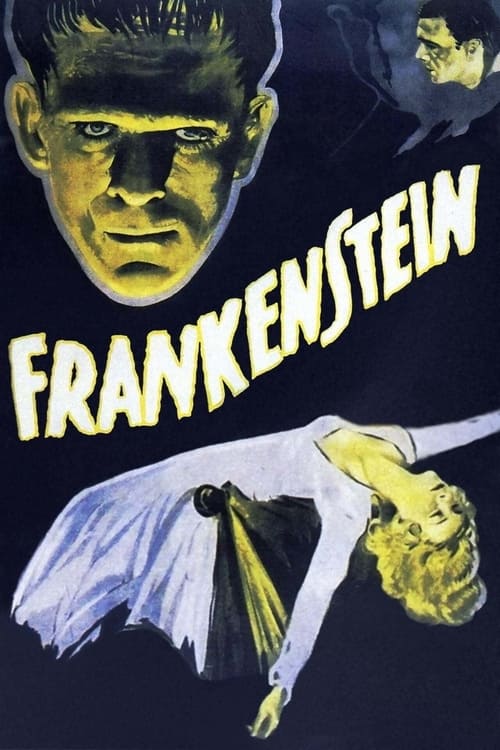
All that the references add up to is demonstrating that both the writer and the idealised viewer have seen, or heard of, a great many horror picture stretching back into the 1930s and James Whale's Frankenstein .
The first time came in the 1930's after the early success of Universal's monster movies, Tod Browning's Dracula (1931) and James Whale's Frankenstein (1931).
The list of movies mentioned or satirized is amazingly long, and features everything from the 1931 Universal classic, Frankenstein, to Tom Cruise's All the Right Moves ("if you pause [the video] at the right place, you can see his penis").
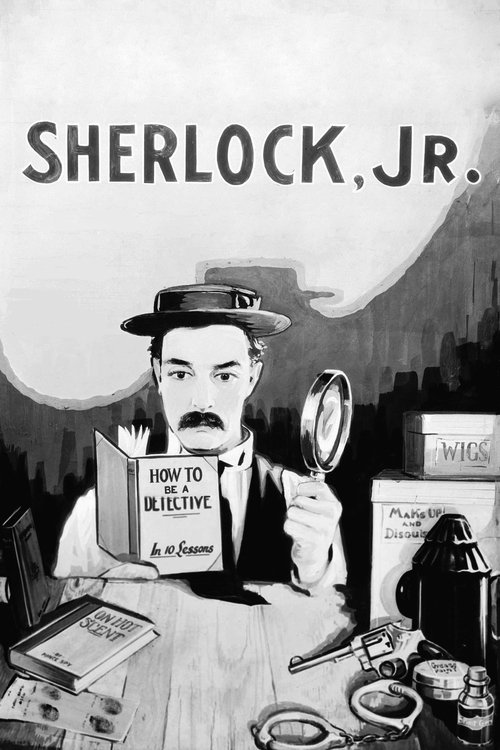
His Shocker was a misfire, a heavy metal slasher movie that was aimed perhaps a little too narrowly at its target audience -- but who would guess that Craven would make his points about the pervasiveness of television as our new fantasy realm by directly referencing Buster Keaton's Sherlock Jr.?
Advertisement
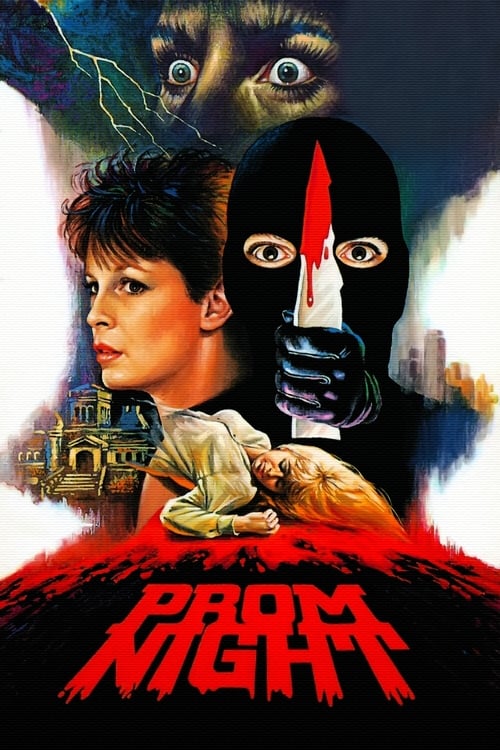
Arguably, "Prom Night" is far less derivative as it was made back in 1980, the time at which the formula was still being perfected.
As suspense builds, young horror movie-nut Randy (Jamie Kennedy) remarks that the police ought to look at some horror pictures, "Prom Night," an early and potent Jamie Lee Curtis flick in particular, to understand that everyone should be considered a suspect.
Featuring a ferociously hair-flipped Curtis as yet another stalked (and virginal) Final Girl, the no-budget psycho thriller Prom Night (1980) has been given the widescreen laserdisc treatment--apparently owing to the hip genre necrophilia of the Scream films (see: Rule No. 1).
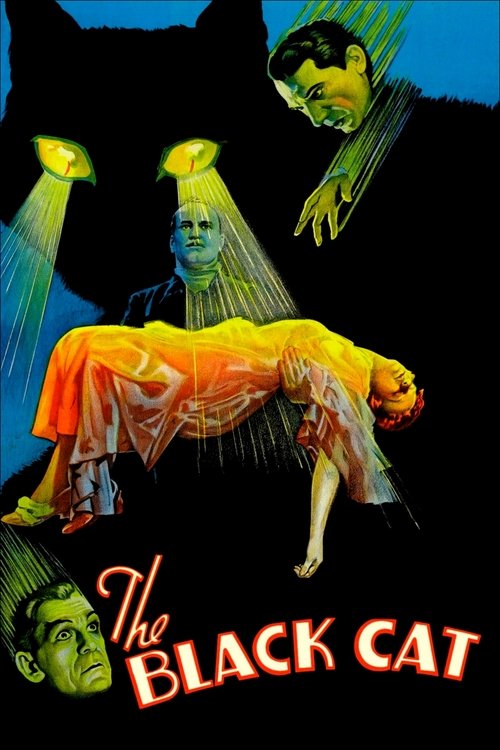
Some of these worked, especially Whale's Bride of Frankenstein (1935) and Edgar G. Ulmer's The Black Cat (1934).
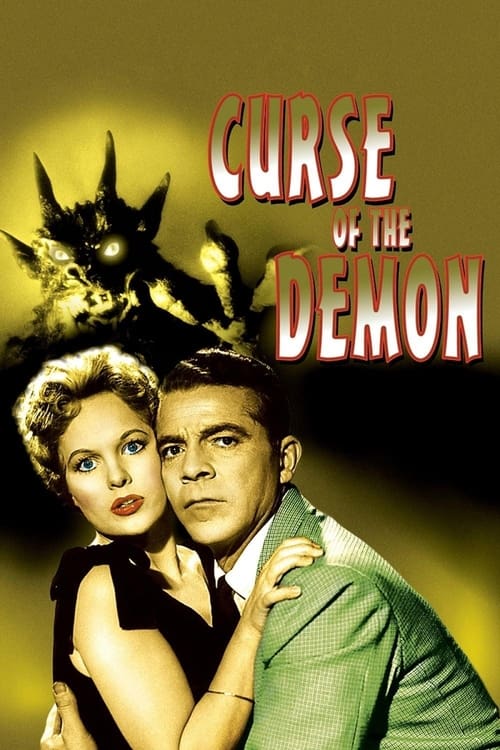
To the best of my knowledge it was kept breathing through B-movies like Jacques Tourneur's excellent Curse of the Demon (1957), but it wasn't fully resurrected until the British studio Hammer began doing their versions of the monsters, Dracula, Frankenstein's monster, the Wolf Man, the Mummy, etc. Their most influential film was Terrence Fisher's Horror of Dracula (1958).
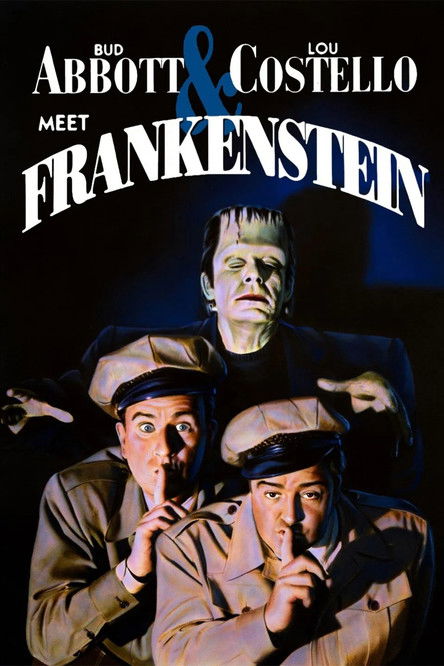
The cycle culminated in 1948's Abbott and Costello Meet Frankenstein, the true sequel to Dracula with Bela Lugosi returning to his famous role for the first time.
Advertisement
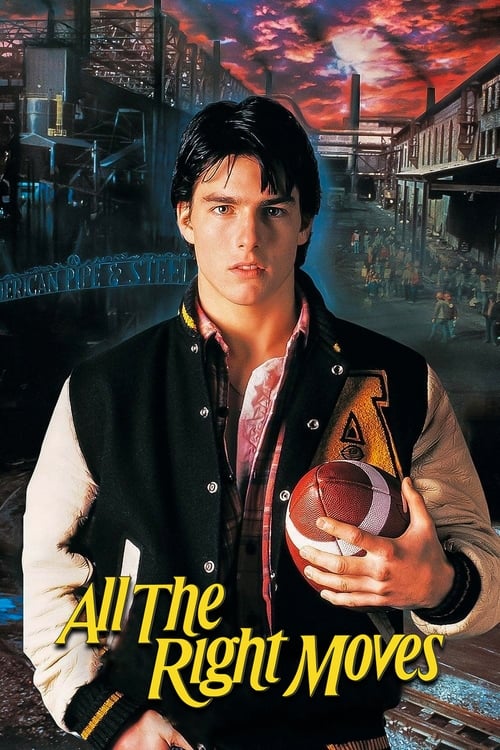
One of her girlfriends discusses how to pause a tape for "All the Right Moves" at the moment when Tom Cruise's genitals are revealed.
The list of movies mentioned or satirized is amazingly long, and features everything from the 1931 Universal classic, Frankenstein, to Tom Cruise's All the Right Moves ("if you pause [the video] at the right place, you can see his penis").

To the best of my knowledge it was kept breathing through B-movies like Jacques Tourneur's excellent Curse of the Demon (1957), but it wasn't fully resurrected until the British studio Hammer began doing their versions of the monsters, Dracula, Frankenstein's monster, the Wolf Man, the Mummy, etc. Their most influential film was Terrence Fisher's Horror of Dracula (1958).