
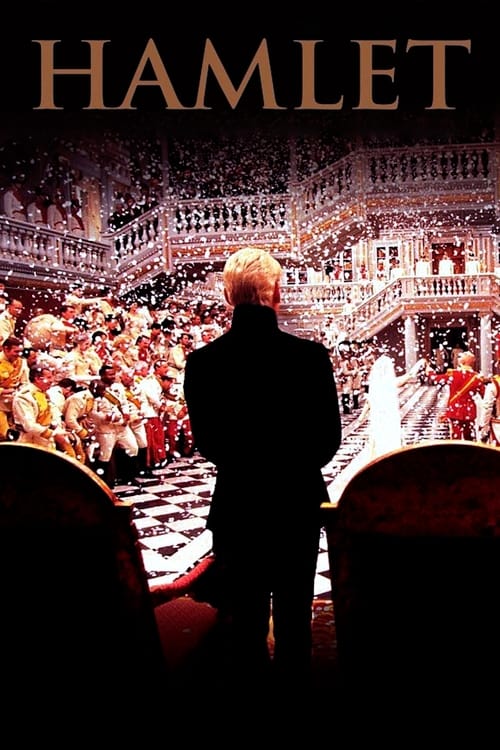
Hamlet (1996)
Directed by Kenneth Branagh
Hamlet, Prince of Denmark, returns home to find his father murdered and his mother now marrying the murderer... his uncle. Meanwhile, war is brewing.
16 connections found
View:
16 connections, in both directions
What critics compared Hamlet to
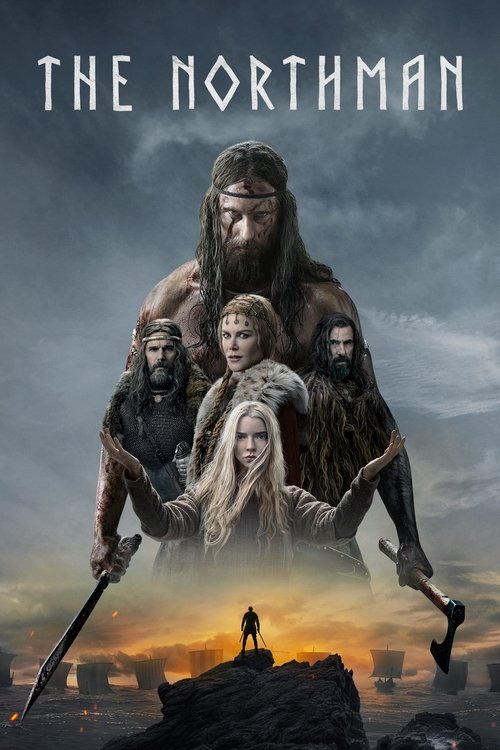


Heading into this movie, I hadn’t looked up Amleth’s story, only to leave the theater thinking to myself how much the story reminded me of William Shakespeare’s Hamlet .
A brutal, blood-soaked Viking epic based on a Scandinavian legend – the same legend that inspired William Shakespeare’s Hamlet – director Robert Eggers’s third film is probably his most punishing.
The Northman is the legend of Amleth, the story that inspired William Shakespeare’s Hamlet , and with a prayer to Odin the film opens on the North Atlantic in 895 AD as the hero as a young boy (Oscar Novak) anticipates the long-awaited arrival of King Aurvandil War-Raven (Ethan Hawke).
The Northman is loosely based on the Scandinavian legend of Amleth, a figure that also inspired William Shakespeare to write Hamlet.
If you know the story of William Shakespeare's Hamlet, you know the broad strokes here, as Hamlet was based on Amleth's tale.
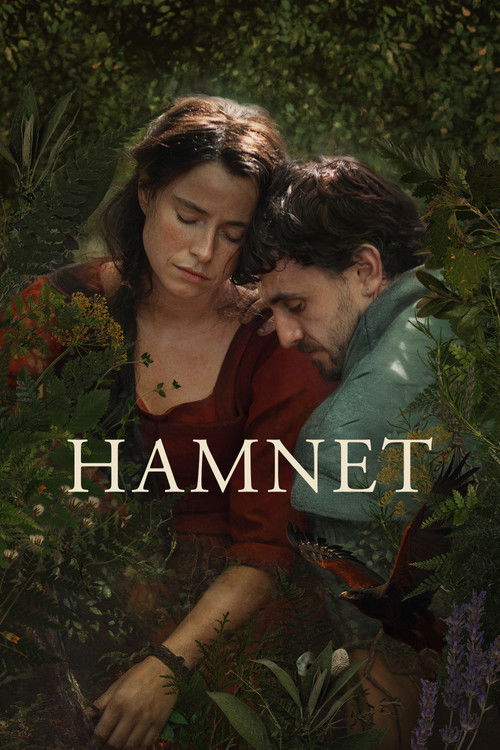
His eventual turn to Hamlet as a vessel for mourning is rendered not as triumph but as an act of survival.
As Shakespeare’s Hamlet reminds us, “When sorrows come, they come not single spies, but in battalions.”
…the devastating inspiration behind Hamlet…
Zhao doesn't lean too heavily on the author's various Shakespearean references outside of the oft speculated idea that the bard's most famous play, 'Hamlet,' was inspired by the death of his son, the names Hamlet and Hamnet being interchangeable in the late 16th century.
…the writing and preforming of “Hamlet” is an epiphany for both William and Agnes, in that it meets mortality head-on, from the mourning of a loved one, to the effects of loss on those left behind and the fear of, “what dreams may come” in “that undiscovered country, from whose bourn / No traveller returns.”
…culminating in the creation and first performance of Shakespeare’s Hamlet: a tribute born from heartbreak and enduring love.
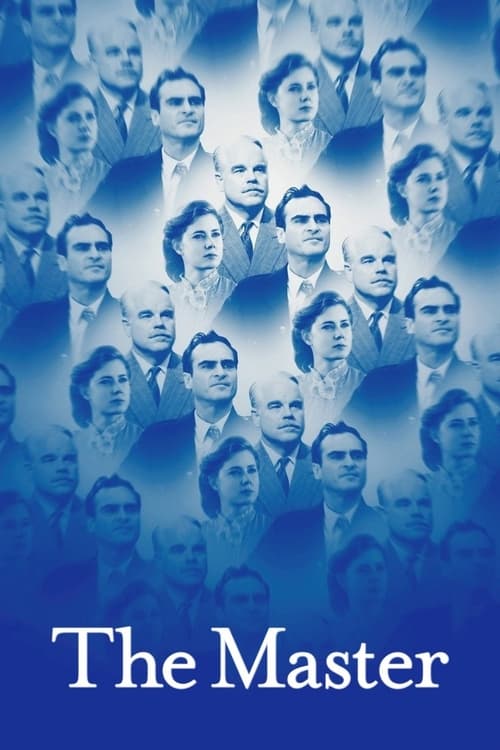
The cinematography, the purview of Mihai Malaimare Jr., represents the first time 65mm has been used since Kenneth Branagh's Hamlet .
And while the movie (the first to be shot in 70 mm since Kenneth Branagh’s Hamlet 16 years ago) is glorious to watch, it brings no coherence or insight to its two main characters: the wastrel Freddie Quell (Joaquin Phoenix) or the shaman-showman Lancaster Dodd (Philip Seymour Hoffman).
The Master is also the first motion picture since Kenneth Branagh’s Hamlet back in 1996 to be shot on 65mm and projected on 70mm.
And yet he shot the film in 70MM, a giant format generally reserved for epics, and hasn’t been used on a narrative feature since Kenneth Branagh’s 1996 adaptation of Hamlet .
This is the first major American theatrical feature film to entirely shoot on 65mm stock since Kenneth Branagh’s “Hamlet” in 1996.
The first feature production to be shot in 65mm since Kenneth Branagh’s Hamlet in 1996, it mixes exquisite period recreation of the post-World War II Eisenhower years with sublime visual grandeur and larger-than-life characters battling each other and themselves physically and metaphysically.
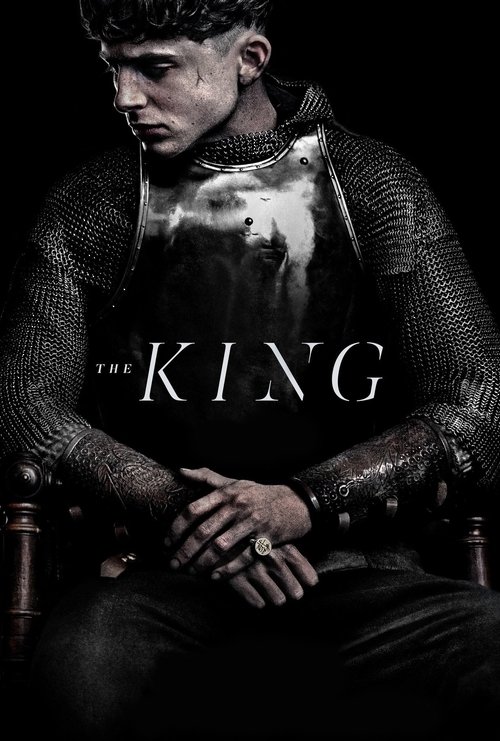
They punch metal and eat dirt until The King‘s body count outpaces Hamlet’s.
Advertisement
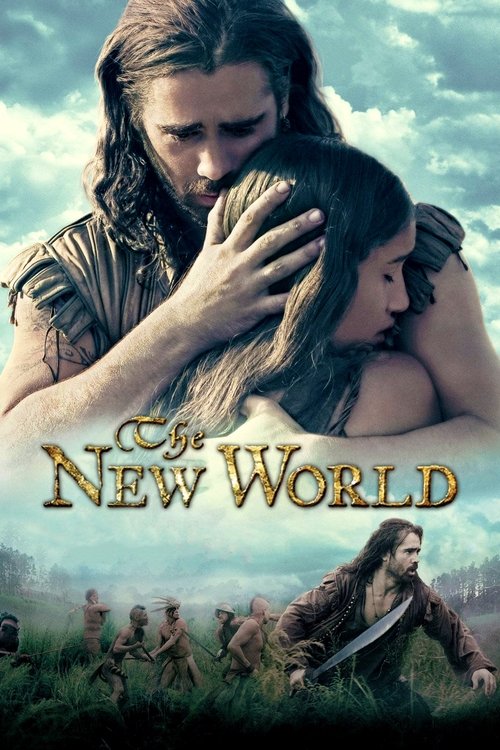
(Everything except scenes requiring visual effects was shot in 65 mm, making this the first movie since Kenneth Branagh's Hamlet to employ the expensive stock.)
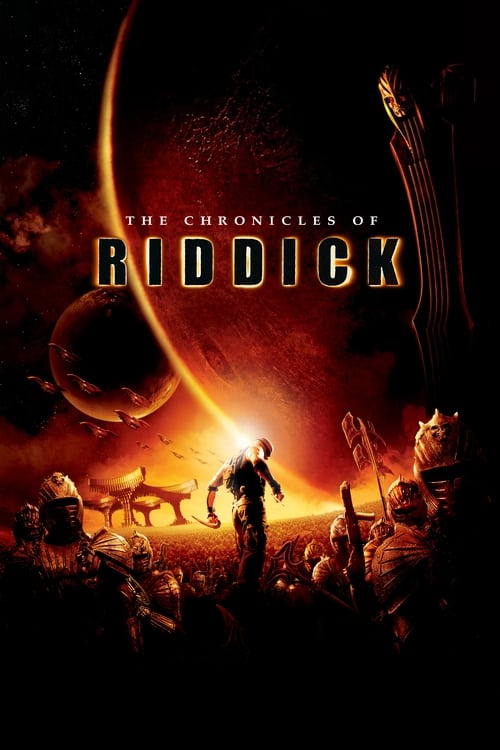
Combining elements of Hamlet, Dune, Star Wars, Star Trek and Vin Diesel running in slow-motion; The Chronicles of Riddick essentially becomes William Shakespeare's first video game.
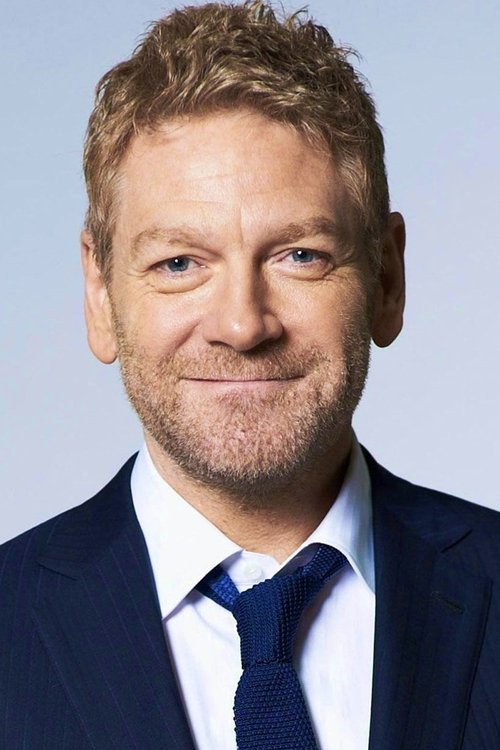
When the filmmaker and actor’s name pops up, you likely – and fortunately, for his sake – recall the man’s respected string of Shakespeare adaptations: Henry V, Much Ado About Nothing, As You Like It, and his gargantuan Hamlet.
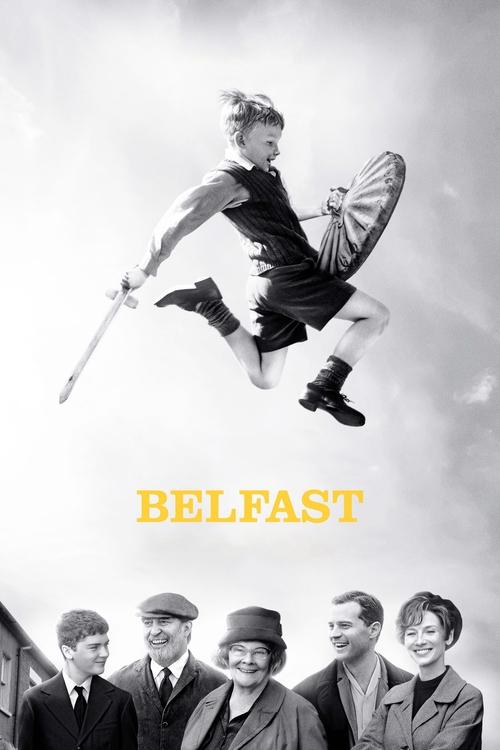
Narrowing his scope way, way down from the Marvel bombast of Thor and his movie-star-drunk Agatha Christie adaptations, Kenneth Branagh’s autobiographical Belfast , easily his strongest film since his Hamlet in 1996 (if not ever), begins with that exact alarm bell ringing for Buddy (Jude Hill).
His imagination flies and he talks a lot, which is no surprise considering the thespian Branagh would later be, even filming all of “Hamlet” in 70mm.
Kenneth Branagh is an all-caps filmmaker, generally preferring the grand dramatic gesture even when a subtler flourish would do: the same man, after all, gave us both a gorgeous full-length Hamlet (1996) and a bloated Murder on the Orient Express (2017).
When Branagh burst onto the scene in the ‘90s as an innovative actor-director of stage and screen, he garnered a lot of “next Olivier” buzz (thanks in no small part to his signature achievement, the 4-hour 1996 adaptation of Hamlet).
It’s ironic that Branagh will be competing against the black-and-white “The Tragedy of Macbeth,” a Shakespeare adaptation similar to Branagh’s Oscar nominations for “Henry V” (1989) and “Hamlet” (1996) directing himself like Sir Laurence Olivier.
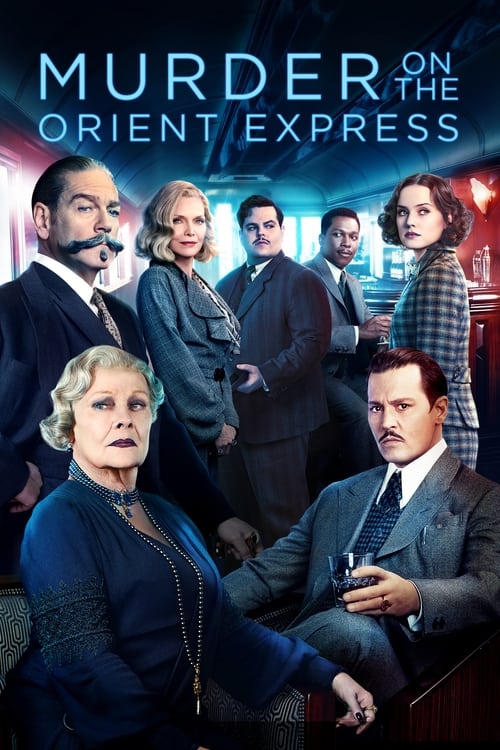
He’s also one of the best actor-directors working today, and his wearing of two hats on “Murder on the Orient Express” recalls his exuberant work on “Henry V” (1989) and “Hamlet” (1996), as well as on the nifty little crime film that was his sophomore effort, “Dead Again” (1991).
Having proven his worth at adapting some of Shakespeare’s finest work with such features as Henry V (1989), Much Ado About Nothing (1993), and Hamlet (1996), it stands to reason that Kenneth Branagh would align himself with the catalogue of another respected writer such as Agatha Christie, and as both director and lead actor (screen writing duties fall to Logan scribe Michael Green) he wholly embraces the story’s aesthetic both thematically and characteristically.
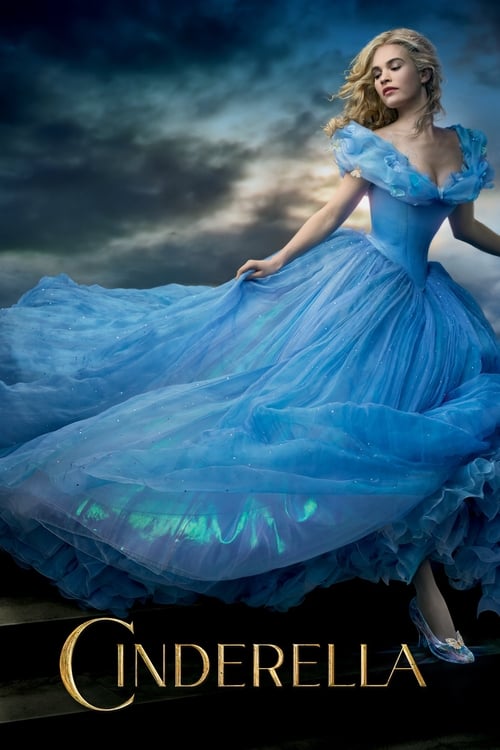
And yet, along comes Kenneth Branagh, he who gave us, in his heyday, such fine Shakespearean adaptations as Henry V , Much Ado About Nothing and Hamlet , before moving on to merely entertaining, if forgettable, non-Shakespearean fare like Thor , Jack Ryan: Shadow Recruit and Cinderella .
Haris Zambarloukos’ evocative cinematography meshes well with Branagh’s decision to use 65 mm cameras (the first time he has done so since Hamlet ).
Building his Hollywood career on the backs of adaptations of William Shakespeare, Branagh brought a sense of grandeur and elegance to his early films, most notably Hamlet .
From Henry V (which earned him Oscar nods for best actor and for best director) to Hamlet to Much ado about Nothing, there’s a great prestige present in much of his filmography (the same can be said for Thor , Branagh’s venture into the Marvel universe).
Kenneth Branagh, who directs the upcoming adaptation of Cinderella, made his name as a director with his adaptations of Shakespeare — most notably, Henry V and Hamlet; films that garnered seven Academy Award nominations between them.
As a director, Branagh has always shown a flair for sumptuous visuals - witness Hamlet - and he brings that quality to Cinderella.
From Hamlet to Jack Ryan , Kenneth Branagh has never been afraid to re-interpret iconic characters as a director.
Director Kenneth Branagh (Hamlet, Thor) has taken a different approach to Cinderella.
Branagh ("Henry V," "As You Like It," "Hamlet," "Othello") takes the 1950 animated Disney version that has come to define Cinderella as his starting point.
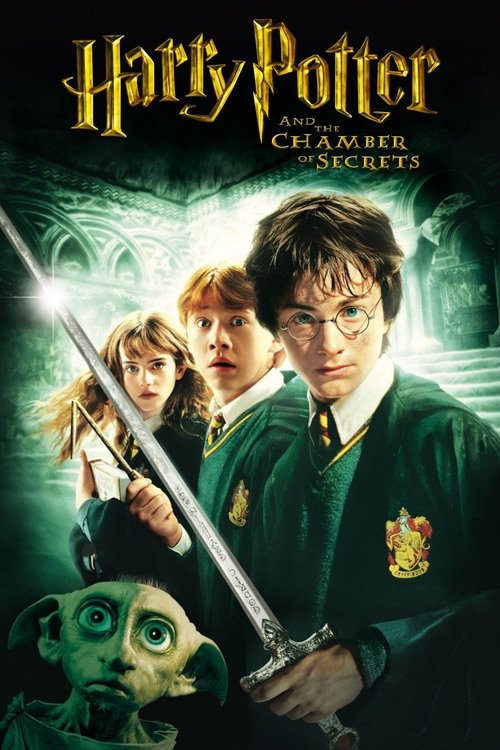
Harris' role is greatly expanded here, and Branagh, as the preening, pretentious Lockhart, is hilarious -- far better than he's been in any film since his own "Hamlet" in 1996, reminding us what an entertaining and versatile actor he is.
Advertisement
Altman is working with an almost entirely new crew here, many culled appropriately enough from Britain: cinematographer Andrew Dunn (The Madness of King George), composer Patrick Doyle (Sense and Sensibility, Kenneth Branagh's Hamlet), and Merchant-Ivory costume designer Jenny Beavan, along with Ang Lee's regular editor Tim Squyres, join Robert's longtime production designer (and son) Stephen Altman to sculpt a film in different key.
…film since "Far and Away" in 1992, and at 238 minutes the second-longest major Hollywood production (one minute shorter than "Cleopatra").