
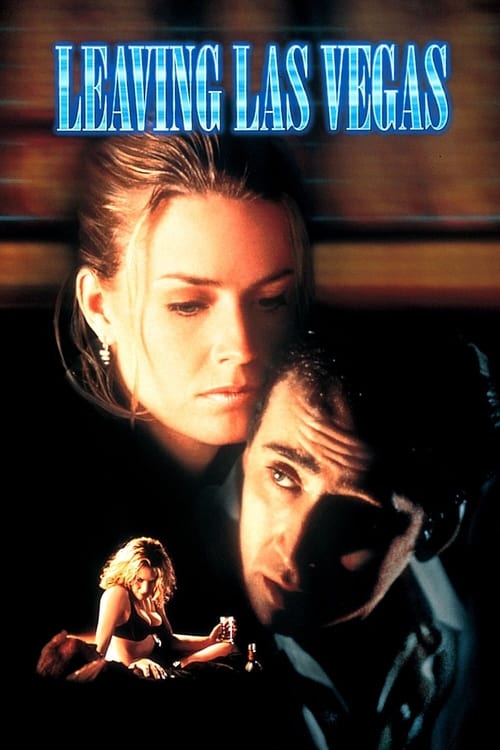
Leaving Las Vegas (1995)
Directed by Mike Figgis
Ben Sanderson, an alcoholic Hollywood screenwriter who lost everything because of his drinking, arrives in Las Vegas to drink himself to death. There, he meets and forms an uneasy friendship and non-interference pact with prostitute Sera.
21 connections found
View:
21 connections, in both directions
What critics compared Leaving Las Vegas to



(It recalls the similarly fateful union between Nicholas Cage and Elisabeth Shue in Mike Figgis’ Leaving Las Vegas, still the high-water mark for drunken romantic fatalism.)
Weaving along the booze-soaked trail that so many great film actors have navigated before him, Washington gives a career-defining performance, right up there with Ray Milland in The Lost Weekend, Jack Lemmon in Days of Wine and Roses, and Nicolas Cage in Leaving Las Vegas.
Other celebrated films featuring memorable portrayals of booze hounds such as Harvey (1952), The Verdict (1982), Barfly (1987), Leaving Las Vegas (1995) and House of Sand and Fog (2003) have richly textured drunks — though not of the highly functional kind — and almost always hover on the border of stereotype.
Nor is it soaked in the romantic poetry of self-destruction, in the manner of “Leaving Las Vegas” (1995), in which Nicolas Cage, with Elisabeth Shue at his side, undergoes an extended liquid self-immolation in a hotel room.
What makes this different from genre classics like “The Lost Weekend,” “Days of Wine and Roses” and “Leaving Las Vegas” is an action-packed first act and a bravura performance by Denzel Washington.
Flight, after the amazing set-up, turns out to be a film about alcoholism and maybe redemption, ala a couple of classic films about drunks, The Lost Weekend and Leaving Las Vegas.

It’s just his thing, the same way drinking was Nicolas Cage’s thing in “Leaving Las Vegas.”
There have been a few movies like that — “Leaving Las Vegas” comes to mind — but they’re hard to pull off.
“The Gambler” is as much a film about addiction as “The Lost Weekend” or “Leaving Las Vegas,” except the source of the addiction is the lure of the tables, rather than a substance.
Gambling as an addiction isn't the focus here — this isn't Leaving Las Vegas with playing cards replacing the booze bottles — which is fine since the film is content operating as a tightly wound drama about a man with self-destructive impulses.

If you’ve ever seen a Mike Figgis movie (Leaving Las Vegas, One Night Stand, Timecode), you might understand the self-consciously conceptual, stressed masculinity that’s afoot here as mid-tier Figgis.
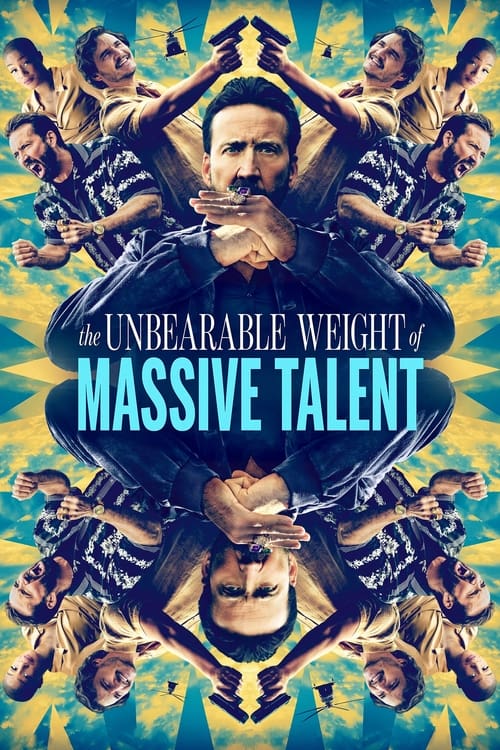
"Massive Talent" is a house of mirrors where he's able to poke fun at himself, his persona and his career, and there are references to his gonzo work in "Moonstruck," "Leaving Las Vegas," "Face/Off," "National Treasure," "Captain Corelli's Mandolin" ("underrated for sure," Cage quips), "Croods 2" and more.
The film, directed by Tom Gormican, is certainly indulgent in its references: there’s a swimming pool shot directly cribbed from Leaving Las Vegas , an appearance by Castor Troy’s gold pistols from Face/Off , as well as the chainsaw from Mandy .
It jokingly references his best-known movies throughout, from Leaving Las Vegas to Gone in 60 Seconds , and Cage obligingly parodies himself too.
The Leaving Las Vegas Academy Award-winner is portraying a character named “Nick Cage,” a talented actor with a sizeable ego and a fading career who is starting to wonder if it’s time for him to retire, and it’s a character who has a filmography that’s the mirror image of Cage’s real one.
But with all the hysterical nods to the actor’s previous works, as well as through embracing his perceived quirkiness (and desire for scenes in which he can freak out unreservedly), it’s difficult not to recommend this flick to anyone who has followed the star’s career – from such acclaimed comedies and romances like “Raising Arizona” and “Moonstruck” to his Oscar-winning turn in “Leaving Las Vegas” to his action hero transformation in “The Rock” and “Con Air” to the riveting weirdness of “Mom and Dad” and “Mandy.”
Advertisement

In that moment, Blunt brings together two great Nicolas Cage performances: his Oscar-winning turn as a suicidal alcoholic in "Leaving Las Vegas," and his lunatic eye-bulging in "Bad Lieutenant: Port of Call New Orleans."
Most importantly, in the shape of the mercurial Emily Blunt, The Girl on the Train has a believably derailed heroine whose hollow eyes, crusty lips and stumbling gait convey Leaving Las Vegas levels of addiction while still retaining an air of mystery and intrigue.

It’s as if all of the talent he showed in Leaving Las Vegas and Adaptation.
Nicolas Cage, having squandered most of his goodwill from his 1995 Oscar for "Leaving Las Vegas," goes "all in" for what is likely to be the first and last entry in the "Ghost Rider" franchise, and yet a project bound for the pantheon of "good" bad movies.
This is not a stretch for the man who gave the brilliant turn in “Leaving Las Vegas.”

It's the opposite approach of Nicolas Cage in "Leaving Las Vegas," which also explored extreme behavior in surprisingly relatable characters, but it has the same effect as Cage's.

I haven’t been so swept up in the aquatic since “Leaving Las Vegas” (1995), in which Nicolas Cage, as an alcoholic, carried on drinking underwater, beer in hand.
Advertisement

Fassbender's Brandon is on the other end of the spectrum from Nicolas Cage's crazed alcoholic character in Leaving Las Vegas , with McQueen breaking long stretches of repression with harrowing moments of emotionless lust.

But remember what happened to Nicolas Cage — he fell for a hooker in Leaving Las Vegas and now his career is kitty litter.