

Little Odessa (1994)
Directed by James Gray
Long separated from his family, hitman Joshua returns to Brighton Beach for a contract killing for the Russian Mafia. His abusive father, Arkady, banned him from returning after Joshua committed his first murder. He takes up residence in a hotel, and soon everyone knows he has returned. He goes home to visit his dying mother, Irina, and prepares for the assassination, getting drawn back into the criminal community he left behind.
5 connections found
View:
5 connections, in both directions
What critics compared Little Odessa to
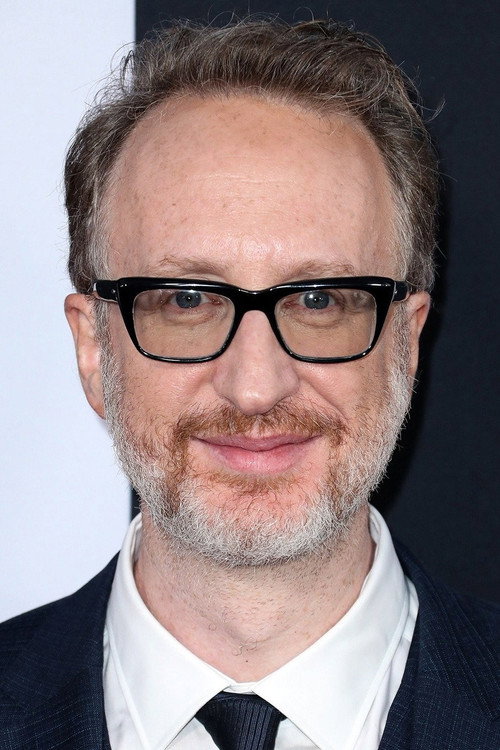



Gray’s been one of the best American filmmakers around since the 1990s, when Little Odessa and The Yards established him as the pre-eminent post-Scorsesian New York filmmaker.
Among other things, that faith has compelled Gray to leave his native New York, an urban jungle that he has spent most of his career colonizing, starting with his 1994 Brighton Beach-set crime thriller, “Little Odessa,” and culminating in his epic Ellis Island melodrama, “The Immigrant” (2013).
Familial expectation and duty, and the crushing burden they impose, is a theme which recurs in his films, beginning with the thermonuclear domestic meltdown of Little Odessa (1995) and continuing through the cop dynasty guilt-trip of We Own the Night (2007) and the love triangle of Two Lovers (2008), in which nice Jewish boy Leonard Kraditor (Joaquin Phoenix) exchanges a deal-brokering kiss with the nice Jewish girl (Vinessa Shaw) hand-picked by his parents in front of a wall laden with family photographs.
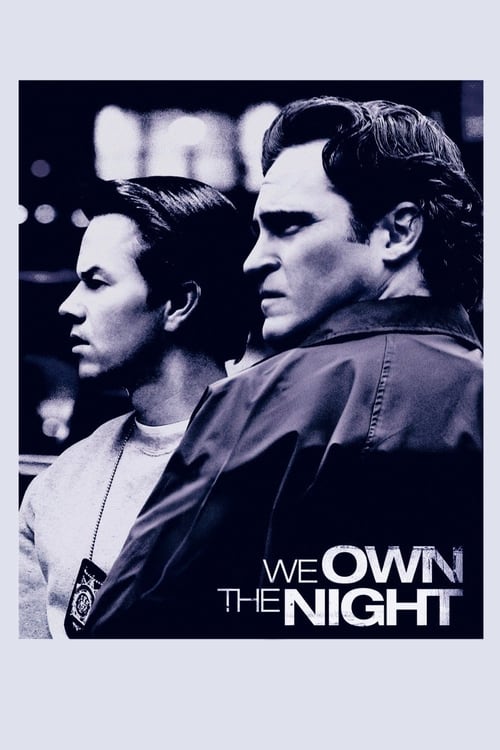
Brothers, loyalty, the Russian mob and New York City's outer boroughs continue to fascinate filmmaker James Gray, whose "We Own the Night" marks his third feature in a dozen years following "Little Odessa" and "The Yards."
Gray, who previously made the impressive "Little Odessa" and "The Yards," has a sinuous camera style that pulls us into the brackish allure of the underworld.
James Gray is an old-school classicist whose two films – Little Odessa and The Yards – were archetypal crime dramas set in the director’s beloved New York City.
As a writer, though, Gray seems much more interested in asking questions and setting up familial (particularly fraternal) conflict - his directorial debut, 1994’s Little Odessa, was also about violence and Russian émigré dysfunction in Brighton Beach - rather than actually answering things in concrete fashion.
While certain elements of the plot hearken back to the disappointing The Yards, the complexity of the characters and the ways in which they interact is more reminiscent of Gray's superior first movie, Little Odessa.
Gray revisits the same blue-collar Brooklyn milieu that was the setting for his previous films, Little Odessa and The Yards, and he reunites with The Yards stars, Joaquin Phoenix and Mark Wahlberg.

Pivoting away from the biggest production of his career with a melancholy return to the kind of small-scale New York stories (à la “The Yards” and “Little Odessa”) that first put him on the map, Gray revisits his childhood years and all of their related ghosts with a burnished memoir that hears echoes of 19th European pogroms reverberating through the Trump family — 100 years later and some 4,000 miles away — in much the same way as “Ad Astra” found an Applebee’s on the Moon.
Little Odessa (1994) was set in Brighton Beach; The Yards in the Bronx; The Immigrant took us to Ellis Island.
In his cinematic memoir “Armageddon Time,” the filmmaker James Gray unpacks his early influences with the kind of uncommonly sensitive and keen perception that he has employed throughout his body of work, which has evolved from crime thrillers (“Little Odessa,” “The Yards,” “We Own The Night”) to historical dramas (“The Immigrant,” “The Lost City of Z”) to existential sci-fi explorations of love, existence and family (“Ad Astra”).
Gray (“Little Odessa,” “The Immigrant”) is scrupulously honest about the lineaments of that friendship.
While the white, Jewish, working-class experience of New York’s outer boroughs is hardly new territory for Gray (see also Little Odessa, The Yards, Two Lovers, and The Immigrant), here it’s an experience he examines the very premises and contexts of head-on.
Like his previous efforts (see his debut film “Little Odessa” or the sci-fi drama “Ad Astra”), this story is about relationships, principally, the connections between close family members who construct walls between them.
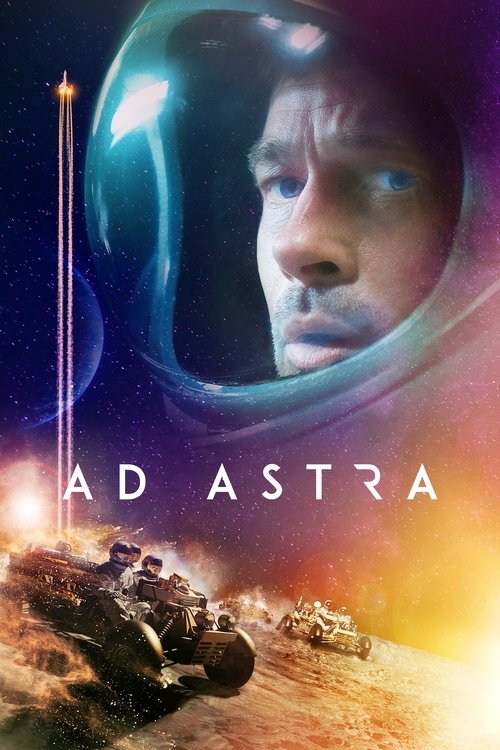
Michael Bay could not make 2001: A Space Odyssey , but James Gray, who’s jumped from crime thrillers ( Little Odessa , We Own the Night ) to pastiche dramas ( The Immigrant ) and other action-forward quests into the unknown ( The Lost City of Z ), has the capacity to make Michael Bay’s 2001: A Space Odyssey .
The latest film by James Gray (“Little Odessa,” “We Own the Night”) is set in the near future – a time when you can board a spaceship and travel to a colonized moon.
Ad Astra , the ambitious film from welterweight auteur James Gray (1994’s Little Odessa and 2016’s The Lost City of Z ), two-steps this strange waltz to alternatingly thrilling and frustrating effect.
From the thin blue line that divides the brothers of We Own the Night to the disrupted family units of Little Odessa and The Lost City of Z , it’s the external forces that pull us apart rather than the ties that bind us that’s of most interest to American filmmaker James Gray.
From “Little Odessa” (1994) to “The Lost City of Z” (2016), Gray has been brewing his particular blend of action and introspection.
For the protagonists of earlier Gray films like Little Odessa , Two Lovers , and We Own The Night , the world ended with the Atlantic surf at Brighton Beach.
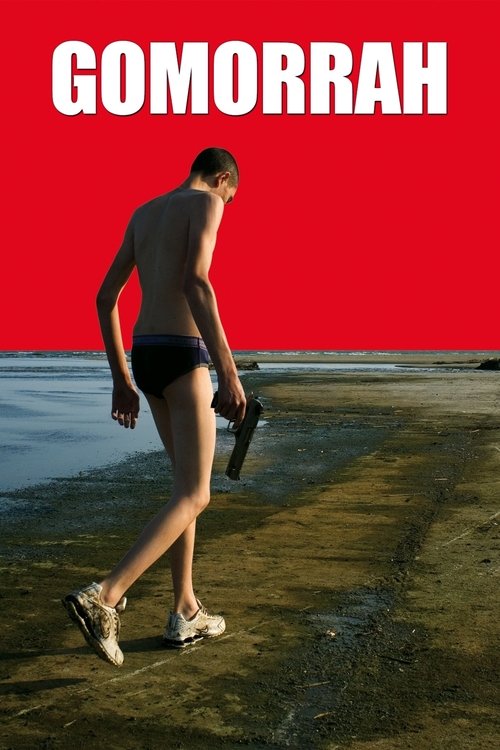
His previous features, beginning with "Little Odessa" in 1994 and continuing with "The Yards" and "We Own the Night," have all been crime films.