
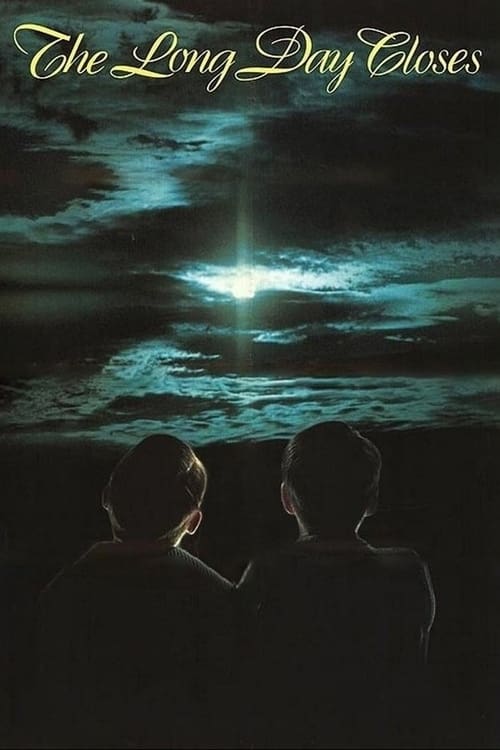
The Long Day Closes (1992)
Directed by Terence Davies
Bud is a lonely and quiet boy whose moments of solace occur when he sits in rapture at the local cinema, watching towering and iconic figures on the movie screen. The movies give Bud the strength to get through another day as he deals with his oppressive school environment and his burgeoning homosexuality.
3 connections found
View:
3 connections, in both directions
What critics compared The Long Day Closes to


You may recall similarly formative moviegoing scenes from John Boorman’s “Hope and Glory” or Terence Davies’ “The Long Day Closes,” with their early glimpses of a future steeped in the pictures.
It may seem like having a child protagonist might restrict the themes and subject matter that you would explore, but just take a quick look through an array of films of this kind to see the depth that’s possible: Louis Malle’s Au Revoir Les Enfants (a favorite of Branagh’s) handles the shame and complicity of bystanders during the Holocaust, Spike Lee’s Crooklyn celebrates a Brooklyn childhood without once losing perspective of race and class, Terrence Davies’ The Long Day Closes is a blossoming poem to the childhood memories that we carry with us for life, Abbas Kiarostami’s Where is the Friends House?
Thematically, it also has much in common with Terence Davies’ 1992 classic The Long Day Closes, which considers the influence of movies, family, and home on a young boy’s life.
This technique, used to perfection by Terence Davies in The Long Day Closes, also risks the ridiculous in what turns out to be the emotional highlight of the film: a reenactment of a moment from High Noon, replete with Tex Ritter’s famous “Do Not Forsake Me” ballad coming over the soundtrack.
Belfast doesn’t come close to relaying personal experiences in the way that enhanced Terence Davies’s The Long Day Closes , John Boorman’s Hope and Glory , and Jim Sheridan’s In America , just to name three Irish-ethnic movies where the directors’ own lives prompted deep responses universally.

More specifically, through Jack’s childhood memories so that like Terence Davies’s Distant Voices, Still Lives and The Long Day Closes, the recollections are segmented and combined with small non-naturalistic moments to reflect what impressions remained with Jack into his adult life.
Films such as Cinema Paradiso and The Long Day Closes highlight the magic of filmmaking through the eyes of consumers seeking escapism.