
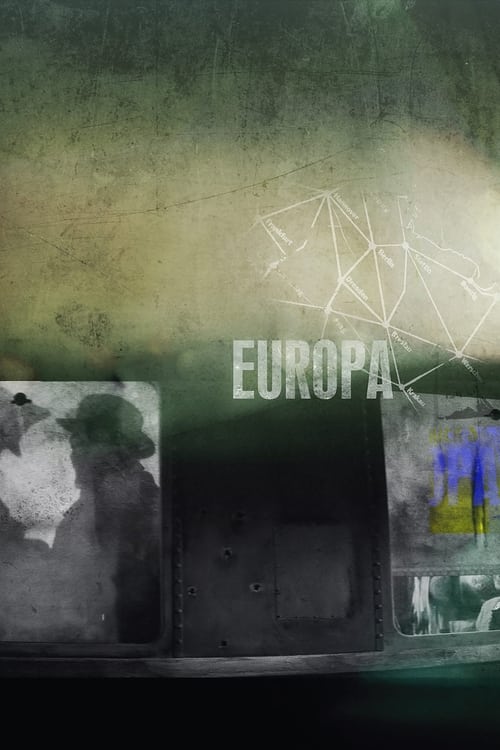
Europa (1991)
Directed by Lars von Trier
Just after World War II, an American takes a railway job in Germany, but finds his position politically sensitive with various people trying to use him.
5 connections found
View:
5 connections, in both directions
What critics compared Europa to


Naturally for a film this steeped in its own construction, there are oodles of film references, from Lars von Trier's "Europa" to "Harold and Maude" to, most bizarrely, "A Woman Under the Influence," in a squirm-inducing scene in which Polley's depressed housewife joins their daughter's birthday party and proceeds to make herself into an embarrassing dancing child.


Here is the Wellesian Gothic chamber (Europa); here is the Brechtian Basilica (Dogville) and here is the Grotto of Utter Lunacy, enshrining musicals about capital punishment starring Björk (Dancer in the Dark).

The risk-taking raconteur behind such bruising beauties as 2003's Dogville, 1996's Breaking the Waves (out this month on Blu-ray from Criterion and reviewed here ) and 1991's Zentropa (aka Europa) hasn't engaged my senses in years, and this pattern follows suit with the limp-wristed one-two punch of Nymphomaniac: Volume I and Nymphomaniac: Volume II.
From beautiful and stylish films like "Europa" or "Melancholia" to stark and sombre tales of hope and redemption like " Breaking the Waves " or " Dancer in the Dark ," Von Trier has long crafted films that are at once shattering and inviting, with narratives appearing distant, brutal and calculating, yet with a heart that's often surprisingly sweet.
Lars von Trier has made some of the best films of recent years ("Europa," " Breaking the Waves ," " Dancer In The Dark ").
While this Cannes breakthrough's inventive tricks aren't as ugly as the sub-Brechtian shenanigans that followed in Dancer in the Dark and Dogville , von Trier and his three cinematographers fashioned a handmade, retro pastiche with a small, dried-out heart.
It’s a tradition that runs from Hitchcock’s Lifeboat to the likes of Cube and The Raid (for static, or relatively static locations); and taking in Speed , Runaway Train , Air Force One , and Lars von Trier’s Europa (closed spaces that actually move).