
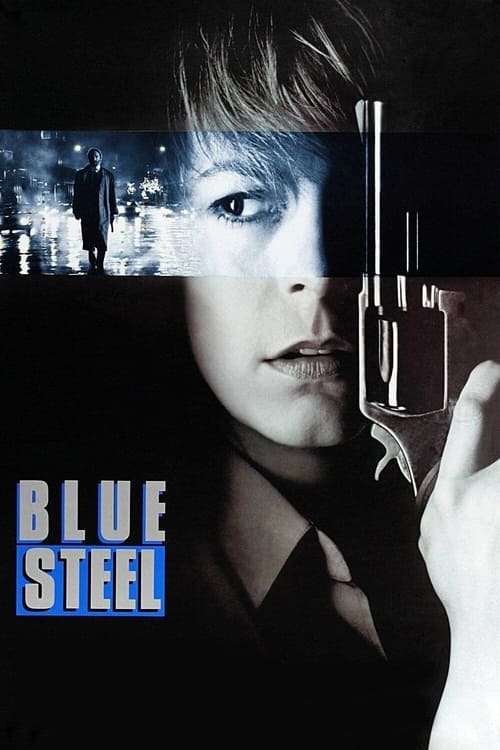
Blue Steel (1990)
Directed by Kathryn Bigelow
Rookie cop Megan Turner orders a burglar to drop his gun. He whirls to shoot. Too late. Turner fires, killing him instantly. When someone lifts the assailant's gun from the crime scene, the police hold Turner accountable for killing an unarmed man. That same someone carves Turner's name into the bullets and uses them in a series of murders. Turner teams up with detective Nick Mann to clear her name and catch the killer. But she is drawn into a deadly game of wits with a psychopath who's always one step ahead… and much closer than she thinks!
4 connections found
View:
4 connections, in both directions
What critics compared Blue Steel to



She's made one hypnotic vampire Western (Near Dark) and one sleek if ludicrous feminist cop thriller (Blue Steel).
The film was directed by Kathryn Bigelow, whose last film, ''Blue Steel,'' was a silly mixture of reason and outrage.
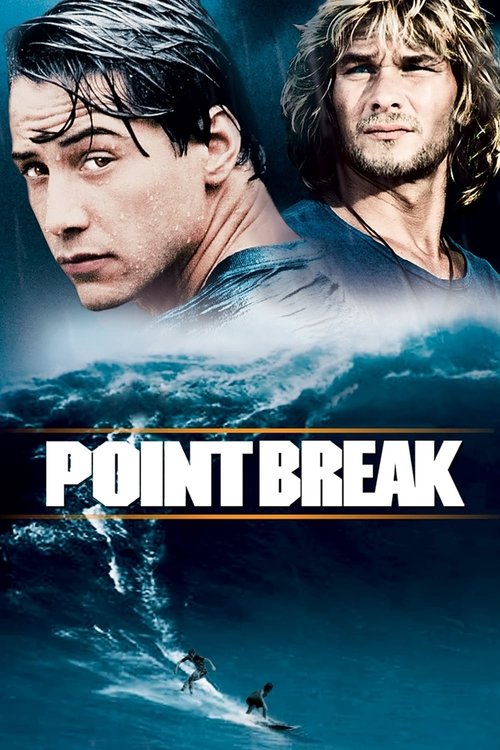
"Point Break" concludes with the same orgy of violence and nonsense that eventually caught up with "Blue Steel."
But there's no question that director Kathryn Bigelow ("Near Dark," "Blue Steel") is a stylish artist with an understanding of how much gorgeous lighting and color can mean to a film's texture.
She made " Blue Steel ," with Jamie Lee Curtis as a rookie cop, and now here is Keanu Reeves in essentially the same role - a kid determined to prove himself, up against the twisted intelligence of a megalomaniac.
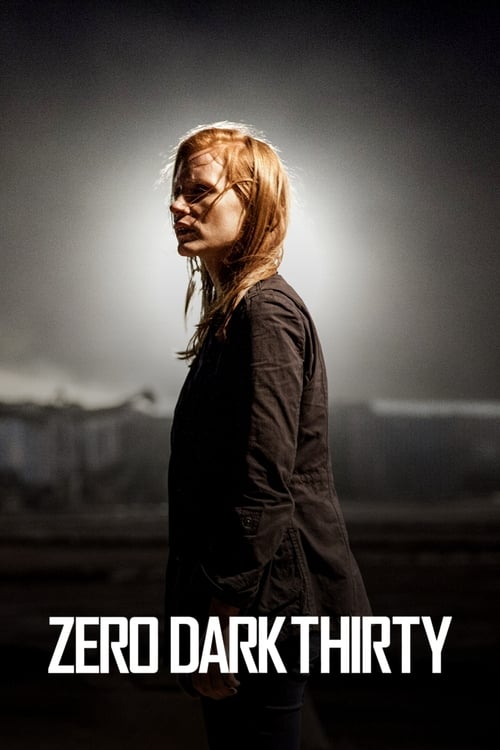
Similar to Bigelow’s Blue Steel (1989), Zero Dark Thirty has as a protagonist an authoritative woman in a mostly male environment.
It links nicely with her previous films, like Hurt Locker, of course, but also the dystopian sci-fi thriller Strange Days and even Blue Steel, a cop movie about a woman trying to bring a psychopath to justice.
But from her, we get what Bigelow has always done best, as she focuses on men under fire ("The Hurt Locker," "K-19: The Widowmaker") and women working twice as hard to survive in that male world ("Blue Steel," "Strange Days").
Bigelow has rarely focused on women as active protagonists ("Blue Steel" is the most notable exception), but it is significant that Maya is a woman in a predominantly masculine world, compelled to renounce her sexuality to get the job done.
That’s the theme (and sly joke) of her melodrama Blue Steel, in which a male bystander watches a female cop blast a robber into oblivion and covets her phallic power.
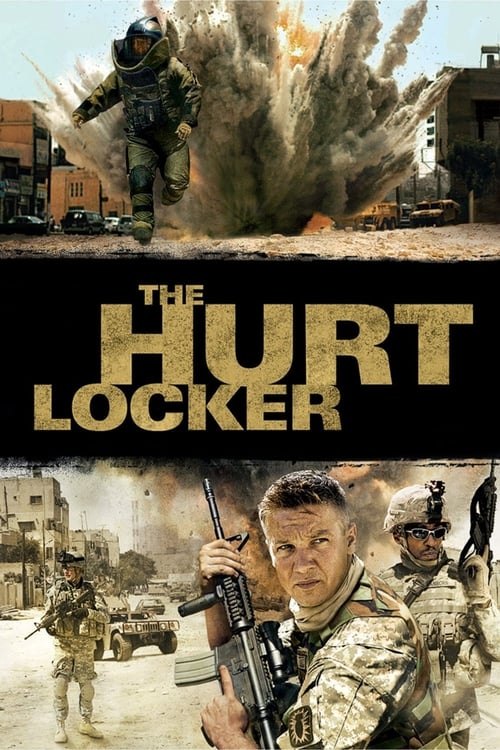
Director Kathryn Bigelow (Strange Days, Blue Steel) is one of the great action directors but in The Hurt Locker she relies a bit too heavily on what is increasingly becoming the very clichéd way of representing the Iraq War with the use of handheld camera, grainy textures and washed out cinematography.
Near Dark (1987), Blue Steel (1989) Point Break (1991) and the best of the millennium thrillers, Strange Days (1995), all showed an understanding of the camera, actors (often cross cast against type) and editing that were as good as any.
Over the years, Bigelow has sometimes been guilty of working too hard to out-macho the guys (particularly with movies like “Blue Steel”), though she’s also made a few terrific and distinctive pictures, like the raggedly poetic vampire story “Near Dark.”
The gender role subtexts of Blue Steel and Strange Days make both into far more interesting films than they might have been otherwise, and are particularly intriguing considering Bigelow's role as one of the very few women in the testosterone-laden fraternity of action movie directors.
In her “Blue Steel” (1989), as Jamie Lee Curtis, playing a cop, geared up for a day’s work, Bigelow focussed on her revolver, her leather holster, and her shoes, in gleaming closeup.
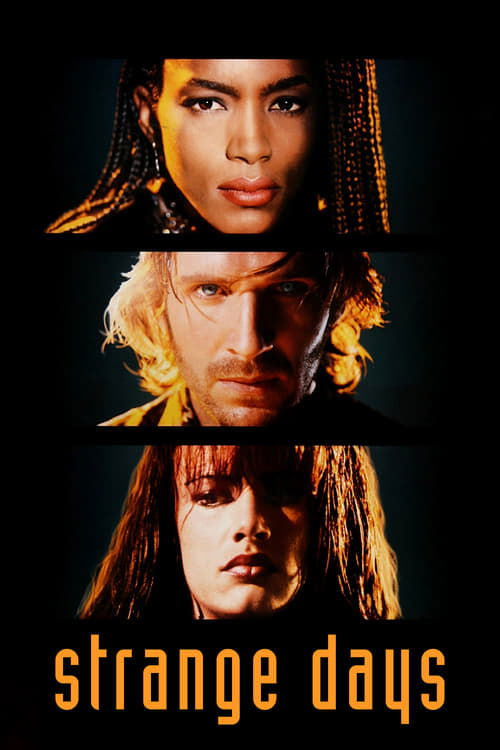
Director Kathryn Bigelow (" Blue Steel ") and her designers and special-effects artists create the vision of a city spinning out of control.
The director has staked her turf in male preserves: Hell's Angelic bikers ("The Loveless," 1981), cowboy vampires ("Near Dark," 1987), tough cops ("Blue Steel," 1990).
For "Strange Days," co-writer/co-producer James Cameron (the "Terminator" films, "Aliens") and director Kathryn Bigelow ("Point Break," "Blue Steel") have stolen the device and upped the ante.