
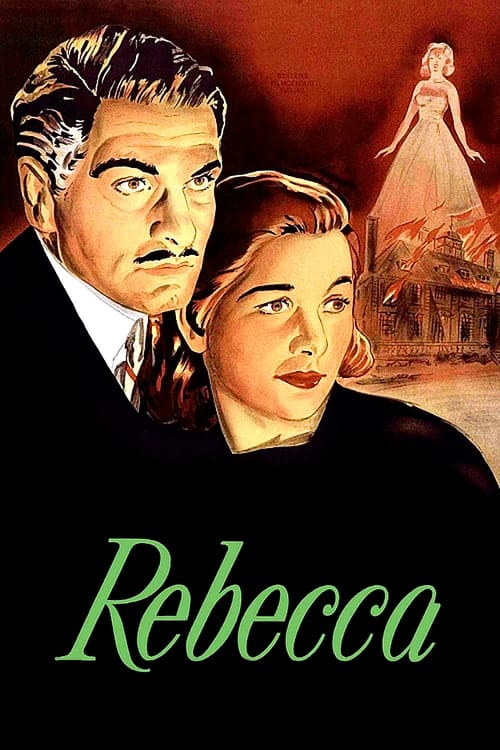
Rebecca (1940)
Directed by Alfred Hitchcock
Story of a young woman who marries a fascinating widower only to find out that she must live in the shadow of his former wife, Rebecca, who died mysteriously several years earlier. The young wife must come to grips with the terrible secret of her handsome, cold husband, Max De Winter. She must also deal with the jealous, obsessed Mrs. Danvers, the housekeeper, who will not accept her as the mistress of the house.
18 connections found
View:
18 connections, in both directions
What critics compared Rebecca to
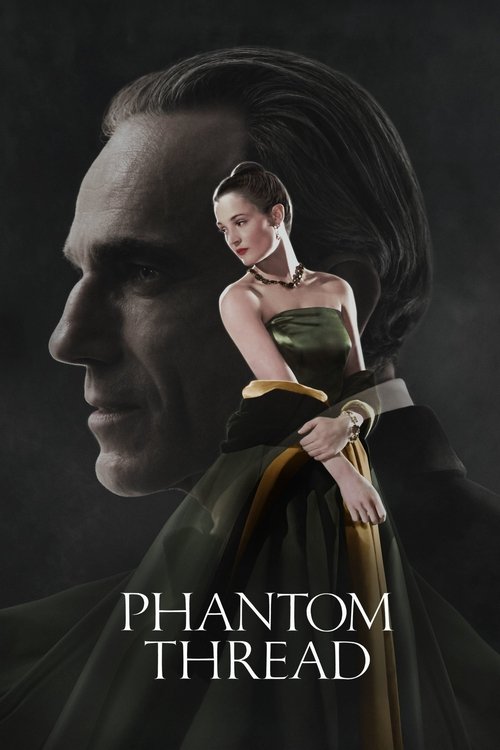


But here, influenced heavily by the haunting suspense of Hitchcock’s “Rebecca,” an older Anderson dramatizes the other side of love.
The film, which Anderson, in an interview with the New York Times , likened to gothic romances like Rebecca, Vertigo, and Gaslight, is as much about female frustration as it is about the spark of creativity.
When the second Mrs de Winter questions her husband and home in Rebecca, her fear and insecurity, as well as her love and longing, were real, deeply, sensitively understood.
Beyond the dazzling performances of Daniel Day-Lewis, Vicky Krieps, and Lesley Manville; the swooping and/or oddly angled luminous 35-mm cinematography by Anderson himself; and the almost omnipresent orchestral score by Jonny Greenwood, which suggests Nelson Riddle on ecstasy, the movie’s uniqueness is its fluidly shifting tone, as if the ghosts of genres as diverse as gothic mysteries (Hitchcock’s Rebecca), screwball comedies (Hawks’s Bringing Up Baby), perverse, obsessional romances (Kubrick’s Lolita), and Angela Carter’s feminist inversions of classic fairy tales were dancing at the edge of the collective consciousness of everyone involved, including the viewer.
She’s like the housekeeper in Hitchcock’s “Rebecca,” creepy and a touch macabre, always hovering, except that the great Lesley Manville, her eyes like black lasers, her hair piled into a short stacked ‘do, plays her like the Judi Dench version of a John Waters character: a badass in dowager’s clothing.
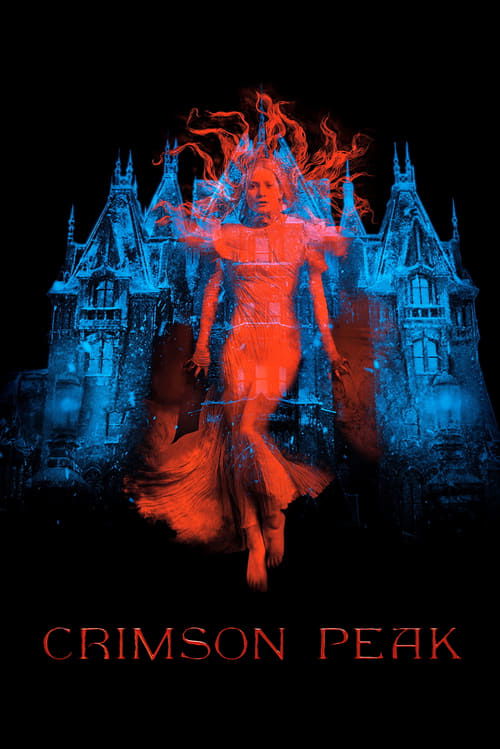
Nineteenth-century Gothic has rarely looked so sumptuous as it does in Guillermo del Toro’s “Crimson Peak,” a lusciously atmospheric period homage to such classics as “Wuthering Heights,” “Jane Eyre” and “Rebecca” that also manages to integrate reminiscences of “Gaslight,” “Notorious,” “The Shining” and even “Dragonwyck” into the mix.
She may be channeling Judith Anderson’s Mrs. Danvers from Hitchcock’s Rebecca, but she’s no less effective for that, and she is harrowing in a scene when Lucille does nothing more than talk about her mother while feeding porridge to an ill Edith.
It plays as a miscalculation on del Toro’s part, like he’s nodding a little too vigorously at Mrs. Danvers from Alfred Hitchcock’s Rebecca — a stated influence — though Chastain is able to shine in a few moments of quiet, emotional introspection.
It reminded me of silvery black and white classics like House on Haunted Hill , Gaslight , Rebecca , Dragonwyck , Wuthering Heights , et al – except of course that Crimson Peak lives up to its title and is awash with glorious, saturated color.
Though it draws inspiration from Rebecca, Notorious, and Jane Eyre, the sensibility is pure Del Toro.
You just know something ghastly is lurking under her unruffled demeanor — she reminds me of the Mrs. Danvers character in “Rebecca.”
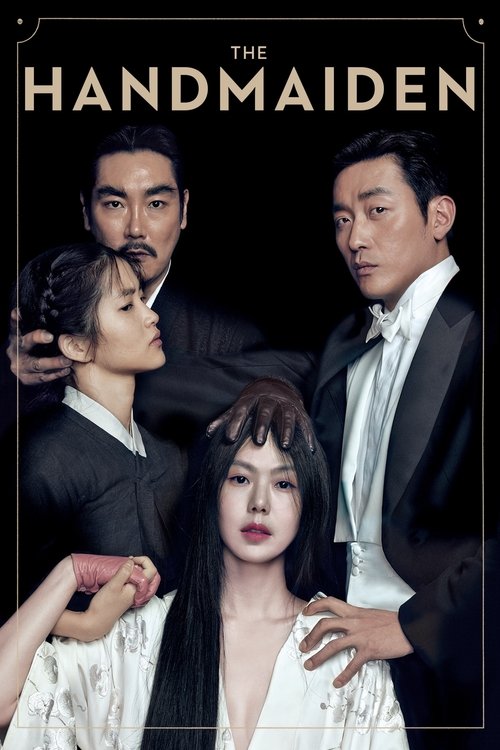
You may be reminded of Gothic romances like “Jane Eyre” and “Rebecca,” or the Euro-noir manipulations of “Diabolique” and “Gaslight.”
This time his touchstone of choice is Rebecca, Hitchcock’s foray into lesbian Gothic psychodrama that earned him his only Best Picture Oscar in 1940.
The house in which this labyrinthine psychodrama plays out is a strange and mysterious hybrid, part western gothic mansion (there are shades of both The Haunting and Rebecca in its shadowy facade), part palatial Japanese residence.
That’s the setup and it’s straightforward enough — there’s even a creepy housekeeper (Kim Hae Sook) right out of “Rebecca.”
The plot faintly evokes many Gothic thrillers (chiefly "Rebecca," "Jane Eyre" and "Gaslight") and quite a few examples of film noir as well; Park’s source is Sarah Waters ’ Fingersmith, a 2002 novel set in Dickensian England that was previously made as a 2005 British miniseries.
With shades of “All About Eve” and more than a dash of “Rebecca,” Sookee arrives at the impressive manor, and while never forgetting her status as double agent, begins to fall for her beautiful employer, the Count’s mark Hideko (Kim Min-hee).

Based on a short story by Daphne Du Maurier, whose works have also inspired Alfred Hitchcock’s Rebecca (1940) and The Birds (1963), Don’t Look Now is a complex, challenging horror film, one that rewards greatly if you’re willing to give it the attention it deserves.
Based on a short story by Daphne du Maurier, the wordsmith whose works also fueled the Hitchcock classics Rebecca and The Birds, this stars Julie Christie and Donald Sutherland as Laura and John Baxter, a happily married couple who, reeling from the death of their daughter Christine, have temporarily settled in Venice so that John can assist in restoring an old church.
Director Roeg treads on Hitchcock territory with this Daphne Du Maurier ( Rebecca , The Birds ) story about a couple whose daughter has just drowned.
Advertisement

In some of these sequences, “Jane Eyre” recalls another gothic romance, Hitchcock’s “Rebecca,” in which Joan Fontaine plays the bewildered, fragile child-bride of Laurence Olivier.
And it includes the elements that have enlivened stories from “Rebecca” to “Dark Shadows.”
This Brontë celebration was accompanied by Hitchcock's classic treatment of Rebecca, Daphne du Maurier's homage to Jane Eyre, starring Joan Fontaine as an unnamed narrator, and we tend to conflate her two performances in our mind.
Vinterberg adds a scene to the last of these which is incredibly moving, reminiscent of Hitchcock's "Rebecca" yet evoking a different emotion.
Just look at the major Hollywood releases this summer: First "Mission: Impossible 2" borrows a plot from "Notorious," then "X-Men" takes a Statue of Liberty climax from "Saboteur," and finally we have Robert Zemeckisâ "What Lies Beneath," which cribs from so many Hitchcock thrillers itâs impossible to mention them all, but the chief victims are "Rear Window," "Rebecca," and "Suspicion."
Johnson’s magnifying glass focus on class reminded me of classic Agatha Christies; and many English mysteries include a mousy young woman, never accepted by the privileged family at the heart of the story (in Daphne Du Maurier’s Rebecca she doesn’t even have a name).
Advertisement
Cornet and Suárez are young, dumb and callow, while enigmatic Marisa Paredes, the most interesting character in the movie, is like Garbo doing Mrs. Danvers in Rebecca.
"Vertigo," "Eyes Without a Face," "Rebecca," "Frankenstein" and every mad doctor movie ever made, including "The Island of Lost Souls," are mixed into this movie's DNA.

Taking cues from classic films ranging from Rebecca, to The Thing and a little The Shining sprinkled around, The Lodge is posed to be 2019’s first horror sensation.
There’s a bit of Hitchcock’s Rebecca here, with Grace fighting the specter of Richard’s once happy life with another woman.