

Stuart Gordon
32 connections found





View:
Connections, in both directions
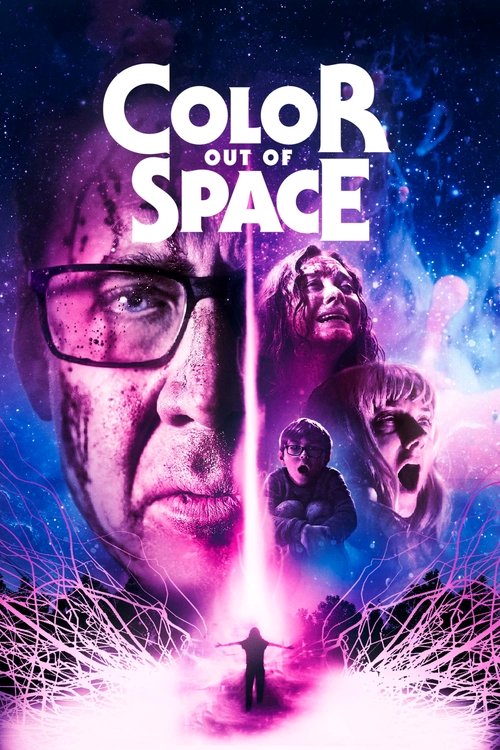
Color Out of Space (2020)
Directed by Richard Stanley
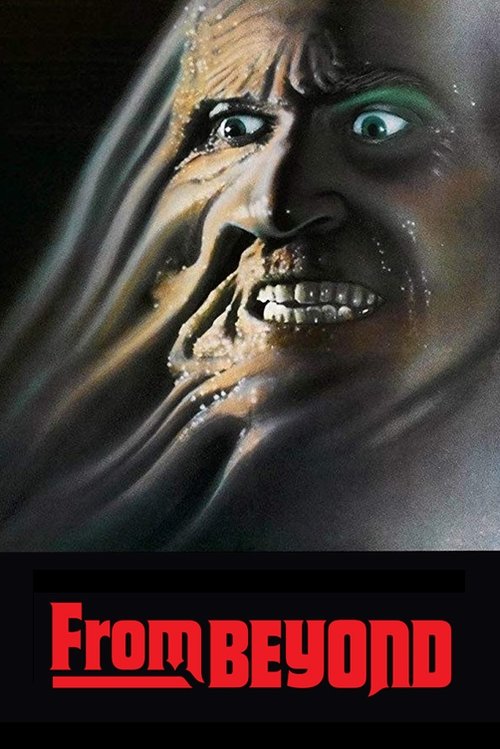
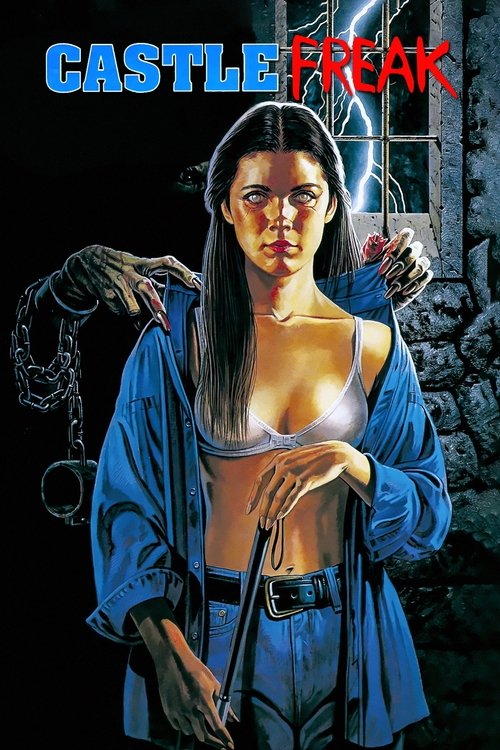
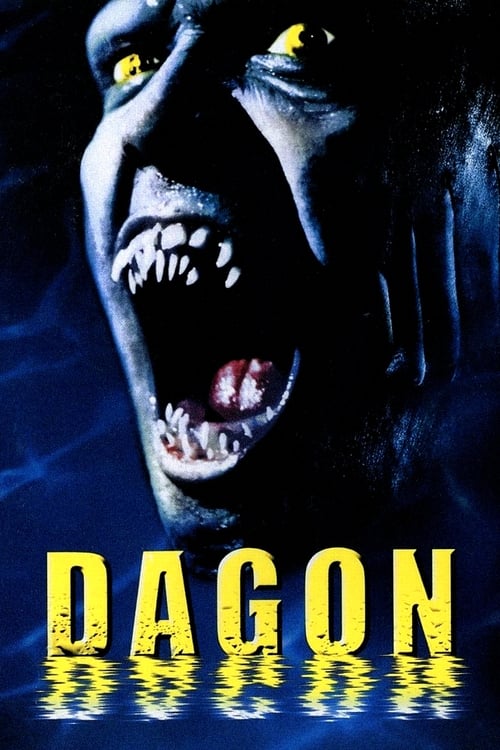
influenced by From Beyond (1986), Re-Animator (1985), Dagon (2001), Castle Freak (1996)
Visuals Themes


Other than director Stuart Gordon, who delivered Lovecraft adaptations Re-Animator and From Beyond, filmmakers have failed to capture the essence of the author's work, with Stanley pulling off the seemingly impossible task of turning a story about colors emanating from a meteorite that fall outside conventional description into a cohesive and riveting experience.
Stanley realizes this effect via some digital imagery, but mostly goes the practical route, crafting strange creatures inspired in equal parts by John Carpenter’s The Thing and Stuart Gordon’s From Beyond , another Lovecraft adaptation that finds ways to depict the author’s sense of unspeakable cosmic horror using movie tools.
It’s often said that Lovecraft is among the most difficult of authors to adapt for a visual medium — hell, half his schtick is telling his readers that a specific monster is simply too horrific to describe — but, much like Stuart Gordon (Re-Animator, From Beyond), Stanley and co-writer Scarlett Amaris have anticipated this problem from the beginning, and the more surreal material is balanced nicely with the essentials required for a traditional horror film.
Once you’ve seen Stuart Gordon’s Re-Animator , From Beyond , and Dagon , and a couple other stragglers, you’re at a bit of a loss for decently budgeted, faithful takes on the cosmic horror pioneer.
Color Out of Space, director Richard Stanley's first narrative feature in almost 25 years, is the best Lovecraft adaptation since From Beyond in 1986.
Later, when the colorful force starts taking a toll on human and animal bodies, Stanley switches into high gear, giving us ickiness on a level commensurate with one of the all-time great Lovecraft adaptations, Stuart Gordon's From Beyond .
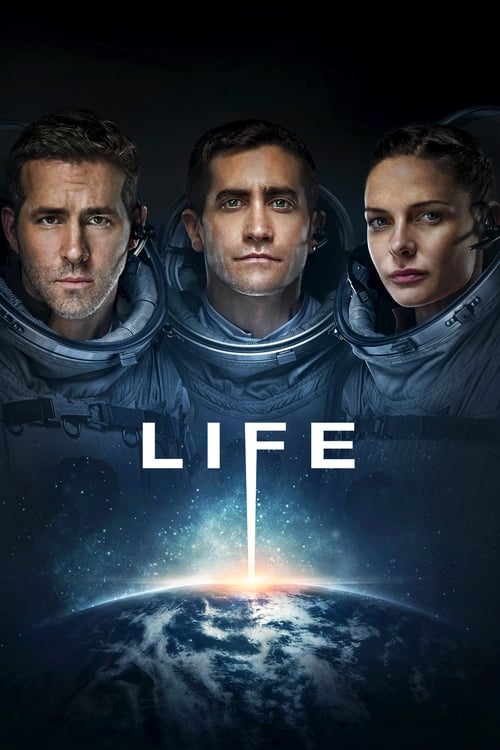
Reynolds gets to partake in some fun bickering with his fellow crew members and his reference to Re-Animator early on is a nice nod to the film’s Lovecraftian influence.
They throw in one stray "Re-Animator" reference for geek credibility.
A genuine effort has been made to add a human dimension to the six members of the Plymouth Rock's crew (the dialogue references "Goodnight Moon" as well as "Re-Animator"), to create convincing individuals rather than space opera constructs.
Fans of “Deadpool” duo Reese and Wernick may be disappointed to find precious few genre-savvy wisecracks in the finished film (though a nerdy “Re-Animator” reference survives).
The introduction of the crew and their gumbo of accents is only slight more coherent: There’s Rebecca Ferguson (Mission: Impossible—Rogue Nation) as the no-nonsense rep from the Centers for Disease Control; Jake Gyllenhaal as the slightly depressive chief medical officer; Ryan Reynolds as (what else?) the wisecracking scientist tossing off Re-Animator references; Ariyon Bakare (Jupiter Ascending) as the ship’s exobiologist with withered CG legs (which seems like a very pricey method of character building); Russian actress Olga Dihovichnaya as a Boris-and-Natasha-sounding cosmonaut; and Hiroyuki Sanada (The Wolverine) as a Japanese engineer and proud father of a newborn back on Earth.
The time is somewhere in the near future — near enough that the crew makes jokes about the 1985 cult horror film “Re-Animator” and ABC-TV’s David Muir hasn’t aged a day, appearing to still be a network-news anchor.
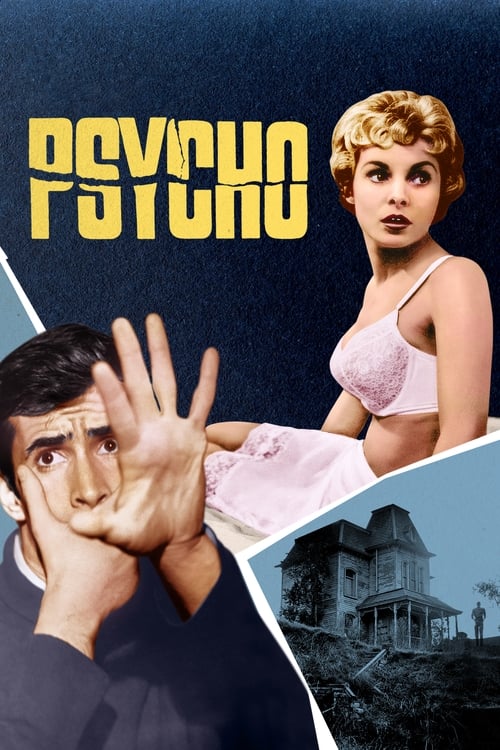
Completing the mood, composer Richard Band blatantly rips off Bernard Hermann's Psycho score, and gets away with it (it works beautifully).
While still somewhat limited by the source material, the new soundtrack sounds excellent, opening up Richard Band’s fantastic New Wave rendition of Bernard Herrmann’s classic Psycho score and making all those gushy, gross-out sound effects even, well, gushier and grosser coming from your surround channels.
Richard Bands memorable score, which cheerfully rips off Bernard Herrmanns "Psycho" theme, sounds just fantastic here.
Purposeful and loving as it may be, it’s merely a half-step up from “Psycho,” right down to the anxious eighth-note triplets.
The centrepiece (not the bathtub scene, which, after Les Diaboliques and Psycho , seems less taboo than exquisitely beautiful) is a pursuit through an environment lit, uncannily, by colour cels and flashing neons that ends with our first good look at the faceless killer and, more importantly, with the silencing of the owner of the abovementioned black leather purse.
Roberta Bloch, with a bow to the author of " Psycho " (1960), who will probably not be inclined to bow back.
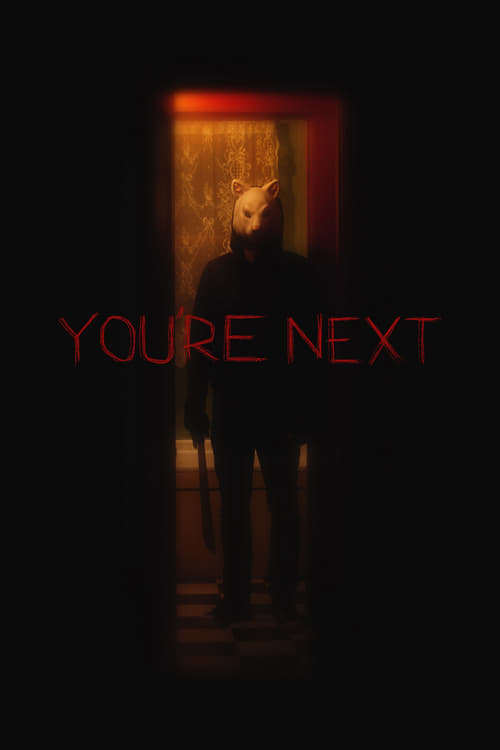
As they drive through remote countryside towards the English Tudor style mansion, Crispian's mom Aubrey (Barbara Crampton, "Re-Animator") is insisting her husband Paul (Rob Moran, "Hall Pass") investigate a noise she heard coming from upstairs in the just-opened (and found unlocked) house.
She brings a nice horror heritage to the movie, having starred in "Re-Animator" and "From Beyond."
It’s a testament to the skill Wingard and his actors (among them Crampton, of Re-Animator fame) evince that the oft-improvised dinner-party dialogue between Swanberg and West (director of The House of the Devil) fits so seamlessly with the overall narrative of a family reunion gone straight to hell.
And, as mother Aubrey, it is a treat to see Barbara Crampton (best-known for her work with Stuart Gordon in 1984's "Re-Animator" and 1986's "From Beyond") onscreen again, her shattering portrayal of motherly anguish at the sight of what she cares for the most falling apart a lingering force even after she's exited the scene.
They are ostensibly celebrating the parents' wedding anniversary (the parents are played by colorless character actor Rob Moran and, in a stroke of pure fucking genius, Barbara Crampton from "Re-Animator" and a particularly memorable 1986 Playboy pictorial).
Many of the cast members are either genre filmmakers (Larry Fessenden, Joe Swanberg , Ti West ), or horror icons (Crampton, from Re-Animator).
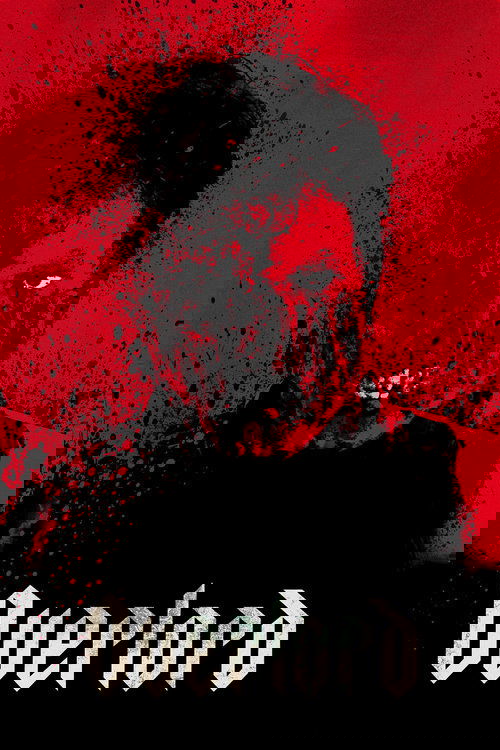
It might also sweeten the pot that Avery’s horror war hybrid feels like a spiritual prequel to “Re-Animator.”
If you can imagine the pulpy WWII revisionism of Inglourious Basterds cross-pollinated with the giddy grindhouse splatter of 1985’s Re-Animator , then you’re more than halfway to the insane B-movie mayhem of Overlord .
But that didn’t stop the makers of Overlord —including hotshot producer J.J. Abrams—from trying their darnedest to find some whacked-out middle ground between Re-Animator and Saving Private Ryan .
Written by Billy Way and Mark L. Smith, with solid cinematography by Laurie Rose and Fabian Wagner, “Overlord” is a kooky riff on the “Re-Animator” formula.
Produced by J.J. Abrams and directed by Julius Avery, Overlord -- which feels something like Inglourious Basterds crossed with Re-Animator -- goes along for the first hour as if it were an ordinary WWII movie, albeit one that's rather noisy and with quite a lot of shaky-cam footage.

Slither (2006)
Directed by James Gunn
influenced by From Beyond (1986), Re-Animator (1985)
Themes Visuals
Anyone can make a bad horror comedy, but Gunn, the screenwriter of the vastly underrated remake of George A. Romero’s seminal gutbuster-cum-social critique Dawn of the Dead, is not only an honest and heartfelt fan of horror films but also one heck of a writer: Gag all you need to while taking in this smart, ghastly, and often disarmingly hilarious homage to everything from Romero’s herky-jerky undead to Stuart Gordon’s moister moments in Re-Animator and From Beyond (not to mention Brian Yuzna’s adroit skewering of Republican family values in the little-seen 1989 nightmare-cum-satire Society), but by the time the final credits roll, damned if you’re not downright upbeat about the whole alien invasion situation on screen.
Gunn does have the sense to create several scenes of notable tension, but little that aims for a creepy horror-film frisson in the manner of Stuart Gordon’s Re-Animator, Ken Russell’s The Lair of the White Worm or Don Mancini’s Seed of Chucky.
The faint of heart should skip it, but if your guilty-pleasure tastes run to such storied horror-comedies as ''Re-Animator" and ''Tremors," here's your cup of extraterrestrial gastropod guts.

But in my defense, that is only because I very early on got attached to thinking of it as a stupider version of the already stupid Robot Jox , on account of the earlier film having a similar premise (in the future, the most popular sport is matches between battlebots...) with an even higher concept behind it (...that are fighting World War III by proxy!).
In a tale predicated on the surpassing of man by machine, Real Steel doesn?t engage in the same?it?s what a publicist might describe as an ?effects movie with heart.? Robot Jox jokes aside, gladiatorial animatronics are of secondary concern here.

The Autopsy of Jane Doe (2016)
Directed by André Øvredal
influenced by Re-Animator (1985)
Visuals Themes
(One sequence in particular recalls the elevator scene in Re-Animator, but way more intense.)
When horror buffs debate their favorite morgue scenes, most probably gravitate towards Re-Animator and Stuart Gordon’s undead monster mash.

The Substance (2024)
Directed by Coralie Fargeat
influenced by From Beyond (1986), Re-Animator (1985)
Visuals
…the lengths aging stars will go to retain relevance in a film that also plays as Stanley Kubrick homage (with a touch of Stuart Gordon’s "From Beyond").
I won’t spoil the precise details of how the drug works except that it involves injecting a neon green fluid (straight out of Stuart Gordon’s Re-Animator) and giving birth to a much younger version of yourself in extremely grisly fashion.
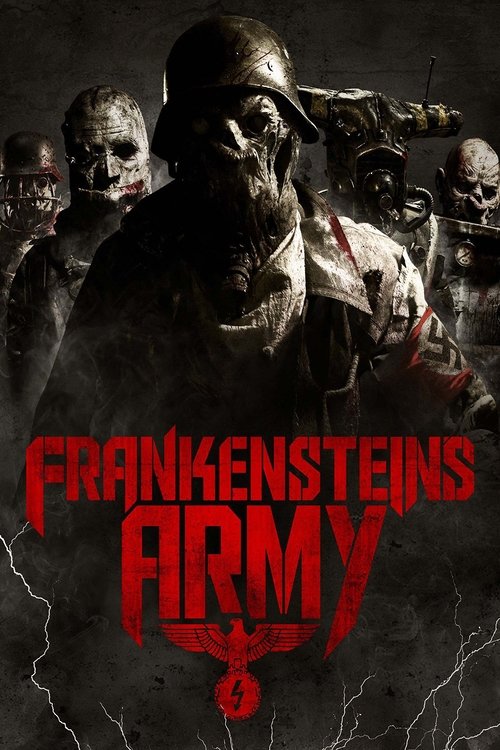
"Frankenstein's Army" represent's Raaphorst's feature directorial debut, but he has many credits as a concept and storyboard artist on such European-made films as Paul Verhoeven's "Black Book" and Stuart Gordon's "Dagon."

Achilles’ comeback gives a conventional “hero’s journey” grounding to a movie that’s otherwise ahead of its time, falling somewhere between RoboCop (which came out while Robot Jox was in production), The Hunger Games, and Pacific Rim.
Mine are Robot Jox , the 1998 Godzilla , Blade Runner , and the 1966 Japanese TV series Ultraman for various details of the scenario and design, all of it yoked to a storyline rather similar to Top Gun , though of course that film didn't invent the idea of the hotshot pilot with demons any more than Pacific Rim did.
I mostly agree with that statement, but I’m not an idiot, I didn’t go into this Robot Jox vs. Godzilla movie expecting a Merchant-Ivory film or some Reservoir Dogsian character drama.
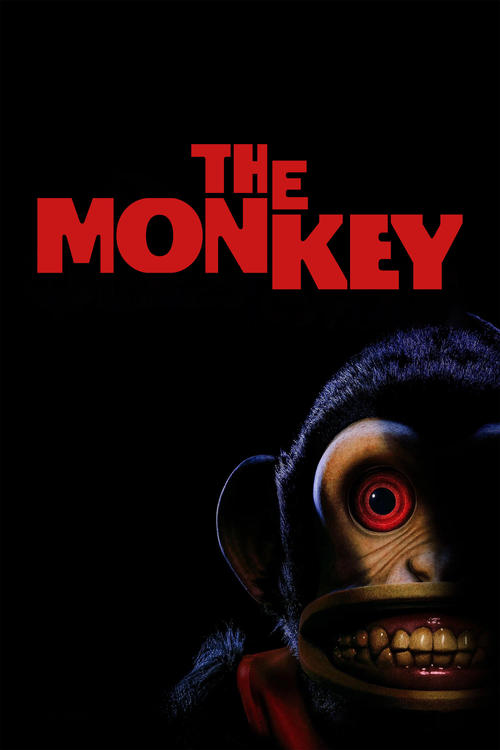
…or the way that Gordon brought his background in era-defining Chicago theatre to raise Re-Animator above its splatter peers…
Think Final Destination meets Re-Animator, with a splash of Drag Me to Hell thrown in for good measure.

Krampus suggests what it might be like to see a shrill and anonymously shot Christmas movie starring Hugh Grant or Sarah Jessica Parker invaded by the ghoulies from Stuart Gordon's Dolls .

When the film begins to show its From Beyond influence, Erickson means to capture the outright absurdity of both the 1986 film and the Lovecraft story on which it's based and use the premise for political satire, but the conclusion becomes burdened by the rigidity of Erickson's tone and restrains itself from the bizarre heights material such as this allows.
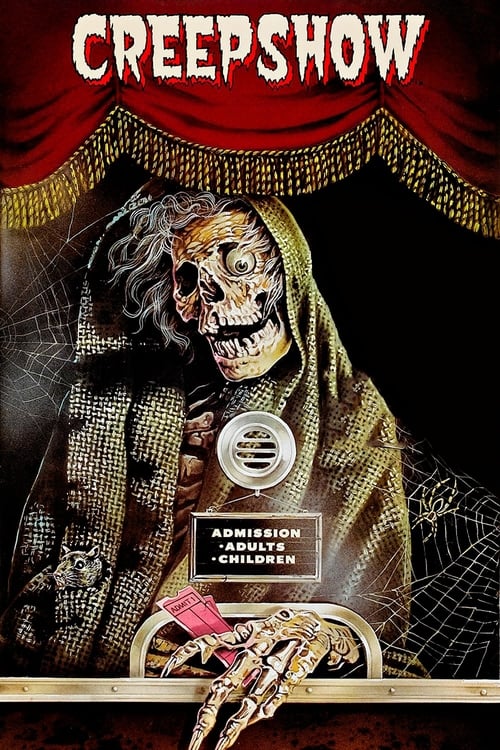
These were all movies that irreverently stripped away the seriousness that had filled the horror genre throughout the late 1960s and 1970s, and replaced it with a willful sense of the comic, which ranged from outright slapstick in Raimi’s films to the dark, EC Comics-inspired humor of George Romero and Stephen King’s Creepshow (1982).

Horror movies being centered around possessed dolls are nothing new—in addition to "Child's Play," there's everything from the underrated Stuart Gordon shocker "Dolls" to the evil clown in "Poltergeist" to the Stephen King-penned episode of "The X-Files" to the insanely popular direct-to-video "Puppet Master" franchise (there have been ten movies).

It’s bright and unusual and features designs that seem inspired by esoteric sci-fi oddities like Ice Pirates and Space Truckers instead of just the usual Star Wars riffs.

(I kept being reminded of Jeffrey Combs’ line to the libidinous David Gale in Re-Animator: “You steal the secret of life and death and here you are trysting with a bubble-headed co-ed.”)

Worthy of special mention is Jeffrey Combs (star of "Re-Animator") who clearly relishes the role of Milton Dammers, the kind of FBI agent who could bring J. Edgar Hoover back from the dead.
Jeffrey Combs, of Re-Animator fame, is a stand-out as Milton, the FBI agent who specializes in paranormal psychology.

Suffice it to say that “Get Out” morphs gradually from weirdly off-kilter social satire to full-fledged horror in a way that suggests Peele’s appreciation not only of Yuzna’s “Society” but of Stuart Gordon’s “Re-Animator” (which Yuzna produced) as well.