
Tommy Lee Jones
8 connections found
View:
Connections, in both directions
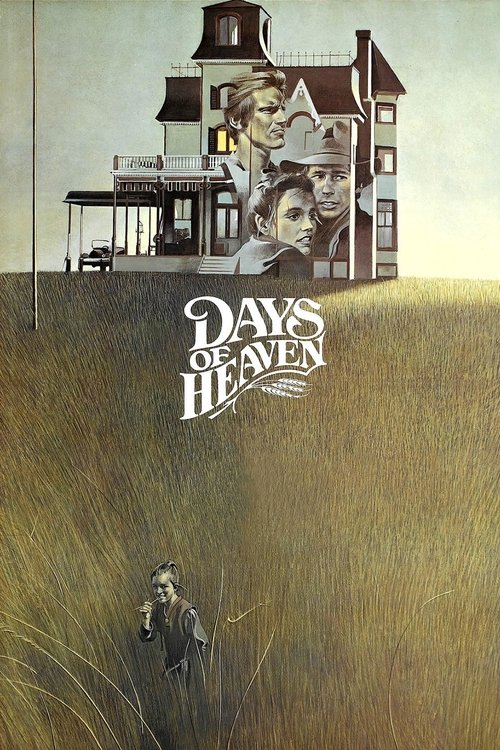


The strangest section of the film involves a stop-over at the Fairfield Hotel, standing alone in the middle of the plains, like an Andrew Wyeth painting, reminiscent of Sam Shepard's house in Terrence Malick's " Days of Heaven ."
Cinematographer Rodrigo Prieto ("Brokeback Mountain") enhances the vastness of the landscape which Jones has taken pains to shift as the journey progresses.
(The cinematographer is Rodrigo Prieto , who has brought his mastery to "Brokeback Mountain," "Babel" and "The Wolf of Wall Street," among other projects.)
As the sweeping landscapes, gorgeously photographed by Rodrigo Prieto of Brokeback Mountain, Argo, and The Wolf of Wall Street, host the unlikely quintet of travelers, Jones allows the audience to marinate in an undercurrent of Cuddy’s assured steadfastness and even insecurities, gladly stepping back to let Swank shine.
Working in gritty 35-millimeter with the gifted cinematographer Rodrigo Prieto ( 25th Hour , Brokeback Mountain ), Jones devotes most of the frame to the sky whenever he presents landscapes, making any human activity seem trivial.
Veteran cinematographer Rodrigo Prieto , with an Oscar nod for capturing the interplay between man and the environment so beautifully in "Brokeback Mountain," does the shooting.
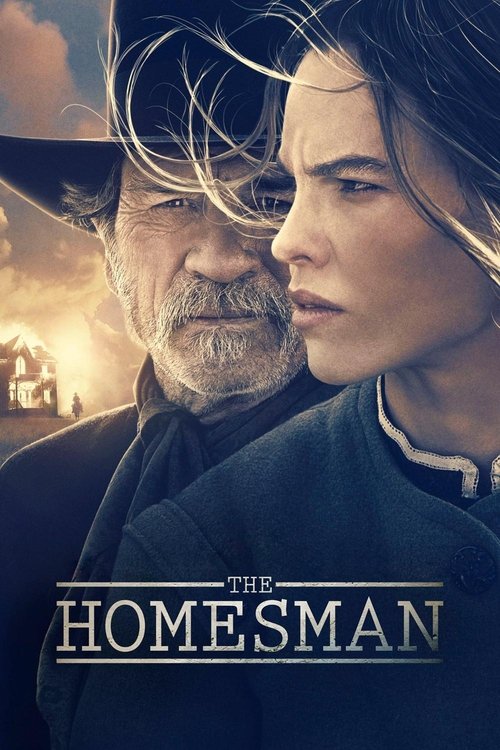
Tommy Lee Jones’ second theatrical feature, “The Homesman,” is curt, cruel and weirdly funny, a female-leaning 1855-set Western “road movie” about a covered-wagon escape-cum-trek from pioneer life in the Nebraska Territories that lives up to Jones’ advance talk of the film as being built by himself and ingenious cinematographer Rodrigo Prieto (“Brokeback Mountain,” “Babel,” “The Wolf of Wall Street”) upon geometry, minimalism and the visual work of artists like Donald Judd and Josef Albers, Kabuki theater and the textures of photographer Josef Koudelka.

Mad Max: Fury Road (2015)
Directed by George Miller
influenced by The Homesman (2014)
Plot Characters Themes
The first half of "Fury Road" is not unlike Tommy Lee Jones's "The Homesman," with its reluctant hero aiding a woman trying to bring the weaker of her kind across hostile territory.
But you know as little about their pasts as you do about the addled wives in Tommy Lee Jones's The Homesman.
Besides having some interesting thematic and plot similarities to the recent Tommy Lee Jones-Hilary Swank western The Homesman, you might even be able to say Mad Max: Fury Road is a feminist film.
The Assassination of Jesse James by the Coward Robert Ford (2007)
Directed by Andrew Dominik
influenced The Homesman (2014)
Visuals Themes
The Homesman, adapted from a novel by proven western hand Glendon Swarthout (The Shootist, 7th Cavalry), fits securely into the "new wave" of ultra-realistic (read: surly and grubby) oaters, à la the Coen Brothers' True Grit and No Country for Old Men; The Assassination of Jesse James by the Coward Robert Ford; Meek's Cutoff, etc.
From Peckinpah’s Wild Bunch and Altman’s McCabe and Mrs. Miller through Eastwood’s Unforgiven and Jarmusch’s Dead Man to Dominik’s The Assassination of Jesse James by the Coward Robert Ford and Reichardt’s Meek’s Cutoff, the outlier/atypical exception has become the norm, and these days, the truly daring move would be to make a straight-up oater without the frills.
Amores Perros (2000)
Directed by Alejandro G. Iñárritu
influenced The Three Burials of Melquiades Estrada (2005)
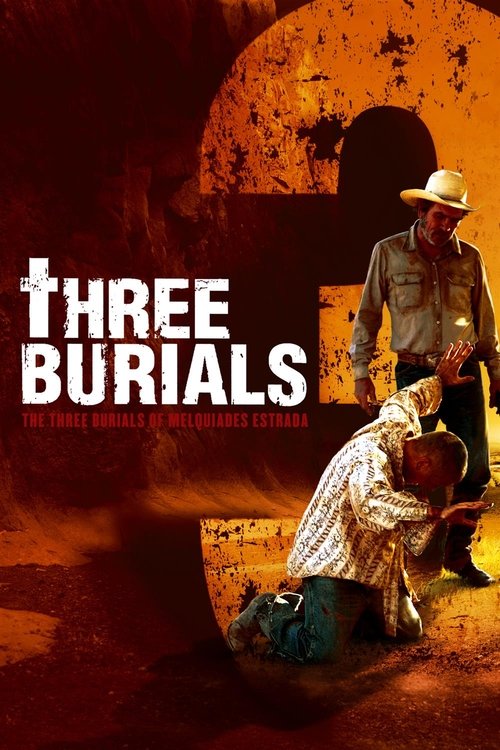
Jones, who also stars in Three Burials, received the Best Actor award at Cannes, while the film’s screenwriter Guillermo Arriaga (Amores Perros, 21 Grams) received the Best Screenplay award.
The script by Guillermo Arriaga ("Amores Perros" and "21 Grams") jumps to flashbacks without warning and expects the audience to catch up with it.
(The very compassionate screenplay is by Mexico's Guillermo Arriaga, whose previous works -- "Amores Perros" and "21 Grams" -- also used non-linear storytelling.)
Arriaga has proven, with “21 Grams,” “Amores Perros” and, now, “The Three Burials of Melguiades Estrada,” his mettle as an intriguing, creative storyteller.
Screenwriter Guillermo Arriaga has already explored this "fractured narrative" structure in both "Amores Perros" and "21 Grams."
Skip it: Written by Guillermo Arriaga ("21 Grams," "Amores Perros"), "The Three Burials of Melquiades Estrada" is another bitter morality tale of accidental murder and vigilante justice.

Working in a succession of lowly jobs, Senegalese immigrant Samba (Omar Sy, the co-lead from The Intouchables) strives to keep his head above water while fighting to gain residency in France.

Working from a screenplay that he co-wrote with Kieran Fitzgerald (“The Homesman”), Stone delivers a portrait of a whistleblower whose political education was gradual but had an irrevocable impact on his worldview.
Part of the problem is that Stone, who co-wrote the script with Kieran Fitzgerald (the underrated “The Homesman”), goes too broad, covering a decade in Snowden’s life in which the security expert traveled between Washington, Geneva, Tokyo, Hawaii and Hong Kong, where the movie gets under way.
Oliver Stone directs and co-writes (along with The Homesman screenwriter Kieran Fitzgerald) this paint-by-numbers, Wikipedia-page biopic of NSA whistleblower/traitor Edward Snowden.
His script, co-written with The Homesman’s Kieran Fitzgerald and based on extensive research (and nine separate visits with Snowden in Moscow), takes an unambiguous position, but the feisty, alarmed movie that could have been is choked off, given Gordon-Levitt’s severity.
His direction here is competent but unexceptional, aptly matching the quality of his and co-writer Kieran Fitzgerald's (2014's "The Homesman") by-the-numbers screenplay, based on the books "The Snowden Files" by Luke Harding and "The Time of the Octopus" by Anatoly Kucherena.A former private contractor for the CIA and NSA, 29-year-old computer hacker Edward Snowden (Joseph Gordon-Levitt) has become privy to, and increasingly outraged by, the United States government's methods of tracking and spying on unsuspecting, by and large innocent, citizens.
Stone, working from a screenplay by Kieran Fitzgerald (“The Homesman”), doesn’t present any theories or assertions beyond what’s been covered in the press, and his editorializing is all in broad strokes.
Kelly Reichardt’s extraordinary Meek’s Cutuff (2011) and Tommy Lee Jones’ haunting The Homesman (2014) have recently proved that not only is it still possible to tell these frontier-times stories of America’s past without relying on such exclusionary points of view, but that it is essential.