
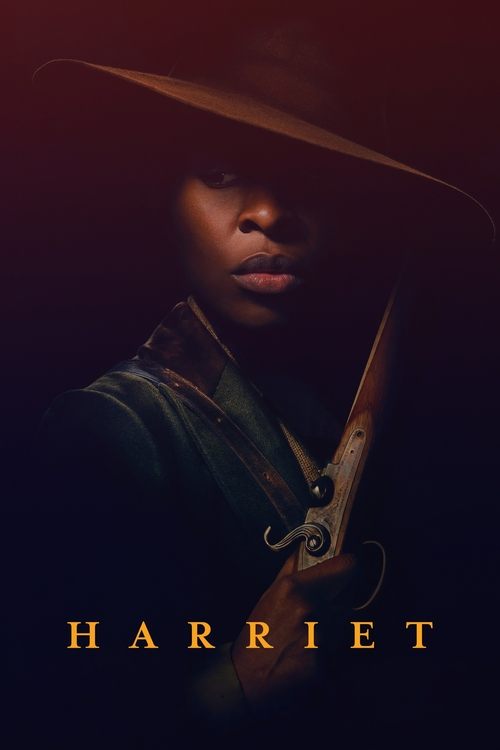
Harriet (2019)
Directed by Kasi Lemmons
The extraordinary tale of Harriet Tubman's escape from slavery and transformation into one of America's greatest heroes. Her courage, ingenuity and tenacity freed hundreds of slaves and changed the course of history.
4 connections found
View:
4 films that influenced Harriet
What critics say influenced Harriet


Unlike the grisly “Braveheart” showdowns of “The Birth of a Nation,” Lemmons focuses on Tubman’s ability to take action and inspire others to do the same.
Despite some fleeting moving moments from the supporting cast, including Janelle Monae and Clarke Peters, Lemmons’ film suffers from a lack of inspired segues (montages featuring Leslie Odom Jr. as William Still provide easy, arguably awkward moments of catharsis) and underwhelming technical contributions, with two-time Oscar-winning DP John Toll ( Braveheart ; The Thin Red Line ) and composer Terence Blanchard (a regular Spike Lee contributor, Oscar nominated for his BlacKkKlansman score) driving sincerity into the realm of saccharine artifice.
The film is beautifully shot by multi-Oscar winner John Toll (Legends of the Fall, Braveheart), although every gorgeous sunset or sub-dappled field of grass is balanced with a frigid forest at midnight filled with terrified frozen breath or a raging river that Harriet must hurl herself into to escape.
But Harriet would, at least, have felt more at home if it had been released in the Nineties, when Gregory Allen Howard wrote the first version of the film’s script – a time when historical biopics (such as Braveheart ) were expected to be both epic and a little overcooked.
That’s not to diminish the contributions of cinematographer John Toll (“Braveheart”) and composer Terence Blanchard (“BlacKkKlansman”), but it’s important that the lead singular vision come from a rooted place of authenticity.
This isn’t the snarling, mustache-twirling villainy of Leonardo DiCaprio in Quentin Tarantino’s Django Unchained .
Unlike the cartoonish revenge of “Django Unchained,” or the melancholic poetry of “12 Years a Slave,” Lemmons’ straightforward narrative style foregrounds its purpose — to translate Tubman’s heroism into cinematic terms — and the emotional coda pulls it off.
The value of “Harriet” may be clearer to critics when juxtaposed with other modern movies that cover the same atrocities: “Django Unchained” from 2012, Quentin Tarantino’s violent homage to spaghetti Westerns that includes slaves; the incendiary but historically accurate “12 Years a Slave” in 2013; and 2016’s cogent (though controversy-mired) “The Birth of a Nation,” based on Nat Turner’s slave rebellion in Virginia in 1831.
The film is beautifully shot by multi-Oscar winner John Toll (Legends of the Fall, Braveheart), although every gorgeous sunset or sub-dappled field of grass is balanced with a frigid forest at midnight filled with terrified frozen breath or a raging river that Harriet must hurl herself into to escape.
Cinematographer John Toll ( Legends of the Fall , The Thin Red Line ) has already created a handsome-looking film.
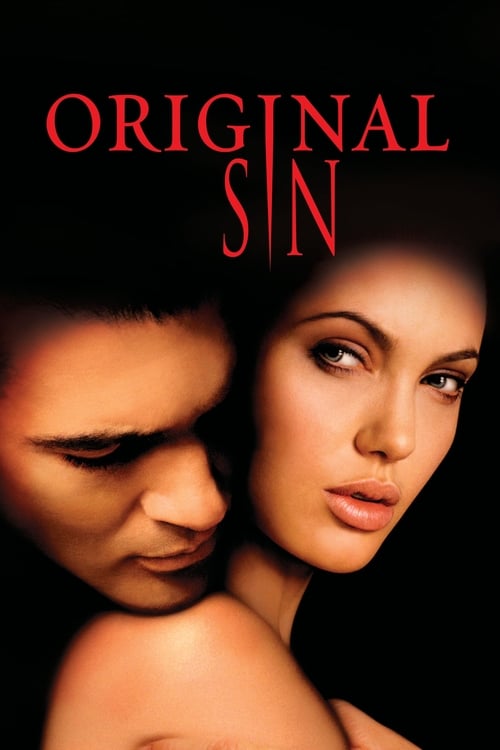
Both films focus on the horrors of slavery, which has been characterized as America’s “Original Sin,” but there’s an important difference.