
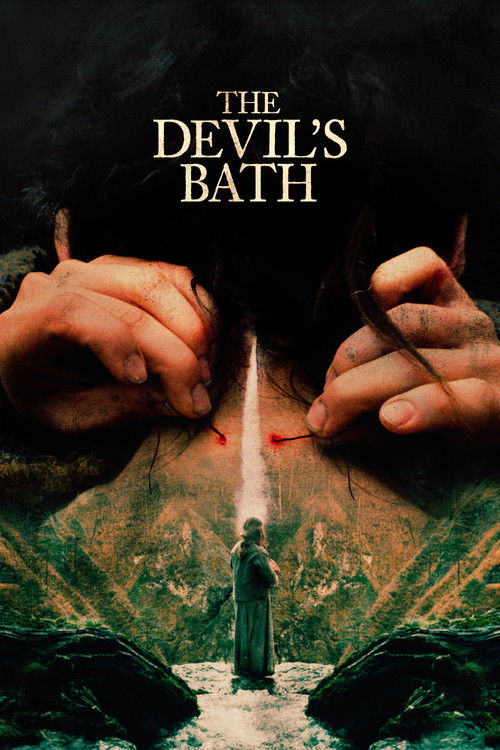
The Devil's Bath (2024)
Directed by Severin Fiala
In 1750 Austria, a deeply religious woman named Agnes has just married her beloved, but her mind and heart soon grow heavy as her life becomes a long list of chores and expectations. Day after day, she is increasingly trapped in a murky and lonely path leading to evil thoughts, until the possibility of committing a shocking act of violence seems like the only way out of her inner prison.
2 connections found
View:
2 connections, in both directions
What critics compared The Devil's Bath to
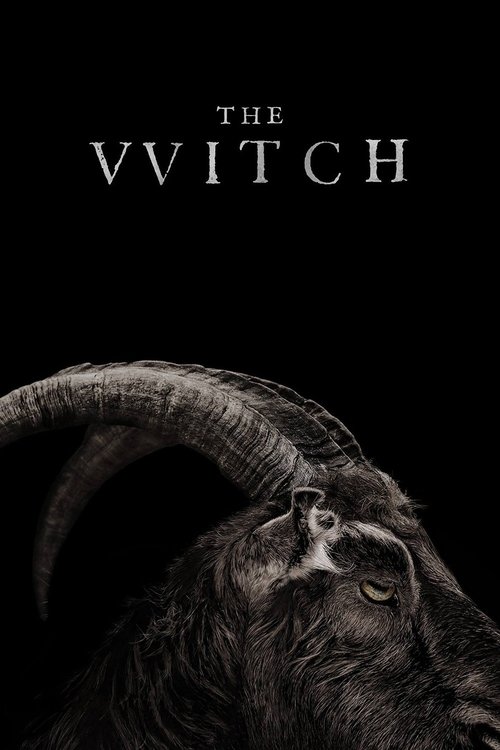


While inevitable comparisons will be made with Robert Eggers’ The Witch (2015), it’s more spiritually akin to Peter Brunner’s Luzifer (2021). But Agnes is a protagonist who behaves inversely to the victims we often see in films like this because she’s pious–an innocent. Whereas the rebellious young women in The Crucible engage in behavior which instigated a witch hunt, Agnes turns inward, seeking self annihilation.
Early on, Franz and Fiala’s new film recalls Robert Eggers’ The Witch, despite being set more than a century later, in 1750. It has a comparable emphasis on ambience and authentic historical detail, which is possibly even more granular here. But vague suggestions of witchcraft quickly turn out to be misleading, with the story instead fueled by converging forces of religion, folklore and nature.
The Devil’s Bath operates according to the tenets of folkloric horror, but doesn’t feature anything remotely fantastical outside Agnes’ fever dreams. Whereas Robert Eggers’ The Witch molds olden tales of oppressively religious teachings into outright horror imagery, The Devil’s Bath remains grounded and earthly.
The dense, swampy landscape and gloomy aesthetic of The Devil’s Bath serve well to enhance the film’s narrative tension, comparable to the cinematography of Robert Eggers’ The Witch. Nature at the beginning of the film seems friendly, as we see Agnes joyfully weaving flowers into her wedding headpiece and playing with an insect. The forest appears more sinister, however, as Agnes becomes emotionally detached.
From the film’s harrowing opening scene, immediately invoking the austere natural beauty and historical accuracy of Robert Eggers’ The Witch, we see the dire consequences of this troubling view on salvation.

Franz and Fiala are not new to depicting psychological trauma women often experience; it is a prominent theme in their previous films Goodnight Mommy (2022) and The Lodge (2019). The tagline, “a mother should look out for her sons,” encapsulates Goodnight Mommy’s chilling commentary on the burdens of motherhood and the weight of guilt. Both Goodnight Mommy and The Lodge follow a similar general plot of a mother-figure being alone with two children in an isolated location.
Although it comes from the filmmaking duo behind “Goodnight Mommy” and “The Lodge,” Veronika Franz and Severin Fiala‘s “The Devil’s Bath” is not a horror movie.
The Austrian filmmaking team of Veronika Franz and Severin Fiala had an auspicious feature debut in 2024 with the subtle yet terrifying horror film Goodnight Mommy. The American remake in 2022 by Matt Sobel (whose debut Take Me to the River was promising) could not hold a candle to it.
The Devil’s Bath is far more subtle than Franz and Fiala’s breakout film Goodnight Mommy (2014), or their 2019 follow-up The Lodge, steeped as the production is in authentic period detail while carefully building on events and instances which strip away Agnes’ hope.
Written and directed by Veronika Franz and Severin Fiala, the duo behind the chilling horror films Goodnight Mommy and The Lodge, The Devil's Bath succeeds at topping those works.