
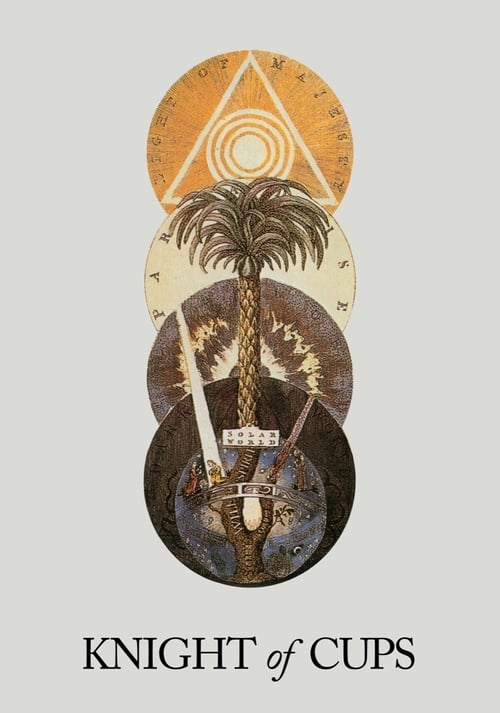
Knight of Cups (2015)
Directed by Terrence Malick
Rick is a screenwriter living in Los Angeles. While successful in his career, his life feels empty. Haunted and confused, he finds temporary solace in the decadent Hollywood excess that defines his existence. Women provide a distraction to his daily pain, and every encounter brings him closer to finding his place in the world.
7 connections found
View:
7 films that influenced Knight of Cups
What critics say influenced Knight of Cups

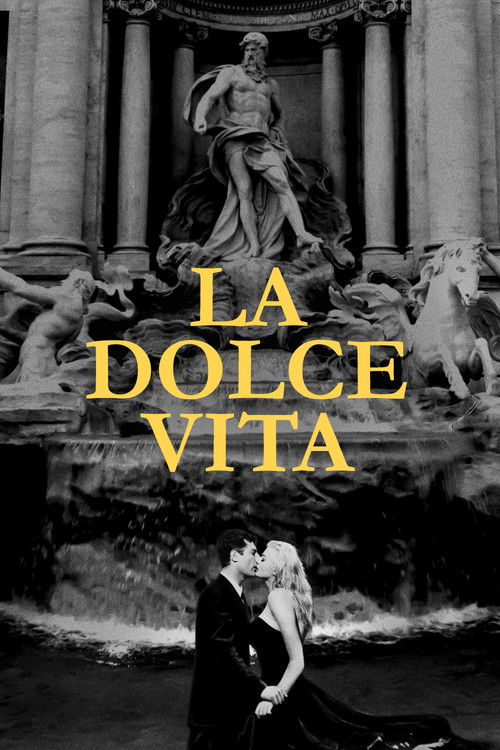


When not occupied with agents or equally tormented family members like his brother (Wes Bentley) or his father ( Brian Dennehy ), Rick spends his time living the lush life to an extent actual screenwriters rarely do, going to "La Dolce Vita"-type Hollywood parties and cavorting with platoons of all-too-willing female accomplices.
We can safely infer that Bale’s character (identified as “Rick” in the closing credits) is meant to be a latter-day stand-in for that knight, a Hollywood type who has embraced la dolce vita and lost his sense of self in the process.
Despair abounds in stylish duds, no doubt, and parallels to chic sixties cinema are obvious, but it’s a far cry from the disaffected existentialism of L’Eclisse or La Dolce Vita.
(If there’s a model here, it’s Fellini’s La Dolce Vita, particularly in some star-packed party scenes set on the grounds of Antonio Banderas’ happily hedonistic character.)
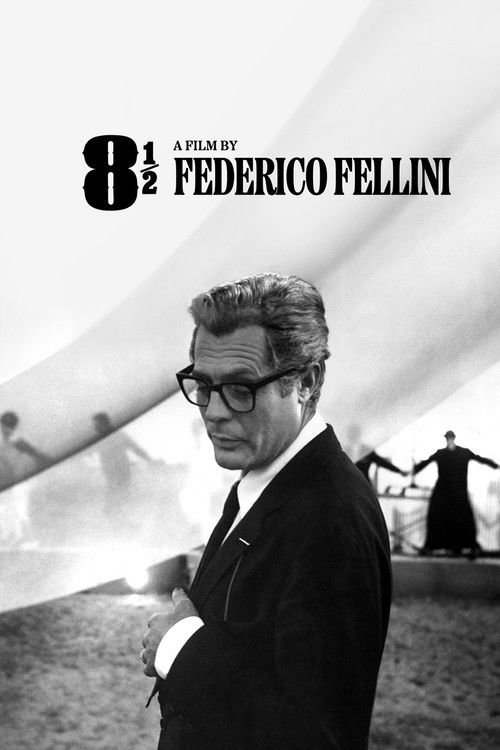
…by Walter Chaw Terrence Malick's Knight of Cups is an obvious companion piece to Sofia Coppola's Somewhere and Fellini's 8½, and a less obvious spiritual companion to the Coens' Hail Caesar!, Cronenberg's Maps to the Stars, and even Fosse's All That Jazz.
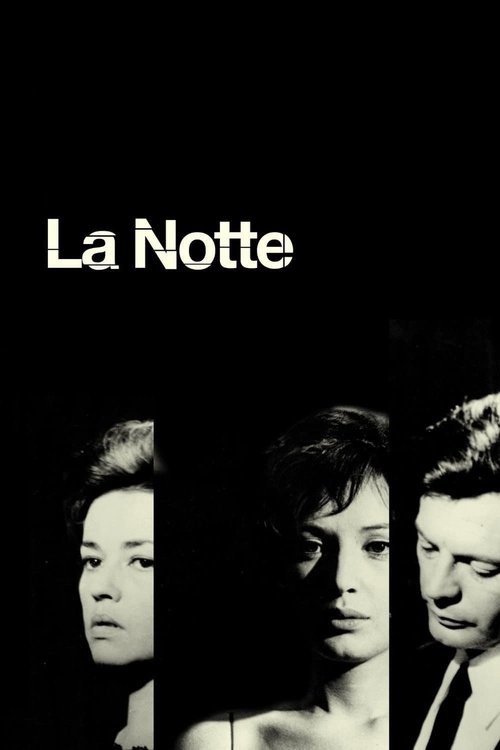
Many images evoke the Cinema of Stylish Ennui: think of Michelangelo Antonioni's "La Notte" and "L'Eclisse," Michael Mann's "Heat," Sofia Coppola's " Somewhere ."
In The Hermit, Rick wanders the grounds of a lavish shindig at the Malibu mansion of a Spanish satyr (Antonio Banderas), a set piece that manages to simultaneously recall Antonioni’s La notte (1961) and—in old horndog Banderas’s statement that “women are like flavors: sometimes you want raspberry, and then you get tired of it and you want strawberry”—Raekwon’s “Ice Cream.”
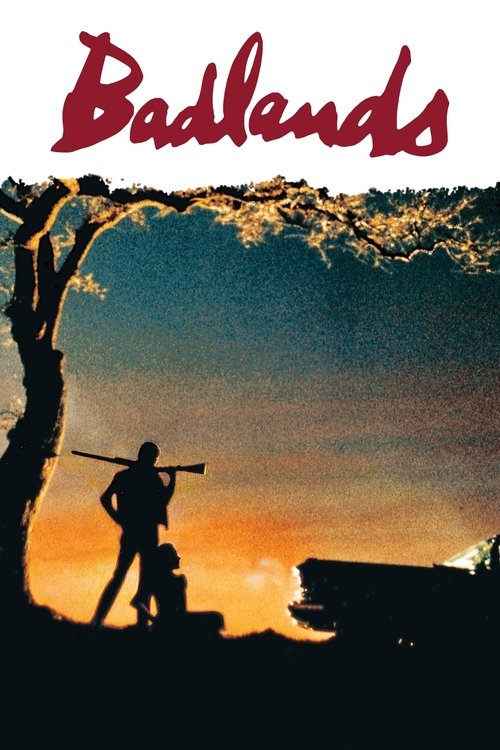
From his very first film, the criminals-on-the-lam romance Badlands, Malick has displayed an affinity for figures in extreme circumstances who find themselves emotionally adrift.
His true-crime debut “Badlands” back in 1973, while stunning to behold and brilliantly composed, didn’t employ those dreamy voiceovers or lingering portraits of nature we’ve come to expect from the famously reclusive director.
His early films — “Badlands” and “Days of Heaven” — were gorgeous to look at but also had strong narratives to engage mainstream audiences.
"The Tree of Life," in 2011, was only the director's fifth feature in a career that began with "Badlands," in 1973; at one point during that almost four-decade swing, the gap between movies was 20 years.
She barefoots along the edge of a riser in front of a studio’s backdrop painting of bluest sky, as on the Paramount lot, even back to 1970s days when young screenwriter Malick walked there at the crest of the “Hollywood Renaissance” that allowed him to make “Badlands” and “Days of Heaven.”
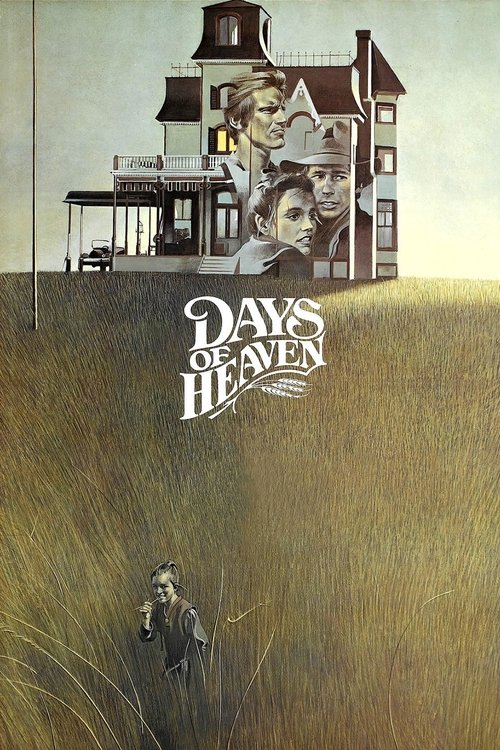
Since his 1970s masterworks “Badlands” and “Days of Heaven,” his focus has been painful paradoxes as faith attempts to adapt itself to the latest challenges of an ever-evolving culture.
Malick’s pursuit of the beautiful was already devout in “Days of Heaven,” in 1978, and in recent decades it has grown more flagrant still.
Both films are under two hours long (a first since 1978's Days of Heaven), and a plot summary of either would last only a few vague sentences.
It wasn’t until “Days of Heaven” in 1978 that Malick started to experiment and form those now revered filaments of filmmaking.
These used to be rare: The filmmaker laid low for 20 years between 1978’s “Days of Heaven” and his comeback, “The Thin Red Line.”
Terrence Malick has won acclaim for films as diverse as “Days of Heaven,” “The Thin Red Line” and “The Tree of Life.”

Those of us who had hoped that "Knight of Cups" might see Malick changing tack a bit after the progressive steps toward a far-off horizon that were "The Tree of Life" (which, if you're wondering, I loved) and "To The Wonder" (which I did not) are bound for disappointment, as his new film finds him more abstruse than ever, and more involved with existential questions which are beautiful, vital, universal, and also completely unanswerable.
Much like his last two movies, The Tree of Life and To the Wonder, Knight of Cups is spattered with details lifted straight from the notoriously private director's known biography.
The film, however, feels like remnants from his search for meaning in “The Tree of Life,” a spiritual allegory about suffering and how to live one’s life, as a good Christian.
Unless we keep track of the length of Bale’s stubble, it’s impossible to construct a timeline of the events we’re shown, but there is a sense that everything we see is being remembered by Rick as he wanders the wastes, sifting through the images of his life as Malick has been sorting through the known details of his autobiography in The Tree of Life (2011) and To the Wonder (2012).
Then, as Malick laid out his next few projects (one called Q that concerned origins of the universe and man’s place in it and would ultimately become The Tree of Life), he ran into varying degrees of conflict with the studio and retreated into a self-imposed 20-year hiatus (in Paris), before returning to the screen with The Thin Red Line, the auteur’s contemplation on man and war based on James Jones’s account of the U.S. campaign in the South Pacific during the Second World War.
After returning from a quote-unquote hiatus that spanned a full 20 years, the media-shy filmmaker made movies touching on everything from World War II (The Thin Red Line) and America's creation myth (The New World) to the birth of the universe itself (The Tree of Life).
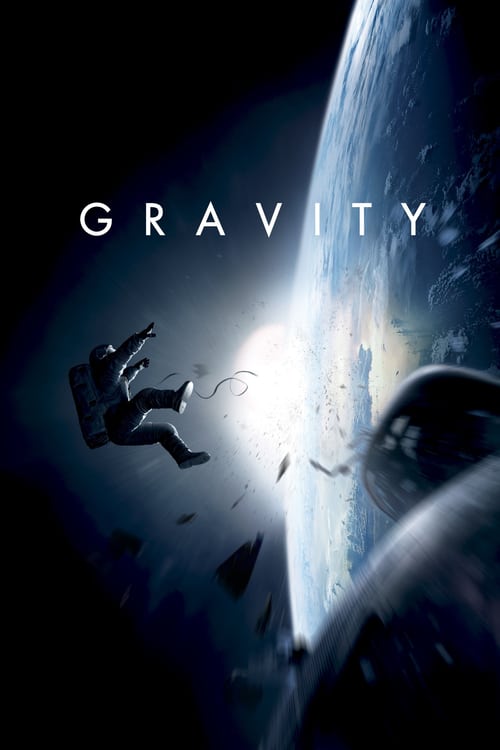
Of course, the iconic cinematographer Emmanuel Lubezki — who just collected an Oscar for The Revenant to go with the others he won for Gravity and Birdman — can make even suicidal inertia look gorgeous.
“Knight of Cups,” shot by that great artist of light Emmanuel Lubezki (director of photography for Malick’s last three films, and a three-in-a-row Oscar winner for “Gravity,” “Birdman” and “The Revenant”), follows the Malick tradition: It’s not about plot and character, but about mood.
The majority of “Knight of Cups” is little more than stream-of-consciousness, beat poet-style ramblings laid over gorgeous imagery from back-to-back-to-back Oscar-winning cinematographer Emmanuel “Chivo” Lubezki (“The Revenant,” “Birdman,” “Gravity”).
Cinematographer Emmanuel Lubezki, who has won three consecutive Oscars (for “Gravity, “”Birdman” and “The Revenant”) shoots Los Angeles through filters and angles and camera moves that give new perspective on even the most familiar L.A. streets and landmarks.
With a cinematographer like Emmanuel Lubezki (The Revenant, Gravity) at the helm, there was never any question to the visual quality.
Lubezki has won Oscars three years in a row—twice for his work with Alejandro González Iñárritu and, before that, for filming Alfonso Cuarón’s “Gravity,” a trio of films in which he normalizes, rationalizes, and banalizes the boundary-breaking styles that he developed with Malick (it’s like giving Leonardo DiCaprio an Oscar for “The Revenant” rather than for “The Wolf of Wall Street”).