
Men in Black 3 (2012)
Directed by Barry Sonnenfeld
Agents J and K are back...in time. J has seen some inexplicable things in his 15 years with the Men in Black, but nothing, not even aliens, perplexes him as much as his wry, reticent partner. But when K's life and the fate of the planet are put at stake, Agent J will have to travel back in time to put things right. J discovers that there are secrets to the universe that K never told him - secrets that will reveal themselves as he teams up with the young Agent K to save his partner, the agency, and the future of humankind.
4 connections found
View:
4 films that influenced Men in Black 3
What critics say influenced Men in Black 3


Second, while the film falls short of the first “Men in Black” – if only because it lacks that film’s sense of discovery – the time travel story (written by Etan Cohen) reinvigorates the series with a fresh sense of fun that’s reminiscent of 1985’s “Back to the Future.”
The very casual changing-the-future-by-changing-the-past narrative evokes Back to the Future (1985); this time suggesting Robert Zemeckis is the director whom Sonnenfeld is taking his cues from.
Introducing time travel to a series that has never raised that possibility sounds like a desperate ploy, drafting off Back to the Future much like young Marty McFly drafted off cars on his skateboard.
Borrowing heavily from “Back to the Future,’’ the new film finesses the second one’s biggest problem — Tommy Lee Jones’ very weary-looking Agent K — by sending Smith’s Agent J back in time to 1969, where he meets a 29-year-old version of Agent K (played, in an uncanny impersonation, by Josh Brolin).
It copies off Back to the Future 's paper by injecting daddy issues, sad-but-reversible deaths and a time travel method (plunging off the tops of buildings and pressing a button when you almost hit the ground) every bit as plausible as DeLorean gunning.
To inject some energy into a franchise that ran out of gas a decade ago, dribbling whatever it had left onto the asphalt of asinine ancillary-reaping mega fare in the woebegone Men in Black 2 (2002) , Men in Black 3 — the sequel nobody asked for, wanted or expected — arrives as an unofficial Back to the Future hybrid.
In some inspired casting, Josh Brolin plays a young K and delivers the best impersonation of an actor playing a younger version of a character he's already established since Rob Lowe absolutely nailed Robert Wagner in the "Austin Powers" movies.
Humor focused on the late-'60s time period has an "Austin Powers" familiarity, not unlike the recent Tim Burton release "Dark Shadows."
Boris decides to travel back in time to kill K before that happened and before you can say, "Austin Powers", Agent J (Will Smith) travels after him back to the 1960s.
Haven’t we already seen all the fish-out-of water 60s culture jokes in the “Austin Powers” movies already?
Both movies have difficulty finding the right balance between wacky and serious; unlike “Dark Shadows,” though, “Men in Black 3” still manages to be entertaining, even when the movie turns into the 2000 thriller “Frequency” in the third act.
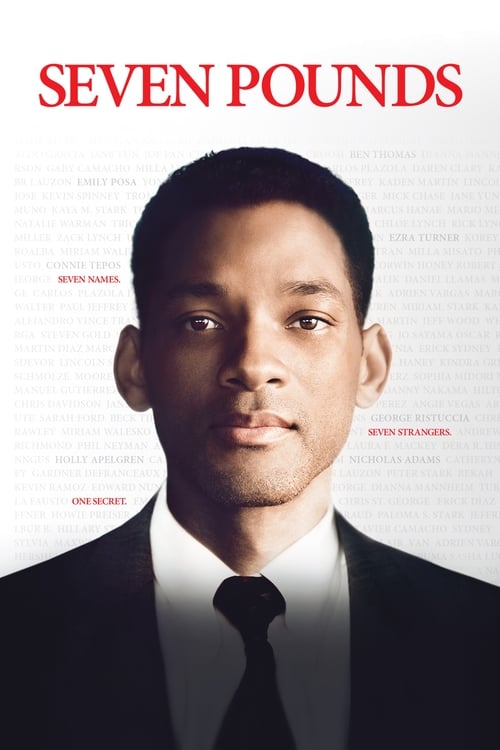
One day, J arrives at work and discovers that Boris has indeed succeeded at this and that New York is now under attack from a bunch of giant jellyfish-like creatures that will inspire some degree of laughter from anyone who recalls the insane finale of the Will Smith vehicle "Seven Pounds."
Returning as J is Will Smith, in his first starring role since the execrable "Seven Pounds" in 2008.
First, though, they'll have to draw them into the theater.Will Smith (2008's " Seven Pounds ") and Tommy Lee Jones (2011's " Captain America: The First Avenger ") are in upstanding form as Agents J and K, their opposites-attract shtick on prominent display.
Like an old pair of shoes you know you should throw out, but they’re too comfortable to toss, Will Smith (“Seven Pounds”) and Tommy Lee Jones (“Captain America: The First Avenger”) easily recapture their chemistry from the previous installments as intergalactic peacekeepers Agents J and K tasked with keeping Earth safe from evil alien menaces.
“Hancock” and “Seven Pounds” (both from 2008) were easily seen as two of his worst movies, so you’d have to go back to 2007’s “I Am Legend” to find one of his best.
In 2008 he popped up in Hancock and Seven Pounds .