
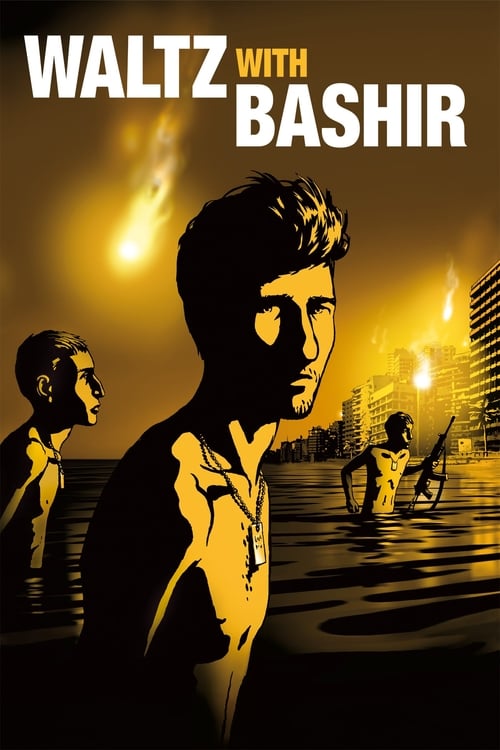
Waltz with Bashir (2008)
Directed by Ari Folman
A film director from Israel interviews fellow veterans of the 1982 invasion of Lebanon to reconstruct his own memories of his term of service in that conflict.
5 connections found
View:
5 connections, in both directions
What critics compared Waltz with Bashir to
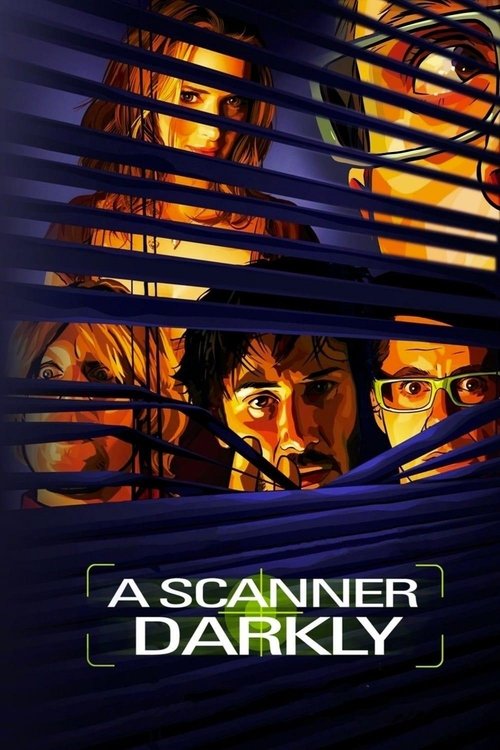


Craftily, and with deliberate, unnerving speed, the details of Sabra and Shatila unfold, via the interviews Folman does with his old army buddies -- who are rendered, like Folman, animated, via the process known as rotoscoping -- which transforms photographic footage into cartoon (see the Richard Linklater films "Waking Life" and "A Scanner Darkly").
The cartoon style (in which video cameras capture the performances and animators then trace and enhance the scene) has been done before, notably by Richard Linklater in Waking Life and in A Scanner Darkly.
…painting over live footage) as seen in Richard Linklater’s art jobs Waking Life and A Scanner Darkly, Folman opts for two-dimensional, non-CG animation, layered to give three-dimensional depth.
While sharing the visual flavor of Richard Linklater’s Waking Life and A Scanner Darkly, Folman did not employ rotoscope animation, in which illustrators trace over film or video footage.
The animation employed by Mr. Folman bears a superficial resemblance to the rotoscoping technique seen in Richard Linklater’s films “Waking Life” and “A Scanner Darkly,” but it’s not the same; it’s more stylized, more cartoonish.
Using a technique that resembles rotoscoping (as in "Waking Life" or "A Scanner Darkly"), combining a variety of visual and musical styles, giving equal weight to actual and imagined events, he has told the story of his past and how he discovered it in "Waltz With Bashir," a film that dazzles and terrifies, sometimes at the very same moment.
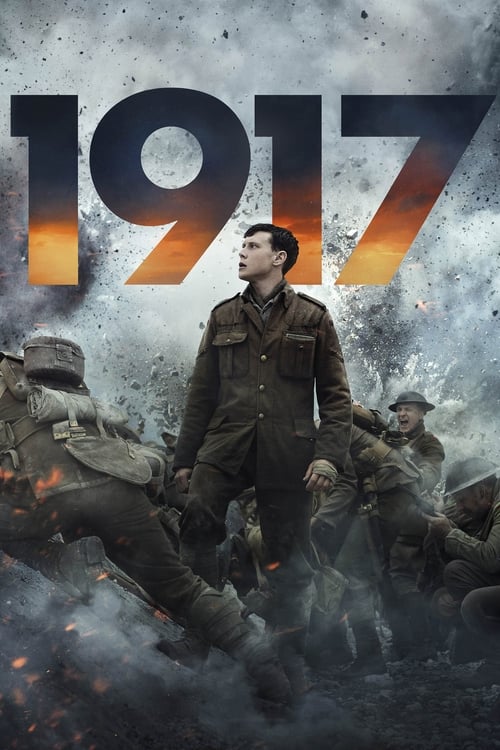
In one of its more surreal (or perhaps transcendent) sequences, wherein a purgatorial night-time underworld is illuminated in a yellow phosphorescent haze, I was unexpectedly reminded of a dream scene from Waltz With Bashir , in which young men rise from the water, like ghosts walking among the living.
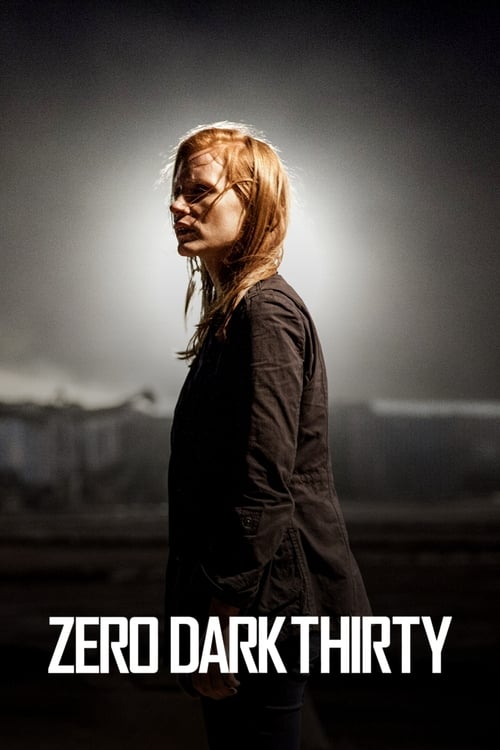
The ambivalence and perspective and distinctive vision we get in all memorable films about war and espionage and violence, from All Quiet on the Western Front (1930) to The Battle of Algiers (1965) to Waltz with Bashir (2008), is totally absent, leaving only the procession of facts (and unmarked prevarications), from the harrowing 9/11 emergency phone-call recordings to the final dead-body shots.

Max Richter’s (Waltz with Bashir, The Leftovers) commanding score is the perfect accompaniment to Gray’s direction, and the sound design which reflects that space is silent.
Advertisement
There are major exceptions (“Waltz With Bashir” comes to mind), but there are few things worse than forgettable movies about selective amnesia — movies like “Spellbound,” in which the protagonist’s mental block is magically cured by some dime-store psychology and the restorative powers of a third act reveal.