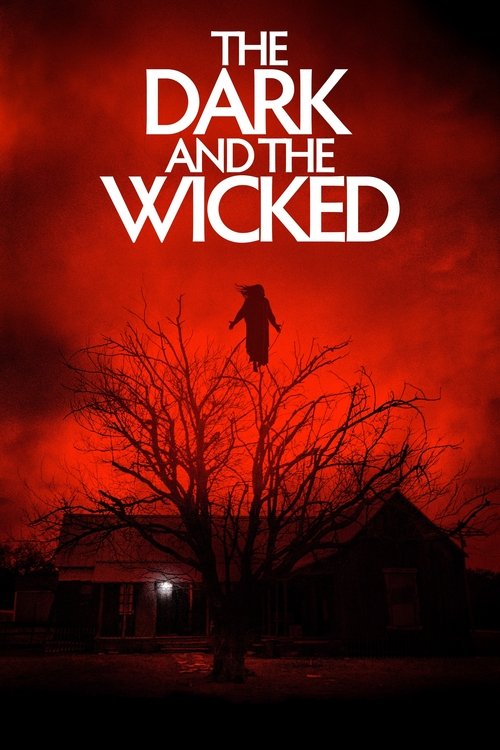
The Dark and the Wicked (2020)
Directed by Bryan Bertino
On a secluded farm in a nondescript rural town, a man is slowly dying. His family gathers to mourn, and soon a darkness grows, marked by waking nightmares and a growing sense that something evil is taking over the family.
1 connection found
View:
1 connections, in both directions
What critics compared The Dark and the Wicked to
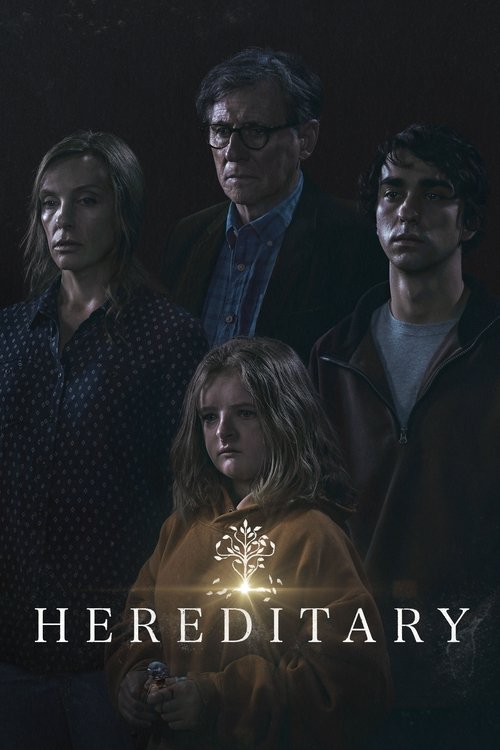


It deals with big themes of family and grief and religion (or lack thereof); rather than the typical photogenic starlet, its heroine is a complicated woman in her 40s; and it traffics in ambiguity, opting to leave the mechanics of its central haunting nebulous and shifting (there are also a couple of images which seem to owe more than a little to Hereditary).
Building on the more schematic anguish of Ari Aster’s Hereditary , where the annihilation of the characters was so choreographed they were framed as playthings in a dollhouse, Bertino’s vision of grief is that it is a force that will destroy you if you let it — or even if you fight back.
Laid up in bed connected to tubes with healthcare workers circling him, he resembles someone who’s suffering from cancer or succumbing to dementia—a suggestion that connects The Dark and the Wicked to other recent horror movies that have utilized supernatural flourishes to examine familial death and diminishment, including Ari Aster’s Hereditary and Natalie Erika James’s Relic .
That is unfortunate, not only because Marin Ireland and Michael Abbott Jr. turn in strong, fierce performances, but because the film’s supernatural dread might have escalated even more had it been tied to the characters’ own psyches, which we see in superior horror films like Jennifer Kent’s The Babadook (2014), Robert Eggers’s The Witch (2016), and Ari Aster’s Hereditary (2018).
There have been comparisons to Ari Aster’s 2018 Hereditary, and it’s easy to see why, but Bryan Bertino has created a frightening film that is capable of standing out on its own.
Similar to Colin Stetson’s work on 2018’s Hereditary — or even Mark Korven’s melange of sounds for 2015’s The Witch — Schraeder floods so much of the terrain here with compositions that feel culled from the roots of Hades.