
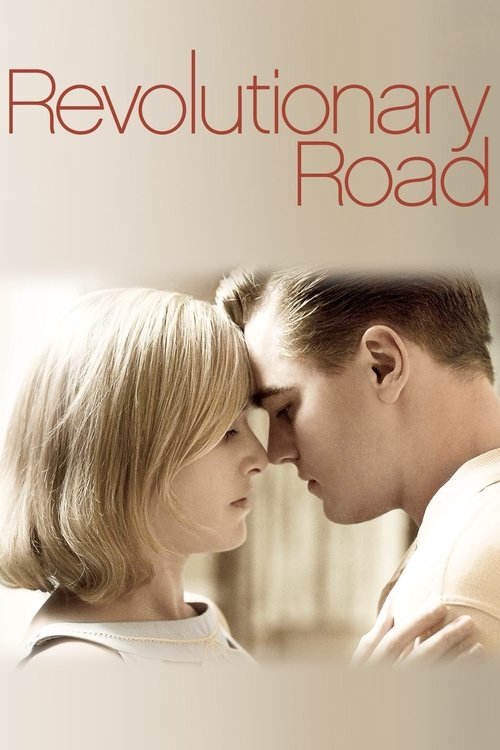
Revolutionary Road (2008)
Directed by Sam Mendes
A young couple living in a Connecticut suburb during the mid-1950s struggle to come to terms with their personal problems while trying to raise their two children. Based on a novel by Richard Yates.
17 connections found
View:
17 connections, in both directions
What critics compared Revolutionary Road to
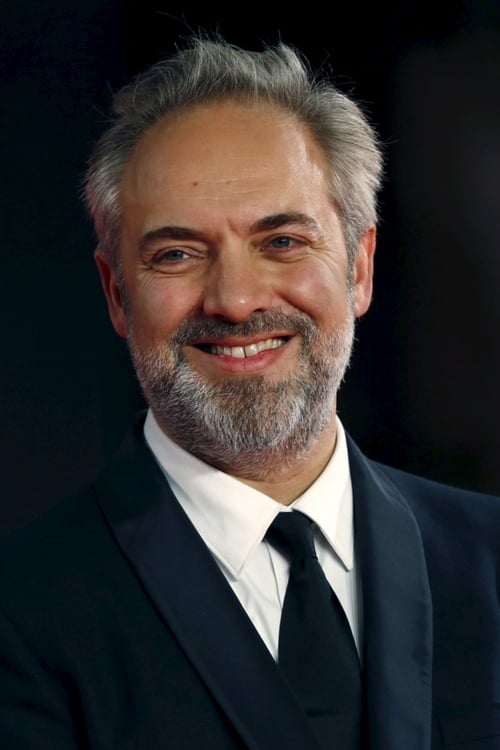



Since then he’s continued his examination of American life with films such as Road to Perdition, Jarhead and Revolutionary Road – each with a detached and objective perspective, presenting and framing the wonderful and terrible with the same stayed approach.
Nor does Mendes approach this with the kind of smirk that occasionally surfaced in "American Beauty," a movie which also dealt with unhappy adults and childish adulteries -- and yet, thanks to Alan Ball's script, occasionally did so with caricature and condescension.
"American Beauty," Mendes' Oscar-winning film, was similarly about suburban angst, but had a contemporary setting and was told from the perspective of a disillusioned male character.
But, with a script that takes most of its dialogue straight from the book, director Mendes pulls it off, giving us something similar in tone -- and almost as striking -- as his 1999 Oscar-winner for best picture, "American Beauty."
The well-publicized reuniting of "Titanic" team Winslet and DiCaprio's is set in Winslet's husband Sam Mendes's ("American Beauty," HBO's "True Blood") picture perfect production, but although the director has received astonishing performances from his leads, the adaptation of Richard Yates's highly respected 1960's novel by sophomore screenwriter Justin Haythe ("The Clearing") loses the source material's balance and the film slides down its spiralling slope.
“Revolutionary Road” was directed by Winslet’s husband Sam Mendes (”American Beauty”) and adapted from the novel by Richard Yates.
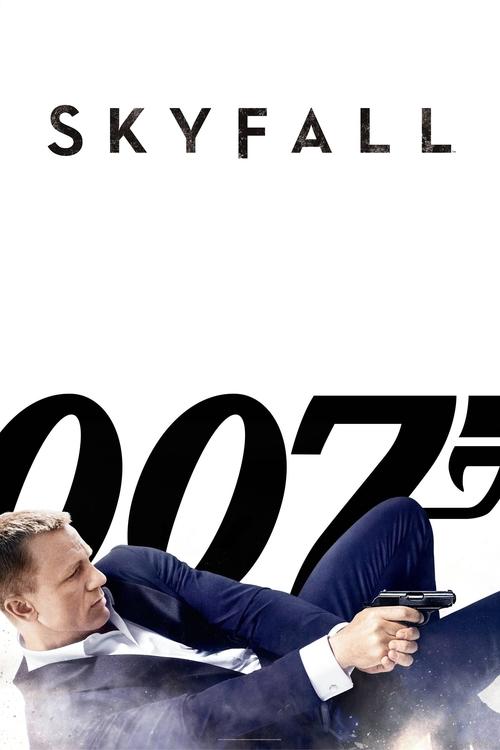
Mind you, a lot of those episodes are pretty doggone terrific, and from the first seconds Mendes (best known for serious indie drama like “American Beauty” and “Revolutionary Road” ) makes clear that he’s sticking closely to Bond formula and not arting up the thing too much.
(And, thankfully, miles away from the histrionics of “Revolutionary Road” and “American Beauty.”)
Gifted Sam Mendes (“Road to Perdition,” “Revolutionary Road”) isn’t that guy.
Mendes ("American Dream," "Road to Perdition") was savvy enough to sign up the extraordinary cinematographer Roger Deakins ("No Country for Old Men," Mendes' "Revolutionary Road") to take on the varied looks that are part of "Skyfall."
Sam Mendes , the maker of such suburban dysfunction as "American Beauty" and " Revolutionary Road ," has upped the ante, the action and the artistry in "Skyfall" without losing all the defining traits we've come to expect — and need — from Bond.
However, director Sam Mendes, of “American Beauty” and “Revolutionary Road” fame, and cinematographer Roger Deakins showcase the visual flair to match Craig’s slick-but-sincere take on Agent 007.
He did it again for Werner Herzog in the decidedly weird 2009 drama " My Son, My Son, What Have Ye Done? " He earned a 2009 Oscar nomination for doing it in Sam Mendes' " Revolutionary Road ."
Michael Shannon (2010's " The Runaways ") is exceptionally committed to the role of Curtis, the same way he disappeared into his Oscar-nominated turn in 2008's " Revolutionary Road ."
Shannon's peripheral character John Givings, somebody's crazy son, stole the movie from Leonardo DiCaprio and Kate Winslet in the space of one key scene in Sam Mendes' Revolutionary Road.
Shannon, an Oscar nominee as a troubled genius in "Revolutionary Road," has finally found a role that marries his brute intensity to a tender humility.
Shannon is known for playing mentally unstable individuals, has been since his indescribable turn in "Bug" (adapted from his own stage play), his Oscar nomination for "Revolutionary Road" and more recently for his role as a self-flagellating FBI zealot in "Boardwalk Empire."
The intense Shannon, who stole the show from Leonardo DiCaprio (and received an Oscar nomination) in “Revolutionary Road’’ is perfectly cast as the troubled hero.
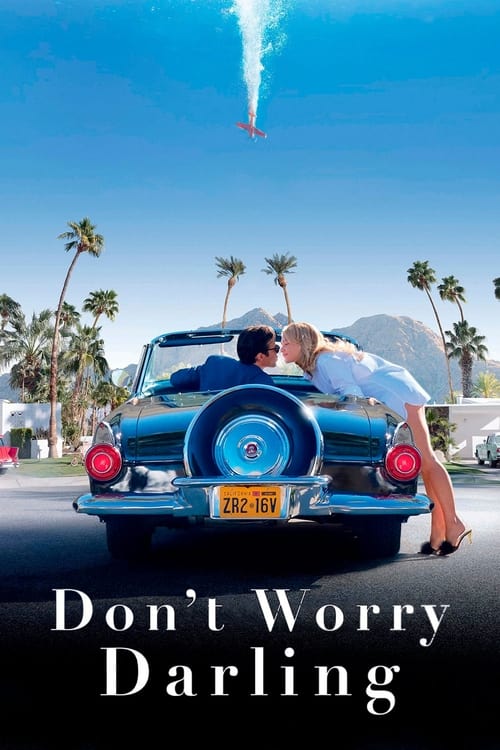
On paper, sounded like a promising follow-up, a look at married life in the 1950s reminiscent of resonant work like Revolutionary Road and "Mad Men." Pugh and Styles play Alice and Jack Chambers, an attractive young couple residing in The Victory Project, a utopian experimental community out in the desert.
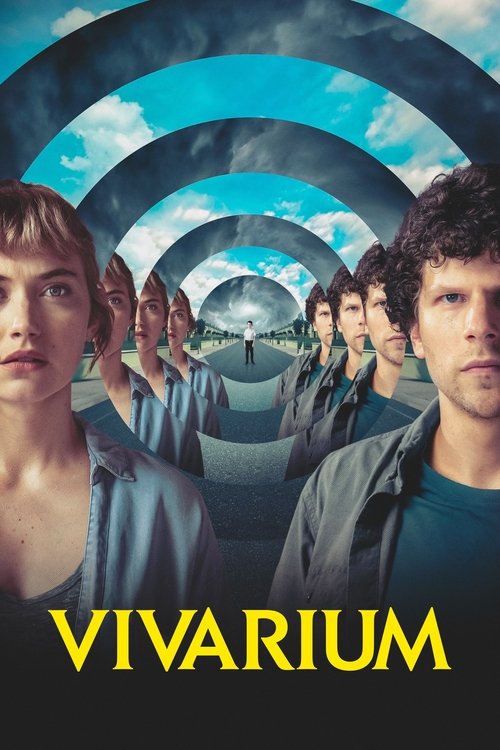
Much like April and Frank Wheeler in Richard Yates’ scathing indictment of 1950s America, Revolutionary Road , there’s also something a touch smug about Gemma and Tom, as though they imagine themselves to be smarter and more self-aware than their peers.
Advertisement
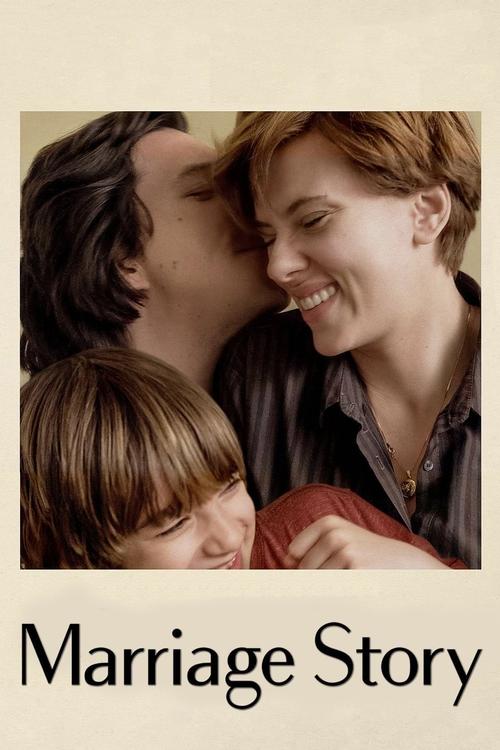
It’s a shame that Baumbach’s meticulously considered, wonderfully crafted drama was not given the same large theatrical run by Netflix as Scorsese received with “The Irishman” as “Marriage Story” is perhaps the finest family drama to be released since at least 2008’s “Revolutionary Road.”
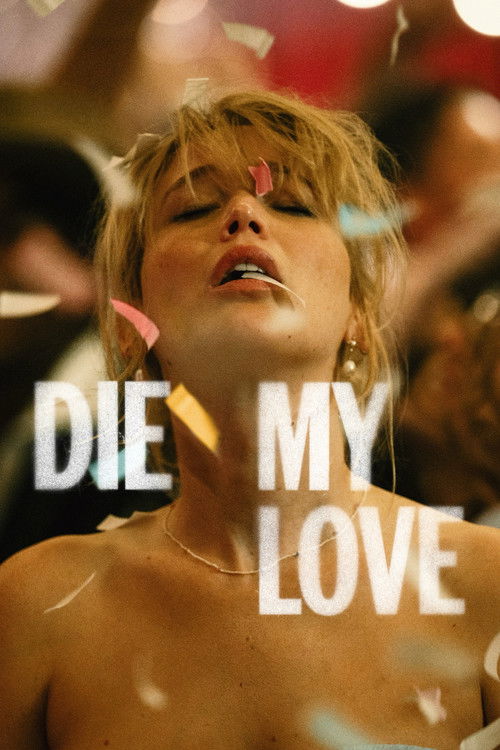
It has echoes of Leonardo DiCaprio’s performance in Revolutionary Road (2008), of a partner, despite the love and care they have for their partner, being incapable of showing it as the relationship deteriorates.

Yet instead of keeping this a tightly wound yarn of imprisonment and escape, Verbinski — working from a script by Justin Haythe (“The Lone Ranger,” “Revolutionary Road”) — opts for something bigger, grander and more operatic, sending the film wildly off the rails over the course of its far-too-long 146-minute running time.
Co-written by Verbinski and Justin Haythe (The Lone Ranger, Revolutionary Road), A Cure for Wellness opens with the death of a stock broker after his receipt of a mysterious letter.
The original screenplay by Justin Haythe (Revolutionary Road) alludes to Thomas Mann’s 1924 symbolic novel The Magic Mountain (which one Volmer employee reads on the job).
Written by the adventurous Justin Haythe – his diverse credits include The Clearing, Revolutionary Road and The Lone Ranger – the story’s thrust revolves around one line, “Only when we know what ails us can we find the cure.”
Reteaming with his “Lone Ranger” scribe, Justin Haythe (“Revolutionary Road”), Verbinski (the Oscar-winning “Rango”) exhibits a fascination we don’t share for a story about a man (Dane DeHaan) being treated at the Volmer Institute, a strange health spa in the Swiss Alps.
The film was directed by Gore Verbinski (The Ring, Pirates of the Caribbean) and features a script from Justin Haythe who wrote The Lone Ranger and adapted Revolutionary Road to the big screen.

What then ensues is a tale of suburban ennui and domestic dissatisfaction that isn't exactly new ground for either Mr. (after his American Beauty ) or Mrs. (after her Little Children) Mendes, save for the 1950s setting.
These qualities have made Winslet a muse of seething suburban self-loathing, first in "Little Children" and now in "Revolutionary Road," directed by Winslet's husband, Sam Mendes, whose decade-old "American Beauty" was a much-lauded representation of the somewhat clichéd notion that a home in suburbia isn't so much a symbol of success as a doorway to hell.
The periodic inclusion of electrifying interludes - ie anything featuring Michael Shannon's unhinged John Givings - ensure that Revolutionary Road remains a cut above such similarly-themed fare as Little Children and The Ice Storm, with the emotional punch of the third act (coupled with a final scene that's just about perfect) cementing the film's place as yet another stellar endeavor from Mendes.
Onscreen together for the first time since 1997's "Titanic," Leonardo DiCaprio (2008's " Body of Lies ") and Kate Winslet (2006's " Little Children ") are dramatic powerhouses as Frank and April.
But Mendes lacks the skill that Todd Field showed, in the similarly-themed Winslet-starrer Little Children, for making feral moments jump out and bite us.
Advertisement
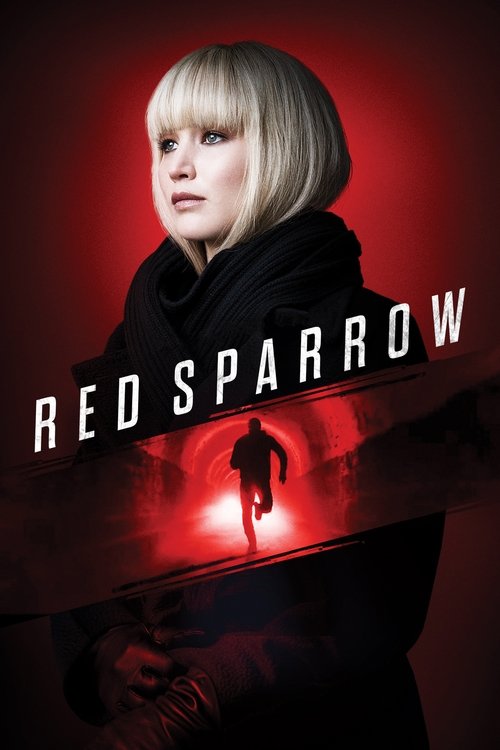
Justin Haythe, known for "Revolutionary Road," penned the script from Jason Matthews's 2013 spy novel, not from Marvel Comics Black Widow franchise.
I cannot say how much of that dumbness was intrinsic to the 2013 source novel by Jason Matthews, and how much was introduced by screenwriter Justin Haythe (a veteran of a most idiosyncratic career that includes things from Revolutionary Road to A Cure for Wellness ); but it is so, either way.
Screenwriter Justin Haythe (Revolutionary Road, A Cure for Wellness) here adapts a novel by former CIA operative Jason Matthews, seemingly dumbing it down in the process.
But though director Lawrence brought a necessary pizzazz to the "Games" films, the difficulty he has here creating involving emotional connections on screen echoes the problems he had adapting 2011's "Water for Elephants," and screenwriter Haythe, whose credits include "Revolutionary Road" and the miserable "Lone Ranger," is not much help.
Jennifer Lawrence jumps into her first overtly sexual role with the director of her last three "Hunger Games" movies, Francis Lawrence, screenwriter Justin Haythe ("Revolutionary Road," "A Cure for Wellness") adapting 33 year CIA veteran Jason Matthews' book.
Working from a screenplay by Justin Haythe (“Revolutionary Road”), director Francis Lawrence — who worked with Lawrence on three of the “Hunger Games” films — fails to establish much of a momentum.
Yes, I know she had a new film out only last week (Labor Day) but that was very much in the grain of tasteful, middle-class, middle-brow, book-of-the-month-club projects like The Reader and Revolutionary Road (inflammatory novel, that, but a tame movie).