

The Man Who Knew Infinity (2016)
Directed by Matt Brown
Growing up poor in Madras, India, Srinivasa Ramanujan Iyengar earns admittance to Cambridge University during WWI, where he becomes a pioneer in mathematical theories with the guidance of his professor, G.H. Hardy.
4 connections found
View:
4 films that influenced The Man Who Knew Infinity
What critics say influenced The Man Who Knew Infinity



Just look at “Good Will Hunting” and “A Beautiful Mind,” both of which are movies about so much more than numbers and equations.
At a very basic level, you could consider “The Man Who Knew Infinity” a historically accurate, international version of 1997's Oscar-winning “Good Will Hunting.”
But the movie, a real-life "Good Will Hunting" of sorts, suffers from being nothing like the cultural outlier Ramanujan was: It's one more respectable British biopic following a formula.
Around the time that “Good Will Hunting” came out, I had occasion to chat with a Nobel Prize-winning scientist about the great Indian mathematician Srinivasa Ramanujan, who is referenced in that film.
Not that it’s been a dealbreaker for “Good Will Hunting,” “A Beautiful Mind,” and “The Imitation Game,” among others.
The visual portrayal and understanding of a subject of this kind is usually accompanied by a sub-plot and a story which eventually brings us closer to the protagonist – Matt Damon's sessions with Robin Williams in Good Will Hunting come to mind.
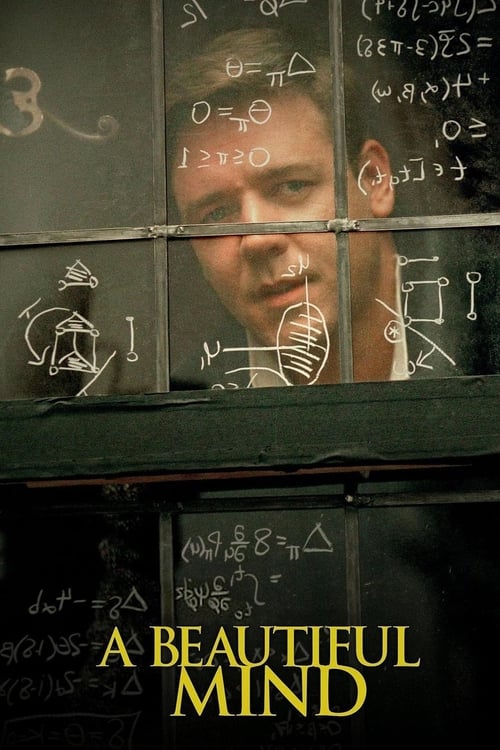
Ramanujan’s story is A Beautiful Mind meets Something the Lord Made and is just as heart-wrenching and important.
The success of A Beautiful Mind, The Theory of Everything, and The Imitation Game are proof of that.
Just look at “Good Will Hunting” and “A Beautiful Mind,” both of which are movies about so much more than numbers and equations.
Let me stop you before you say “A Beautiful Mind” or “The Imitation Game.”
Movies about aggrieved math prodigies have become almost a subgenre: “A Beautiful Mind” (John Nash), “The Theory of Everything” (Stephen Hawking), and “The Imitation Game” (Alan Turing) are the most obvious recent examples.
We do not know if we are in for “A Beautiful Mind” meets Harry Potter or “Slumdog Millionaire” meets Stephen Hawking.

Though Brown is on to something in dramatizing Ramanujan and Hardy as hot and cold opposites on a blind academic date, he settles too often for clichéd lines ("I was told you love numbers more than people") and never gels the swirl of prejudice, war and brilliant minds into a charged whole the way "The Imitation Game" did depicting Alan Turing, another beleaguered brainiac.
But mainly this trades in the sort of nerd sanctification familiar from The Imitation Game, The Theory of Everything, and other math-whiz dramas.
Por ejemplo El código enigma (es decir The Imitation Game) y Una mente brillante, con sus modos enfáticos, con sus simplificaciones que iban más allá de las cuestiones matemáticas, lo habían probado previamente.
Let me stop you before you say “A Beautiful Mind” or “The Imitation Game.”
The success of A Beautiful Mind, The Theory of Everything, and The Imitation Game are proof of that.
Where Brown falters is in coming up with a way to convey the substance and significance of his subject's work — as the makers of The Theory of Everything and The Imitation Game, for example, did so effectively.

Many of those around Hardy are skeptical of Ramanujan, jokingly referring to him as "Gunga Din."