
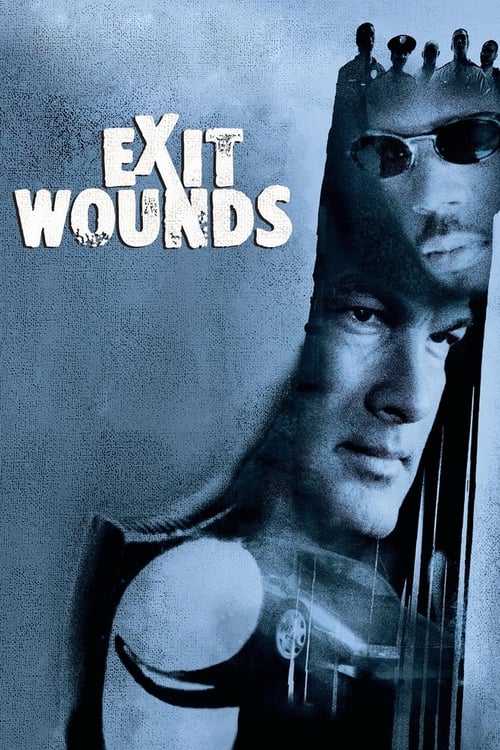
Exit Wounds (2001)
Directed by Andrzej Bartkowiak
Maverick cop Orin Boyd always brings down the domestic terrorists he tracks, but he ruffles feathers with his unorthodox techniques -- and soon finds himself reassigned to the toughest district in Detroit. When he discovers a group of detectives secretly operating a drug ring, Boyd joins forces with an unlikely ally -- gangster Latrell Walker -- to bring down the rotten cops.
1 connection found
View:
1 connections, in both directions
What critics compared Exit Wounds to



Oddly, as the screenplay — by Richard D'Ovidio, whose last credit was for the Steven Seagal/DMX vehicle "Exit Wounds" (2001) — gets dumber, the movie gets better, or at least more confident.
While the progression of the story is definitely predictable and overly familiar, Anderson and screenplay writer Richard D’Ovidio (Thir13en Ghosts, Exit Wounds) come up with enough ways to stage each episodic rescue attempt and near-save with an exciting and visceral precision that is hard not to respond to.
The script by Richard D'Ovidio, who hasn't written a movie since "Thirteen Ghosts" and the Steven Seagal/DMX joint "Exit Wounds" in 2001, also largely resists the gruesomeness and vile revenge favored in related genre efforts like "Taken."
Shocking, I know, to think the writer of Thir13en Ghosts and the Steven Seagal "classic" Exit Wounds may not have been up to the task of crafting a fully realized narrative.
That’s not much of a surprise considering the script was written by the same guy behind such cinematic turds as “Thir13en Ghosts” and “Exit Wounds,” but no one could have guessed that the villain would be such a ridiculously over-the-top Norman Bates clone whose most developed character trait is his love of early ’80s pop music.