
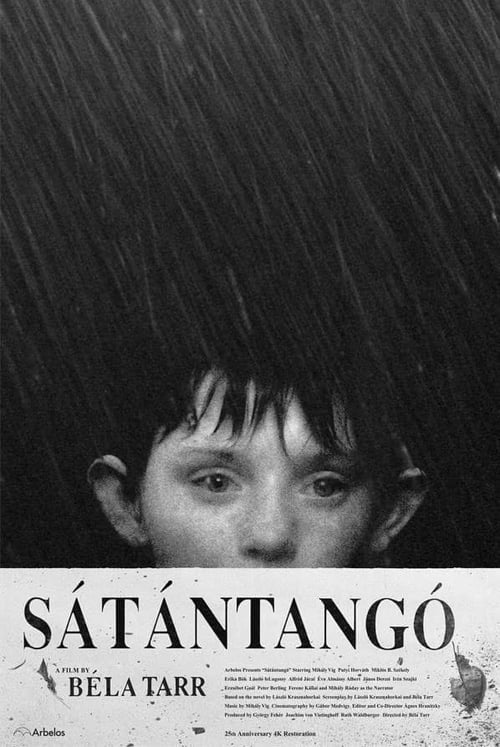
Satantango (1994)
Directed by Béla Tarr
Inhabitants of a small village in Hungary deal with the effects of the fall of Communism. The town's source of revenue, a factory, has closed, and the locals, who include a doctor and three couples, await a cash payment offered in the wake of the shuttering. Irimias, a villager thought to be dead, returns and, unbeknownst to the locals, is a police informant. In a scheme, he persuades the villagers to form a commune with him.
1 connection found
View:
1 connections, in both directions
What critics compared Satantango to



Many of the scenes occur simultaneously and certain moments cross over from one scene to the next; Gus Van Sant, a fan of Tarr's, tried the same technique on a much smaller scale in his Elephant (2003).
From Tarr's Satantango (1994) comes a complicated overlapping time structure that repeats the same events from a variety of viewpoints, seen mainly in extended takes that follow characters as they walk through adjacent settings.
Along with the Bela Tarr-inspired long tracking shots, Van Sant also makes Elephant non-chronological as the same events are sometimes seen multiple times from different characters perspectives a narrative technique Tarr used in his masterpiece, Satantango .