

Ju Dou (1990)
Directed by Zhang Yimou
Tianqing falls in love with Ju Dou, his uncle's wife who is tortured for being childless. However, after they have an affair, they discover that his uncle is impotent and try to conceal the truth.
2 connections found
View:
2 connections, in both directions
What critics compared Ju Dou to
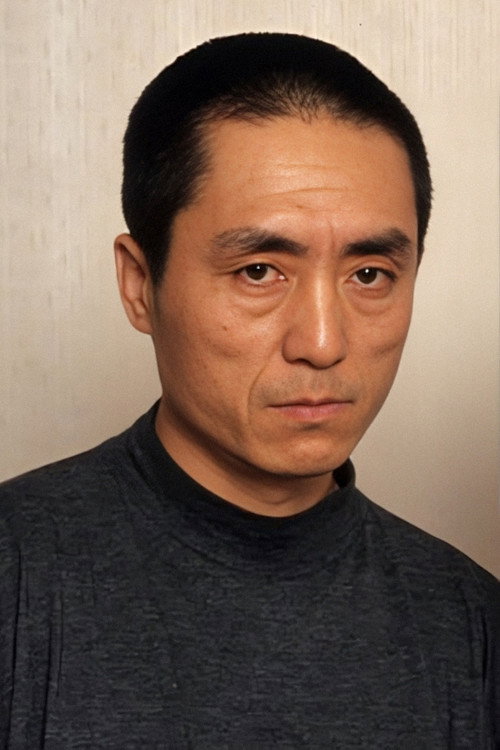
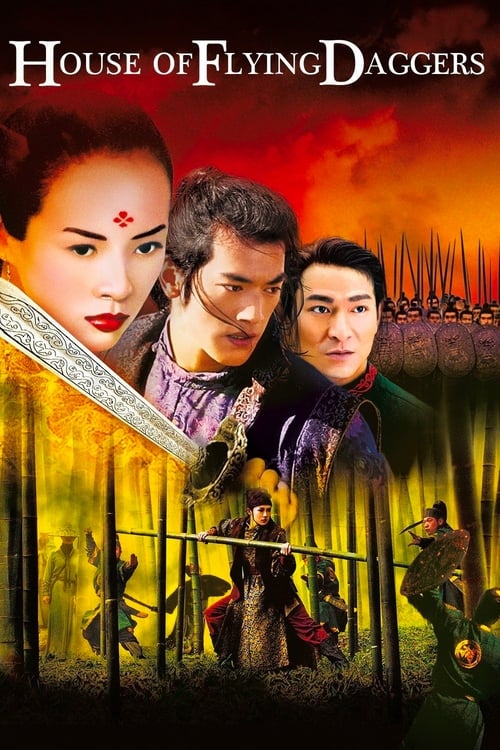


As the 53-year-old filmmaker moves into martial arts and swordplay (wuxia) films, with Hero and now House, he brings with him the grand themes and precise details that made his much-revered arthouse films so distinctive -- the gorgeous billowing of fabrics (Ju dou [1990]), the building effects of diurnal niceties (The Story of Qiu Ju/Qiu Ju da guan si [1992]), the gentle breezes alongside the incessant force of destiny (The Road Home/Wo de fu qin mu qin [1999]).
Among our favorites are the historical dramas, Raise the Red Lantern and Ju Dou, and the touching tales of peasants Not One Less and The Road Home.
Shackled with these jaded preconceptions and a mountain of advance hype (aided by a maddeningly peekaboo release schedule), the critical and popular success of director Yimou Zhang's Hero came as a welcome shock; an unexpectedly deep Goliath which married the emotional precision of his earlier films (such as Raise the Red Lantern and Ju Dou) with a newfound gargantuan energy and scope--the glee of a small-scale model expert who suddenly discovers a giant robot revving up in his backyard.
FLYING DAGGERS is the most seamless piece of sensuous expressionism Zhang has created since Ju Dou (1990).
It is difficult to imagine that this is the same filmmaker who fashioned anti-authoritarian tracts like Ju Dou or To Live giving Chinese government officials conniptions.
House of Flying Daggers (its title in Chinese the loaded "Ambush from Ten Directions"--essentially an ambush from everywhere) is at its essence an allegory for rape and the Chinese tradition of concubinage that Zhang has already explored to varying degrees in Raise the Red Lantern, Ju Dou, Shanghai Triad, and, of course, Red Sorghum, in which a young woman played by Gong Li (Ziyi's predecessor as Zhang's muse) is saved from rape by a young man with whom she later runs a winery.

For the 1990 romantic drama “Ju Dou,” he used large swaths of colorful cloth to create stunning scenes as he painted a tender tale of tragedy between star-crossed lovers.
Now 66, veteran Chinese director Zhang Yimou is the man responsible for the 1991 masterpiece Raise the Red Lantern, which was preceded by the equally strong Red Sorghum (1987) and Ju Dou (1990) and followed by the profoundly moving film, To Live (1994).
A depressing thought considering 2017 is the 30th anniversary of Zhang’s debut film, Red Sorghum , which launched a magnificent run of emotionally opulent dramas including Ju Dou (the first Chinese film ever nominated for a Best Foreign Language Film Oscar) and Raise the Red Lantern .
Sets, props and costumes are glorious, the primary colors of the regiments and the stained glass of the Imperial Palace Pagodas reminding us of Yimou's own "Ju Dou."
Over the course of a couple of decades, director Zhang has gone from a dissenting chronicler of social oppression (in movies like Ju Dou and Raise the Red Lantern) to beloved people’s artist chronicling the glories of the State (in movies like Hero); he has an almost supernatural eye for composition and light, as well as a keen sense of rhythm.
No Academy Awards nomination for foreign-language feature, like he earned for Ju Dou (199), Raise the Red Lantern (1991), and Hero (2002).