
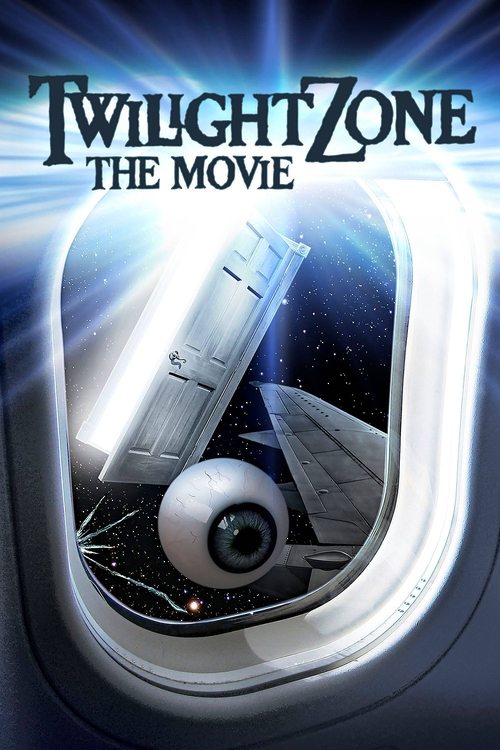
Twilight Zone: The Movie (1983)
Directed by John Landis
An anthology film presenting remakes of three episodes from the "Twilight Zone" TV series—"Kick the Can", "It's a Good Life" and "Nightmare at 20,000 Feet"—and one original story, "Time Out."
8 connections found
View:
8 connections, in both directions
What critics compared Twilight Zone: The Movie to


Creedence Clearwater Revival’s cover of “Midnight Special” was featured in Twilight Zone: The Movie back in 1983.
But in a story that unfolds almost entirely on the road, there's a playful connection also to the 1969 Creedence Clearwater Revival cover, a Southern rock classic, which was used in the prologue and epilogue of 1983's Twilight Zone: The Movie, both featuring late-night driving scenes.
The scene is reminiscent of the opening of 1983's Twilight Zone: The Movie, where Albert Brooks is driving through the desert at night with Dan Aykroyd as his passenger.
The film shares its title with the 1969 Creedence Clearwater Revival song that featured prominently in Twilight Zone: The Movie, the underrated 1983 portmanteau movie that counted Spielberg among its four directors.
(This subplot reminds me of the horrific accident on the set of “Twilight Zone: The Movie,” in 1982.)
The design feels reminiscent of unhinged choices like the stop-motion rabbit monster from Dante’s segment in the 1983 Twilight Zone film…
You had your Twilight Zone: The Movie, your Creepshow, Body Bags, and others.
Advertisement
A fourth story, "The Customer is Always Right," stars Josh Hartnett and Marley Shelton, and serves as the opening stinger, a la Twilight Zone: The Movie —it's actually Rodriguez's "test" footage for the George Lucas-Kerry Conran "green screen" approach that allows him to shoot first, add the sets later (in a computer).
Perhaps it's no wonder, considering producers Kathleen Kennedy and Frank Marshall are longtime Steven Spielberg associates, that one of Benjamin Button's closest cinematic precursors is "Kick the Can," the Spielberg-directed segment of 1983's Twilight Zone: The Movie, in which the denizens of a retirement home briefly revert to their childhood selves, only to realize that, no matter what age you are, into every life some heartache must fall.


In 1983, he directed a segment of Twilight Zone: The Movie ; in another segment of that movie, a character says, "I like cartoons because anything can happen in them."
It actually highlights how important the carefully burnished appearance of The Color Purple was to its discordant politicism--and how hopelessly childish is Spielberg when contriving to convey the point-of-view of the downtrodden (best example: his sickening "Kick the Can" instalment of Twilight Zone: The Movie).