
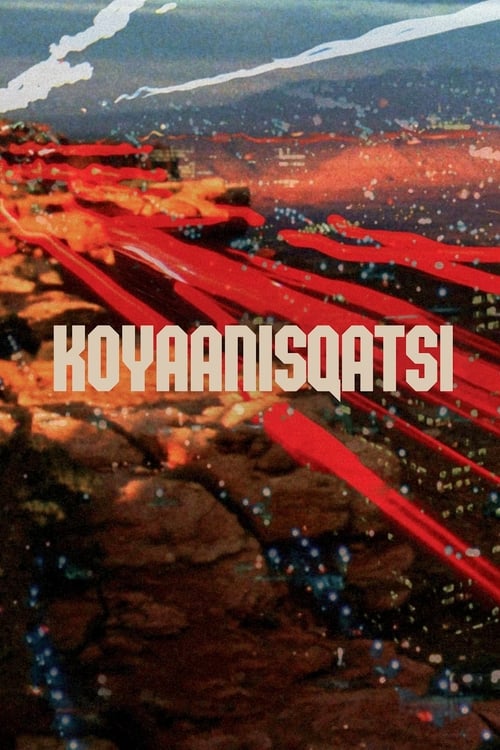
Koyaanisqatsi (1983)
Directed by Godfrey Reggio
Takes us to locations all around the US and shows us the heavy toll that modern technology is having on humans and the earth. The visual tone poem contains neither dialogue nor a vocalized narration: its tone is set by the juxtaposition of images and the exceptional music by Philip Glass.
4 connections found
View:
4 connections, in both directions
What critics compared Koyaanisqatsi to



Stylistically, the film occasionally nods to Godfrey Reggio’s famed time-lapse documentary Koyaanisqatsi, which the film also name-checks, sometimes speeding up or slowing down the frame, suggesting the mutability of time.
He even imposes an occasional switch into Koyaanisqatsi mode to give the illusion of smeary LSD trails.
Lo and behold, then, that a closed-off home located in a very particular place at a very specific cultural moment — which Mills, time and again, will make the point of emphasizing through his Beginners-esque montages, too-on-the-nose Koyaanisqatsi clip and all — fosters particular ways of thinking and being.
Since Godfrey Reggio's time-lapse-intensive Koyaanisqatsi is another cultural artifact sampled by Mills, the post-production effect also manages to suggest punk as a logical extension of late postwar capitalism.
Writer/director Mike Mills—whose previous family drama Beginners (2010) was a lovable portrait of the relationship between a son and his elderly, newly declared gay dad—makes unusual use of fast-motion photography in many sequences, a choice perhaps inspired by the frenzied time-lapse of the 1982 modernist documentary Koyaanisqatsi (a movie explicitly referenced at one moment).
Bening and Gerwig are dynamite, their co-stars exceptional, and a late-game visual quote of Godfrey Reggio’s incredible 1982 documentary “ Koyaanisqatsi ” proves serendipitous in its synchronicity.
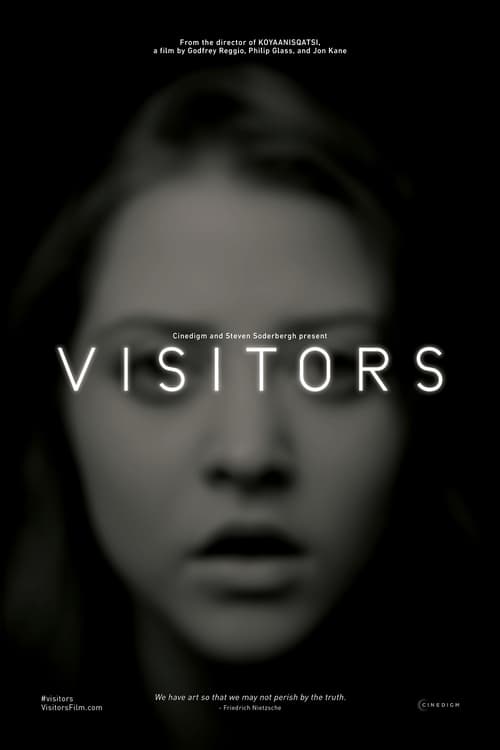
With 1982’s Koyaanisqatsi (“life out of balance”) and 1988’s Powaqqatsi (“life in transformation”), Reggio considered modern man’s broken relationship with nature, contrasting footage of cities and remote villages with majestic shots of animals and natural wonders.
Composed of 74 roughly minute-long shots, underscored by the roiling rhythms of Philip Glass (as were the filmmaker's 1982 Koyaanisqatsi and two formally similar follow-up features), Reggio's black-and-white space oddity opens with Kubrickian flair, fading in on the baleful stare of a lowland gorilla, then a flyover of the lunar landscape with an empty sky above its horizon.
Filmgoers might be familiar with Reggio’s name from his previous three films — “ Koyaanisqatsi ,” “ Powaqqatsi ” and “ Naqoyqatsi ” — which coined a cinematic language all their own, combining a cascade of images, stream-of-consciousness editing, time-lapse photography and the ever-present Glass score, an evocative ostinato of moody foreboding.
According to the film’s official synopsis, this black-and-white effort from the director of Koyaanisqatsi “reveals humanity’s trancelike relationship with technology, which, when commandeered by extreme emotional states, produces massive effects far beyond the human species.”
Best known for 1982’s dreamlike Koyaanisqatsi, director Reggio segues from the “life out of balance” visual premise of his stunning debut to a calmer – but no less astonishing – deconstruction of the planet’s current state of singularly impressive distress.
Remember all those “Qatsi” movies – “Koyaanisqatsi,” “Powaqqatsi,” and “Naqoyqatsi”?
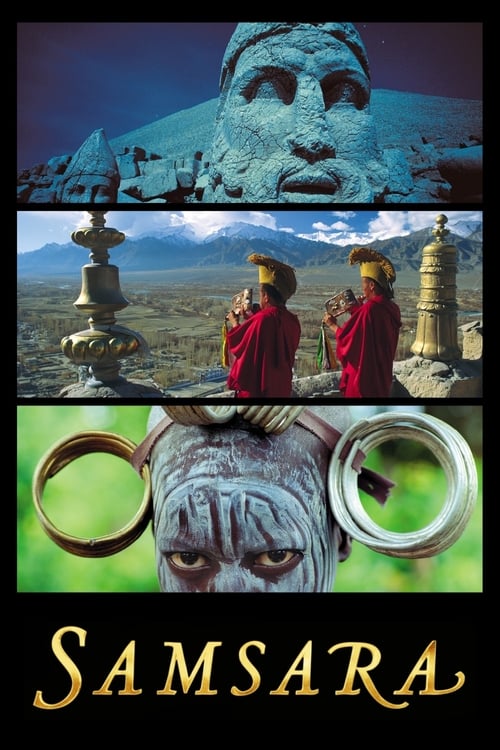
Director-photographer Ron Fricke (Koyaanisqatsi, Baraka) seems to be making a spiritual statement about the unity of life (the title is a Sanskrit word meaning "cyclic existence"), but any sincerity inherent in the project is overwhelmed by the manufactured awe of its godawful New Age score.
“Samsara” is a sumptuous film by Ron Fricke, who directed “Baraka” and was cinematographer of “Koyaanisqatsi.”
The results, as in the previous films Fricke has photographed, including "Baraka," "Chronos" and "Koyaanisqatsi," can take your breath away.
Much like his films “Chronos,” or “Koyaanisqatsi”, Fricke’s “Samsara” (the word is Sanskrit for “continuous flow,” referring to the cycle of life) is a wordless documentary that is essentially a continuous flow of arresting images, sometimes sped up with time-lapse photography.
Thirty years ago, a popular film on the midnight-movie circuit was “Koyaanisqatsi.”
Its director and co-writer, Ron Fricke, served as a writer and cameraman on Koyaanisqatsi and made several similar docs, including 1992's Baraka — so his message is pretty clear.

This is why half the movie plays out as a greatest-hits homage to the trick camera work of Danny Boyle, Godfrey Reggio, and Jonas Åkerlund (a useless shot of Ben falling onto a bed is a perfect example of how to squander an entire day of shooting; one ray-of-light shot accomplishes nothing but vertically flipping Koyaanisqatsi 's DVD cover art), while the rest occurs as tacky fits of juvenilia, the nadir of which is a bathroom-mirror montage of the story's motley characters getting ready for a party that ends with Ben's best bud whacking off to a nudie mag—his bottle of lotion opportunely evoking the man sploog exploding below the frame.