
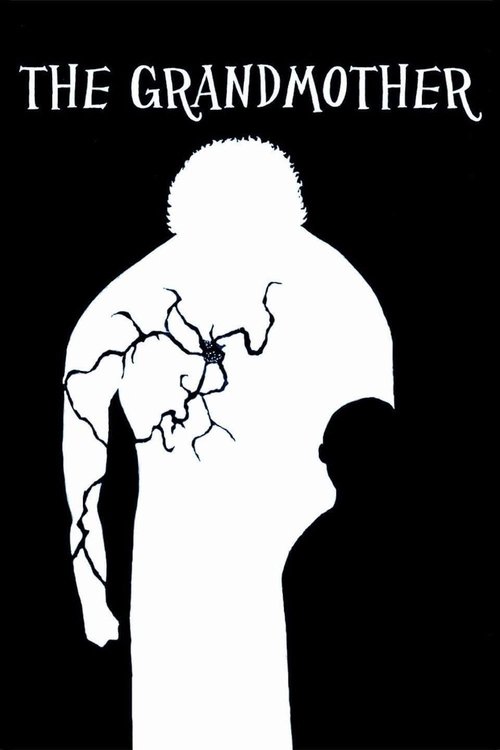
The Grandmother (1970)
Directed by David Lynch
To escape neglect and abuse from his parents, a young boy plants some strange seeds and they grow into a grandmother.
2 connections found
View:
2 connections, in both directions
What critics compared The Grandmother to



The film is reminiscent of the 30-minute short film The Grandmother by David Lynch, whom Kent has cited as an influence (the auteur's has a singular approach to horror ).
"The Babadook" borrows heavily from early David Lynch, not just his award-winning short "The Grandmother" but his classic "Eraserhead," an extended nightmare that often plays out on a literal stage (the same happens more than once in "The Babadook").
“The Grandmother” (1970, 33 min) was Lynch's first lengthier film and proved an effective calling card for his tenure at AFI. “The Amputee” (1974, 4 or 5 min.) is presented in two versions of slightly differing lengths and was basically a footage test that Lynch turned into a creepy exercise.
Backed by expressionistic sets, spare lighting and in-film bulbs that sputter and hiss, as well as Lynch?s own buzzing mechanical score -- he has composed an Industrial Symphony No. 1 for experimental theater -- this bizarre controversial feature début is in line with the then Philadelphia art student?s earlier animated-and-live The Grandmother, thirty-five minutes about an unhappy incontinent child who grows an idealized grandmother from a pod.
The first disc contains Six Men Getting Sick (1967), The Alphabet (1968), The Grandmother (1970), both versions of The Amputee (1974) and Premonitions Following an Evil Deed (1995), all of which make Eraserhead seem accessible and commercial by comparison.
It also feature 2K restorations of six Lynch shorts, all previously released by Lynch on DVD, with brief video introductions to each by the director: Six Men Getting Sick (1966), an animated (and self-explanatory) art-installation; The Alphabet (1968), a strange mix of live action and animation; the weird fairy tale The Grandmother (1970), The Amputee, Version 1 (1974) and The Amputee, Version 2 (1974), both starring future log lady Catherine Coulson, and Premonitions Following an Evil Deed (1996), his deliriously weird and unsettling 52-second piece shot on the 19th century Lumiere camera for the anthology film Lumiere and Company.