
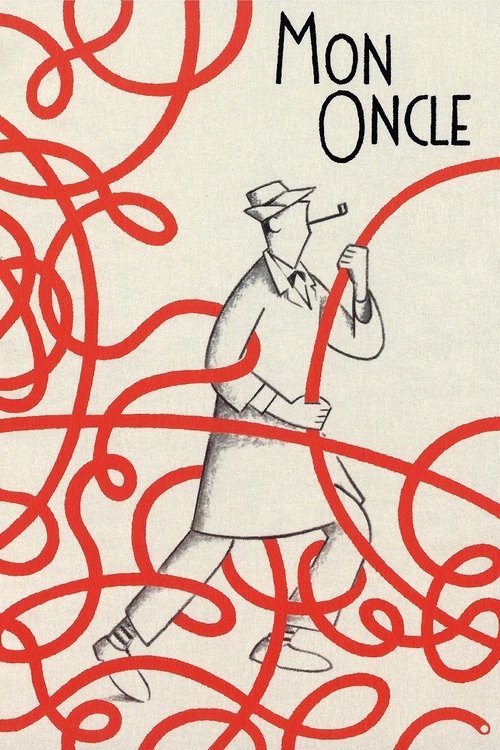
Mon Oncle (1958)
Directed by Jacques Tati
Genial, bumbling Monsieur Hulot loves his top-floor apartment in a grimy corner of the city, and cannot fathom why his sister's family has moved to the suburbs. Their house is an ultra-modern nightmare, which Hulot only visits for the sake of stealing away his rambunctious young nephew. Hulot's sister, however, wants to win him over to her new way of life, and conspires to set him up with a wife and job.
8 connections found
View:
8 connections, in both directions
What critics compared Mon Oncle to



With Sellers cast as an amiable, old-fashioned klutz lost among the technological gizmos and runaway decadence of the modern world, The Party is Edwards’ attempt to import Jacques Tati to Hollywood, specifically Tati’s 1958 film Mon Oncle, which sets his Monsieur Hulot loose in an automated house.
There, in a tribute to Jacques Tati’s Mon Oncle, Sellers’ Bakshi fumbles his way around the producer’s modern Art Deco home, failing to properly operate the automatic doors and furniture and vainly navigating the house’s numerous pools.

Indeed, Antonioni seems to call into question the celebrated wonders of modernity itself in a way that seemed to echo the concerns Jacques Tati had explored so comically in Mon Oncle (1958): namely whether modern life, particularly in a city infatuated with the New, was worth the aggravation.
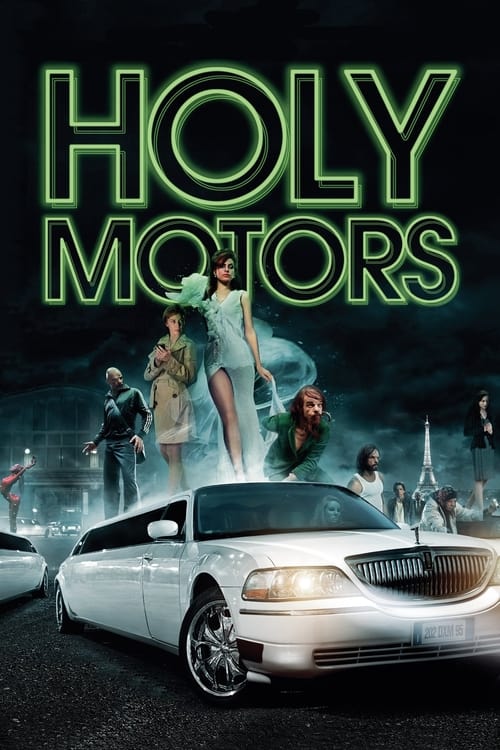
Now this man is inside a cinema, and we meet Monsieur Oscar ( Denis Lavant ), who lives in a house that seems designed by the same architect employed in Jacques Tati's " Mon Oncle ."
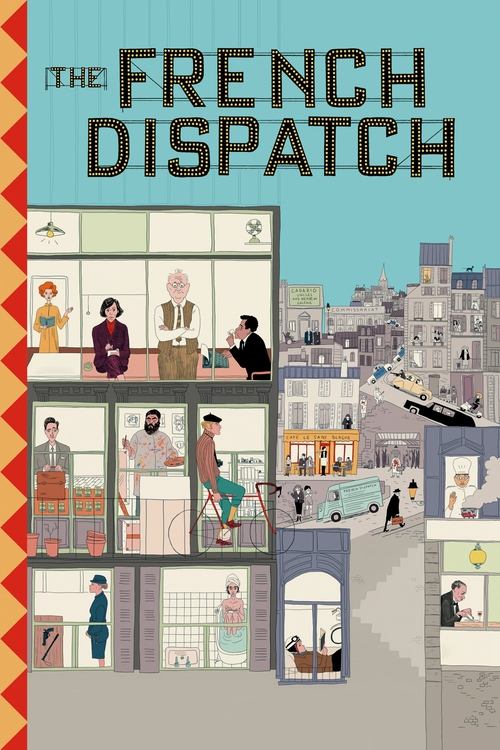
After an early sequence that steals directly from Jacques Tati’s Mon Oncle (an exterior establishing shot of the dilapidated Dispatch building, through which a waiter passes by various windows and stairways), much of the movie fills the screen with props, sets, and busy backdrops.
Rug repair bills aside, from essentially the first moment that the dazzled viewer is introduced to the moving picture’s location – a French town glorying in the moniker Ennui-sur-Blasé, on which an average of 190,000 flakes of snow fall per year and from whose canal an average of 8.2 bodies are dredged per week – Mr. Anderson delivers such a dense and barmy barrage of minutely imagined wonders (not least a complete and perfect recreation of the famously ramshackle house from Mr. Jacques Tati‘s “Mon Oncle“) that it leaves one in something of a quandary.
Advertisement

Think of a fusion of a violent, razor�s edge (but not black) comedy like Demme�s Something Wild or Scorsese�s After Hours and a Jacque Tati film like Mon Oncle and you might come close to approximating the sophisticated humor that the film packs.
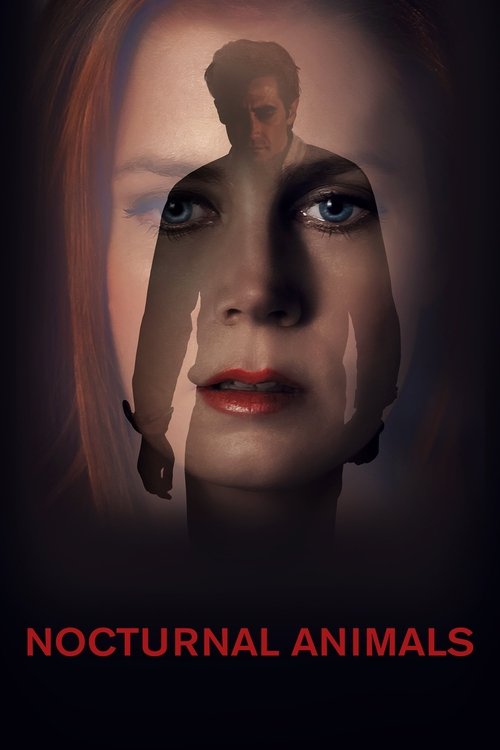
Perhaps we’re supposed to feel that the novel is so grisly that it would make us want to take a shower, too—a high-tech downpour in a pricey marble stall, since her house is as expensive and over-styled, in its own slab-like way, as the suburban manse in Mon Oncle.
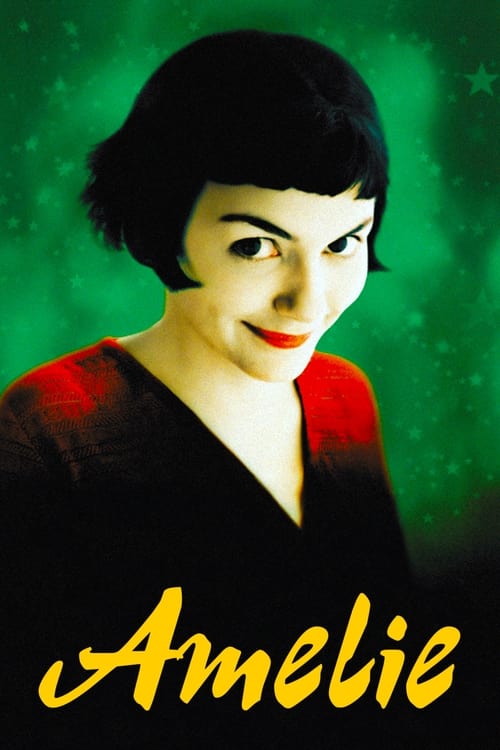
"Amelie" wafts us back to the fairytale France that once seduced international moviegoers in the days of "Le Million," "The Red Balloon" "Mon Oncle," but it also shows all the things -- some sexual, some political -- that now grace the screen since those more innocent days.
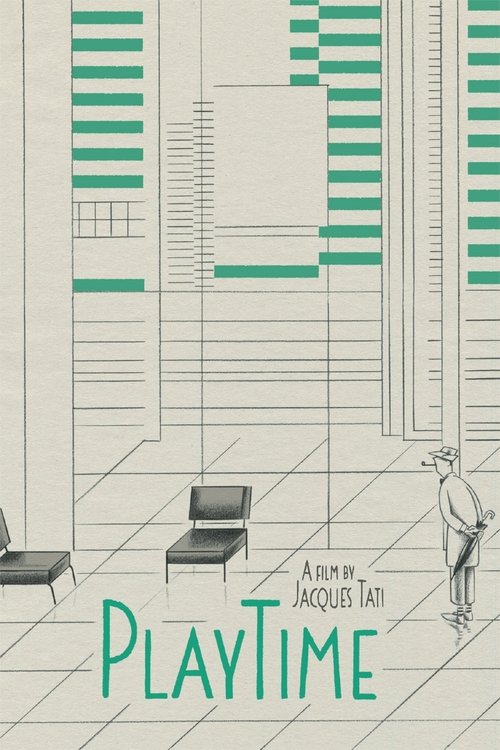
Tati's signature persona of M. Hulot (the center of Tati's Oscar-winning smash Mon Oncle) is present for stretches, but the filmmaker strenuously avoids making him a central protagonist.
Hulot had been the star of Jour de Fete (1948), Mr. Hulot's Holiday (1953) and Mon Oncle (1958).
Of course, it is impossible to fully appreciate PlayTime without having seen the two films that preceded it, Monsieur Hulot’s Holiday (1953), which introduced audiences to Tati’s near-silent screen clown Monsieur Hulot, and Mon oncle (1958), which used Hulot as a peripheral character in a study of two competing worlds, the old and the new.
In one of the many bonus features in Criterion’s outstanding The Complete Jacques Tati Blu-ray box set, French filmmaker Olivier Assayas suggests that Tati’s four best-known films—Jour De Fête, Monsieur Hulot’s Holiday, Mon Oncle, and PlayTime—form an arc, telling the story of France during the post-World War II years of economic expansion and urbanization sometimes called “The Glorious Thirty.”
Playtime is known foremost as a vehicle for Tati’s character Monsieur Hulot (portrayed by the filmmaker himself), seen previously in M. Hulot’s Holiday and Mon Oncle.
Tati's famous character, often wearing a raincoat and hat, usually with a long-stemmed pipe in his mouth, always with pants too short and argyle socks, became enormously popular in the director's international hits " Mr. Hulot's Holiday " (1953) and " Mon Oncle " (1958, winner of the Oscar for best foreign film).