
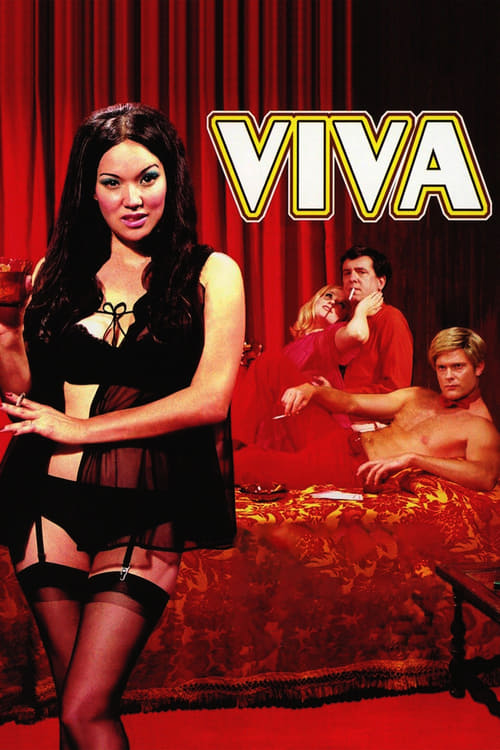
Viva (2008)
Directed by Anna Biller
Abandoned by her husband, Barbi is dragged into trouble by her girlfriend, who spouts women's lib as she gets Barbi to discard her bra and go out on the town. Barbi becomes a Red Riding Hood in a sea of wolves, and quickly learns a lot more than she wanted to about nudist camps, the hippie scene, orgies, bisexuality, sadism, drugs, and bohemia.
1 connection found
View:
1 connections, in both directions
What critics compared Viva to



Writer-director Anna Biller is an obvious fan: Her work, including 2007’s Viva and now the vastly entertaining The Love Witch, seems plucked from the same Playboy-era universe of huge hairdos, lurid makeup and voracious female appetites.
Like Viva, her last film, The Love Witch is a tad too long—those Doris Wishman and Roberta Findlay movies that used to play in Times Square barely broke the 60-minute mark—but any longueur in narrative at least gives us the chance to luxuriate in Biller’s hyper-detailed production, daubed in saturated blocks of red, purple, pink, and yellow, larded with nudity and gloriously silly rituals, and then dotted with anachronistic computers and cellphones.
Writer-director Anna Biller (Viva 2007) has a passion for Technicolor melodramas, and it really shows here.
Given that Anna Biller's (Viva) second feature is painted in a palette of dazzling shades that threaten to put technicolor to shame, the same statements could apply to The Love Witch as a whole.
A less-successful follow-up to Biller’s wonderful 2007 sex comedy Viva, which made fun of '70s sexploitation pics, The Love Witch gives itself over to the camp aesthetic so thoroughly that it undoes the satirical intent.
Después de “Viva”, la norteamericana Anna Biller vuelve a subvertir los códigos de género sexual mediante la reinterpretación nostálgica de los géneros cinematográficos.