
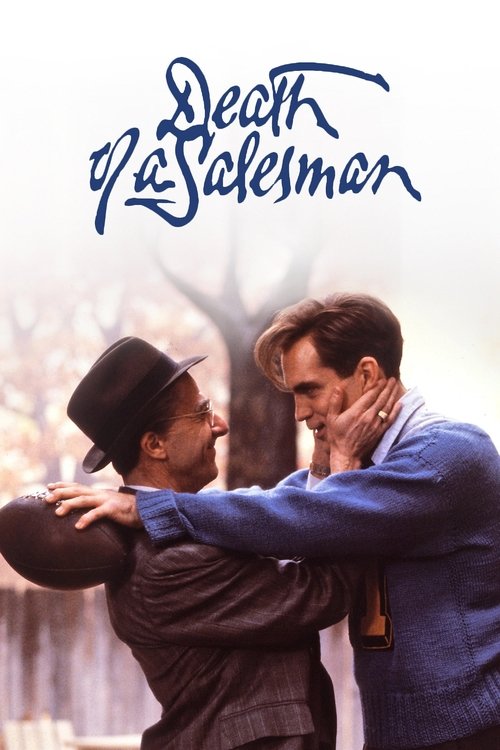
Death of a Salesman (1985)
Directed by Volker Schlöndorff
Willy Loman, an aging, failing salesman, struggles to accept reality and his failure to achieve the American Dream.
10 connections found
View:
10 connections, in both directions
What critics compared Death of a Salesman to


Yet the most surreal segment of the production is the incredibly massive city-size theatrical extravaganza Caden undertakes after obtaining a MacArthur grant for his enormous success with a rejuvenated reworking of Arthur Miller’s Death of a Salesman cast entirely with young people.
The title is both a term meaning a part that is used to refer to the whole, or vice versa, as well as a wordplay on the upstate city of Schenectady, where Caden Cotard (Hoffman) is staging an avant-garde production of "Death of a Salesman."
Caden is currently putting on a revisionist play of "Death of a Salesman," casting young twenty-somethings in much older roles as a way of telling the audience that these actors, too, will end up alone and gasping their last breath like the characters they are portraying.
Not so poignant as "Death of a Salesman," to which it's often compared, the drama really has more in common with Barry Levinson's "Tin Men."
The piece itself is a modern classic: Mamet's revisiting of the themes of Death of a Salesman with the added disillusionment of the 1980s and enough profanity to choke a motherfucker.
“A Most Violent Year” makes an unlikely cross of the early works of David Mamet with the gangster sagas of Lumet, Coppola and Scorsese with even a hint of Arthur Miller in his “Death of a Salesman” mode thrown in.
Like “Death of a Salesman,” “A Most Violent Year” portrays a passionate man trapped between personal and professional obligations.

Death of a Salesman it is not.
Parts "Death of a Salesman," "On the Road," and "Bonnie and Clyde" — with a pinch of "Glengarry Glen Ross" thrown in — this film feels completely of the moment and also classic.
Advertisement

Garfield, so good in The Social Network and onstage in Death of a Salesman, puts his own stamp on Peter and his drive to solve the mystery of his parents' death.
It so happens that Andrew Garfield, the new Spider-Man, played Biff to Hoffman’s Willy in Mike Nichols’ Death of a Salesman this spring and got great notices.
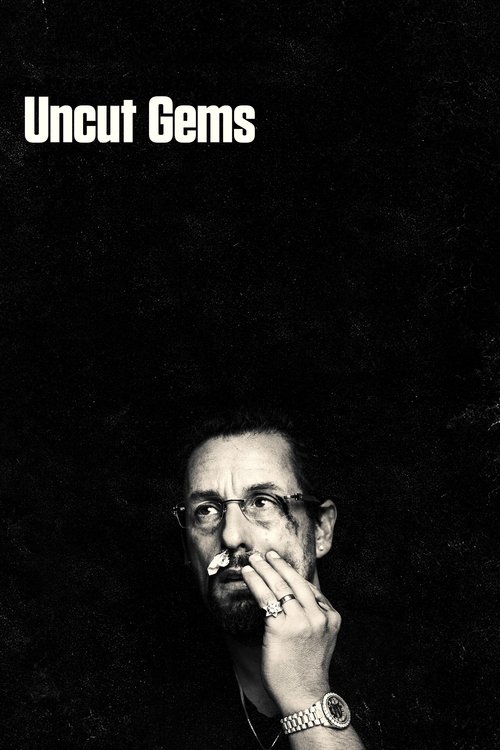
That quest suggests “Mean Streets” by way of Preston Sturges, with a touch of “Death of a Salesman” to boot — a mesmerizing chronicle of desperate schemes, and it’s hard to imagine anyone but Sandler at the center of it.
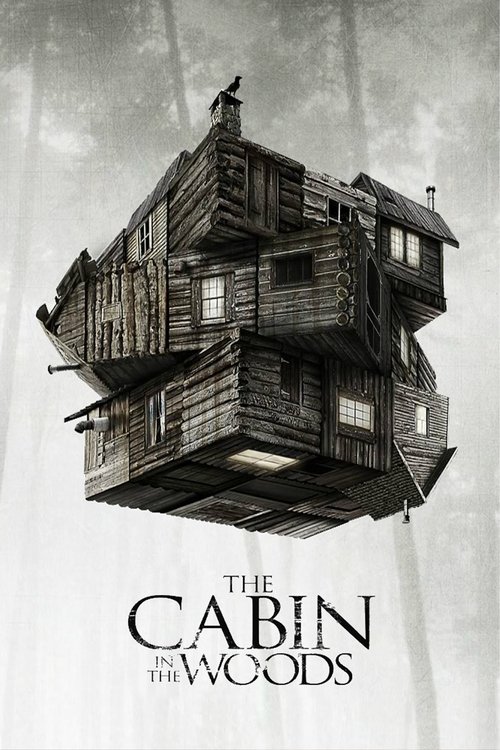
And Kranz, now on Broadway in Death of a Salesman, is comic dynamite as the pothead.
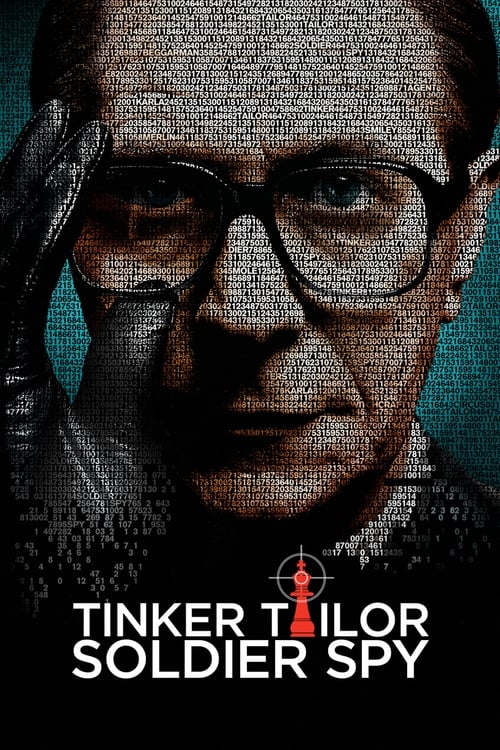
Trench-coat trudging, briefcase-carrying Gary Oldman, as John le Carre's Cold War-era British agent George Smiley, looks like he's on his way to the "Death of a Salesman" auditions.
Advertisement
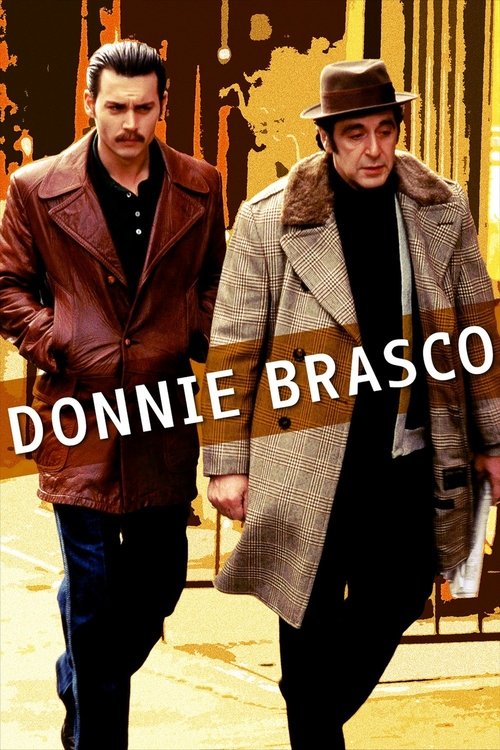
Director Mike Newell has likened this story to Death of a Salesman and its an apt comparison.
He regroups quickly, though, and propelled by extraordinary performances by Al Pacino and Johnny Depp and a fine supporting cast creates a brooding, funny, horrific frieze of thwarted loyalty, love, and ambition -- a gangster version of Death of a Salesman.
One assumes a gifted comedian like Keaton might be able to inject a little spunkiness into the proceedings (just look what the kooky Johnny Depp did for "Secret Window"), but Keaton approaches the role like "Death of a Salesman."