
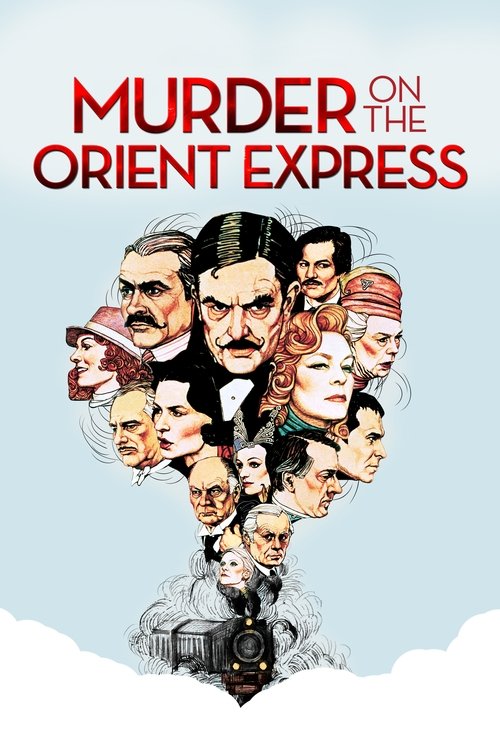
Murder on the Orient Express (1974)
Directed by Sidney Lumet
In 1935, when his train is stopped by deep snow, detective Hercule Poirot is called on to solve a murder that occurred in his car the night before.
8 connections found
View:
8 connections, in both directions
What critics compared Murder on the Orient Express to

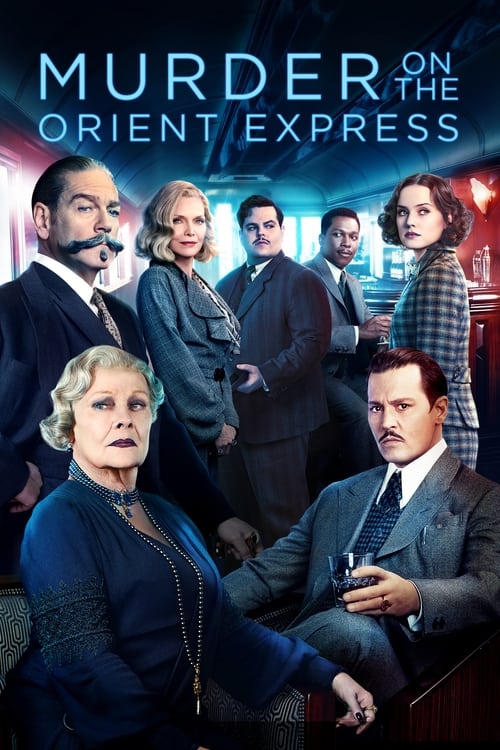


Agatha Christie’s durable mystery novel MURDER ON THE ORIENT EXPRESS has been adapted as a feature film in 1974, a telefilm in 2001, an episode of the series AGATHA CHRISTIE’S POIROT, and more.
Having seen Albert Finney's rendition of Agatha Christie's famous detective in 1974's Murder on the Orient Express, it is one of the few times I was thankful for my shocking memory - I couldn't remember "whodunnit".
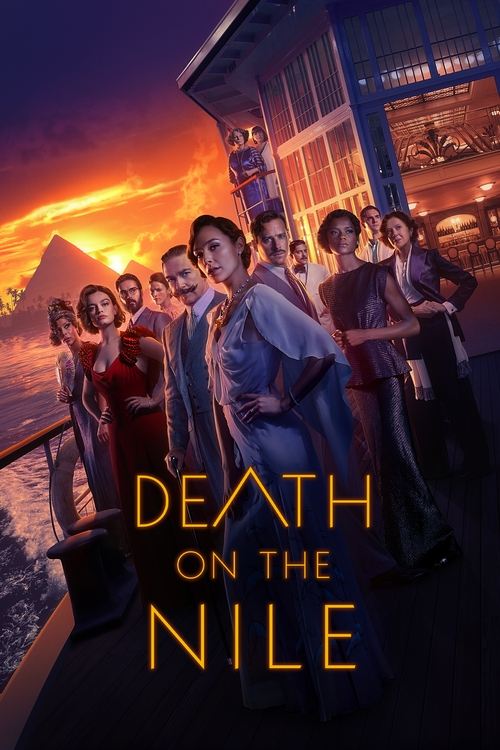
I wasn’t the biggest fan of our last mystery with Agatha Christy penned detective Hercule Poirot, Murder on the Orient Express .
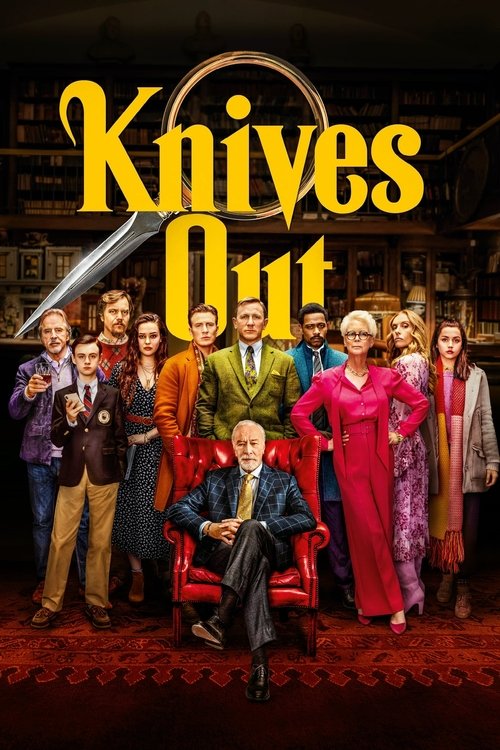
It’s a kind of self-reflexive knowingness that never crosses the line into snark, but enables Johnson and his cast to fool around with their premise and make “Knives Out” feel like something a good deal fresher than say, Kenneth Branagh’s recent waxwork remake of “Murder on the Orient Express.”
Marta’s inability to fib is balanced against Benoit’s tendency toward wild, grandiloquent speculation, which Craig plays with just the right level of hearty, self-satisfied cheerfulness—he’s a better Hercule Poirot than Kenneth Branagh was in Murder on the Orient Express .
The best-known examples of the form – almost all of them Agatha Christie adaptations, such as And Then There Were None (1945), Murder on the Orient Express (1974), and Death on the Nile (1978) – tend to be clever, star-studded little tchotchkes, eliciting a fleeting sensation of gratification but no lasting artistic impression.
The movie’s wit and energy hold your interest, but they don’t spark the pleasure of the unexpected, the thrill you felt in Laura, The Last of Sheila, Chinatown, The Sixth Sense, or the 1974 adaptation of Christie’s Murder on the Orient Express (not Kenneth Branagh’s inept remake ), movies whose big reveals surprise you in their elegant simplicity.
Prime examples include Herbert Ross’ cult classic The Last of Sheila (1973) and Sidney Lumet’s Murder on the Orient Express (1974).

The Pitch: Think Romancing the Stone meets Murder on the Orient Express , but thinned out, less plucky, and sporting two ‘90s mainstays as the leads.

The plot — and there's a lot of it — concerns the death of one of the concierge's aged lovers (Tilda Swinton, giving Wendy Hiller's turn in "Murder on the Orient Express" a run for her money).
Advertisement
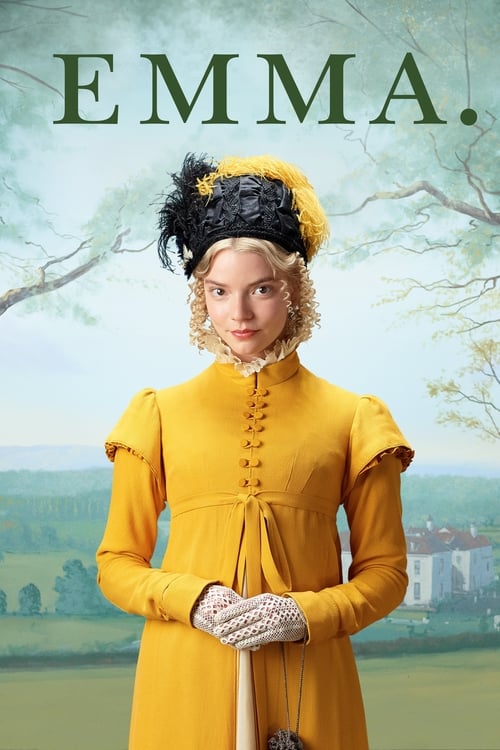
Aided by Bill Nighy‘s infectious eccentricity as Emma’s doting father, Goth’s docility, and Miranda Hart‘s somewhat desperate, yet no less loveable comedic flair as the genteel spinster Miss Bates, as well as the visual opulence of Alexandra Byrne‘s costuming (the Academy Award-winning designer of such fare as Elizabeth , Thor , and Murder on the Orient Express ) and Isobel Waller-Bridge‘s (yep, Phoebe’s sister) traditional score, Emma.
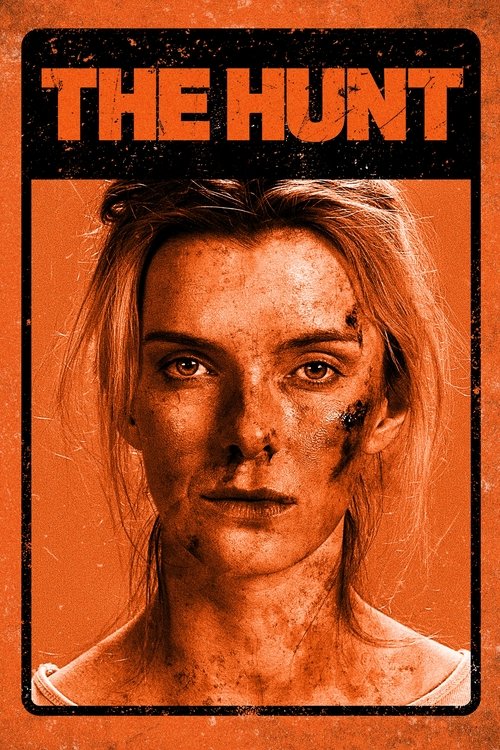
The pacing is zippy and the seeming Murder on the Orient Express ensemble setup is quickly dispatched, revealing a memorable mano-a-mano showdown with The Final Neo-Liberal Boss, played by a teeth-gritting, scenery-gnawing Hilary Swank.
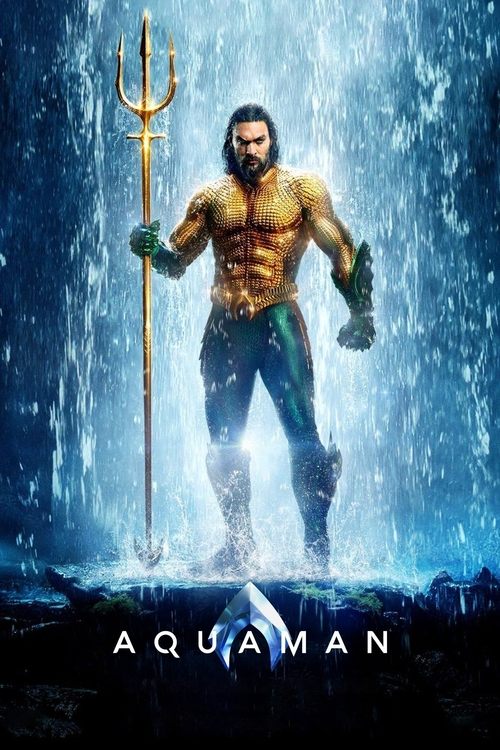
Arthur grows up with his father at the lighthouse, but is secretly tutored in the ways of Atlantis and trained to fight by Atlanna's friend, royal advisor Nuidis Vulko (Willem Dafoe of “Murder on the Orient Express”).